Fall prevention requires more than a few balance exercises. The most effective programs combine strength training, balance work, flexibility, environmental assessment, medication review, and vision checks into a complete approach. Standalone apps and structured programs make this multi-component approach accessible from home, guiding you through the exercises, tracking your progress, and providing the systematic structure that random YouTube videos can’t.
Before starting any fall prevention program, talk to your doctor. They can identify specific risk factors (medication side effects, vision problems, underlying conditions) that need to be addressed alongside exercise. If you’ve fallen in the past six months or have significant balance impairment, ask for a referral to a physical therapist for an individualized assessment before beginning a home program.
Evidence-Based Fall Prevention Programs
Otago Exercise Programme
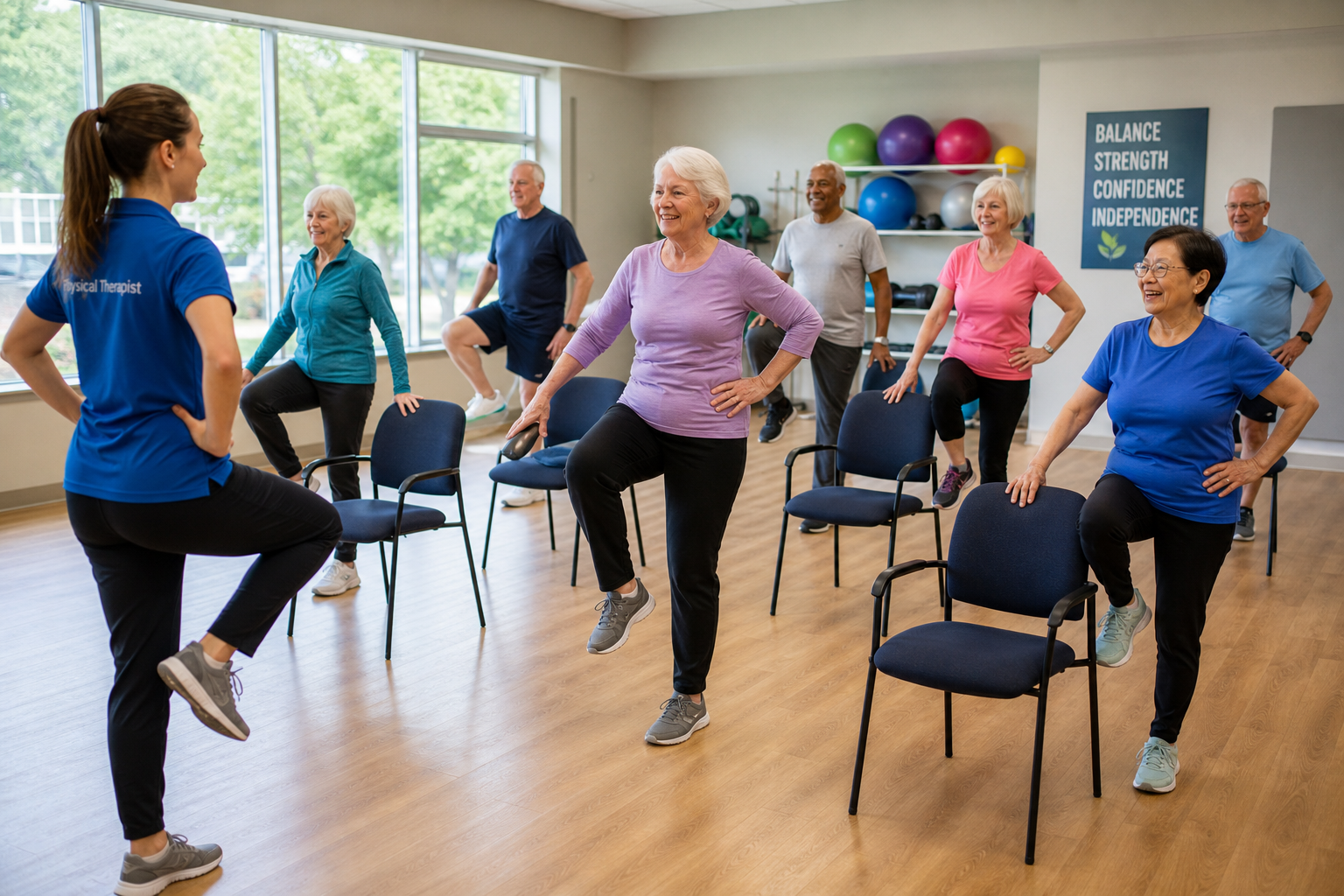
The Otago Exercise Programme (OEP) is one of the most researched fall prevention programs in the world. Developed in New Zealand and validated in multiple randomized controlled trials, it reduces falls by 35% in community-dwelling older adults. The program includes 17 strength and balance exercises (progressive difficulty levels) plus a walking program, performed 3 times per week at home.
A physical therapist teaches the initial exercises and progresses you through difficulty levels over 4 visits. During these sessions, the therapist evaluates your current balance and strength, demonstrates proper form, and determines which difficulty level you start at for each exercise. After that, you continue independently at home with the provided materials.
The exercises progress from basic (standing on one foot while holding a counter) to advanced (tandem stance with eyes closed, knee bends on one leg). The program also includes lower-body strengthening exercises using ankle weights, starting at 1 pound and progressing to 10 pounds as strength improves. The walking component begins at 15 minutes twice weekly and builds to 30 minutes.

Ankle Weights for Seniors
Look for adjustable weights with comfortable padding that start at 1-2 pounds and expand as your strength improves
Ask your doctor for a referral to a physical therapist trained in the OEP. Medicare covers the PT visits under standard physical therapy benefits. The program itself is free once you’ve completed the initial PT sessions. You’ll need ankle weights (starting at 1-2 pounds) and a sturdy chair, with total equipment cost running budget-friendly amounts.
The research backing the OEP is extensive. Multiple trials across New Zealand, the U.S., Australia, and the U.K. show consistent fall reduction rates of 30-40% when participants complete the exercises as prescribed. Compliance is high because the exercises can be done at home on your own schedule, and the progressive structure keeps them challenging without being overwhelming.
Stepping On
Stepping On is a community-based fall prevention program offered through local senior centers and health departments. The 7-week group program covers balance and strength exercises, home safety assessment, vision optimization, medication review, and outdoor safety strategies. Each 2-hour session includes education, group discussion, and practical exercises.
Studies show a 31% reduction in falls among participants. The program goes beyond exercise to address environmental and behavioral risk factors. You’ll learn how to navigate icy sidewalks, assess lighting in your home, talk to your doctor about fall-risk medications, and problem-solve specific hazards in your daily routine.
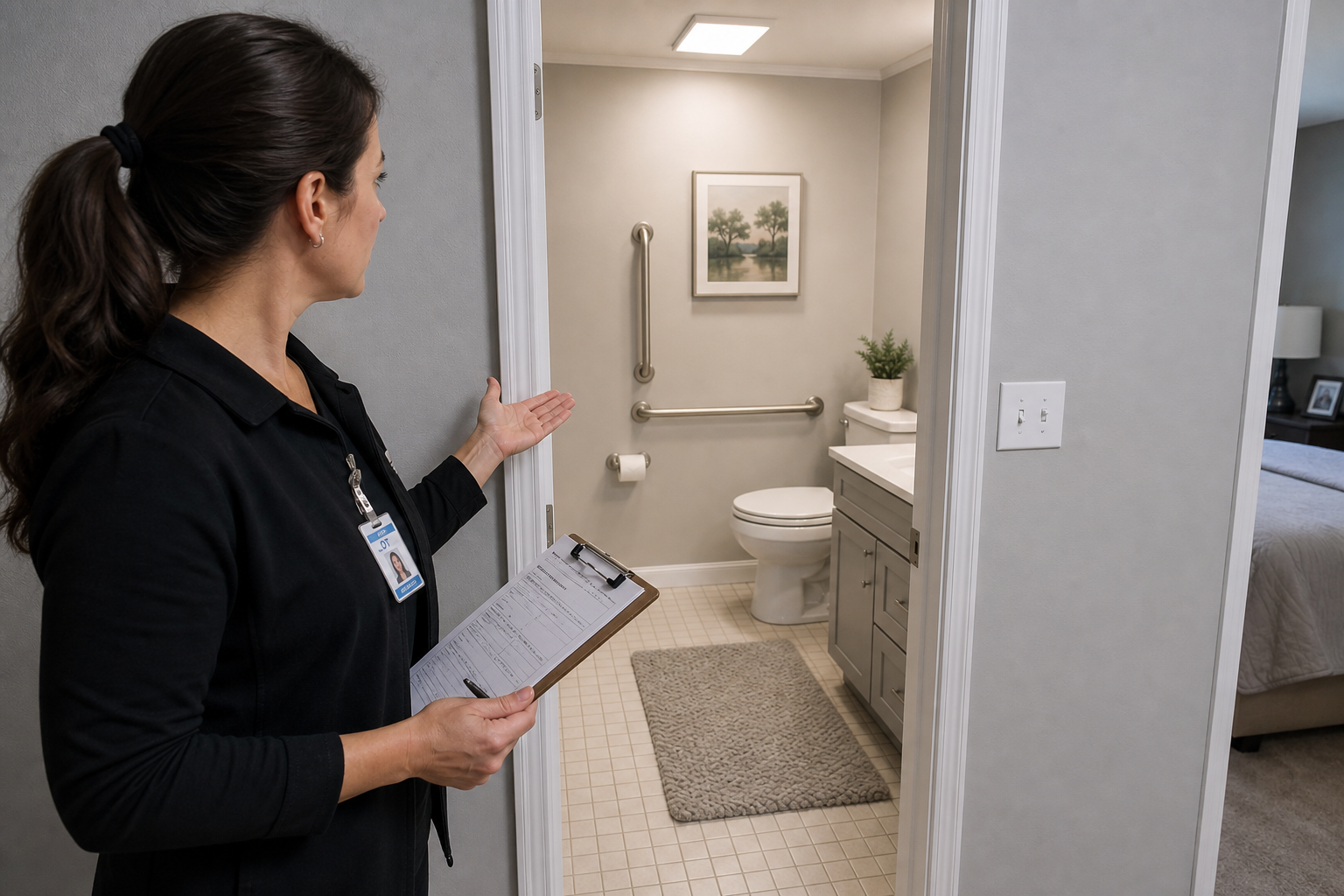
One session includes a home visit from an occupational therapist who walks through your house and identifies specific hazards. They provide concrete recommendations (move this rug, add a grab bar here, increase wattage in this fixture) tailored to your actual living space rather than generic advice.
The group format provides accountability and social support. Many participants continue meeting informally after the program ends to maintain their exercise routines together. Search for “Stepping On fall prevention” plus your state or city to find a local program. Most programs charge minimal fees for the full 7-week session, and some offer scholarships or sliding-scale fees.
A Matter of Balance
A Matter of Balance (MOB) is an 8-week program specifically designed for seniors who have fallen or fear falling. It addresses both the physical (strength, balance) and psychological (fear, avoidance, confidence) components of fall risk. Classes are offered at senior centers, hospitals, and community organizations nationwide.
Fear of falling creates a vicious cycle: you avoid activities, your strength and balance decline from inactivity, and your actual fall risk increases. MOB breaks this cycle by teaching you to view falls as controllable rather than inevitable, set realistic goals for increasing activity, and practice exercises that rebuild confidence alongside physical ability.
The evidence shows significant reductions in both fall fear and actual fall rates. Participants report increased willingness to engage in social activities, less restriction of daily activities due to fear, and improved confidence in their ability to manage fall risk.
The 8 sessions run 2 hours each. You’ll practice standing from a chair without using your hands, improve your walking stability, and learn specific strategies for safely continuing activities you’ve been avoiding. The program also covers when to use assistive devices (canes, walkers) and how to get up from the floor if you do fall.
Contact your local Area Agency on Aging to find MOB classes near you. Most programs are free or very low-cost for the full session.
Tai Chi for Fall Prevention
Tai chi reduces falls by 20-40% in multiple meta-analyses. The slow, controlled movements train balance, strength, and confidence simultaneously. Unlike Western exercise programs that isolate specific muscle groups, tai chi integrates whole-body coordination, weight shifting, and dynamic balance challenges into flowing sequences.
Community tai chi classes for seniors are widely available through senior centers, YMCAs, and parks departments. The most studied tai chi fall prevention program is “Tai Chi: Moving for Better Balance” (TCMBB), a 24-form program specifically designed for fall prevention. TCMBB classes typically run 60 minutes, twice weekly, for 24 weeks.
Tai chi works because it trains the exact movements involved in preventing a fall: rapid weight shifts, stepping in multiple directions, reaching while maintaining balance, and recovering from a loss of balance. The meditative component reduces anxiety about falling, which itself is a risk factor for future falls.
If you have significant balance problems, start with a chair-based tai chi class or work with an instructor one-on-one for the first few sessions. Most tai chi forms can be modified to hold onto a chair back during the learning phase. You progress to unsupported practice as your balance improves.
For those interested in exploring different movement practices, you can read more about yoga vs tai chi for seniors to see which practice might suit you best.
Fall Prevention Apps
SilverSneakers GO
The SilverSneakers app includes fall prevention-specific workout programs with guided balance and strength exercises, video demonstrations, and progressive difficulty. It’s free with Medicare Advantage plans that include SilverSneakers membership. If your plan includes SilverSneakers, download the app at no cost.
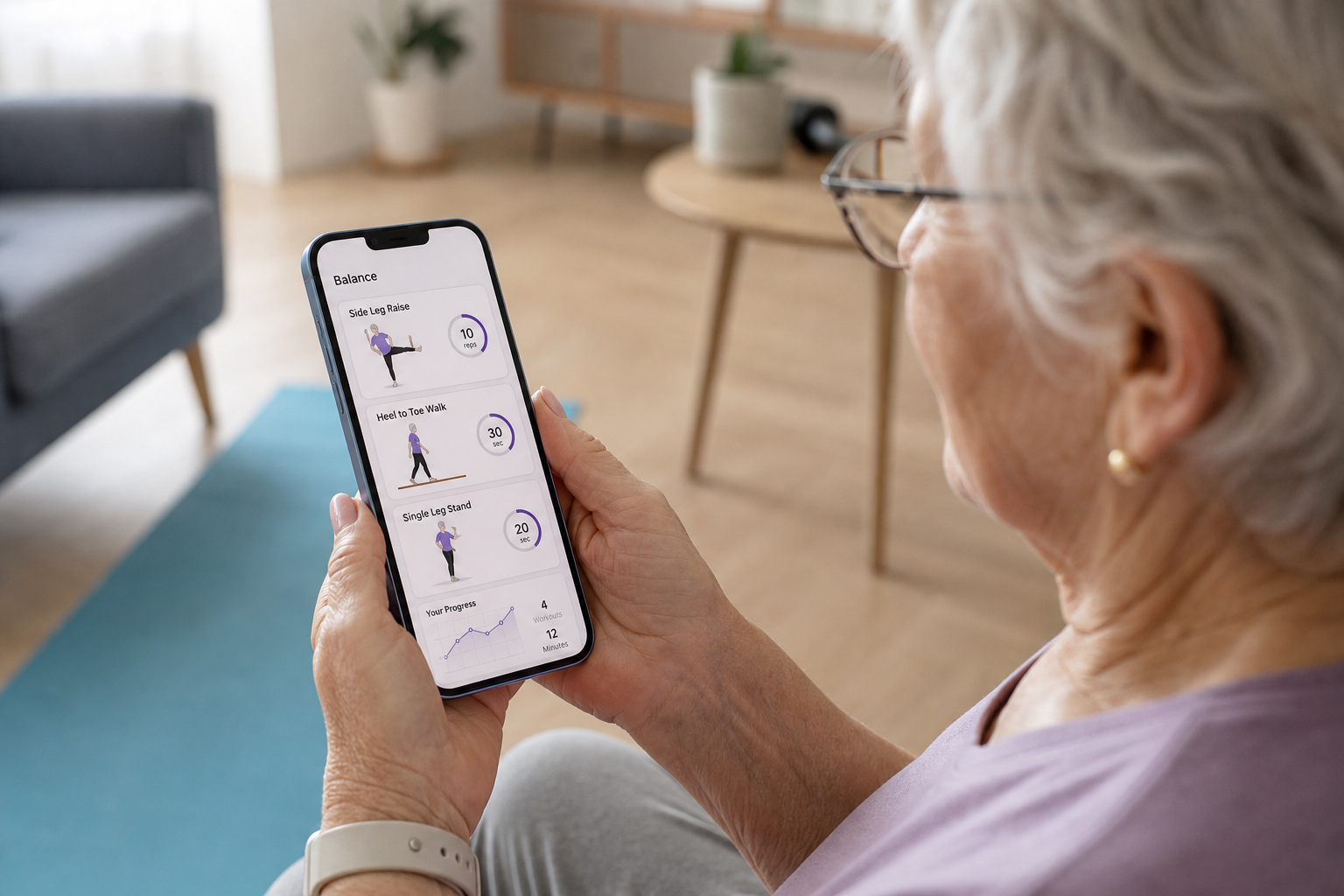
The fall prevention section includes standing balance sequences, lower-body strengthening routines, and flexibility work. Each exercise shows a video demonstration with modifications for different ability levels. You can perform the workouts with just a chair and a wall for support.
The app tracks consistency and provides reminders. You set your weekly exercise goals (3 sessions per week is the research-backed frequency for fall prevention), and the app sends push notifications on your scheduled workout days. Progress tracking shows how many consecutive weeks you’ve met your goal, which research shows improves long-term adherence.
The workouts range from 10 to 30 minutes. Start with the shorter sessions and build up. Shorter, consistent sessions beat sporadic longer workouts for fall prevention.
If you’re looking for more ways to track your fitness progress, check out our guide to fitness tracking apps for seniors.
Nymbl (Evidence-Based)
Nymbl is a dual-task balance training app that combines balance exercises with cognitive challenges (quiz questions you answer while performing balance movements). The dual-task approach trains the real-world multitasking that most falls occur during. You’re not just standing on one foot in a quiet room; you’re standing on one foot while answering trivia questions, simulating real-world conditions like walking while talking or reaching for something while thinking about your grocery list.
Research shows dual-task training reduces falls by 25-30%. The cognitive interference makes the balance challenge harder, forcing your nervous system to develop automatic, unconscious balance control that doesn’t require your full attention.
Each Nymbl session lasts 10 minutes. The app presents progressively harder balance exercises while asking you questions from categories like history, music, or sports. You answer by tapping the screen while maintaining your balance position. The questions keep your brain engaged, preventing you from overthinking the balance task and tensing up.
Many Medicare Advantage plans offer Nymbl at no cost to members. Check with your insurance provider. If your plan doesn’t cover it, the app requires a modest subscription.
StandingTall
Developed by Australian researchers, StandingTall provides personalized, progressive balance exercises delivered daily through a tablet or smartphone. The app adjusts difficulty based on your performance and has been shown in clinical trials to reduce fall rates. Available for download on iOS and Android.
StandingTall assesses your current balance ability with a series of tests (standing on one foot, turning in a circle, standing up from a chair without hands), then generates a daily exercise program tailored to your starting level. As you complete exercises, the app tracks your balance hold times and adjusts the difficulty up or down.
The exercises include single-leg stance variations, tandem stance, weight shifts, stepping patterns, and dynamic reaching tasks. Each exercise has clear video demonstrations and voice instructions. The app reminds you to stand near a sturdy support surface for safety.
Clinical trials showed participants using StandingTall daily had 36% fewer falls compared to a control group. The personalization appears to matter: by continuously adjusting to your improving ability, the app keeps exercises challenging enough to drive adaptation without being so hard you can’t complete them.
The app is competitively priced after a 7-day free trial. The subscription includes access to all exercises, personalized daily programs, and progress reports you can share with your doctor or physical therapist.
Combining Programs for Maximum Benefit
You don’t have to choose just one approach. Many people combine a structured program (like Otago or tai chi) with an app for additional daily practice. For example, you might do Otago exercises three times per week and use Nymbl on the other days for 10-minute dual-task balance sessions. Or attend a weekly tai chi class and use StandingTall for daily home practice.
The research shows that more frequent balance training (5-7 days per week) produces larger fall reductions than 2-3 days per week, as long as you’re not overtraining to the point of fatigue. Balance exercises don’t require the same recovery time as heavy strength training. A 10-15 minute daily balance routine causes minimal fatigue and can be done every day.
Just like with progressive resistance training, starting with one program and establishing consistency first is key. Add supplementary activities once your base routine is solid. Trying to do too much at once usually leads to burnout and quitting.
Home Safety Assessment
Exercise is only half the fall prevention equation. Environmental hazards in your home cause 50-60% of falls. A complete fall prevention approach addresses both your physical ability and your environment.
Remove tripping hazards: Loose rugs, electrical cords, clutter in walkways, low furniture in paths. Walk through your home and identify anything that disrupts a clear walking path. Remove decorative rugs in high-traffic areas or secure them with double-sided tape or non-slip rug pads. Reroute electrical cords along walls rather than across walking paths. Clear coffee tables, magazine racks, and pet bowls away from main walkways.
Improve lighting: Nightlights in hallways and bathrooms, brighter bulbs in dim areas, light switches accessible from every entrance. Many falls happen during nighttime bathroom trips. Install motion-activated nightlights that turn on automatically when you enter the hallway. Replace 60-watt bulbs with 100-watt equivalents in stairways, entryways, and task areas. Add switches at both ends of hallways and stairways so you never walk through a dark space to reach the switch.
Install grab bars: Bathroom grab bars beside the toilet and inside the shower/tub. Position the grab bar next to the toilet 12 inches out from the wall and 33-36 inches high. In the shower, install a horizontal bar on the back wall and a vertical bar on the side wall for maximum support during entry, exit, and turning. Grab bars must be anchored into wall studs, not just drywall. If you’re not confident in your installation skills, hire a handyman. A properly installed grab bar supports 250-300 pounds. A poorly installed one pulls out of the wall when you need it most.

Stainless Steel Bathroom Grab Bars
Choose rust-resistant stainless steel bars with a textured grip surface and ensure professional installation into wall studs for maximum safety
Add non-slip surfaces: Non-slip mats in the bathroom, non-slip treads on stairs. Stick-on tread strips for stairs are affordable for a set of 15 treads. Apply them to the front edge of each step, where your foot lands. In the bathroom, use a non-slip mat in the tub or shower (suction-cup styles work if your tub bottom is smooth; textured tub bottoms need adhesive strips instead).
Secure stairways: Handrails on both sides, adequate lighting, no items stored on steps. Handrails should run the full length of the stairway and extend 12 inches beyond the top and bottom steps. If you have an open-sided stairway, add a second rail. Many falls happen when someone loses balance to one side and has no rail to grab. Never store anything on stairs, even temporarily. The “I’ll take it up later” pile causes countless falls.
Other modifications to consider: cordless phones (so you don’t rush to answer a ringing phone), shower chair or transfer bench (for safer bathing), raised toilet seat (makes sitting and standing easier), step stool with a handrail (for reaching high shelves without standing on a chair).
An occupational therapist can conduct a formal home safety evaluation, often covered by Medicare Advantage plans. They’ll walk through your home and identify hazards you haven’t noticed. Many local Area Agencies on Aging offer free or low-cost home safety assessments through their fall prevention programs.
Vision and Medication Review
Falls have multiple causes. Balance exercises and home modifications address two major factors, but vision problems and medications cause a significant percentage of falls.
Vision check: Poor vision doubles fall risk. Schedule an eye exam annually. Update your glasses prescription when your vision changes. If you wear bifocals or progressive lenses, be aware that they distort depth perception when you look down (like when navigating stairs). Some people find single-vision distance glasses safer for walking outside and reserve bifocals for reading and close work. Discuss this with your eye doctor.
Cataracts reduce contrast sensitivity and make it harder to see changes in floor level (like a step down from a doorway). Cataract surgery reduces fall risk by 30% in people