The area around a pool or along a beach is one of the most dangerous surfaces for seniors. Wet tile, slick deck surfaces, uneven sand, and hidden rocks create fall hazards that regular shoes can’t handle and bare feet can’t protect against. The right swim shoes provide non-slip grip on wet surfaces, protect your feet from sharp objects and hot pavement, and support your arches during water walking and aqua aerobics.
Falls on wet surfaces account for a significant portion of senior injuries during summer months. A proper pair of swim shoes isn’t optional equipment. It’s your primary defense against slips that can lead to fractures, head injuries, and loss of independence. This guide covers what makes a swim shoe safe and effective, which models deliver real traction and support, and how to use them correctly in pool and beach environments.
What to Look for in Swim Shoes
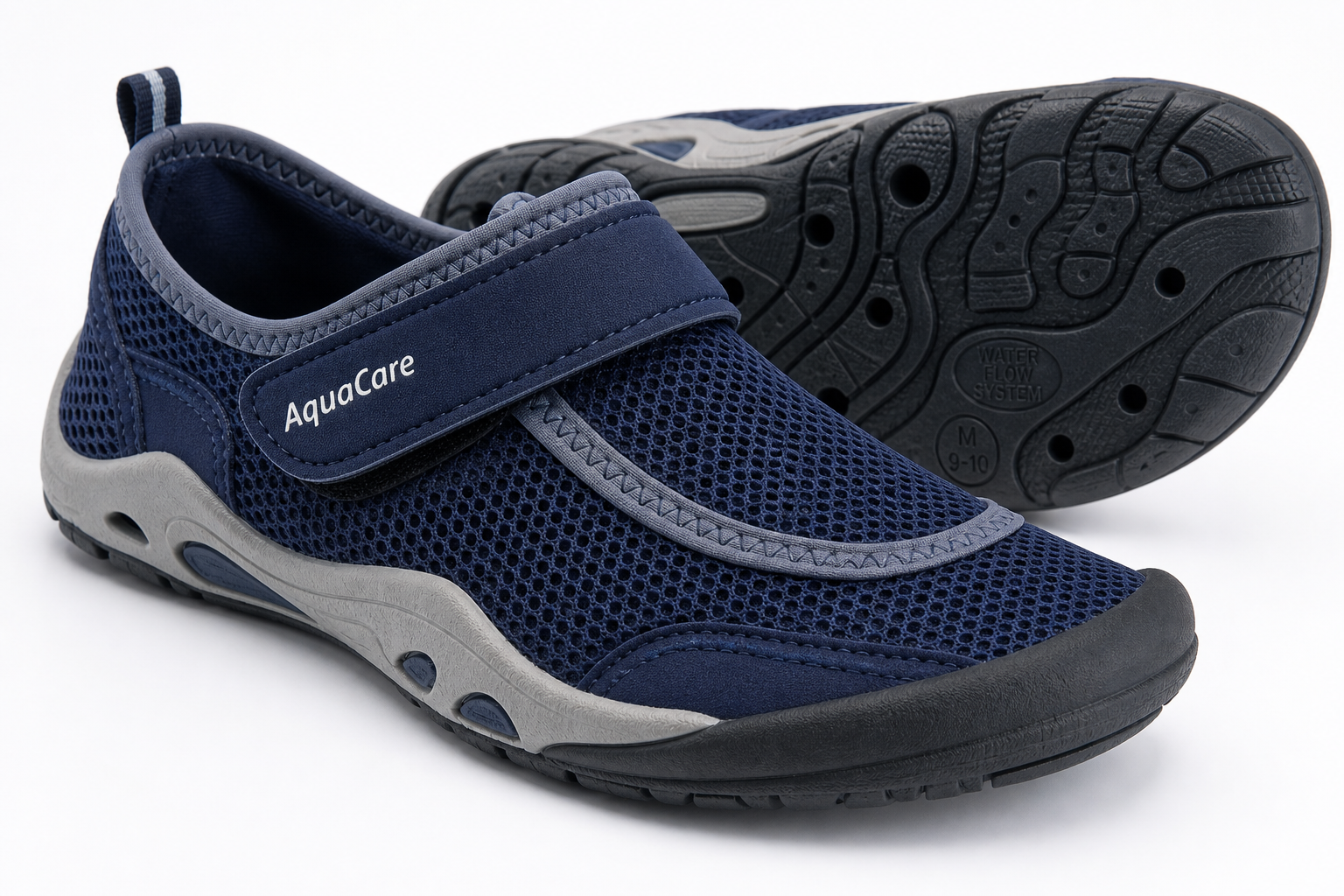
Non-Slip Soles
The sole must grip wet tile, pool decks, and slippery surfaces. Look for rubber outsoles with multi-directional tread patterns designed specifically for wet conditions. Flat, smooth soles (even on water shoes) provide almost no grip. The tread pattern matters: deep lugs with channels that evacuate water work better than shallow textures. Siping (small cuts in the rubber) creates additional edges that bite into wet surfaces.
Test the shoe on a wet surface before committing to wearing it poolside. Stand on a wet tile floor in the store if possible. Shift your weight side to side. If the shoe slides at all during this static test, it will be worse when you’re walking. A true non-slip sole should feel planted even on soapy tile.
Avoid shoes marketed as “water shoes” with thin, flexible rubber that feels slick to the touch. These work for kayaking or light beach use but lack the grip pattern needed for pool decks. The rubber compound matters too: softer rubber grips better but wears faster, while harder rubber lasts longer with slightly less traction.
Quick-Drying Material
Shoes that stay waterlogged are heavy, uncomfortable, and breed bacteria. Neoprene and mesh uppers drain quickly and dry within an hour. Avoid cotton or canvas materials that absorb water and take hours to dry.
Look for mesh panels or perforations throughout the upper, not just on the sides. Drainage holes in the sole let water escape from the footbed. Some designs incorporate a perforated insole that channels water out through the bottom of the shoe. Without these features, water pools inside the shoe, creating squishing sounds with every step and keeping your feet wet long after you’ve left the pool.
Wet shoes left in a gym bag develop mildew within 24 hours. Quick-drying materials reduce this risk and make the shoes more practical for daily pool visits. If you swim three times a week, you need shoes that are dry and ready for the next session.
Arch Support
Many water shoes are essentially glorified socks with a thin sole. For seniors who need arch support (especially for water aerobics or beach walking), look for shoes with a molded footbed or removable insole. Without arch support, extended time in the water or on sand can aggravate plantar fasciitis and flat-foot-related pain.
A supportive water shoe has a contoured footbed that cups your heel and supports the arch. You should feel the arch support when standing, not just a flat plane under your foot. Removable insoles let you replace the factory footbed with an orthotic if needed. Some water shoes accept standard orthotics, while others have too narrow a profile.
For water aerobics classes that last 45 to 60 minutes, arch support becomes critical. You’re standing and moving the entire time, often on a hard pool floor. A flat water shoe will leave your feet aching. Beach walking over soft sand also demands arch support, as sand offers no structure and forces your foot to work harder with each step.
Easy On and Off
Bending down to lace shoes on a wet, slippery deck is a fall risk in itself. Slip-on designs, pull-tab backs, and adjustable Velcro or toggle closures let you get shoes on and off quickly without bending deeply. This is especially important in locker rooms where the floor is wet and you’re standing on one foot.
Pull tabs should be large enough to grip with wet hands. Toggle closures adjust with one hand and don’t require tying. Velcro straps work well but lose grip over time when exposed to chlorine and salt water. Some seniors find that Velcro becomes less reliable after a season of pool use.
Consider where you’ll be putting shoes on and taking them off. If you have a bench in the locker room, lacing is manageable. If you’re standing next to the pool, a slip-on design is safer. For beach use, you’ll often be standing on uneven sand, so easy entry is even more important.
Heel counters (the stiff material around the back of the shoe) help the shoe maintain its shape for easy entry but can dig into your Achilles if too rigid. Look for a padded heel counter or a flexible design that doesn’t require forcing your foot in.
Secure Fit
A loose water shoe is a tripping hazard. Shoes that slip during a step defeat the purpose of wearing them. The shoe should feel snug around the heel and midfoot without pinching your toes. Adjustable closures let you fine-tune fit, which matters because feet swell slightly in water and contract when dry.
For slip-on designs, the fit should be snug enough that you can’t pull the shoe off without using your hands. If the shoe slips off when you point your toes, it’s too loose. For water aerobics and swimming, a snug fit is essential. For poolside walking only, a slightly looser fit is acceptable.
The toe box should allow your toes to spread naturally but not slide forward during downhill beach walks or when braking in water. Toes jammed into the front of the shoe during movement cause blisters and nail damage.
Top Swim Shoes for Seniors
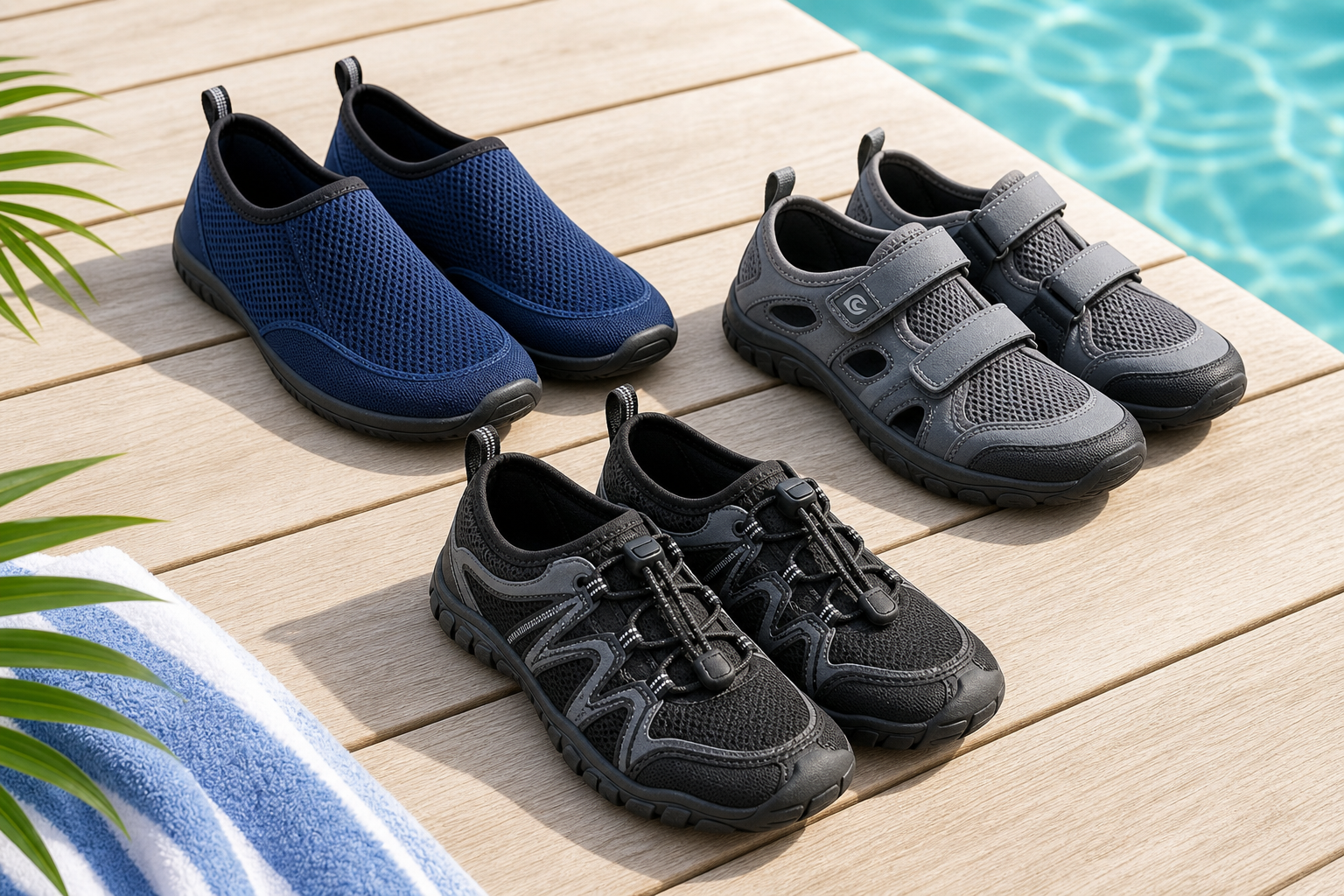
Speedo Surfwalker Pro
The Speedo Surfwalker Pro is a versatile water shoe with a rubber outsole that grips wet surfaces reliably. The mesh upper drains and dries quickly. The pull-on design is easy, and the bungee lace toggle adjusts fit without tying. The insole provides modest arch support, better than most water shoes but not as structured as a walking shoe.

Speedo Surfwalker Pro
Best all-around choice for pool decks and water aerobics with easy pull-on design
The Surfwalker works for pool decks, water aerobics, and light beach walking. The toe area is reinforced to protect against stubbed toes on pool stairs. The shoe stays on during water movement but comes off easily when you pull the heel. The mesh upper breathes well enough that you can wear these in hot climates without overheating between pool sessions.
Fit runs true to size for most users. The bungee lacing accommodates different foot widths. After swimming, the shoes dry within 90 minutes if left in open air. They weigh 6 ounces per shoe, light enough that they don’t feel like you’re wearing shoes in the water.
The Surfwalker doesn’t provide enough support for all-day beach walking or hiking on trails. It’s a true water shoe, designed for in-water use and deck walking. For extended walking on hard surfaces, switch to a more structured shoe.
KEEN Newport H2
The KEEN Newport H2 is a more structured water sandal with a protective toe bumper, contoured arch support, and a non-marking rubber outsole. It provides significantly more support than a basic water shoe, making it better for beach walking over rocky terrain and extended water aerobics sessions. The bungee lacing system adjusts with one pull.

KEEN Newport H2
Best for seniors needing real arch support and toe protection on rocky beaches
The Newport H2 has a metatomical EVA footbed that supports the arch and cradles the heel. This is real support, comparable to a light hiking sandal. The toe bumper protects against rocks and submerged obstacles. The sandal design allows water to drain immediately, so your feet never feel waterlogged.
The outsole uses KEEN’s non-marking rubber with 3mm lugs. It grips wet tile and rocks equally well. The sandal works for tide pool exploration, kayak launches, and poolside use. Some seniors wear these as all-day shoes during beach vacations.
The Newport runs slightly large. Order a half size down if you’re between sizes. The sandal weighs 14 ounces per shoe, heavier than a water shoe but lighter than a hiking boot. The adjustable bungee lacing accommodates foot swelling and different thicknesses of water socks.
Best for: Seniors who need real arch support and toe protection for beach walking and rocky lakeshores.
Crocs LiteRide Clog
The Crocs LiteRide is the easiest slip-on option for pool use. The foam construction is lightweight, the footbed is surprisingly supportive, and the drainage holes prevent water accumulation. The non-slip outsole works well on wet pool decks. They’re not suitable for swimming or aqua aerobics (they’ll come off in the water), but they’re excellent for poolside walking and locker rooms.
The LiteRide footbed uses dual-density foam that’s softer than standard Crocs. It compresses under the arch for support and cushions the heel. The clog design allows instant on and off without bending. The ventilation ports drain water immediately and improve airflow.
These work for seniors who don’t enter the water but need safe footwear for deck walking, locker rooms, and sitting poolside. The Croslite foam resists bacteria and odor better than fabric shoes. After pool use, rinse them with fresh water and let them air dry. They’ll be ready for the next day.
The LiteRide runs true to size. For a secure fit, order your normal size. For a looser, slide-on fit, go up a half size. The strap can be worn behind the heel for a more secure fit or rotated forward for easier slip-on use.
Best for: Pool deck use, locker rooms, and casual beach walking on sand.
Mishansha Water Shoes
The Mishansha water shoes are a budget-friendly option with a thick rubber sole and quick-dry mesh upper. They fit snugly (like a thick sock with a sole) and stay on during water aerobics and swimming. The grip is adequate for pool decks, and the thin profile makes them comfortable for extended wear in the water.
These shoes use a 7mm rubber sole with a textured tread pattern. The sole is thicker than many water shoes, providing better protection against rough pool floors and sharp rocks. The upper is stretchy polyester fabric that drains in seconds. The shoes weigh 5 ounces per pair, nearly weightless in the water.
The Mishansha doesn’t provide arch support. The footbed is flat with minimal contouring. For short pool sessions or beach swimming, this is acceptable. For hour-long water aerobics classes or extended beach walks, you’ll want more support.
Fit