What you wear on your feet during home exercise matters more than most seniors realize. Socks on tile are a slip hazard. Bare feet on hardwood offer no support. Heavy outdoor shoes tire your legs unnecessarily. Slippers provide zero stability.
The right indoor exercise footwear provides grip on your floor surface, support for your arches, cushioning for impact, and stability for balance exercises, all without tracking outdoor dirt through your home.
Falls during home exercise are common and preventable. Many occur because of footwear choices rather than the exercise itself. The wrong shoes (or no shoes) can turn a safe squat or balance hold into a dangerous slip. The right footwear gives you a stable platform to work from and removes one major variable from your fall-risk equation.
This isn’t about buying expensive specialized gear. It’s about understanding what your feet need for the specific movements you do at home and matching your footwear to those demands.
Best Options for Indoor Exercise
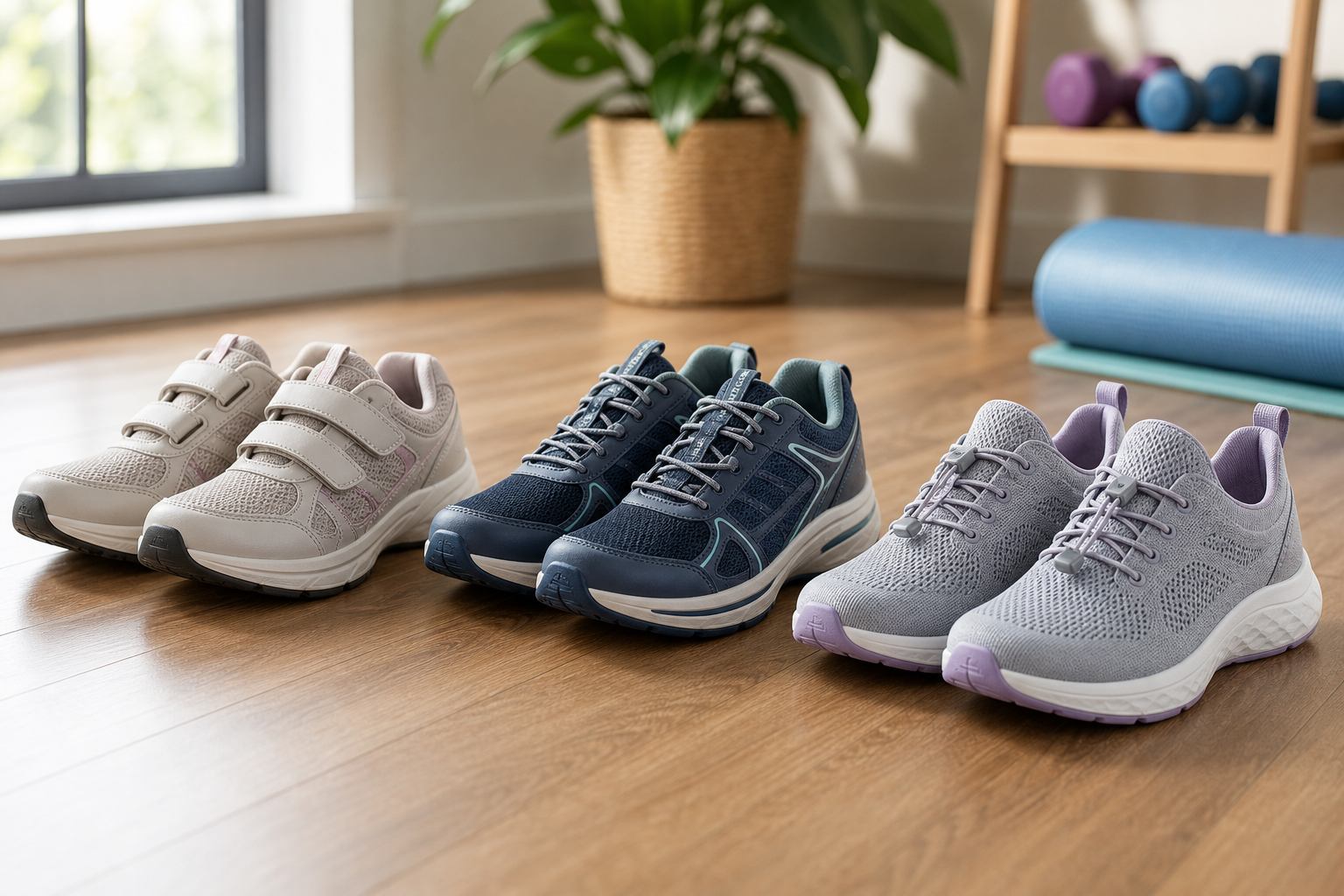
Dedicated Indoor Athletic Shoes
A pair of lightweight athletic shoes with non-marking soles provides the best combination of support, cushioning, and grip for indoor exercise. Keep them exclusively for indoor use (never worn outside) to maintain a clean sole. Cross-trainers or walking shoes with a flat, rubber outsole grip well on hard floors without the aggressive tread of outdoor shoes.

Indoor Walking Shoes with Non-Marking Soles
Best all-around option for regular home exercise routines with maximum support and stability
Look for shoes with a low heel-to-toe drop (4-8mm) for better stability during balance work. High-drop running shoes pitch you forward slightly, which can throw off your center of gravity during standing exercises. A flatter profile keeps your weight distributed more evenly across your foot.
The midsole should compress slightly under your thumb but spring back immediately. That’s functional cushioning. If it stays compressed or feels hard as a rock, it won’t absorb the impact of stepping movements or protect your joints during repetitive work.
Non-marking soles matter on all floor types, not just gym floors. Black-soled shoes can leave scuff marks on hardwood and tile that require scrubbing to remove. Gray or gum rubber soles won’t mark up your floors.
Width matters more as feet age. Many seniors need a wider toe box than they wore in younger years. If your toes feel cramped or your pinky toe rubs against the side of the shoe, go up a width. Cramped toes affect balance by reducing the surface area of your base of support.
Grippy Exercise Socks
Non-slip grip socks with silicone tread patterns on the sole provide traction on hard floors while allowing the ground-feel that some balance exercises benefit from. They’re lighter than shoes and easier to put on for seniors with limited bending ability.
Best for seniors who primarily do chair exercises and light standing work. Not recommended for vigorous standing exercises or walking programs where arch support matters.
The silicone grips should cover the ball of the foot, the heel, and ideally the outer edge of the foot. Socks with grip only on the heel and toe leave the mid-foot vulnerable to sliding during lateral movements.
Grip socks come in ankle and crew heights. Ankle height works fine for most exercise. Crew length provides calf compression, which some seniors prefer during longer exercise sessions.
Wash grip socks inside-out to preserve the silicone tread. The grips lose effectiveness after heavy washing, especially in hot water. When the silicone feels slick or starts peeling off, replace them.
These work well for mat-based Pilates, gentle yoga, and seated strength routines. They’re not a substitute for shoes during walking workouts or standing balance drills where your foot needs structural support.
Indoor Supportive Slippers
Structured slippers with arch support and rubber soles (like Vionic or Orthofeet house shoes) provide more support than socks while being easier to slip on than lace-up shoes. Look for models with a firm midsole, a rubber outsole with tread, and a secure heel (no backless slides). These work for light exercise and daily activity.
The key difference between exercise-appropriate slippers and standard house slippers is the midsole structure. Press down on the arch area. If the slipper collapses flat, it won’t support your foot during exercise. A proper supportive slipper has a rigid arch that holds its shape under pressure.
The heel cup should wrap around the back of your heel and hold it in place. Backless styles slide around during movement, which defeats the purpose of wearing footwear for stability.
Supportive slippers bridge the gap between barefoot comfort and athletic shoe structure. They work for seniors doing 15-20 minute gentle routines or combining light exercise with daily movement around the house. For sustained standing exercise or walking programs, upgrade to proper athletic shoes.
What to Avoid
Regular socks on hard floors: The most common home fall hazard during exercise. Cotton and nylon socks have zero grip on tile, hardwood, and laminate. Even a slow, controlled movement like lowering into a chair squat can turn into a slip when your foot slides out from under you. The risk multiplies on recently mopped floors or any surface with a film of dust.
Bare feet on hard floors: Provides sensory feedback (good for some balance exercises) but no arch support, no cushioning, and limited grip. Acceptable for mat-based exercises near a counter but not for walking or vigorous standing work. The lack of cushioning also means every step transmits full impact force to your knees and hips. For seniors with arthritis or joint sensitivity, this adds up quickly during a 20-30 minute workout.
Flip-flops or loose slippers: No heel support, no arch support, and high trip risk (the loose fit allows the footwear to catch on carpet edges and rug corners). The flapping motion as you walk or step also disrupts your natural gait pattern, which can throw off your balance during transitions between exercises.
Outdoor shoes worn indoors: Tracks dirt and moisture onto your exercise surface, creating slippery spots. The aggressive outdoor tread may also be too grippy on carpet, restricting natural foot movement. Outdoor shoes also carry small stones and grit in the tread, which can scratch hardwood floors and damage exercise mats.
Worn-out shoes with compressed midsoles: Old shoes feel comfortable because they’ve molded to your foot, but that compression means they’re no longer providing support or cushioning. If you can see visible creasing in the midsole or the shoe leans to one side when placed on a flat surface, it’s done. Continuing to exercise in collapsed shoes stresses your ankles, knees, and hips unnecessarily.
Matching Footwear to Exercise Type
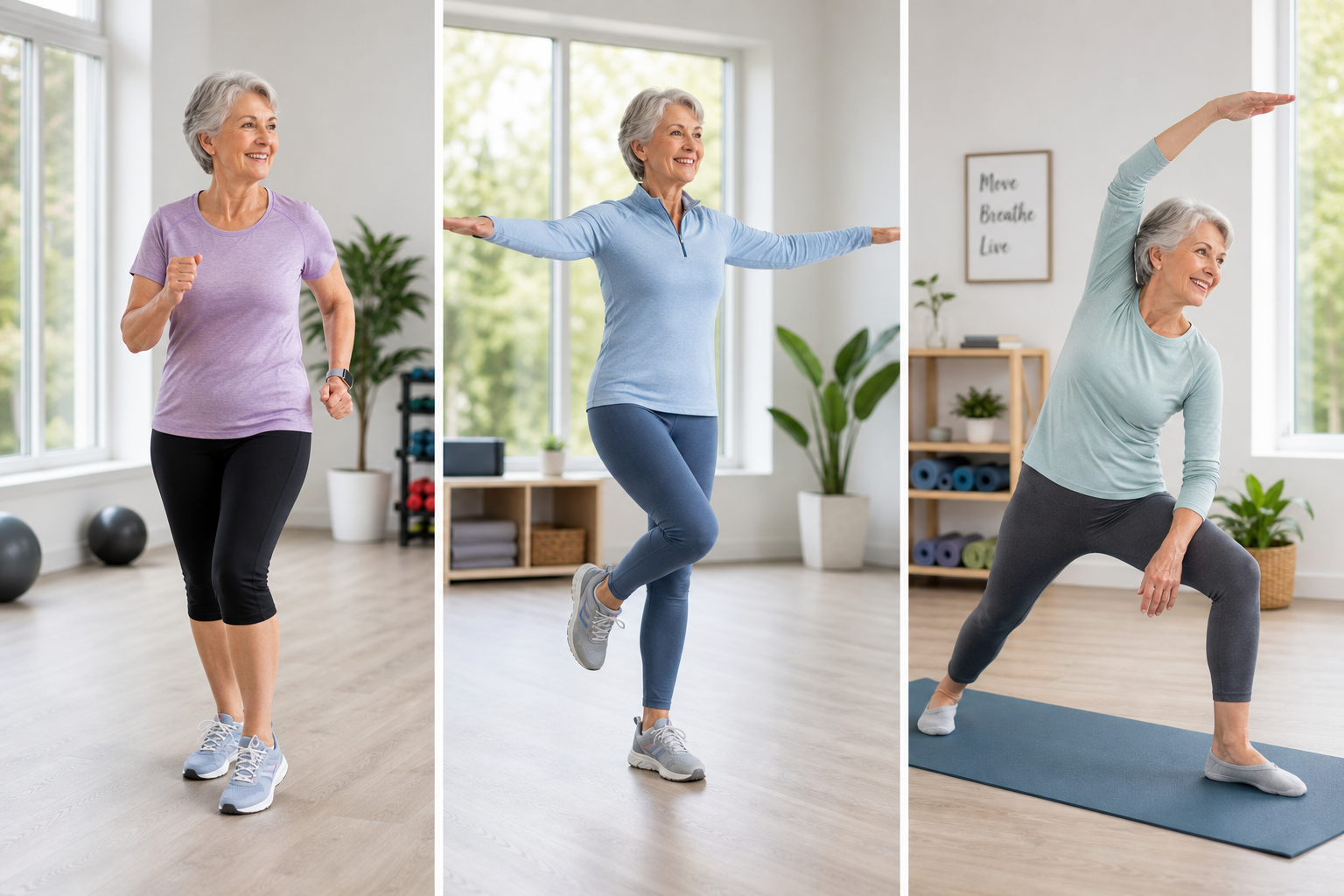
Chair exercises: Grip socks or supportive slippers (adequate support for seated work with minimal standing). The limited standing during chair routines means you’re not loading your feet heavily or frequently. Comfort and ease of putting on the footwear matter more than maximum support.
Standing strength and balance: Indoor athletic shoes (maximum support and stability). Balance work demands a stable base. Strength exercises with free weights or resistance bands create forces that travel through your feet into the floor. Both require shoes that won’t shift, slide, or compress unevenly under load. For seniors working on progressive resistance training, proper footwear becomes even more critical as you increase weights.
Indoor walking program: Indoor athletic shoes (arch support and cushioning for sustained walking). Walking is repetitive impact. Even at a moderate pace, your feet hit the ground hundreds of times during a 15-minute walk. The cumulative stress on your arches, heels, and joints requires proper cushioning and support. Check out our beginner walking program for structured guidance.
Yoga: Bare feet on a mat (traditional yoga is performed barefoot for ground contact) or grip socks if the floor around the mat is slippery. Yoga poses involve spreading your toes, pressing through specific points on your foot, and sensing subtle weight shifts. Shoes block that feedback. But if you’re practicing near a slick floor and need to step off the mat during transitions, grip socks prevent slides. Learn more in our yoga vs tai chi comparison.
Stretching routines: Bare feet or grip socks work fine for floor-based stretching. You’re not generating force or moving dynamically, so support and cushioning matter less than comfort and unrestricted foot movement.
Dance-based cardio or aerobics: Indoor athletic shoes. The lateral movements, pivots, and directional changes in dance workouts stress your feet from multiple angles. Shoes provide stability during side-to-side movements that grip socks can’t match.
Floor Type Considerations
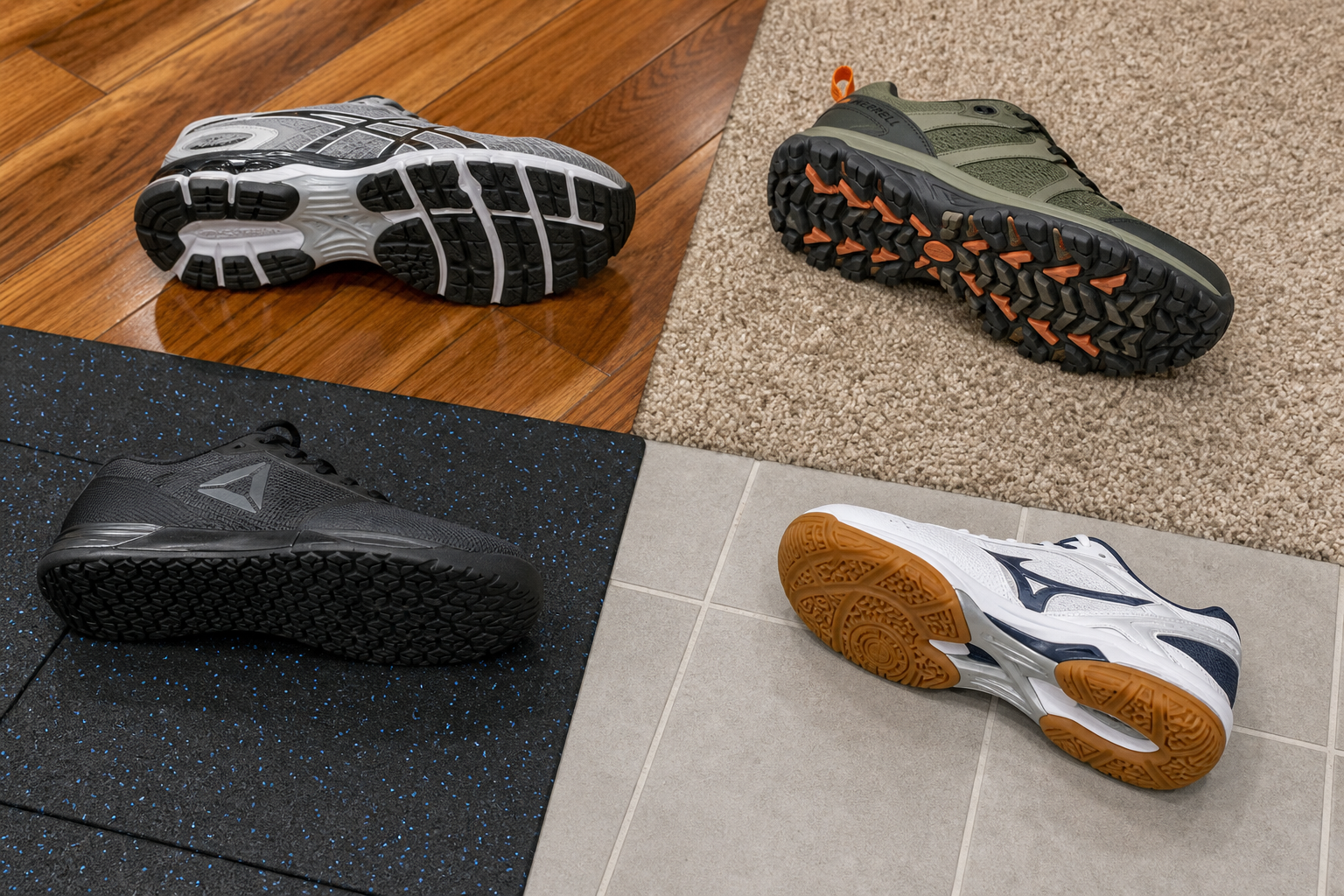
Hardwood and laminate floors are unforgiving surfaces. They provide no cushioning and can be slippery when clean. Rubber-soled shoes or grip socks are essential. Bare feet have minimal grip unless the floor has texture or a slight matte finish.
Tile floors are often the most slippery surface in a home, especially porcelain tile. Even grip socks can slide on polished tile if there’s any moisture or residue. Shoes with rubber outsoles provide the most reliable traction.
Carpet with medium to high pile provides natural cushioning but can catch on shoes or sock grips, creating trip hazards. Lower-profile shoes work better on carpet than chunky athletic shoes. Bare feet work well on carpet for balance exercises since the carpet itself provides grip.
Concrete basement floors are hard and unforgiving. Use shoes with maximum cushioning if you exercise on concrete. The impact forces are greater than on any other surface. Grip isn’t usually an issue on concrete (it has natural texture), but joint protection is critical.
Exercise mats placed on hard floors create their own dynamic. The mat provides cushioning, but it can slide on the floor beneath it if you’re not careful. Make sure your mat has a non-slip backing or place it on a surface where it won’t shift. Your footwear then needs to grip the mat surface, which most rubber soles and grip socks handle well.
When Foot Conditions Change Your Needs
Plantar fasciitis requires shoes with structured arch support and cushioned heels. Grip socks and minimalist footwear make the condition worse by allowing the plantar fascia to overstretch during exercise.
Bunions need a wide toe box and soft upper materials that won’t press against the bunion. Narrow athletic shoes will cause pain during standing exercises. Look for shoes marketed as wide width or with stretch mesh uppers.
Hammertoes and claw toes benefit from a high toe box that doesn’t press down on the raised toes. Low-profile minimalist shoes and some slippers compress the toes uncomfortably.
Neuropathy in the feet (reduced sensation) means you won’t feel pain signals from poor footwear choices until damage is done. Use shoes with substantial cushioning and support even if you can’t feel whether they’re helping. Check your feet after exercise for any redness, blisters, or pressure points you didn’t notice during the workout.
Edema (swelling) in the feet and ankles fluctuates during the day. Choose footwear with adjustable closures (laces, straps, or elastic) rather than slip-ons that fit tightly when your feet swell.
Arthritis in the foot joints benefits from shoes with a rocker sole, which reduces the bending motion required to push off with your toes during walking. Standard flat soles force arthritic toe joints through their full range of motion with every step. For more guidance on exercising with arthritis, see our arthritis-friendly exercise guide.
Breaking In New Indoor Exercise Shoes
Don’t start a full workout in brand new shoes. Wear them around the house for a few days first to identify any pressure points or fit issues. New shoes can cause blisters in unexpected spots, especially if your feet have changed shape recently.
Check the fit at the end of the day when your feet are slightly swollen. Shoes that feel perfect in the morning may feel tight during an afternoon exercise session.
Walk in them on the floor surface where you’ll exercise. A shoe that grips well on hardwood might feel sticky and restrictive on carpet, or vice versa. If the shoe doesn’t feel stable on your actual exercise surface, return it before you’ve worn it too much to get a refund.
Pay attention to how your feet feel the day after your first few workouts in new shoes. Soreness in new places (arches, heels, outer edges of your feet) means the shoe is changing how your foot functions. That’s not always bad, but significant discomfort means the shoe isn’t right for you.
Storage and Maintenance
Keep your indoor exercise shoes in your workout area, not in a closet with outdoor shoes. The visual reminder helps you put them on before starting exercise instead of working out in whatever you’re already wearing.
Air them out between uses. Don’t store them in a gym bag or enclosed space where moisture builds up. Bacteria and odor develop in damp shoes.
Clean the soles periodically. Even indoor-only shoes pick up dust, pet hair, and floor residue that reduces grip. Wipe the outsole with a damp cloth every few weeks. For rubber soles, a bit of dish soap on a brush removes built-up grime.
Replace insoles before replacing shoes. The factory insole is often the first component to break down. Aftermarket insoles with better arch support and cushioning can extend the life of a shoe by months.
Frequently Asked Questions
Do I really need separate indoor exercise shoes?
If you exercise at home regularly (3+ days per week), dedicated indoor shoes are worth the investment. They provide consistent grip, support, and cushioning without the inconvenience of putting on outdoor shoes or the risk of exercising in socks. The clean sole also protects your exercise mat and floor from outdoor debris.
Beyond the practical benefits, having a dedicated pair creates a mental cue. Putting on your exercise shoes signals to your brain that it’s time to work out, which helps with consistency and motivation.
Can I exercise in compression socks?
Compression socks alone don’t provide grip on hard floors. Wear them under grip socks or under your indoor shoes. The compression supports circulation during exercise, and the outer layer provides the floor traction you need for safety.
Medical-grade compression (20-30 mmHg or higher) requires a doctor’s recommendation. Over-the-counter mild compression (8-15 mmHg) is safe for most seniors during exercise but won’t substitute for proper footwear grip and support. For more details, check our guide to