You’ve probably heard that stretching is good for you, but the real question is which kind and when. Static stretching (holding a position) and dynamic stretching (moving through a range of motion) aren’t interchangeable, and using the wrong one at the wrong time can leave you stiffer, less stable, or even mildly sore for no good reason. Here’s how to know which one your body actually needs and when.
The Real Difference Between Static and Dynamic Stretching
Static stretching means moving into a position and holding it, like reaching toward your toes and staying there for 20 to 30 seconds. Dynamic stretching means moving continuously through a comfortable range, like swinging your arms in circles or marching in place with high knees.
Both improve flexibility over time, but they affect your muscles differently in the short term. Static stretching relaxes and lengthens muscle tissue, which is useful when you want to cool down or loosen a specific tight spot. Dynamic stretching raises your heart rate slightly, warms up the muscles, and primes your joints for movement, which makes it better suited for the start of activity.
When Dynamic Stretching Makes Sense

Dynamic stretching works best before activity, whether that’s a walk, a strength session, or a balance routine. It gets blood flowing to the muscles you’re about to use and wakes up your nervous system without draining your strength the way a long static hold can.
Good examples include arm circles, gentle torso twists, leg swings while holding onto a counter, and marching in place. Spend three to five minutes on these before you start your main activity. If you’re heading out for a walk, this is a smarter warm-up than stretching cold on the sidewalk.
Dynamic movement is also a good fit if you’re doing strength work. Pairing it with a sensible warm-up matters more as you get older, and it ties into how long a senior strength workout should last in the first place, since a rushed warm-up often leads to a rushed, less effective session.
When Static Stretching Makes Sense
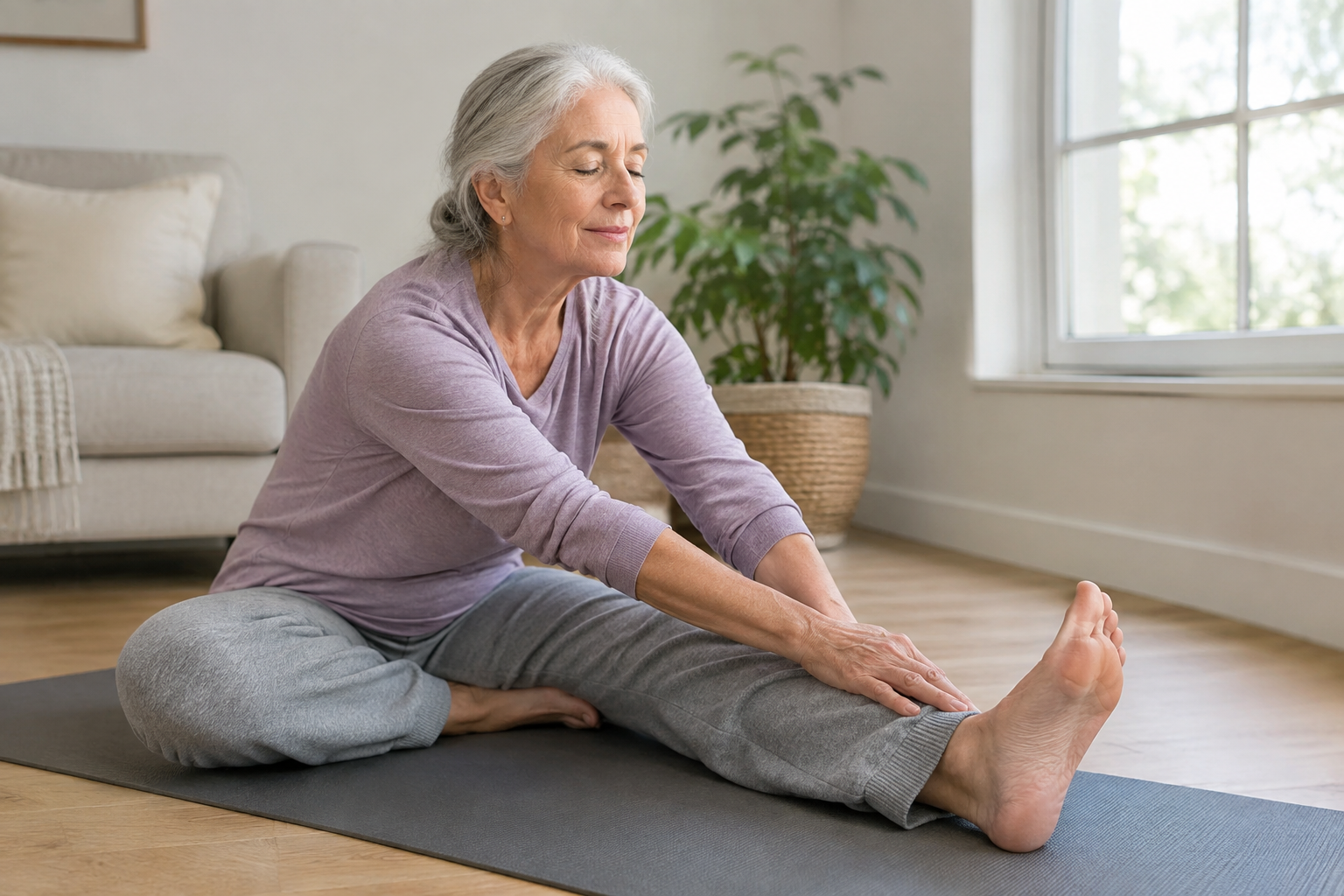
Static stretching shines after activity, when your muscles are already warm and more pliable. Holding a calf stretch, hamstring stretch, or shoulder stretch for 20 to 30 seconds at this point can genuinely improve your flexibility over weeks and months.
It’s also the better choice on rest days or in the evening, when you’re not about to jump into anything physical and you just want to release tension from sitting or standing most of the day. A few slow, held stretches before bed can ease stiffness that builds up from a sedentary afternoon.
If you walk regularly, a short static routine afterward is one of the most useful habits you can build. This post-walk stretching routine is a good example of static stretching used exactly where it belongs, at the end of your session rather than the beginning.
Comfortable Range of Motion and Steady Breathing
Whichever type you’re doing, the target is a gentle pull, not pain. You should feel tension in the muscle, but if you feel sharp, pinching, or shooting sensations, you’ve gone too far. Back off until it feels manageable again.
Breathing matters more than most people realize. Holding your breath tightens your muscles and works against the stretch, while slow, steady breathing helps your body relax into the position. Inhale before you move into a stretch, then exhale as you settle into it, and keep breathing normally while you hold.
This applies just as much to dynamic movements. Rushing through arm circles or leg swings while holding your breath defeats the purpose. Slow the movement down until your breathing stays even throughout.
How Often and How Long Should You Stretch
Frequency and duration aren’t one-size-fits-all, and they shouldn’t be. A few general guidelines work for most older adults, but you can adjust based on how your body responds.
- Dynamic stretching: before any activity, 3 to 5 minutes, most days you’re active.
- Static stretching: after activity or on its own, holding each stretch 20 to 30 seconds, repeated 2 to 3 times per muscle group.
- Frequency: daily static stretching is fine and often helpful, especially for tight areas like calves, hips, and shoulders.
- Duration on rest days: you can spend longer on static stretching since you’re not limiting yourself to preserve energy for a workout.
If you’re also doing strength training, think about how stretching fits around your recovery schedule. This overview of rest days between strength workouts is a useful companion, since light stretching is one of the few things you can do on a rest day without interfering with muscle recovery.
Some people wonder whether stretching alone is even the priority. If you’re trying to figure out where flexibility work fits against building strength, this comparison of stretching versus strength training lays out where each one actually helps.
Skip the Bouncing and Aggressive End-Range Stretching
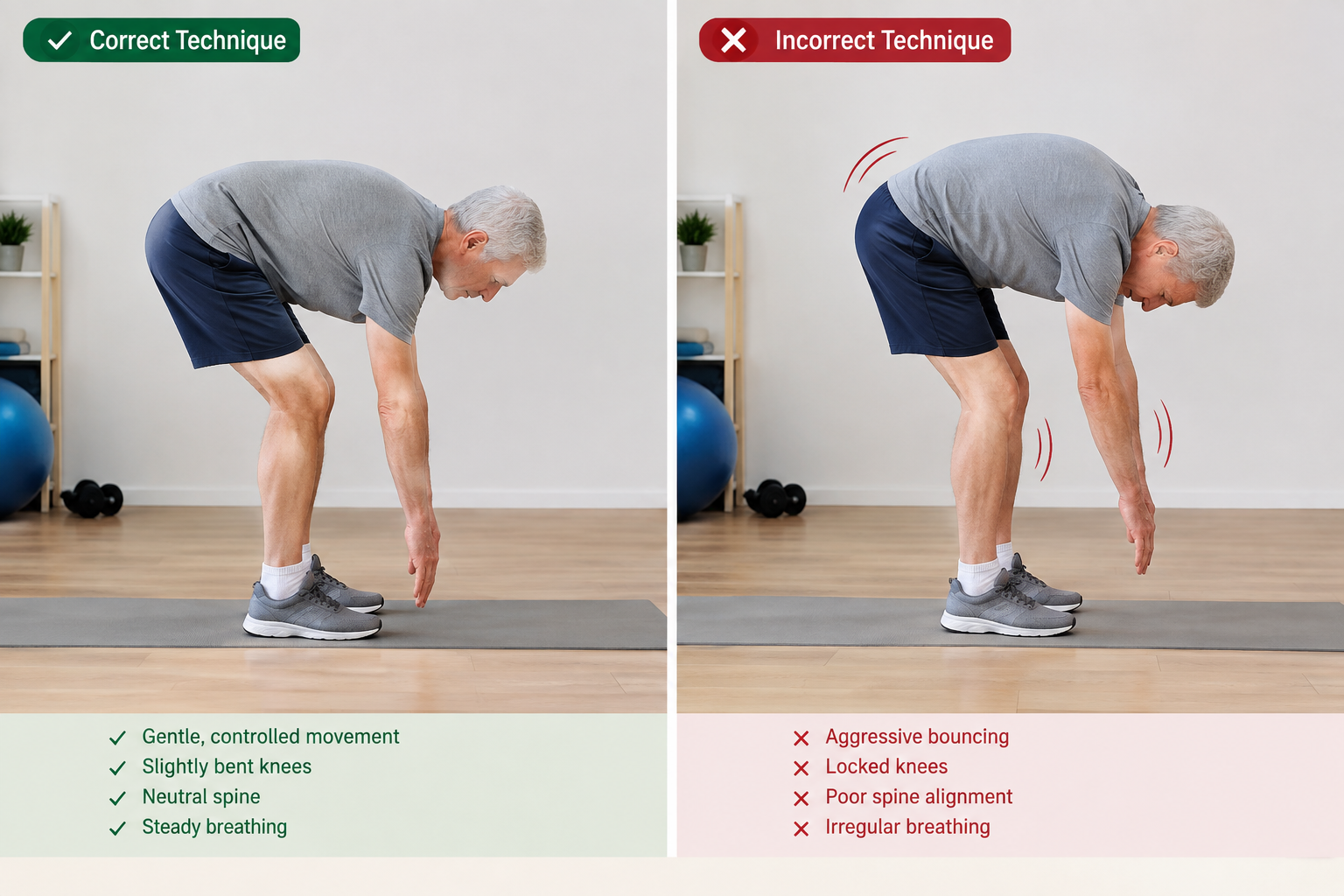
Bouncing into a stretch, sometimes called ballistic stretching, puts sudden force on muscles and tendons that aren’t ready for it. It increases your risk of small tears and doesn’t actually improve flexibility any faster than a slow, controlled stretch does.
The same goes for pushing into the very end of your range of motion and forcing it further. Aggressive end-range stretching doesn’t build usable flexibility, it just stresses joints and connective tissue that may already be more fragile with age. Move slowly into a stretch, stop at mild tension, and hold steady instead of forcing depth.
Having the right surface and support helps you stretch with better control. A cushioned, non-slip mat and a strap or block can make it much easier to hold a position comfortably instead of straining to reach it, and this guide to yoga mats and props for senior-friendly stretching covers what’s actually worth buying.
When Stretching Isn’t the Answer
Flexibility work is meant to maintain and gradually improve your range of motion, not to treat an injury or chronic pain. If a joint or muscle has been hurting for more than a week or two, or the pain is sharp rather than a dull stretching sensation, stretching around it isn’t going to fix the underlying issue.
Persistent knee pain, for example, usually needs targeted strengthening rather than more flexibility work, and this guide on exercises for knee pain when standing explains why. The same logic applies to ongoing back pain, where strengthening exercises for back pain relief often do more than stretching alone.
Stretching is a maintenance tool. If something hurts consistently, talk to a physical therapist or doctor rather than trying to stretch your way out of it.
Frequently Asked Questions
Should seniors stretch every day?
Yes, in most cases daily stretching is safe and beneficial, especially gentle static stretching for tight areas like hips, calves, and shoulders. Dynamic stretching before activity should happen on the days you’re actually active. Neither type needs to be intense to be effective.
Is it bad to stretch cold muscles?
Static stretching on completely cold muscles isn’t dangerous, but it’s less effective and can feel more uncomfortable. If you want to stretch first thing in the morning or before any warm-up, keep the holds gentle and brief, or do a few minutes of light dynamic movement first to warm up.
Can stretching improve balance?
Flexibility in the ankles, hips, and calves supports better balance because tight muscles restrict the small adjustments your body makes to stay upright. Stretching works best alongside dedicated balance work, and pairing it with drills like heel-to-toe walking addresses both flexibility and stability together.
How long until I notice more flexibility?
Most people notice a difference within two to four weeks of consistent stretching, meaning several sessions per week. Flexibility gains are gradual, and holding a stretch longer or harder in a single session won’t speed up the timeline. Consistency matters far more than intensity.