Getting down on a hard floor and back up again isn’t as easy as it used to be. If you’ve been putting off yoga or stretching because your knees ache, your wrists protest, or you just don’t feel stable enough on a standard mat, the right equipment genuinely changes what’s possible. A few thoughtful gear choices can make the difference between a practice that feels good and one that just doesn’t happen.
This guide covers the mats, blocks, straps, and bolsters that make floor work safer and more comfortable for seniors. Whether you’re recovering from joint surgery, managing arthritis, or simply want more cushioning underfoot, these are the tools worth investing in.
Why Standard Yoga Mats Fall Short for Seniors
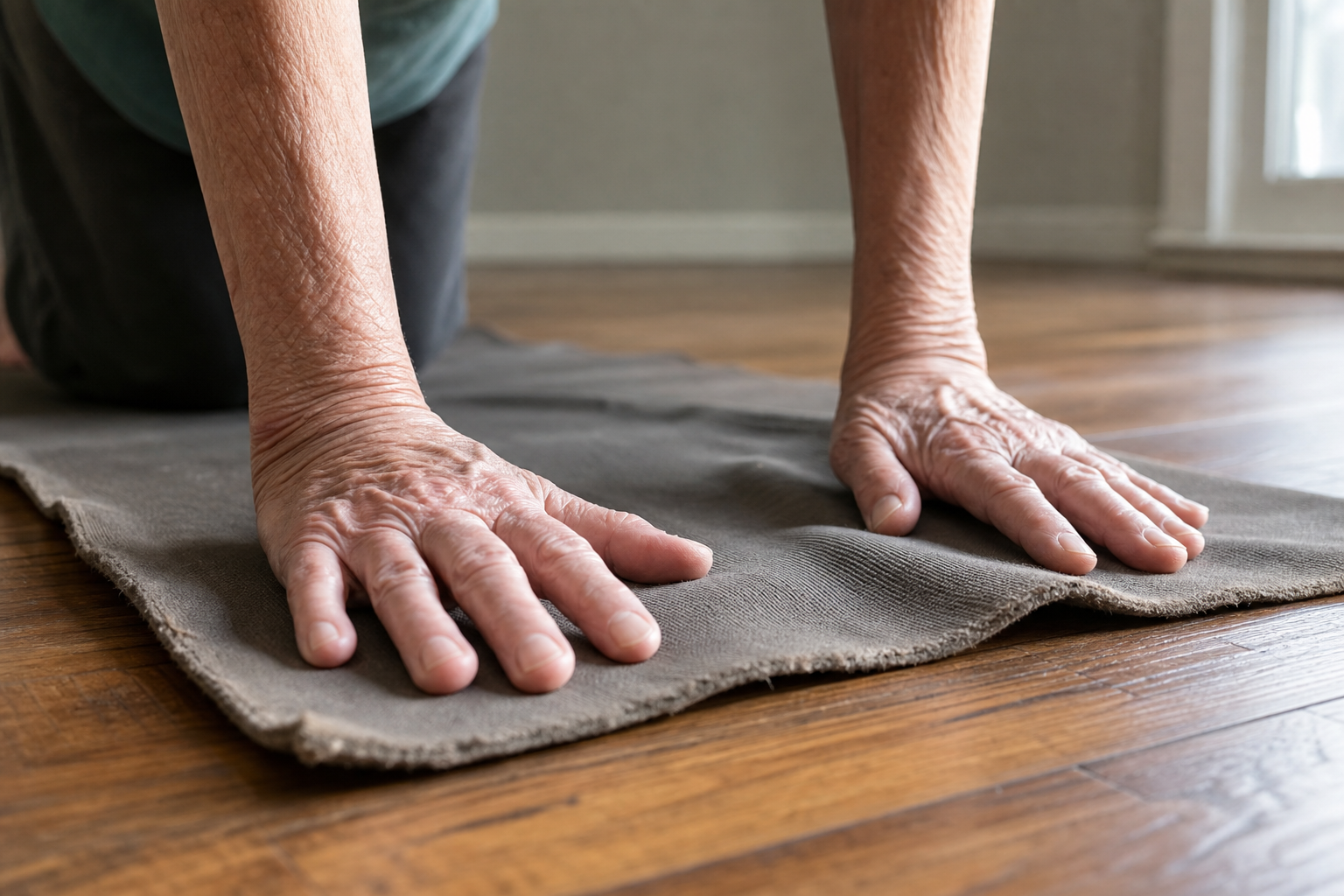
Most yoga mats sold in big-box stores are about 3mm to 4mm thick. That’s fine for a 25-year-old doing a vinyasa flow, but for someone with sensitive knees, bony hips, or reduced balance, it’s not enough padding. You end up shifting your weight to avoid discomfort, which throws off your alignment and increases fall risk.
Grip also matters more than most people realize. Standard PVC mats can get slippery when dry, and some budget mats shift on hardwood floors. If you’re already managing balance challenges, a mat that slides is a real safety hazard.
The other issue is getting down to and up from the floor. Props like blocks and bolsters essentially bring the floor up to you, which reduces the range of motion required and protects joints that don’t have their full flexibility anymore.
The Best Yoga Mats for Seniors: What to Look For
Thickness
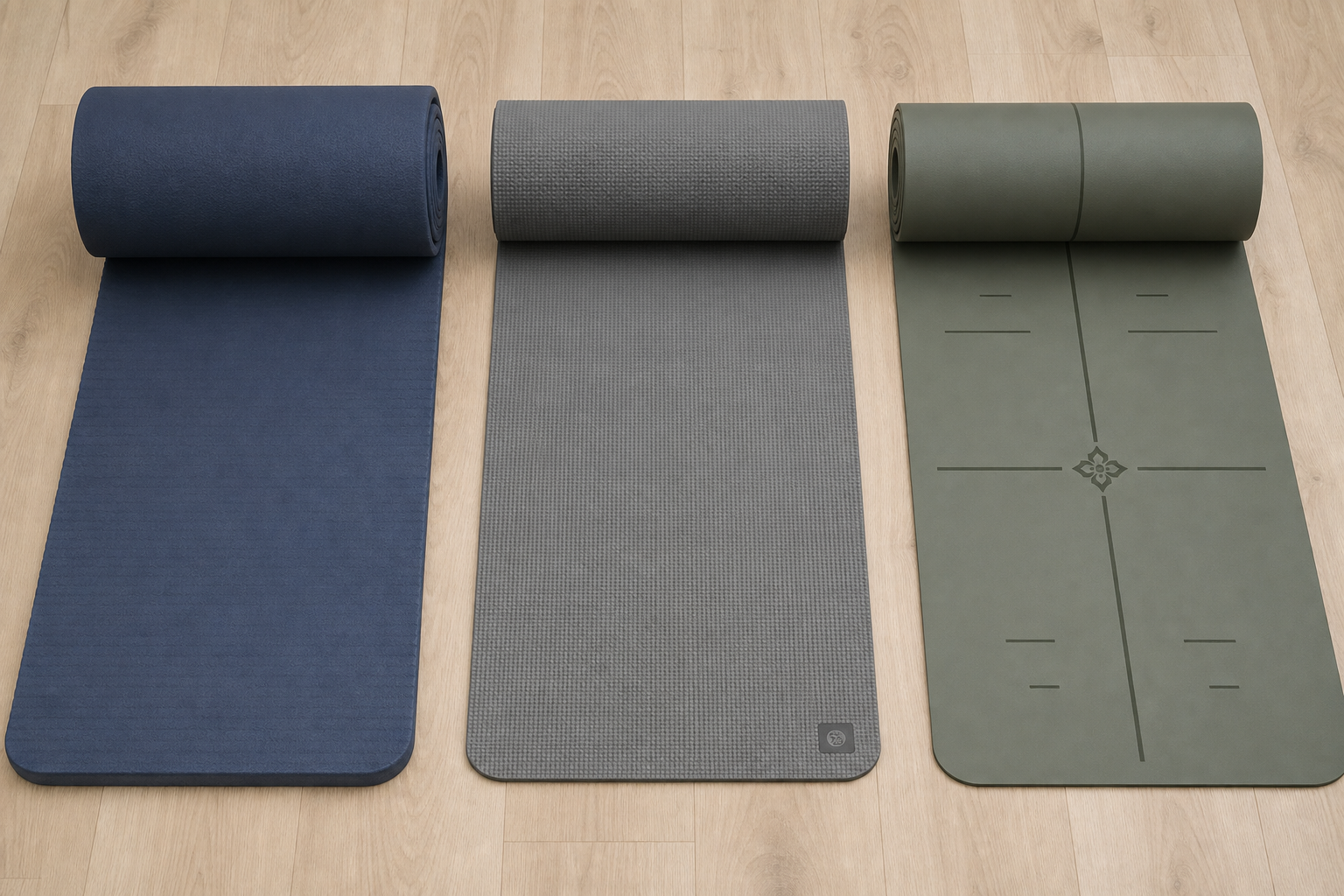
For seniors, 6mm is the practical minimum, and many people do better with 8mm to 10mm. Extra-thick mats absorb pressure on knees, wrists, and hips during seated and kneeling poses. The trade-off is that very thick mats (over 10mm) can feel slightly unstable during standing poses, so balance that consideration based on your practice.
If your main concern is floor work, seated stretching, or gentle supine exercises, go thicker without hesitation. If you’re doing standing balance work, a 6mm or 8mm mat often works better.
Non-Slip Surface
Look for mats made with natural rubber or TPE (thermoplastic elastomer) bases. These materials grip most floor surfaces reliably. Natural rubber offers excellent traction and is a good choice if you practice on hardwood or tile. TPE mats are lighter and often more affordable, which makes them a solid everyday option.
Avoid cheap PVC mats with smooth surfaces. They wear out quickly and become dangerously slick over time.

Extra Thick Non-Slip Yoga Mat for Seniors
An 8mm or thicker mat with a textured non-slip surface gives your knees and hips the cushioning they need for floor work without sacrificing stability.
If you’re building out a home stretching space on a budget, pairing a quality mat with a few key props covers most of what you need. Our budget-friendly home gym setup guide covers other affordable equipment worth adding to your space.
Essential Yoga Props That Make Stretching More Accessible
Yoga Blocks
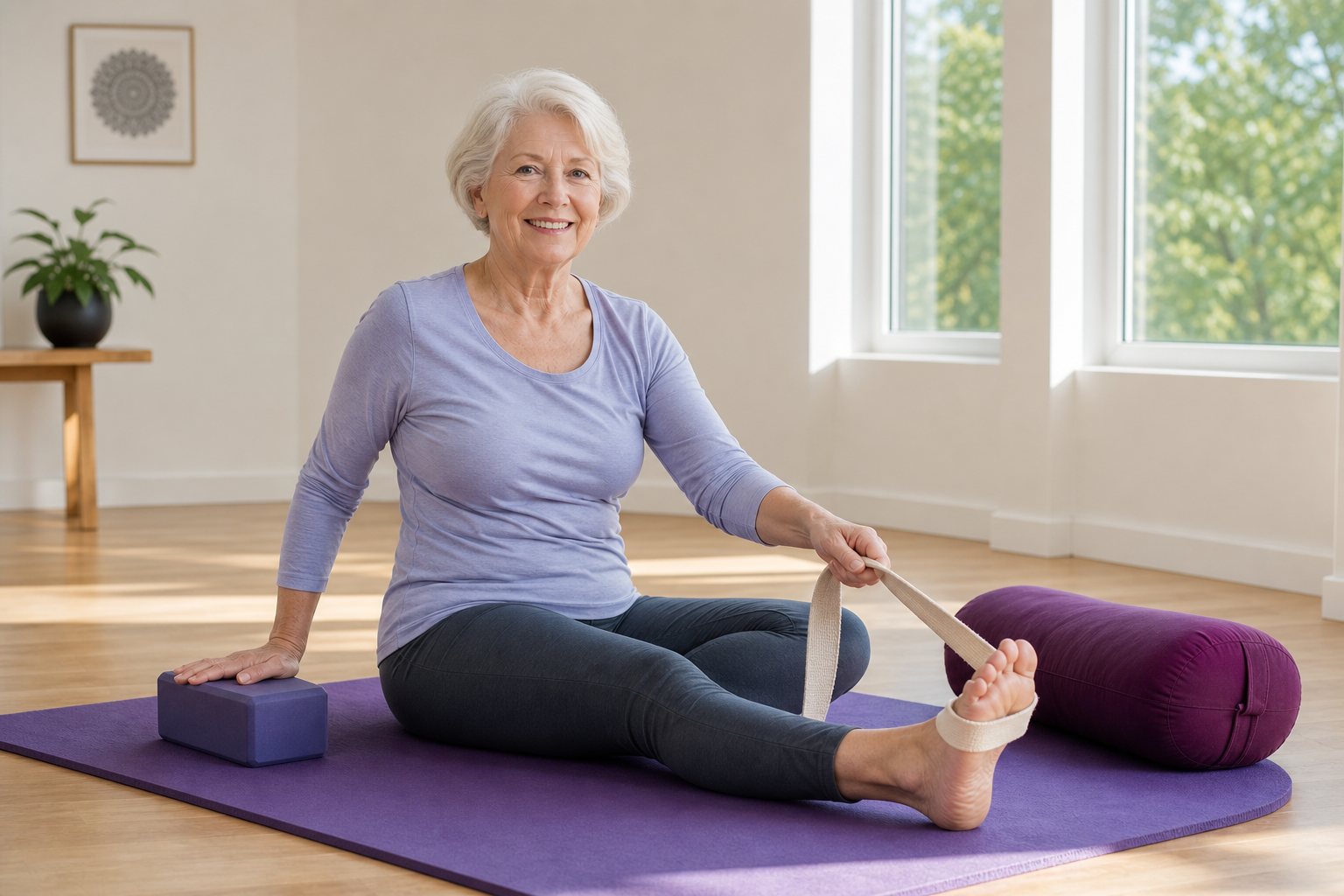
Yoga blocks are arguably the most useful prop in a senior-friendly practice. They bring the floor closer to you, which means you don’t have to force a deep stretch to reach it. Use them under your hands in standing forward folds, under your hips during seated poses, or to support your back in gentle chest openers.
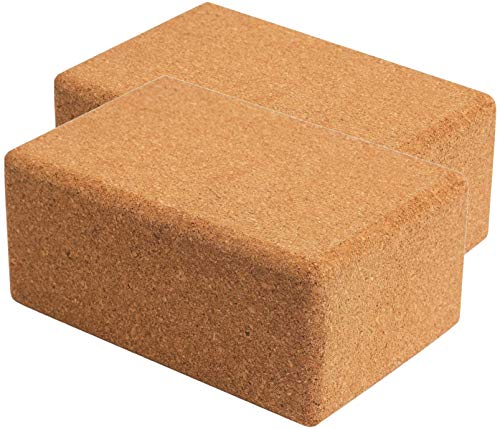
Foam blocks are lightweight and gentle on your hands. Cork blocks are firmer and more stable, which many seniors prefer for weight-bearing positions. Having two blocks is ideal since most poses that use one block benefit even more from having a second.
Yoga blocks are inexpensive and widely available. Start with a foam pair if you’re new to using them.
Cork Yoga Blocks for Seniors
Cork blocks offer firm, stable support for weight-bearing poses and won’t compress under pressure the way softer foam blocks sometimes do.
Yoga Straps
A yoga strap lets you hold a pose you couldn’t otherwise reach. If tight hamstrings or limited shoulder mobility prevent you from completing a stretch, a strap bridges the gap without straining anything. Common uses include seated forward folds, supine hamstring stretches, and shoulder openers.
Look for a strap that’s at least 6 feet long with a D-ring or cinch buckle. This gives you flexibility in how you loop it and allows you to adjust quickly. A yoga strap is one of the most underrated tools for seniors working on flexibility.
Limited flexibility is often part of managing conditions like arthritis or fibromyalgia. Props like straps let you keep moving safely within a comfortable range of motion.
Bolsters and Knee Pads
A yoga bolster is a firm, cylindrical or rectangular cushion that supports your body in restorative poses. Placing a bolster under your knees in savasana removes pressure from the lower back. Sitting on a bolster during cross-legged poses reduces hip strain considerably. They’re especially helpful if you’re working on posture correction or recovering from back issues.
A dedicated yoga knee pad is also worth considering if kneeling poses are part of your routine. These are thicker than your mat and sit on top of it, providing targeted cushioning exactly where you need it.

Yoga Bolster for Restorative Poses
A firm yoga bolster supports your spine, knees, and hips in restorative positions, making longer holds much more comfortable and accessible.
Supporting Your Joints Beyond the Mat
Props and mats help, but joint health also depends on what you’re doing off the mat. If you’re dealing with persistent stiffness or inflammation, your nutrition plays a real role. Supplements like omega-3 fatty acids and collagen have good evidence behind them for supporting joint comfort, and they’re worth reading up on if you haven’t already.
After a yoga or stretching session, your muscles need something to recover with. A light snack with protein and carbohydrates within an hour or two helps tissue repair. Our article on post-workout recovery meals for seniors has practical ideas that work well after yoga sessions too.
If you’re also using a foam roller for muscle recovery, it pairs well with a yoga routine. Use it after stretching to further release tension in tight areas like the calves, quads, and upper back.
FAQ
How thick should a yoga mat be for seniors with bad knees?
For most seniors with sensitive knees, an 8mm mat is a practical sweet spot. It provides meaningful cushioning without feeling too spongy during standing work. If you mainly do floor-based stretching and aren’t doing much standing on the mat, you can go up to 10mm without issue. A dedicated knee pad placed on top of your mat during kneeling poses adds another layer of protection.
Can yoga props actually help if I’m not very flexible?
Yes, and that’s exactly what they’re designed for. Blocks, straps, and bolsters allow you to get the benefit of a pose at your current range of motion rather than straining to reach a position your body isn’t ready for. Using props isn’t a shortcut or a workaround. It’s smart practice that reduces injury risk and makes the work more effective.
What’s the safest way to get down to and up from a yoga mat?
Use a chair or a wall for support when transitioning to and from the floor. Move to the side of your mat, place one hand on a sturdy chair, lower yourself to one knee first, then bring the other knee down before moving to a seated or lying position. Reverse the process to stand. Using a higher-density mat means there’s less distance between the floor and a stable kneeling surface, which makes both movements easier.
Final Thoughts
You don’t need a lot of gear to make yoga and stretching work well as a senior. An extra-thick non-slip mat, a pair of blocks, and a strap cover the vast majority of what most people need. A bolster adds comfort for restorative work and is worth picking up if you enjoy longer, slower sessions.
Start with the mat and one set of foam blocks if you’re unsure where to begin. Once you’ve used them for a few weeks, you’ll have a much clearer sense of what else would genuinely help your practice.
This article contains affiliate links. We may earn a small commission at no extra cost to you.