If you’re over 75 and walking every day, you’re already doing something genuinely good for your health. Walking supports heart health, keeps joints mobile, lifts your mood, and helps you maintain a healthy weight. But here’s the honest answer to the question in the title: for most people over 75, walking alone isn’t quite enough.
It’s not that walking is bad. It’s that it leaves some critical gaps, particularly around muscle strength and balance, that become more important with every passing decade. The good news is that filling those gaps doesn’t require a gym membership or an intense new routine. A few simple additions to your walking habit can make a significant difference in how you feel and function.
What Walking Does Well (and Where It Falls Short)
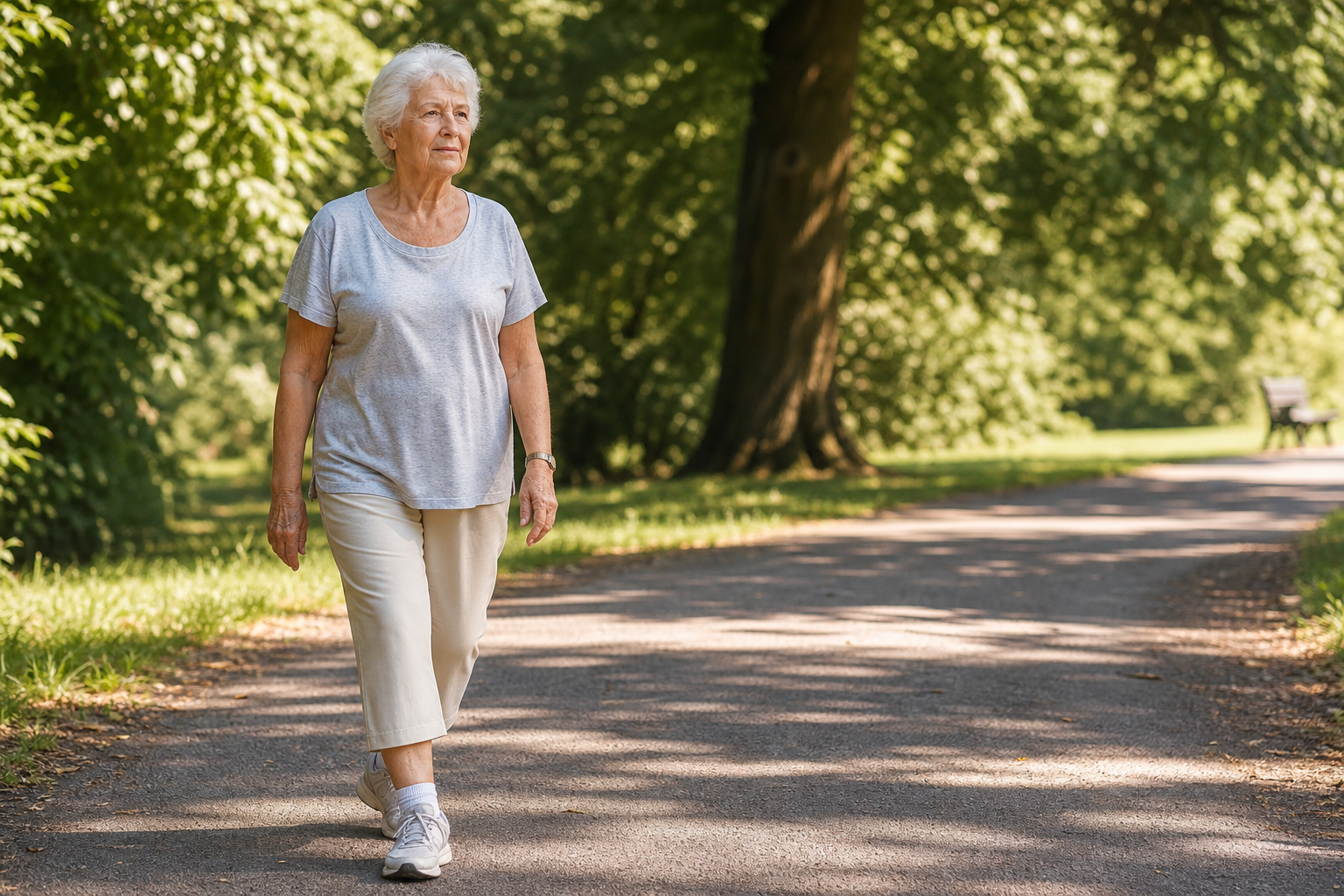
Walking is one of the best low-impact cardiovascular exercises available. It gets your heart rate up, improves circulation, and has been linked to lower rates of cognitive decline in older adults. For people managing conditions like COPD or chronic pain, it’s often the most accessible starting point.
The problem is that walking doesn’t do much for your muscles. After age 60, adults lose roughly 1 to 2 percent of muscle mass per year, a process called sarcopenia. Walking can slow that loss slightly, but it’s not enough to maintain the muscle strength in your upper body, hips, or core that you need for daily life.
Walking also doesn’t directly train your balance system. Balance depends on a combination of leg strength, ankle stability, and your body’s ability to make quick corrections. Falls are the leading cause of injury-related death in adults over 65, and balance deteriorates faster than most people realize without specific training.
What to Add: Three Simple Categories

1. Resistance Training (Twice a Week Is Enough)
You don’t need to lift heavy weights. Two sessions per week of light resistance work can preserve muscle mass, support bone density, and make everyday tasks easier. This matters especially if you’re concerned about osteoporosis, since strength training is one of the most effective non-medication strategies for maintaining bone strength.
A simple set of light dumbbells is all you need to get started at home. Exercises like seated bicep curls, overhead presses, and standing rows cover most of the major muscle groups without putting stress on your joints.

Light Dumbbells Set
A good set of light dumbbells covers most home resistance exercises and is ideal for older adults just adding strength work to their routine.
If dumbbells feel awkward at first, resistance bands are an excellent alternative. They’re gentle on the joints and work well for seated exercises. You can find a full breakdown of how to set up an effective home workout space in this budget-friendly home gym guide.
2. Balance Work (Just 10 Minutes a Day)
Balance training doesn’t need to be elaborate. Standing on one foot near a counter for 30-second intervals, heel-to-toe walking along a hallway, or simple side leg raises can all make a real difference over time. The key is consistency, not intensity.
If you’ve ever experienced dizziness or vertigo, it’s worth checking out balance exercises designed specifically for those conditions before starting. Some standard balance drills can actually worsen symptoms if vertigo is involved.
A balance board or wobble cushion adds an extra challenge once basic drills feel easy. They’re inexpensive and take up almost no space.

Balance Board for Seniors
A wobble board adds progressive balance challenge at home once basic single-leg drills become easy.
3. Flexibility and Mobility (After Every Walk)
Spending 5 to 10 minutes stretching after your walk keeps your hips, hamstrings, and ankles moving through their full range of motion. This directly supports both your balance and your walking mechanics. It also helps prevent the stiffness that tends to build up overnight.
Focus on hip flexors, calves, and your thoracic spine (mid-back). These are the areas that tighten most with age and affect your posture the most. If you’re dealing with posture issues like forward head position or slouching, there are targeted posture correction exercises worth adding to your routine.
Don’t Forget Recovery and Nutrition

Once you’re doing more than just walking, what you eat around your activity starts to matter more. Protein is especially important for preserving muscle mass in older adults. A good overview of how to fuel your workouts is covered in this guide to pre-workout nutrition for senior athletes, and pairing it with smart post-workout recovery meals helps your body actually benefit from the effort you’re putting in.
You don’t need to overhaul your diet. Small adjustments, like adding more protein to your meals and making sure you’re getting enough vitamin D for bone and muscle health, can support everything else you’re doing.
Frequently Asked Questions
How much walking is actually beneficial after age 75?
Most research supports 150 minutes of moderate activity per week, which works out to about 30 minutes five days a week. At a comfortable pace, most adults cover 1.5 to 2 miles in that time. If that feels like too much, starting with 15 to 20 minutes daily and building up gradually is completely valid. The consistency matters more than the exact number.
Is it safe to start strength training at 75 or older with no experience?
Yes, and studies consistently show that older adults respond well to resistance training even when starting late. The key is starting light, using controlled movements, and progressing slowly. If you have joint replacements or other conditions, it’s smart to clear the plan with your doctor first. Many people find that following a structured program like a 12-week progressive resistance plan gives them the structure to build confidence safely.
This article contains affiliate links. We may earn a small commission at no extra cost to you.