A rollator should help you stay active, not make you feel like you’re pushing a medical device through the grocery store. Unfortunately, most rollators look and feel like hospital equipment. They’re heavy, clunky, and come in exactly one color: depressing gray.
The market has evolved significantly, and several brands now make lightweight, modern-looking models that active seniors actually want to use. If you need walking support but haven’t given up on living a full, active life, here’s what to look for and which models deliver.
Key Features for Active Seniors
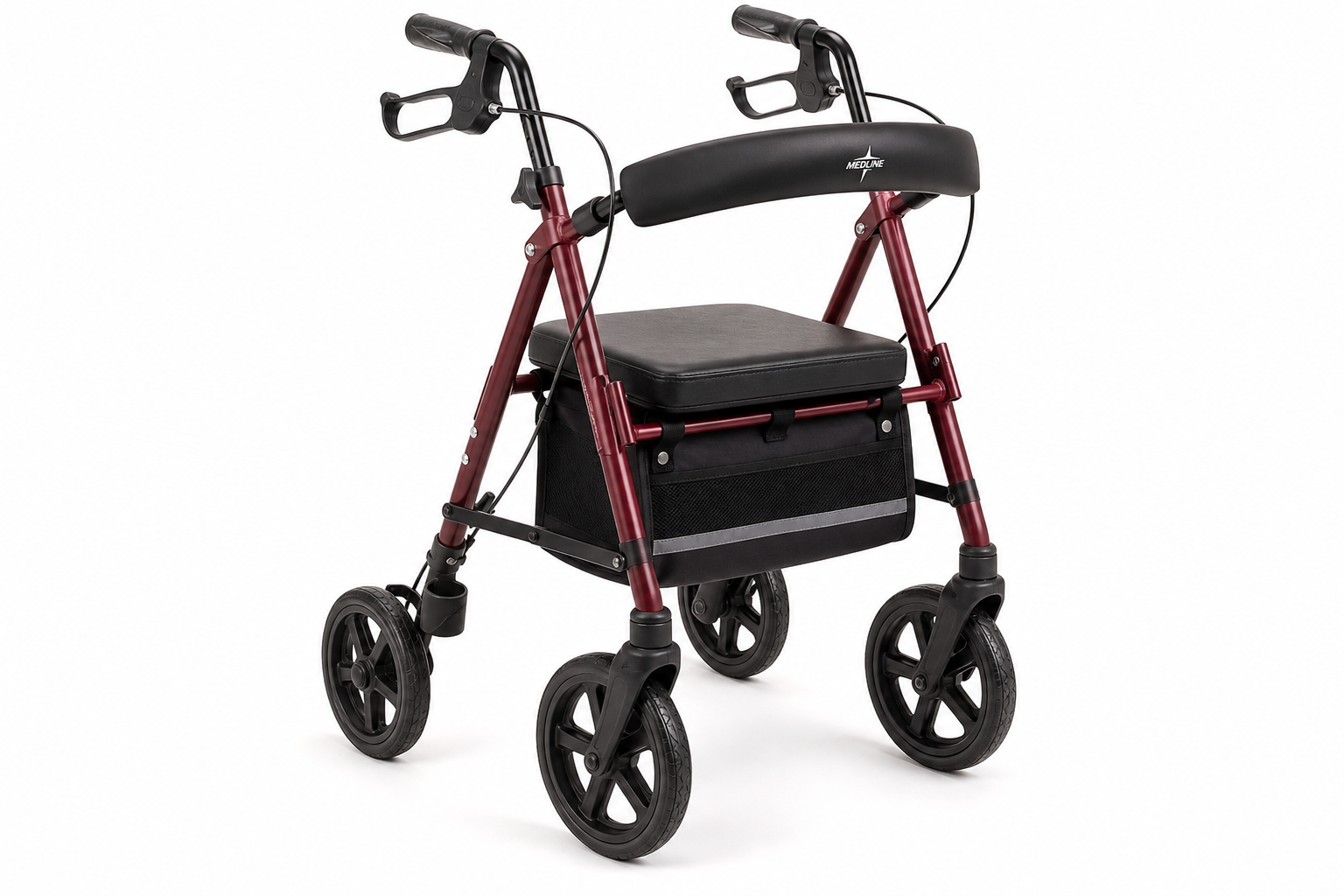
Weight
This is the most practical consideration. You’ll need to lift your rollator into a car trunk, up a curb, and possibly up stairs. Standard rollators weigh 18-22 pounds. Lightweight models drop to 12-15 pounds. Ultra-lightweight carbon fiber models can weigh as little as 10-11 pounds.
Every pound matters when you’re lifting it multiple times a day. The difference between 22 pounds and 13 pounds might not sound like much on paper, but think about lifting that weight from a bent position at trunk height, possibly while standing on one foot for balance.
If you have arthritis in your hands or shoulders, or if you’re recovering from joint replacement surgery, that nine-pound difference becomes significant. A heavier rollator also requires more effort to maneuver, which fatigues you faster on longer outings.
Test the weight yourself before buying. Lift it with one hand. Fold it and unfold it a few times. Can you manage it after a long walk when you’re already tired? If the answer is no, keep looking.
Folding Mechanism
There are two main fold styles: side-fold (the rollator folds flat like a book) and cross-fold (the handles fold down toward the wheels). Side-fold models are narrower when folded and fit better in car trunks and tight spaces. Cross-fold models are more common and usually less expensive.
Look for a one-hand fold mechanism if you have grip or dexterity issues. Some folding mechanisms require pulling a strap or squeezing a lever while lifting. Others have a simple foot pedal release.
The best designs let you fold the rollator without bending over or using both hands. This matters when you’re holding a purse, a shopping bag, or steadying yourself against a car.
Pay attention to how the rollator locks when folded. Cheap models pop open unexpectedly. Quality rollators stay folded until you deliberately release them. This prevents the rollator from springing open and hitting you or someone else when you’re lifting it out of a trunk.
Seat Comfort
The seat on a rollator isn’t just for resting. It’s your bench at the park, your chair at outdoor events, and your rest stop on longer walks. A padded, contoured seat is significantly more comfortable than the thin nylon sling seats found on budget models.
Seat height also matters: 20-22 inches is standard, but taller seniors should look for models with 23-24 inch seat heights. Seat width varies from 12 to 16 inches. Wider seats are more comfortable for longer rest periods and accommodate larger body types.
Narrower seats make the rollator easier to maneuver through doorways and tight spaces. Most people find 14 inches a good middle ground.
The backrest isn’t optional. Even if you think you won’t use it, you will. A proper backrest lets you sit upright without leaning forward, which is important when you’re catching your breath or waiting for a ride.
Some backrests flip up to make folding easier. Others are fixed but padded. Either works as long as it provides actual support, not just a thin strap.
Wheel Size
Larger wheels (8-10 inches) roll more smoothly over uneven outdoor surfaces like cracked sidewalks, gravel paths, and grass. Smaller wheels (6-7 inches) are fine for indoor use and smooth surfaces but struggle outdoors.
Wheel material also matters. Hard plastic wheels are durable and low-maintenance, but they transmit every bump directly to your hands and arms. Pneumatic (air-filled) tires cushion the ride significantly but require occasional inflation and can go flat. Solid rubber tires offer a middle ground: better shock absorption than plastic, no maintenance like pneumatic.
Front-wheel swivel is standard on most rollators, which makes turning easier. Some models let you lock the front wheels to prevent swiveling on slopes or uneven ground. This feature is useful if you walk on hills or cambered sidewalks where the rollator tends to drift sideways.
Braking System
All rollators have loop brakes similar to bicycle brakes. You squeeze the handles to slow down or stop. Push the handles down to lock the brakes when you sit. The lock should engage firmly and hold on slopes.
Test this: set the brakes, sit down, and rock your weight. If the rollator creeps forward, the brakes aren’t strong enough.
Brake handle reach is adjustable on better models. If you have small hands or limited grip strength, you need handles that don’t require a wide spread or excessive force. Arthritis-friendly brake levers are wider and easier to squeeze. Some newer models have ergonomic handles that reduce wrist strain.
Storage
The under-seat storage bag is standard equipment, but size and accessibility vary. Some bags are removable with zippered closures. Others are fixed mesh pouches. A good storage bag should hold a water bottle, wallet, phone, keys, and a light jacket without dragging on the ground when full.
Additional features like cup holders, cane holders, or accessory hooks add convenience. Cup holders that actually hold a coffee cup securely are rarer than you’d think. Many tip over on the first bump. Look for deep, insulated holders with a secure base.
Top Rollators for Active Seniors
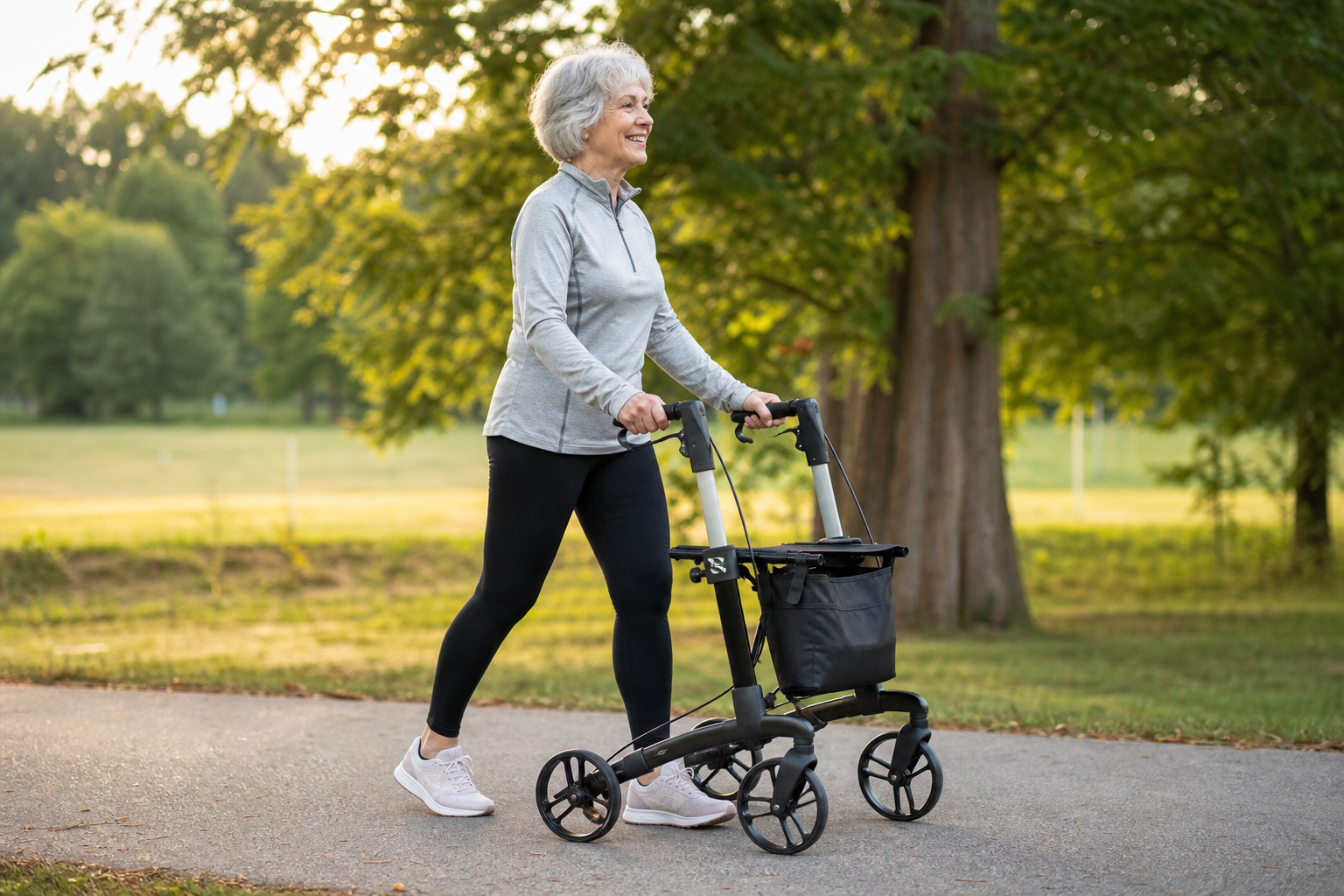
ByACRE Carbon Ultralight
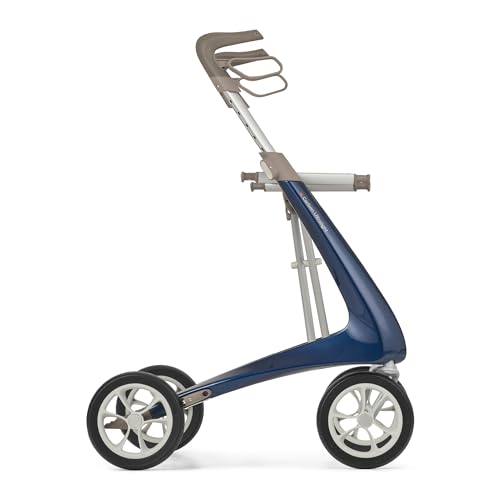
ByACRE Carbon Ultralight
Lightest option at 10.8 pounds with premium Scandinavian design
The ByACRE Carbon Ultralight weighs just 10.8 pounds and looks nothing like a traditional rollator. Its sleek Scandinavian design comes in multiple colors, and the carbon fiber frame is both strong and featherlight. The side-fold mechanism is one-handed and intuitive. The 8-inch wheels handle outdoor terrain confidently.
The Carbon Ultralight folds to 9 inches wide, which means it fits in spaces where other rollators won’t. The seat is firm but supportive, designed for short rests rather than prolonged sitting. The curved backrest provides lumbar support. Handle height adjusts from 31 to 42 inches, accommodating a wide range of heights.
This rollator comes with a removable storage pouch, an ergonomic wrist strap (helpful when navigating curbs), and reflective details for visibility. The brake cables are internal, which gives it a cleaner look and prevents snagging. Weight capacity is 265 pounds.
The main drawback is pricing. This is the most expensive rollator in this category. But if weight is your primary concern and budget isn’t, nothing else matches it.
Best for: Active seniors who travel frequently, anyone who wants the lightest possible rollator with a modern aesthetic. Premium pricing.
Drive Medical Nitro Sprint

The Drive Medical Nitro Sprint weighs about 15 pounds and offers excellent value. It features 10-inch front wheels for outdoor stability, a padded seat with backrest, and a removable under-seat storage bag. The cross-fold design is simple, and the aluminum frame is durable without being heavy. Available in red, black, and champagne.
The 10-inch front wheels are the standout feature. They roll over cracks, thresholds, and uneven pavement with minimal jarring. The seat height is 21 inches with a weight capacity of 300 pounds. Handle height adjusts from 32.5 to 37 inches, which works well for average heights but may be too short for taller users.
The fold mechanism is straightforward: lift the seat and the frame collapses. It’s not quite as compact when folded as side-fold models, but it fits in most car trunks without issue. The storage bag has a zipper closure and is large enough for daily errands.
One practical detail: the brake handles have ergonomic grips that reduce hand fatigue. The loop brakes are easy to squeeze and lock firmly. The Nitro Sprint also includes a cane holder clip, which is useful if you use both aids.
Best for: Outdoor walkers who want large wheels and good features at a mid-range price point.
Hugo Fit Side-Fold Rollator
The Hugo Fit folds flat to just 7 inches wide, making it one of the most compact when stored. It weighs about 15 pounds and fits easily behind a car seat or in an overhead bin on some aircraft. The 8-inch wheels are good for mixed indoor/outdoor use, and the padded seat is comfortable for short rest breaks.
The side-fold design is exceptionally clean. Pull the seat strap and the entire rollator collapses flat in one motion. When folded, it stands upright on its own, which is helpful when you’re maneuvering it into tight spaces. The folded width is narrow enough to fit in a closet alongside coats or behind a door.
Seat height is 21 inches with a 250-pound weight capacity. Handle height adjusts from 33 to 37 inches. The seat is lightly padded but firm, adequate for 10-15 minute rests. The storage bag is smaller than the Nitro Sprint’s but still holds essentials.
The Hugo Fit comes in multiple colors, including navy, burgundy, and black. The frame has a matte finish that resists showing scratches. One nice touch: the brake cables are color-matched to the frame, which gives it a more polished look than most rollators in this category.
Best for: Seniors who need a rollator that stores in tight spaces, frequent travelers, car passengers who need trunk space.
Medline Premium Empower Rollator
The Medline Premium Empower is a well-rounded mid-range option with 8-inch wheels, microban-treated handles (antimicrobial), and a comfortable mesh seat with a backrest. It weighs about 17 pounds and has a 300-pound weight capacity. The handlebar height adjusts from 32 to 37 inches to accommodate a range of heights.
The Empower’s mesh seat is more breathable than padded vinyl, which matters if you live in a warm climate or tend to rest frequently. The backrest is higher than most, providing better upper-back support. The seat flips up for easier folding.
This model uses a cross-fold mechanism with a foot pedal release. Step on the pedal, lift slightly, and the rollator folds. It’s not quite as compact as the Hugo Fit when folded, but it’s manageable. The storage bag is removable and washable, which is a practical detail often overlooked.
The microban handles resist bacteria and odor, which is useful if you have sweaty hands or use the rollator in humid conditions. The 8-inch wheels are solid rubber, offering decent cushioning without the maintenance of pneumatic tires. This rollator handles indoor spaces well and performs adequately on sidewalks and packed paths.
Best for: Average-height seniors looking for a reliable, comfortable everyday rollator.
Volaris All-Terrain Rollator
The Volaris All-Terrain is built specifically for outdoor use. It weighs 19 pounds, which is heavier than the other models here, but the trade-off is 12-inch pneumatic tires that handle grass, gravel, and dirt paths comfortably. The seat height is 23 inches, which works well for taller users.
The wider wheelbase (24 inches vs. 22 inches on standard rollators) provides more stability on uneven ground but makes it harder to navigate narrow doorways. If you do most of your walking outdoors and only occasionally bring the rollator inside, this trade-off makes sense. If you need an indoor/outdoor hybrid, one of the lighter models with 8-10 inch wheels is more practical.
The Volaris includes a padded backrest, large storage bag, and a cupholder that actually holds a water bottle securely. The brake system is designed for slopes and includes a parking brake that locks all four wheels, not just the rear. Handle height adjusts from 33 to 39 inches. Weight capacity is 300 pounds.
Best for: Seniors who walk primarily outdoors on varied terrain, taller users who need a higher seat and handle height.
Overcoming the Stigma

Many seniors who would benefit from a rollator refuse to use one because of how it makes them look. This is a real barrier that costs people their independence, their activity levels, and sometimes their safety. Choosing a modern-looking rollator in an appealing color, one that looks more like outdoor gear than medical equipment, makes a measurable difference in willingness to use it.
The ByACRE models and newer Drive Medical designs specifically target this concern. Reframing helps too. A rollator isn’t a sign that you can’t walk. It’s a tool that lets you walk further, longer, and safer than you could without it.
The analogy that often helps: you don’t refuse to wear glasses because they make you look old. You wear them because they let you see. A rollator lets you walk. It expands what you can do, not limits it.
Consider what you’re actually giving up by not using one. Are you skipping social events because walking from the parking lot is too tiring? Are you avoiding the farmers market or outdoor concerts? Are you staying home more than you want to? A rollator gives those activities back.
When to Start Using a Rollator
Talk to your doctor if you’re experiencing any of the following: frequent fatigue during walks, difficulty maintaining balance on uneven surfaces, fear of falling that limits where you go, or recovery from hip,