You’ve probably noticed it without realizing what to call it. Climbing stairs feels harder than it used to. Carrying groceries takes more effort. Getting up from a low chair requires a moment of extra focus. This isn’t just “getting older.” There’s a specific biological process at work, and it has a name: sarcopenia.
Sarcopenia is the gradual loss of skeletal muscle mass and strength that comes with aging. It’s common, it’s measurable, and left unchecked, it has real consequences for your independence, your balance, and your overall health. The encouraging part is that it’s not inevitable. Two well-studied strategies can meaningfully slow it down, and you can start both of them this week.
What Exactly Is Sarcopenia?
The word comes from the Greek roots for “flesh” and “poverty,” which gives you a pretty clear picture. Sarcopenia refers specifically to the age-related decline in skeletal muscle mass, strength, and physical function. It’s not the same as muscle loss from inactivity alone, though being sedentary certainly makes it worse.
Most people start losing muscle mass in their 30s at a slow rate of about 1 percent per year. After 60, that rate picks up considerably. By the time someone reaches their 80s, they may have lost 30 to 50 percent of their peak muscle mass. That’s not a minor cosmetic change. That’s a fundamental shift in how your body moves, balances, and handles everyday demands.
Beyond the obvious loss of strength, sarcopenia contributes to:
- Increased fall risk and fracture risk
- Slower metabolism and easier weight gain
- Reduced insulin sensitivity and higher type 2 diabetes risk
- Greater fatigue during daily activities
- Loss of functional independence over time
Sarcopenia is now recognized as a clinical condition by the World Health Organization, which added it to the International Classification of Diseases in 2016. That recognition matters because it means healthcare providers can screen for it, diagnose it, and treat it as a real medical issue rather than just an accepted side effect of aging.
Why Muscle Loss Accelerates After 60
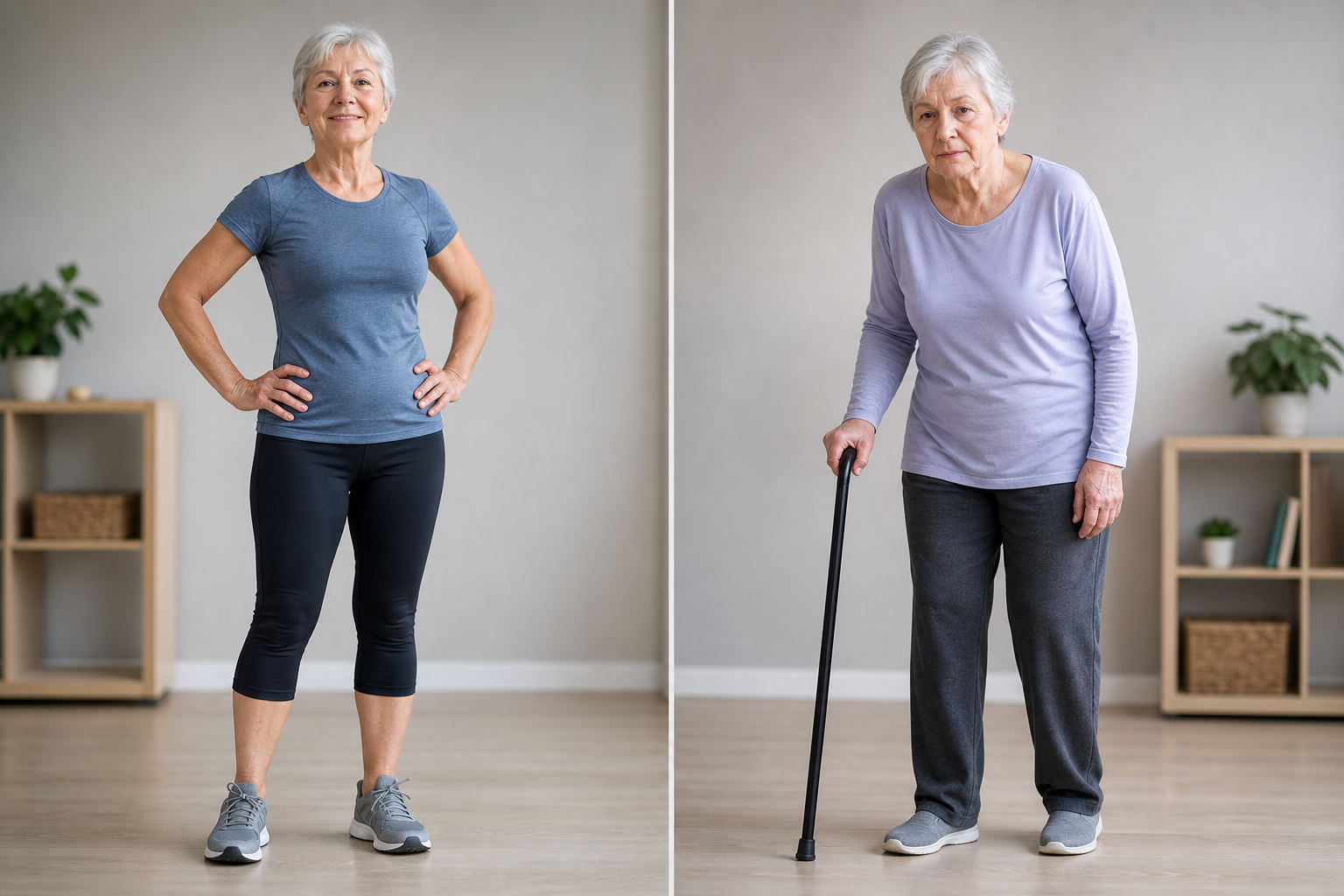
Several biological shifts happen around and after 60 that stack on top of each other and make muscle maintenance genuinely harder.
Hormonal Changes
Testosterone and estrogen both play roles in maintaining muscle tissue. Men see a gradual decline in testosterone starting around age 30, but the drop becomes more pronounced after 60. Women experience a sharp drop in estrogen during and after menopause, which also affects muscle protein synthesis and recovery. If you want to understand how this plays out specifically for men, the article on testosterone and exercise for men over 60 goes into solid detail on what’s happening hormonally and what exercise can do about it. For women, menopause strength training covers the same territory from that angle.
Anabolic Resistance
Younger muscles respond quickly to protein intake and exercise stimulus. Older muscles become resistant to those same signals. This is called anabolic resistance, and it means your muscles need a stronger stimulus to trigger the same growth response. You need more protein per meal, not just more overall, and you need resistance training that’s genuinely challenging, not just movement for movement’s sake.
Neuromuscular Changes
Muscle fibers don’t just shrink with age. Some are actually lost entirely, particularly the fast-twitch type II fibers responsible for power and quick movements. Nerve connections to muscle fibers also degrade over time. This is part of why balance and reaction time decline alongside raw strength.
Chronic Low-Grade Inflammation
Aging is associated with a persistent state of low-grade systemic inflammation sometimes called “inflammaging.” This chronic inflammation interferes with muscle repair and accelerates breakdown. Diet patterns, sleep quality, and physical activity all influence this inflammatory background.
Defense 1: Resistance Training

If there’s one intervention with the strongest, most consistent evidence behind it for sarcopenia, it’s resistance training. Not walking, not yoga, not stretching. Lifting weights or working against meaningful resistance in a way that challenges your muscles close to their limits.
The research is clear: progressive resistance training increases muscle mass and strength in older adults, including those in their 70s, 80s, and even 90s. A landmark study published in the Journal of the American Medical Association showed significant strength gains in nursing home residents with an average age of 87 after just eight weeks of resistance training. Age is not a barrier.
What “Progressive” Actually Means
Progressive resistance training means you increase the challenge over time. You don’t just do the same 10 reps with the same light weights for months. You gradually add weight, add reps, or reduce rest time as you get stronger. Your muscles only continue adapting when you continue challenging them.
A structured program matters here. A 12-week progressive resistance training program gives you a clear roadmap so you’re not guessing whether you’re doing enough or too much.
Which Exercises to Prioritize
Focus on compound movements that work multiple muscle groups at once. Squats, deadlifts (with appropriate modifications), rows, presses, and step-ups give you more return per exercise than isolation movements like bicep curls alone.
Don’t neglect grip strength either. Handgrip strength is actually one of the best predictors of overall muscle health and longevity in older adults, and it’s often one of the first things to decline. Grip strength exercises are worth adding to your routine specifically.
How Often and How Hard
The American College of Sports Medicine recommends resistance training at least two days per week for older adults, though three days produces better results for sarcopenia prevention. Each session should include 2 to 4 sets per exercise, with a weight that makes the last 2 or 3 reps genuinely difficult. If you can breeeze through all your reps without effort, the weight is too light to stimulate muscle adaptation.
You don’t need a gym. A budget-friendly home gym setup with a set of adjustable dumbbells and resistance bands covers most of what you need.
Defense 2: Adequate Protein Intake

Resistance training provides the stimulus for muscle growth. Protein provides the raw material. Without enough dietary protein, your muscles can’t repair and rebuild after training, no matter how hard you work.
The current Recommended Dietary Allowance for protein is 0.8 grams per kilogram of body weight per day. Most researchers studying sarcopenia now consider that figure too low for older adults. A more protective target for people over 60 is 1.2 to 1.6 grams per kilogram per day, and some studies support going higher if you’re actively training.
For a 150-pound person (about 68 kg), that works out to roughly 82 to 109 grams of protein daily at the 1.2 to 1.6 range. That’s more than most older adults currently eat, especially if appetite has declined with age.
Protein Distribution Matters
It’s not just about total daily protein. Because of anabolic resistance, older muscles respond better when protein is spread across meals rather than concentrated in one sitting. Aim for at least 25 to 40 grams of protein per meal rather than eating very little at breakfast and lunch and trying to make up for it at dinner.
Leucine is the amino acid that most strongly triggers muscle protein synthesis. High-leucine protein sources include animal proteins like eggs, meat, fish, and dairy, as well as soy among plant sources. If you’re relying on plant proteins, you’ll need to be more intentional about combining sources to hit adequate leucine levels.
Protein Timing Around Exercise
Consuming protein within a few hours of resistance training appears to enhance muscle protein synthesis compared to training in a fasted state. You don’t need to gulp a shake the moment you put down the weights, but a protein-rich meal within two hours of training makes sense. The guide on post-workout recovery meals for seniors has specific meal ideas designed around this window. And if you train first thing in the morning, pre-workout nutrition for senior athletes is worth reading to understand how to fuel before you even start.
When Food Isn’t Enough
For older adults with smaller appetites, hitting daily protein targets from food alone can be genuinely difficult. Protein supplements, particularly whey protein, have good evidence behind them for supporting muscle maintenance. Whey is fast-digesting, high in leucine, and easy to add to smoothies, oatmeal, or yogurt. The protein powder guide for seniors over 70 breaks down the different types and what to look for without overselling any of them.
Supporting Factors Worth Taking Seriously
Resistance training and protein are the two pillars, but a few other factors genuinely influence how well those two strategies work.
Vitamin D
Vitamin D deficiency is extremely common in older adults, and low vitamin D is independently associated with reduced muscle strength and accelerated muscle loss. Receptors for vitamin D exist in muscle tissue, and the vitamin plays a direct role in muscle protein synthesis. Getting your levels checked and correcting a deficiency can meaningfully improve your response to both training and protein intake. The dedicated article on vitamin D for senior bone and muscle health covers dosing, testing, and what the evidence actually shows.
Sleep
Most muscle repair happens during sleep, particularly during deep sleep stages. Consistently poor sleep impairs muscle protein synthesis and raises cortisol levels, which promotes muscle breakdown. If you’re training hard and eating enough protein but sleeping poorly, you’re fighting uphill. Prioritizing sleep quality isn’t optional for muscle preservation.
Staying Ahead of Weight Loss
Unintentional weight loss in older adults often includes a significant muscle component. Even intentional weight loss for fat reduction carries the risk of losing muscle alongside fat. If you’re trying to manage your weight, it’s worth reading about safe weight loss for seniors that prioritizes muscle preservation rather than simply cutting calories.
How to Know If You’re Making Progress
You don’t need expensive body composition testing to track your progress. Pay attention to functional measures: how easily you rise from a chair without using your arms, how far you can walk before fatigue sets in, how heavy a weight you can now lift compared to when you started.
Grip strength testing with an inexpensive hand dynamometer is actually one of the most clinically relevant measures of overall muscle health. Some primary care physicians now include it in routine assessments for older adults. Ask yours about it at your next appointment.
Keep a simple training log. Write down what exercises you did, how much weight, and how many reps. Progress becomes visible over weeks and months when you have a record to look back at.
Frequently Asked Questions
Can you actually reverse sarcopenia, or only slow it down?
The honest answer is both, depending on where you’re starting. If you’ve already lost significant muscle mass, resistance training and adequate protein can help you regain some of it, especially in the first year of a consistent program. The older you are when you start, the more modest the recovery tends to be, but meaningful improvements in strength and function are consistently documented even in very old adults. The goal isn’t necessarily getting back to where you were at 40. It’s recovering enough function to maintain independence and quality of life.
Is it safe to lift heavy weights after 60?
Yes, with appropriate progressions and attention to form. The risk of injury from well-coached resistance training is low, and it’s substantially lower than the risk of falls and fractures that come with untreated sarcopenia. Start with lighter weights to learn proper form, progress gradually, and don’t ignore pain that’s sharp or joint-based rather than the normal muscle fatigue of a hard workout. If you have an existing condition like osteoporosis, work with a physical therapist or certified trainer familiar with older adult populations to build a safe program.
How much protein is too much for older adults?
For most healthy older adults, protein intakes up to 2.0 grams per kilogram of body weight per day appear safe. The concern about protein harming kidney function applies primarily to people with pre-existing kidney disease. If you have chronic kidney disease, talk to your doctor or a registered dietitian before significantly increasing protein intake. For everyone else, the evidence doesn’t support restricting protein out of concern for kidney health.
Do I need to take any supplements beyond protein?
The evidence is strongest for protein (particularly whey), creatine monohydrate, and vitamin D. Creatine at 3 to 5 grams per day has a meaningful body of research supporting muscle retention and strength in older adults, and it’s one of the most studied supplements in existence. Beyond those three, the evidence for other supplements marketed for muscle health is considerably weaker. Focus on getting food and those few evidence-backed supplements right before spending money on anything more exotic.
The Bottom Line on Sarcopenia
Muscle loss with age is real and it starts earlier than most people think. But it responds to treatment in a way that few age-related conditions do. Consistent resistance training and adequate protein intake aren’t optional extras for older adults who want to stay active and independent. They’re fundamental, and the research supporting them is about as solid as it gets in exercise and nutrition science.
You don’t need to become a competitive powerlifter. You need to challenge your muscles meaningfully, at least two to three times per week, and fuel them with enough protein to rebuild. Start where you are, progress steadily, and give it at least 12 weeks before judging the results. That’s enough time to see real changes in how you feel and function, and it’s more than enough to convince most people to keep going.