Standing desks have become popular for good reason. They help break up long hours of sitting and can reduce back pain. But simply standing in place all day isn’t the answer either. Your body needs movement, variety, and regular position changes to stay comfortable and healthy.
This guide focuses on practical exercises and movements you can do right at your desk, whether you’re standing or sitting. These aren’t complicated gym routines. They’re simple, effective movements that fit naturally into your workday and keep your body active throughout the day.
The Reality of Standing Desks for Seniors
Standing desks offer real benefits, but standing still for hours creates its own problems. Your feet can get tired, your lower back may ache, and your joints can feel stiff. The solution isn’t to stand all day or sit all day. It’s to alternate positions and add movement throughout.
Most experts recommend changing positions every 30 to 60 minutes. You might stand for 30 minutes, sit for 30 minutes, then stand again. This variation keeps your muscles engaged without overworking any single area.
A quality anti-fatigue standing desk mat makes a significant difference in comfort. These mats provide cushioning that reduces pressure on your feet and encourages subtle movements. Look for one with a textured surface that promotes shifting your weight.

Anti-Fatigue Standing Desk Mat
Essential for comfort during standing work sessions and encourages natural weight shifting.
Posture Checks You Can Do Every Hour
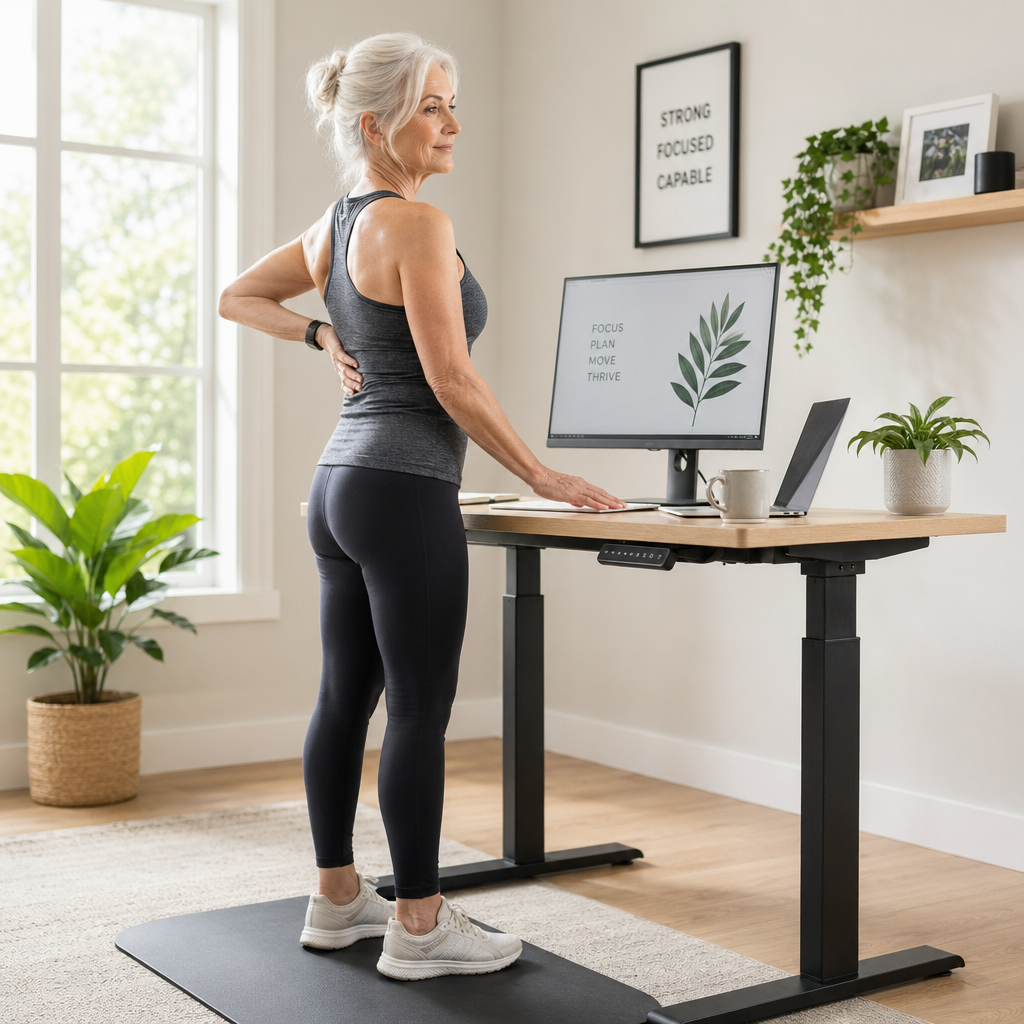
Good posture matters whether you’re sitting or standing. But maintaining it requires regular attention. Set a timer to remind yourself every hour to run through this quick checklist.
Start with your feet. When standing, they should be hip-width apart with weight distributed evenly. When sitting, both feet should rest flat on the floor. If they don’t reach, use a footrest.
Check your knees next. They should have a slight bend when standing. Locked knees restrict blood flow and cause fatigue. When sitting, your knees should be at roughly a 90-degree angle.
Move up to your hips. They should be level and squared. Many people unconsciously lean on one leg or shift weight to one side. This creates imbalance and can lead to hip or lower back pain.
Your shoulders should be relaxed and pulled slightly back. Most of us tend to round forward, especially when looking at screens. Roll your shoulders back and down a few times to reset this position.
Finally, check your head position. Your ears should align roughly over your shoulders. Many people crane their necks forward toward the screen. Move your monitor closer or raise it rather than leaning forward.
Subtle Movements for Active Standing
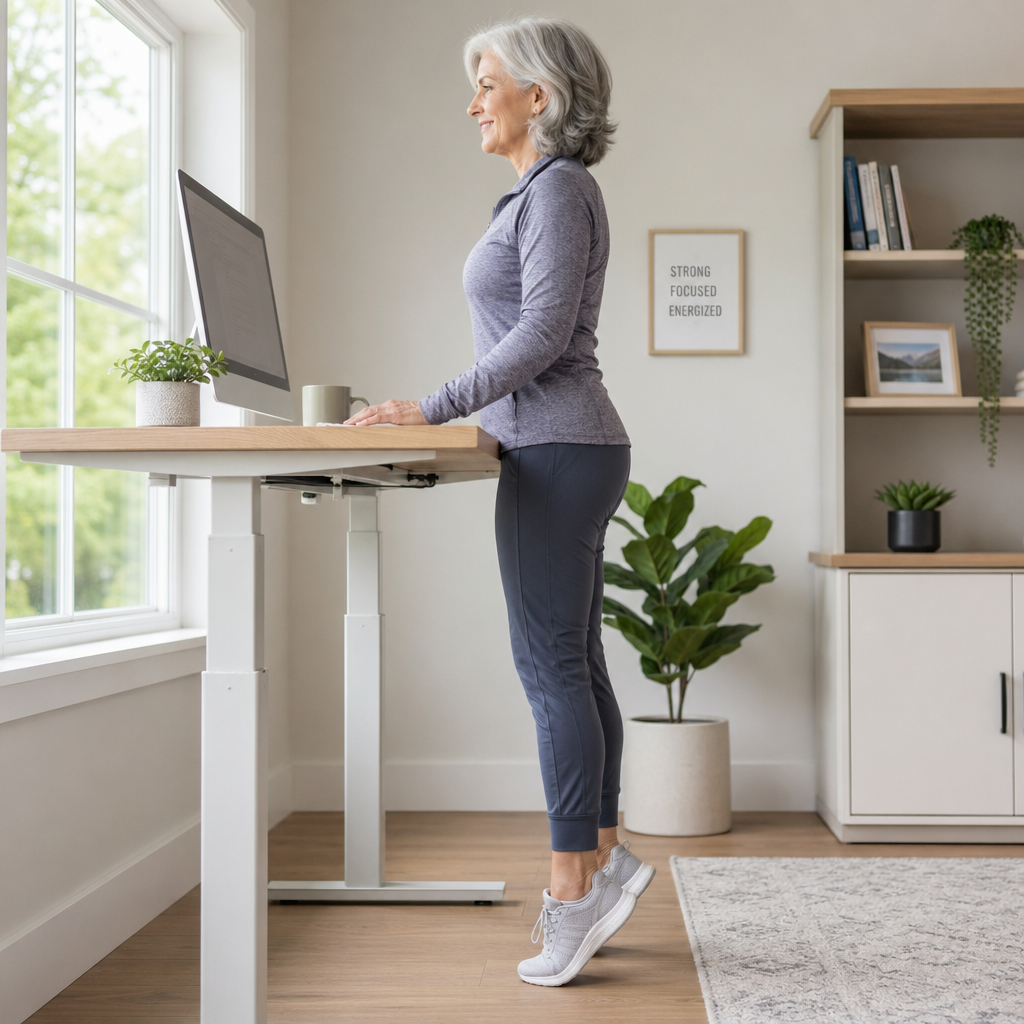
You don’t need to do jumping jacks at your desk. Small, frequent movements keep your blood flowing and muscles engaged without disrupting your work.
Weight shifting is the simplest movement. Every few minutes, shift your weight from one foot to the other. Rock gently forward onto your toes, then back onto your heels. These tiny adjustments activate different muscle groups and prevent that locked-in-place feeling.
Try the standing march. Lift one knee slightly, then the other, as if marching slowly in place. Do this for 30 seconds every 15 minutes. It gets your hip flexors moving and improves circulation in your legs.
Calf raises work perfectly while standing at your desk. Rise up onto your toes, hold for two seconds, then lower back down. Repeat 10 to 15 times. You can do these while reading emails or during phone calls.
Ankle circles keep your lower legs from getting stiff. Lift one foot slightly off the ground and rotate your ankle in circles. Do 10 circles in each direction, then switch feet.
A balance board designed for standing desks adds an extra challenge. These boards create an unstable surface that engages your core and leg muscles. Start with just 5 to 10 minutes if you’re new to them.
Desk Stretches That Actually Help
Stretching at your desk doesn’t require getting on the floor or changing clothes. These stretches target the areas that get tightest during desk work.
The neck stretch releases tension that builds from looking at screens. Gently tilt your head toward one shoulder, bringing your ear closer to your shoulder. Hold for 15 to 20 seconds, then repeat on the other side. Never pull hard or force the movement.
For your shoulders and upper back, try the seated or standing chest opener. Clasp your hands behind your back and straighten your arms. Gently lift your hands away from your body while squeezing your shoulder blades together. Hold for 20 seconds.
The seated spinal twist helps your lower back. While sitting, keep your hips facing forward and rotate your upper body to look over one shoulder. Use the armrest or back of your chair for support. Hold for 20 seconds, then switch sides.
Hip flexor stretches are critical for people who alternate between sitting and standing. Step one foot back into a small lunge position while standing at your desk. Keep your back straight and gently push your hips forward. You’ll feel the stretch in the front of your back leg’s hip. Hold for 20 seconds on each side.
The standing hamstring stretch works well at a standing desk. Place one heel on a low step or sturdy box. Keep your leg straight and gently lean forward from your hips. You should feel the stretch along the back of your thigh. Hold for 20 to 30 seconds per leg.

Desk Exercise Equipment Set
Small resistance bands and hand exercisers fit in a drawer and add variety to desk movements.
Building Movement Into Your Daily Routine
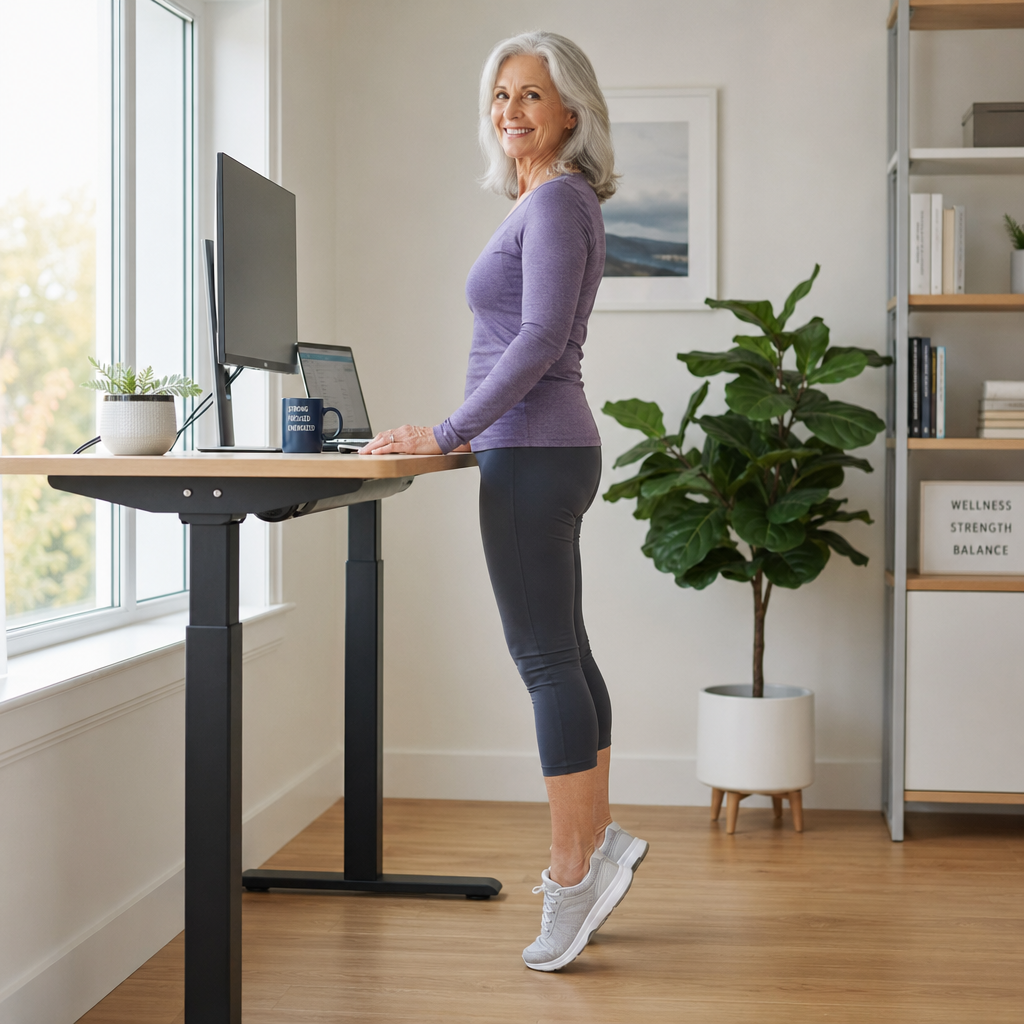
Scheduled exercise is important, but movement throughout the day might matter even more for overall health. Small changes to your routine add up significantly.
Take phone calls standing up or while walking around your space. You’ll naturally move more and often think more clearly when you’re not planted in a chair.
Set movement reminders on your phone or computer. Every 30 minutes, stand up if you’re sitting, or do a quick stretch if you’re standing. Make it automatic rather than relying on remembering.
Use the bathroom or break room that’s farther away. Those extra steps accumulate over the course of a day. Take the long route whenever possible.
Keep a fitness tracker visible on your wrist. Seeing your step count or movement reminders provides motivation to get up and move.
Do simple exercises during natural breaks. Waiting for something to print? Do calf raises. Computer restarting? Do some shoulder rolls. These moments add up to significant movement over time.
Consider a walking meeting when appropriate. Instead of sitting in a conference room, suggest a walk outside for one-on-one discussions. You’ll both benefit from the movement and fresh air.
Creating Your Personal Movement Schedule
Everyone’s needs differ based on their current fitness level, health conditions, and work requirements. Start with a basic schedule and adjust based on what feels right for your body.
A simple starting schedule might look like this: Sit for 30 minutes to start your day while checking emails. Stand for 30 minutes while working on your first task. At the hour mark, do two minutes of stretches. Sit again for 30 minutes, then stand for 30 minutes. Continue alternating throughout the day.
Add movement reminders every 15 to 20 minutes. These don’t require changing positions. Just do some weight shifts, calf raises, or shoulder rolls while staying at your desk.
Take a longer movement break every two hours. Walk around your home or office for five minutes. This longer break gives your body a real change of pace and helps maintain energy levels.
Listen to your body’s signals. Some days you might prefer standing more, other days sitting feels better. Joint pain, fatigue, or swelling are signs to change positions or take a break.
Frequently Asked Questions
How long should I stand at my standing desk as a senior?
Start with 15 to 20 minutes at a time if you’re new to standing desks. Gradually increase to 30 to 45 minute intervals as your body adapts. Most seniors do well alternating between sitting and standing every 30 to 60 minutes rather than standing for multiple hours straight. Your feet, legs, and back will tell you when it’s time to sit. There’s no prize for standing the longest, just find what keeps you comfortable and moving throughout the day.
What should I do if my feet hurt when using a standing desk?
Foot pain usually signals that you need better support or more movement. First, make sure you’re wearing supportive shoes with good arch support. Going barefoot or wearing slippers typically increases foot fatigue. Invest in a quality anti-fatigue mat that provides cushioning. Most importantly, keep moving. Shift your weight, do calf raises, and march in place regularly. Standing completely still causes more pain than standing with frequent small movements. If pain persists, reduce your standing time and consult with your doctor about possible underlying foot issues.
Can I get enough exercise just from desk movements and standing?
Desk movements and standing help significantly but shouldn’t replace dedicated exercise time. These activities keep you from being sedentary and improve circulation, posture, and joint mobility throughout the day. However, you still need cardiovascular exercise, strength training, and flexibility work for complete fitness. Think of desk movements as supplements to your regular exercise routine, not replacements. They help you stay active during work hours, while dedicated exercise sessions provide the intensity needed for building strength and endurance.
This article contains affiliate links. We may earn a small commission at no extra cost to you.