Living with osteoporosis doesn’t mean giving up strength training. In fact, resistance exercise becomes even more important when you’re working to maintain bone density and prevent fractures. But you need to be smart about how you approach it.
Resistance bands offer a unique advantage for people with osteoporosis: they provide progressive resistance that builds strength without the impact forces or balance risks that come with free weights. You get the bone-building benefits of resistance training while maintaining better control throughout each movement. This matters when your skeleton needs protection but your muscles still need to work.
Why Resistance Bands Work for Bone Health
Your bones respond to mechanical stress by becoming stronger. This process, called Wolff’s Law, means that when you apply controlled force to your skeleton through muscle contractions, your body signals bone cells to increase density. Resistance bands create this force while allowing you to stay stable and avoid dangerous movements.
Unlike dumbbells or barbells that rely on gravity and can create sudden loading if you lose control, bands provide variable resistance that increases as you stretch them. This means the weight naturally matches your strength curve through each exercise. At your weakest point in a movement, the resistance is lighter. At your strongest point, it increases.
For someone with compromised bone density, this feature reduces the risk of sudden overload that could cause compression fractures. You also eliminate the chance of dropping a weight on yourself, which becomes a real concern as grip strength often declines with age. This makes resistance bands one of the safest and most affordable exercise tools for home workouts.
Movements to Avoid With Osteoporosis

Before we get into what you should do, let’s be clear about what you shouldn’t. Forward flexion exercises (bending forward at the spine) create compression forces on the front of your vertebrae. This is exactly where osteoporotic fractures most commonly occur.
Skip any exercise that involves rounding your spine forward, including traditional sit-ups, toe touches, or exercises where you bend forward at the waist under load. Also avoid any twisting movements under resistance, especially if they involve rotation through your spine.
High-impact movements aren’t appropriate either. While some jumping can benefit bone health in younger people or those with healthy bone density, the fracture risk outweighs the benefits when you have osteoporosis.
The Safe Resistance Band Program
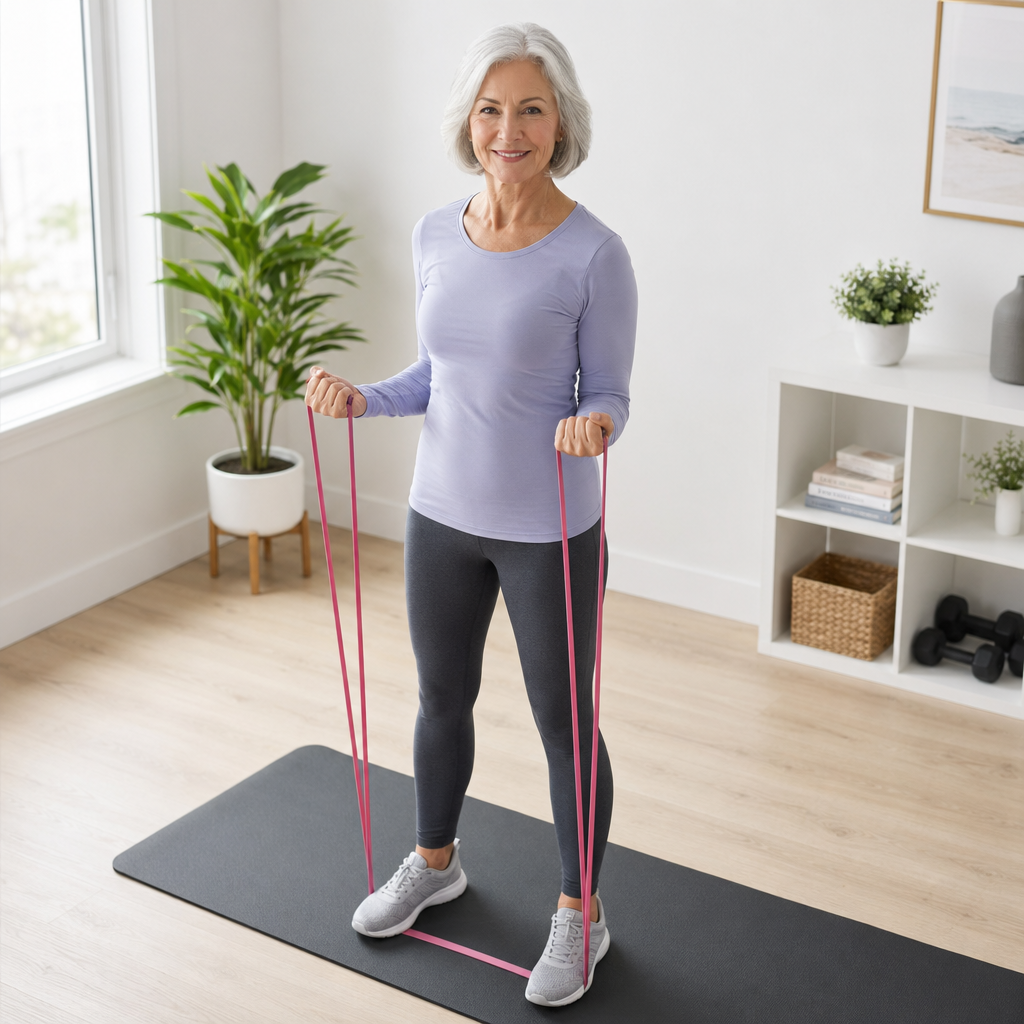
This program focuses on extension movements that strengthen the muscles supporting your spine in an upright posture, along with exercises that load your hips and legs where bone density matters most for preventing falls and fractures. These exercises can be incorporated into a comprehensive home workout routine that requires no gym membership.
Standing Row (Upper Back and Posture)
Anchor your resistance band at chest height or hold it extended in front of you. Pull both handles back toward your ribcage, squeezing your shoulder blades together. Keep your spine neutral and chest lifted. This strengthens the muscles that fight the forward slouch common in osteoporosis. Perform 2 sets of 12-15 repetitions, three times per week.
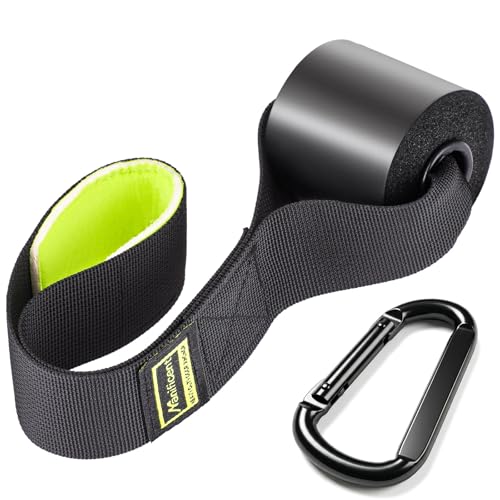
Resistance Bands with Door Anchor
A door anchor attachment lets you perform standing rows and other exercises safely at multiple heights.
Hip Extension (Glutes and Lower Back)
Loop a band around both ankles. Hold onto a chair for balance. Extend one leg straight back behind you, keeping your knee straight and your spine neutral. Focus on squeezing your glutes rather than arching your lower back. This loads your hip bones while strengthening the posterior chain that supports your spine. Build up to 2 sets of 15 repetitions per leg.
Standing Chest Press (Arms and Core Stability)
Anchor the band behind you at shoulder height. Press both handles forward from your chest, maintaining an upright posture. This works your chest and arms while requiring your core to resist rotation. The anti-rotation component builds spine stability without flexion. Complete 2 sets of 12 repetitions.
Lateral Leg Raises (Hip Abductors)
With a band around your ankles, hold a chair for support and lift one leg out to the side. Keep your toes pointing forward and your standing leg slightly bent. This strengthens the hip muscles critical for balance and fall prevention. Work up to 2 sets of 15 repetitions per side.
Band Pull-Aparts (Upper Back and Shoulders)
Hold a resistance band in front of you at shoulder height with hands about 12 inches apart. Pull the band apart by moving your hands away from each other while keeping your arms straight. This exercise directly counteracts forward shoulder posture and strengthens the upper back. Perform 2 sets of 20 repetitions.
Progression Guidelines
Start with a light resistance band that allows you to complete all repetitions with good form but still provides noticeable resistance by the final few reps. Many seniors with osteoporosis should begin with bands labeled as “light” or 5-15 pounds of equivalent resistance.
After two weeks of consistent training, if the exercises feel easy throughout the entire set, progress to the next resistance level. You can also increase difficulty by standing farther from the anchor point or holding the band with a narrower grip to create more stretch.
Never increase resistance if you’re compensating with poor form. Quality of movement protects your skeleton more than the amount of resistance you use.

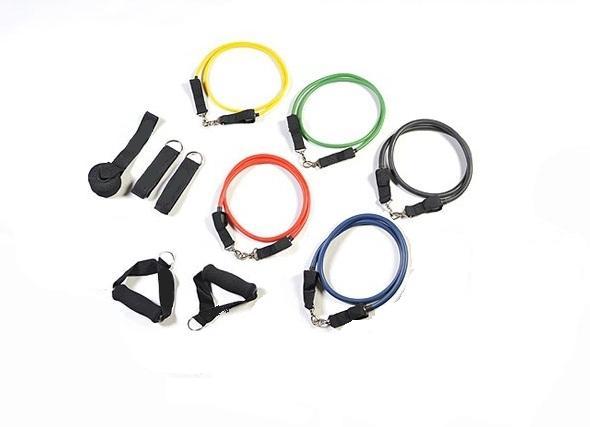
Resistance Band Set with Multiple Resistance Levels
Having multiple resistance levels lets you progress gradually and use appropriate resistance for different muscle groups.
Safety Considerations and Form Tips
Always perform these exercises in a clear space where you can hold onto a stable chair or counter if needed. Your balance may not be what it once was, and preventing falls is just as important as building bone density.
Breathe normally throughout each exercise. Holding your breath increases blood pressure and reduces oxygen delivery to working muscles. Exhale during the exertion phase and inhale during the release.
Move through a pain-free range of motion only. Some stiffness is normal when you start resistance training, but sharp pain or discomfort in your bones should stop you immediately. Consult your doctor if any exercise causes bone pain.
Consider working with a physical therapist for your first few sessions, especially if you’ve already experienced compression fractures. They can assess your individual risk factors and modify exercises for your specific situation.
Frequently Asked Questions
How often should I do resistance band exercises if I have osteoporosis?
Three times per week on non-consecutive days gives your body time to adapt and bones time to remodel in response to the stress. You need rest days between sessions for the bone-building process to occur. Training more frequently doesn’t accelerate results and may increase injury risk.
Can resistance bands actually improve bone density or just prevent further loss?
Studies show that resistance training can modestly increase bone density in postmenopausal women with osteoporosis, though results vary by individual. More importantly, it significantly improves muscle strength and balance, which reduces fall risk. Preventing fractures from falls often matters more than small changes in bone density measurements.
What resistance level should I start with if I haven’t exercised in years?
Begin with the lightest resistance available in a set designed for seniors. You should feel the muscles working but be able to complete 12-15 repetitions with proper form. Many people underestimate how effective even light resistance can be when you’re starting from a deconditioned state. You can always progress upward, but starting too heavy risks injury or discouragement.
This article contains affiliate links. We may earn a small commission at no extra cost to you.
Related Articles
- Benefits of Resistance Training for Seniors Over 65
- Complete Home Workout Routine After 60: No Gym Needed
- Best Home Exercise Equipment for Seniors in 2026 Under $100
- Step Aerobics Workout for Seniors: A Complete Guide