Staying active at home doesn’t require expensive equipment or a spare room converted into a full gym. The right tools can fit in a closet, cost less than a monthly gym membership, and provide everything you need for strength, balance, and flexibility work well into your retirement years.
We’ve tested and researched the most practical exercise equipment for seniors that won’t break the bank or take over your living space. These picks focus on safety, ease of use, and versatility so you can build a complete workout routine without spending more than competitively priced total.
Resistance Bands: Your Most Versatile Investment
Resistance bands deliver the biggest bang for your buck when you’re building a home workout space. They work every major muscle group, pack away in a drawer, and adjust resistance levels simply by changing your grip or doubling up the band.
Look for sets that include multiple resistance levels, usually color-coded from light to heavy. The best sets come with door anchors and handles, which expand your exercise options considerably. You can do chest presses, rows, shoulder work, leg exercises, and dozens of other movements with a single set of bands.

Resistance Bands Set with Handles
A complete set with multiple resistance levels gives you the most exercise variety for your money.
The door anchor is particularly valuable because it turns any doorway into an anchor point at different heights. You can simulate cable machine exercises that normally require bulky gym equipment. Just make sure you’re using a solid door that closes completely, and always pull away from the hinges for safety.
One tip: start with lighter resistance than you think you need. Bands feel different than free weights, and proper form matters more than heavy resistance when you’re working on strength and mobility.
Light Dumbbells for Functional Strength
A pair of light dumbbells rounds out your strength training tools. While bands provide great resistance, dumbbells offer a different stimulus and work better for certain exercises like bicep curls, overhead presses, and weighted squats.
For most seniors, a set of 3-pound, 5-pound, and 8-pound dumbbells covers all your bases. The neoprene-coated versions are easier to grip and won’t damage floors if you need to set them down quickly. They’re also gentler on your hands than bare metal.
Adjustable dumbbells save space, but the traditional fixed-weight versions are actually better for seniors. There’s no fiddling with adjustment mechanisms, no risk of weights coming loose, and they’re ready to use instantly. Store them on a small rack or even in a basket near your workout area.
You’ll use the lighter weights more often than you expect. Many balance and coordination exercises work better with 3-pound weights, and they’re perfect for higher-rep endurance work that builds functional strength without straining joints. For those interested in exploring the full benefits, resistance training offers significant advantages for maintaining muscle mass and bone density as we age.
Stability Balls for Core and Balance Work
A stability ball (also called an exercise ball or Swiss ball) adds an element of balance training to basic exercises. You can use it as a bench for upper body work, a seat for core exercises, or even as an active sitting option while watching TV.
Size matters here. Most seniors do well with a 55cm or 65cm ball depending on height. When you sit on it, your knees should be at about a 90-degree angle. Check the sizing chart that comes with any stability ball you’re considering.

Anti-Burst Exercise Ball with Pump
Anti-burst construction means it deflates slowly rather than popping if punctured, making it much safer.
Anti-burst construction is a must-have feature. These balls deflate slowly if punctured rather than popping suddenly, which prevents falls. They cost just slightly more than basic versions but provide important peace of mind during exercises.
Start with simple exercises like wall squats with the ball behind your back, or gentle bouncing while seated to engage your core. As you get comfortable, you can progress to more challenging moves like ball passes or using it as a bench for chest presses.
Foam Rollers for Recovery and Flexibility
Recovery tools often get overlooked, but a foam roller helps you maintain flexibility and reduce muscle soreness between workouts. Self-myofascial release (the technical term for foam rolling) improves circulation and helps keep muscles and connective tissue healthy.
Standard smooth foam rollers work well for most seniors. The textured or extra-firm versions can be too intense if you’re new to rolling. A medium-density roller about 18 inches long gives you enough surface area for back, legs, and shoulders without being unwieldy.
Use your roller after workouts or even on rest days. Spend 30-60 seconds on each major muscle group, rolling slowly and pausing on tender spots. This isn’t meant to be painful; if something hurts sharply, skip that area and check with your doctor.
You can also use a foam roller for gentle stretching exercises and core work. Lying lengthwise on the roller challenges your balance and engages stabilizing muscles throughout your torso.
Yoga Mats: Your Foundation for Floor Work
A quality yoga mat makes floor exercises more comfortable and safer. You need adequate cushioning for your joints during stretches, core work, and balance exercises, plus a non-slip surface that won’t slide on hardwood or tile.
Look for mats at least 1/4 inch thick, preferably 1/2 inch if you have sensitive knees or do a lot of floor work. Extra length (72 inches instead of the standard 68) gives you more room to move without rolling off the edges. Wider mats also provide more stability for balance exercises.
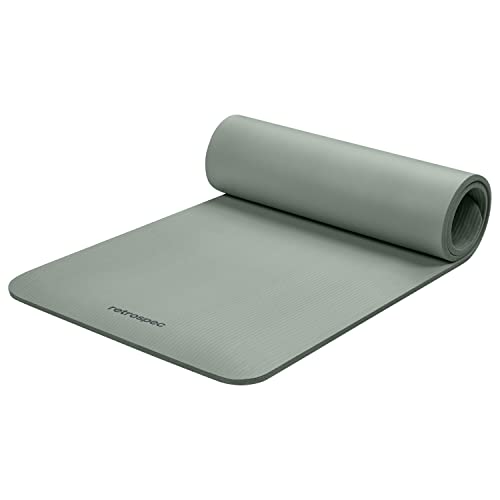
Extra Thick Yoga Mat Non-Slip
The extra cushioning protects joints during floor exercises and makes stretching routines more comfortable.
The material matters too. TPE (thermoplastic elastomer) mats offer good grip and cushioning at reasonable prices. They’re also lighter than PVC mats, making them easier to roll up and move around. Avoid ultra-cheap mats; they tend to slip and compress quickly.
Keep your mat rolled loosely or stored flat if you have space. Tight rolling can create permanent creases that affect stability during exercises.
Building Your Complete Setup
You can acquire all five of these equipment types while staying well under competitively priced total. Start with resistance bands and a yoga mat, which give you the most exercise variety right away. Add dumbbells next, then the stability ball and foam roller as your routine expands.
Store everything in one designated spot so it’s ready when you are. A small storage basket or corner of a closet works fine. The easier you make it to access your equipment, the more likely you’ll stick with your routine.
Consider your space when planning workouts. You need about 6 feet by 6 feet of clear floor space for most exercises. A living room, bedroom, or even a garage works fine as long as you have a smooth, level surface. If you’re looking for more guidance on essential fitness equipment options, there are many other tools that complement these basics perfectly.
Frequently Asked Questions
How often should I replace my exercise equipment?
Resistance bands typically last 1-2 years with regular use before they lose elasticity or show signs of wear. Check them before each workout for tears or thin spots. Dumbbells last indefinitely with proper care. Replace yoga mats when they start to compress unevenly or lose their grip, usually after 2-3 years. Foam rollers and stability balls can last for years if you store them away from direct sunlight and extreme temperatures.
Can I get a good workout with just these basic tools?
Absolutely. These five pieces of equipment cover strength training, flexibility, balance, and recovery. Many physical therapists and trainers design complete programs using nothing more than bands, light weights, and a mat. The key is consistency and proper form, not having lots of fancy equipment. You can progress for years by adjusting resistance, repetitions, and exercise variations. For those just starting out, there are plenty of beginner-friendly workout options that work perfectly with this equipment.
What’s the best order to buy this equipment if I’m on a tight budget?
Start with a resistance band set and a quality yoga mat. These two items enable the widest variety of exercises and provide the best foundation for a home routine. Add dumbbells next when you’re ready to progress your strength work. The stability ball and foam roller are excellent additions but can wait until you’ve established a consistent workout habit and want to expand your options.
This article contains affiliate links. We may earn a small commission at no extra cost to you.
Related Articles
- 20 Handy Fitness Equipment for Seniors to Enhance Your Golden Years
- Complete Home Workout Routine After 60: No Gym Needed
- Top 10 Beginner-Friendly Workouts for Seniors: Achieve Strength, Balance & Wellness
- Benefits of Resistance Training for Seniors Over 65