Waking up stiff and achy isn’t just an inconvenience. It can set the tone for your entire day, making simple tasks feel harder than they should. After 60, our joints naturally lose some flexibility overnight, and that morning stiffness can linger for hours if we don’t address it early.
The good news is that a gentle 15-minute stretching routine each morning can make a significant difference. You don’t need fancy equipment or a gym membership. Just a few targeted stretches performed consistently can help you move more freely, reduce pain, and start your day feeling more capable and comfortable.
Why Morning Stretching Matters More After 60
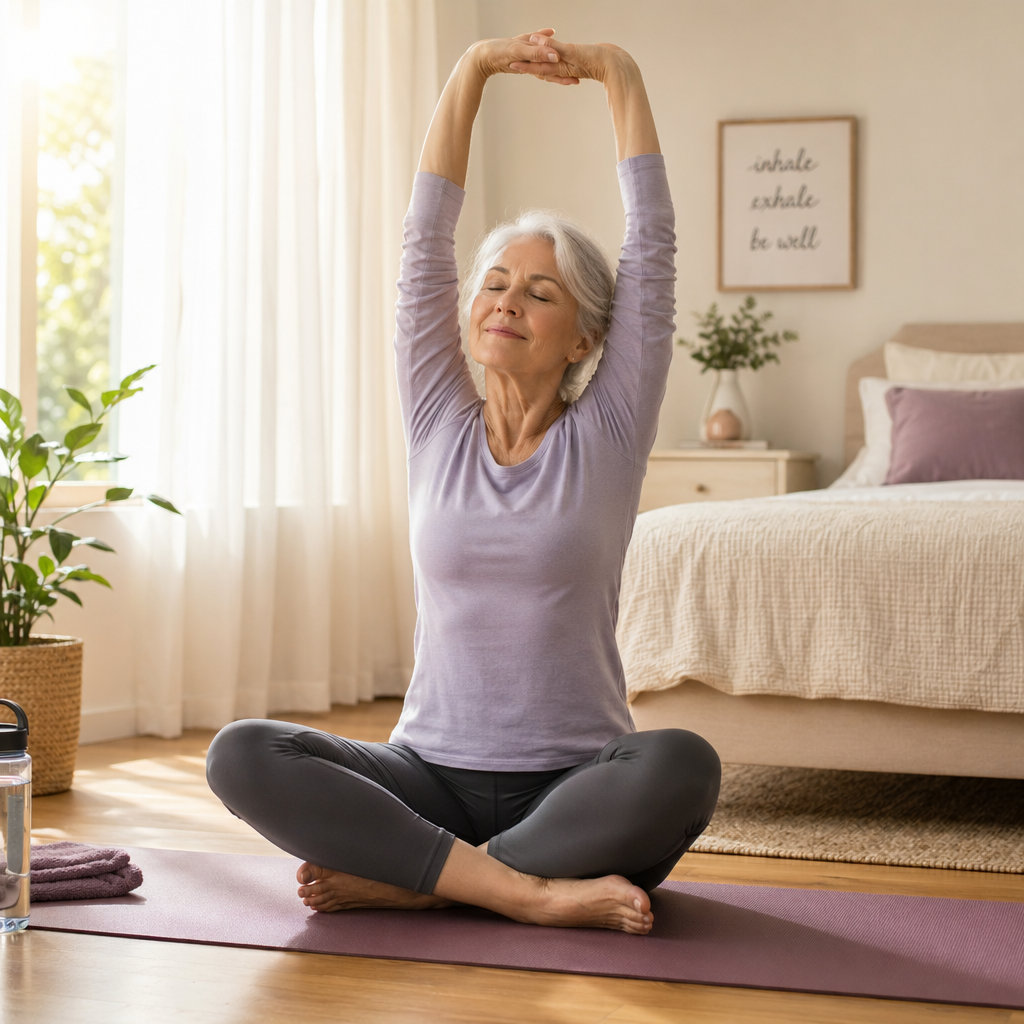
During sleep, your body produces less synovial fluid, the natural lubricant that keeps your joints moving smoothly. Add in age-related changes like reduced collagen production and slower circulation, and you’ve got the perfect recipe for morning stiffness.
When you stretch first thing in the morning, you’re essentially jump-starting your body’s natural lubrication system. You increase blood flow to your muscles and joints, warming them up gradually and safely. This isn’t about pushing yourself to touch your toes or achieving impressive flexibility. It’s about maintaining the mobility you have and preventing further decline.
Research shows that regular stretching can improve range of motion by up to 20% in older adults within just a few weeks. More importantly, people who stretch regularly report less day-long stiffness and better overall quality of life. Morning stretches can be an excellent complement to a well-rounded fitness program that includes other forms of exercise throughout the week.
Bed Stretches: Start Before Your Feet Hit the Floor

You don’t have to jump out of bed to begin your routine. In fact, starting with bed stretches is gentler on your body and gives you time to wake up gradually.
Ankle Circles and Toe Points
While still lying on your back, rotate each ankle slowly in both directions, 5-10 circles each way. Then point your toes away from you and flex them back toward your shin. This simple movement wakes up the circulation in your lower legs and prepares your knees and ankles for weight-bearing.
Knee to Chest Stretch
Bend one knee and gently pull it toward your chest with both hands, keeping the other leg straight or bent, whichever feels more comfortable. Hold for 20-30 seconds, then switch sides. This targets your lower back and hip flexors, two areas that tend to tighten up overnight.
Spinal Twist
Lie on your back with knees bent and feet flat on the mattress. Slowly lower both knees to one side while keeping your shoulders flat on the bed. Hold for 20-30 seconds, then repeat on the other side. This gentle rotation helps loosen the muscles along your spine and can relieve lower back tension.
Standing Stretches With Support
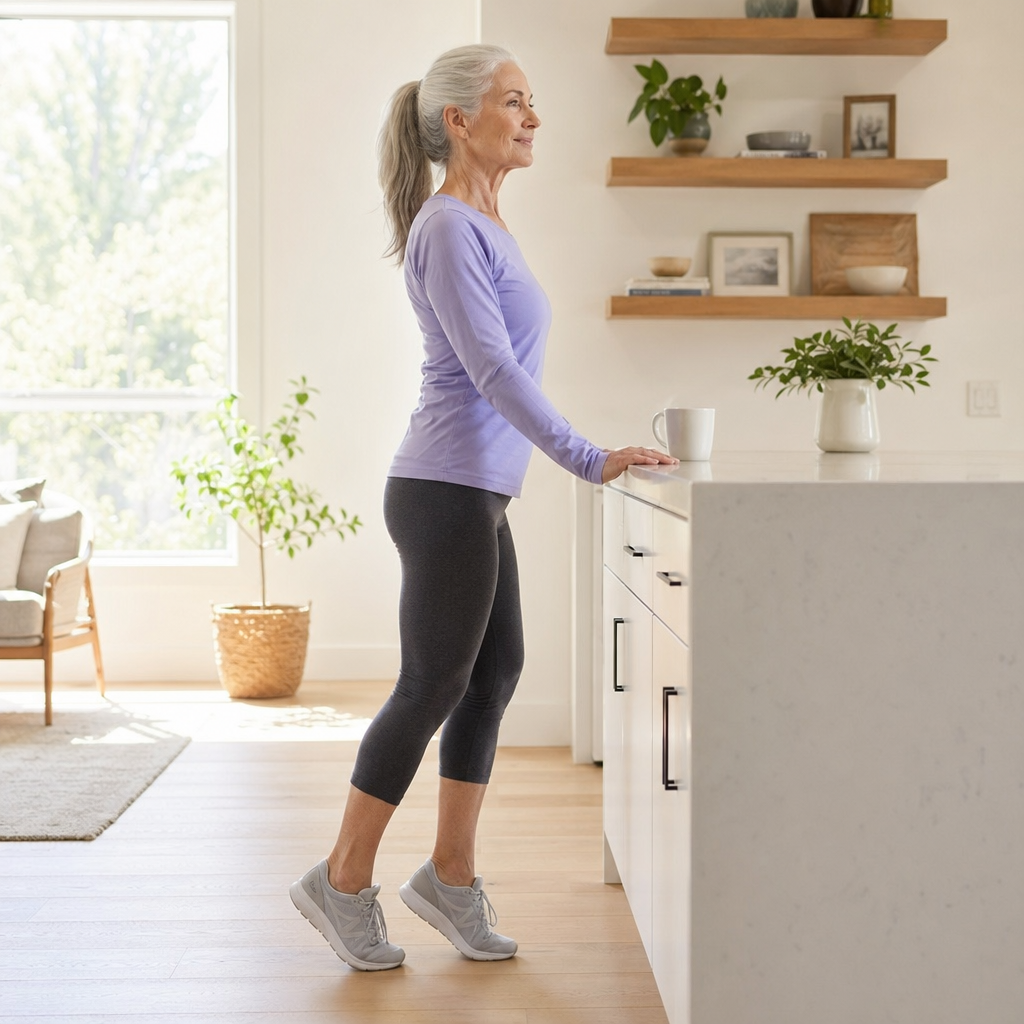
Once you’re up and moving, these standing stretches will continue to loosen tight areas. Keep a sturdy chair or counter nearby for balance and support.
Neck Rolls and Shoulder Shrugs
Stand with feet hip-width apart. Slowly roll your head in a half-circle from one shoulder to the other, never letting your head drop backward. Do this 3-5 times in each direction. Then lift both shoulders up toward your ears, hold for 2-3 seconds, and release. Repeat 5 times.
Many people hold tension in their neck and shoulders, especially if they sleep in an awkward position. These movements release that tightness before it can cause headaches or upper back pain later in the day. If you find yourself carrying stress in these areas, combining your stretching with meditation techniques can provide additional relief throughout the day.
Supported Hip Flexor Stretch
Stand next to a chair or counter, holding on for balance. Step one foot back into a gentle lunge position, keeping both feet pointing forward. You should feel a stretch in the front of your back hip. Hold for 20-30 seconds, then switch sides.
Tight hip flexors are extremely common after 60, especially if you spend much time sitting. This stretch directly addresses that problem area.
Quad Stretch With Support
Still holding onto your support, bend one knee and bring your heel toward your buttock. You can grab your ankle with your free hand or use a stretching strap if reaching back is difficult. Hold for 20-30 seconds on each side.

Stretching Strap for Seniors
A stretching strap extends your reach and makes many stretches safer and more effective when flexibility is limited.
Calf Stretch
Face your chair or counter, standing about two feet away. Place your hands on the support and step one foot back, keeping that back leg straight and heel down. Lean forward slightly until you feel a stretch in your back calf. Hold for 20-30 seconds, then switch sides.
Tight calves can throw off your entire walking pattern and contribute to knee and hip problems. This simple stretch helps maintain proper ankle flexibility.
Making It a Daily Habit
The biggest challenge with any stretching routine isn’t learning the movements. It’s doing them consistently. Here are a few strategies that help.
First, attach your stretching to an existing morning habit. Do your bed stretches before you check your phone or turn on the coffee maker. Consistency comes from routine.
Second, keep comfort items within reach. A thick, cushioned yoga mat near your bed makes floor stretches more comfortable. Having the right tools ready removes one more barrier to getting started.
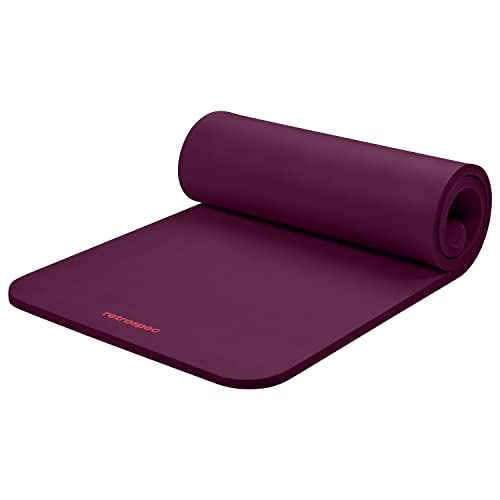
Non-Slip Yoga Mat with Extra Cushioning
Extra padding protects joints during floor stretches, and a non-slip surface provides stability for standing stretches.
Third, track your progress somehow. It doesn’t need to be fancy. Just a checkmark on a calendar each day you complete your routine can provide surprising motivation. After a few weeks, you’ll notice the difference in how you feel, and that positive feedback will keep you going. For deeper muscle recovery after more intense activities, you might also consider incorporating foam rolling techniques into your weekly routine.
When to Modify or Skip Stretches
Listen to your body. Stretching should never cause sharp pain. You’ll feel some tension and mild discomfort as muscles lengthen, but that’s different from pain that makes you wince or hold your breath.
If you have a joint replacement, recent surgery, or specific medical conditions, check with your doctor or physical therapist before starting any new stretching routine. They might recommend modifications or alternative stretches for your situation.
On days when you’re feeling particularly stiff or sore, you can do a shorter version of the routine focusing on just the areas that need it most. Five minutes of targeted stretching is better than skipping it entirely because you’don’t have the full 15 minutes.
Frequently Asked Questions
How long before I notice a difference in my morning stiffness?
Most people notice some improvement within the first week, but the full benefits develop over 3-4 weeks of consistent practice. Your body needs time to adapt. The key is daily consistency rather than occasional marathon sessions. Even on days when you’re short on time, doing a quick 5-minute version maintains the progress you’ve made.
Should I stretch before or after my morning walk?
Do your gentle stretching routine before you walk. These movements prepare your joints and muscles for activity, reducing injury risk. After your walk, you can add a few more stretches if you’d like, focusing on any areas that feel tight. Post-walk stretching helps prevent soreness later in the day.
Is it normal to be less flexible on some days than others?
Absolutely. Your flexibility can vary based on how well you slept, the weather, your hydration level, and your activity from the previous day. Don’t get discouraged if you can’t reach as far on Tuesday as you could on Monday. Just work within your range for that day. Pushing too hard on a stiff day can lead to injury.
This article contains affiliate links. We may earn a small commission at no extra cost to you.
Related Articles
- Mastering the Perfect Fitness Routine for Seniors: A Comprehensive Guide
- 12 Health Benefits of Step Workouts: Learn Before You Ignore It
- Foam Roller Guide for Seniors: Gentle Techniques for Muscle Recovery
- Meditation Techniques for Seniors: Reduce Stress in 2026