If you’ve ever searched for the “right” amount of water to drink as you get older, you’ve probably run into a wall of conflicting numbers. Eight glasses a day. Half your body weight in ounces. A gallon a day for “optimal health.” None of these one-size-fits-all rules actually hold up once you factor in real life, and real bodies change a lot with age.
The truth is there’s no single number that works for every older adult. Your fluid needs depend on your activity level, the weather, what you eat, the medications you take, and any medical conditions you’re managing. Instead of chasing a magic target, it helps to understand the factors that actually move the needle for you personally.
Why a Fixed Daily Number Doesn’t Work
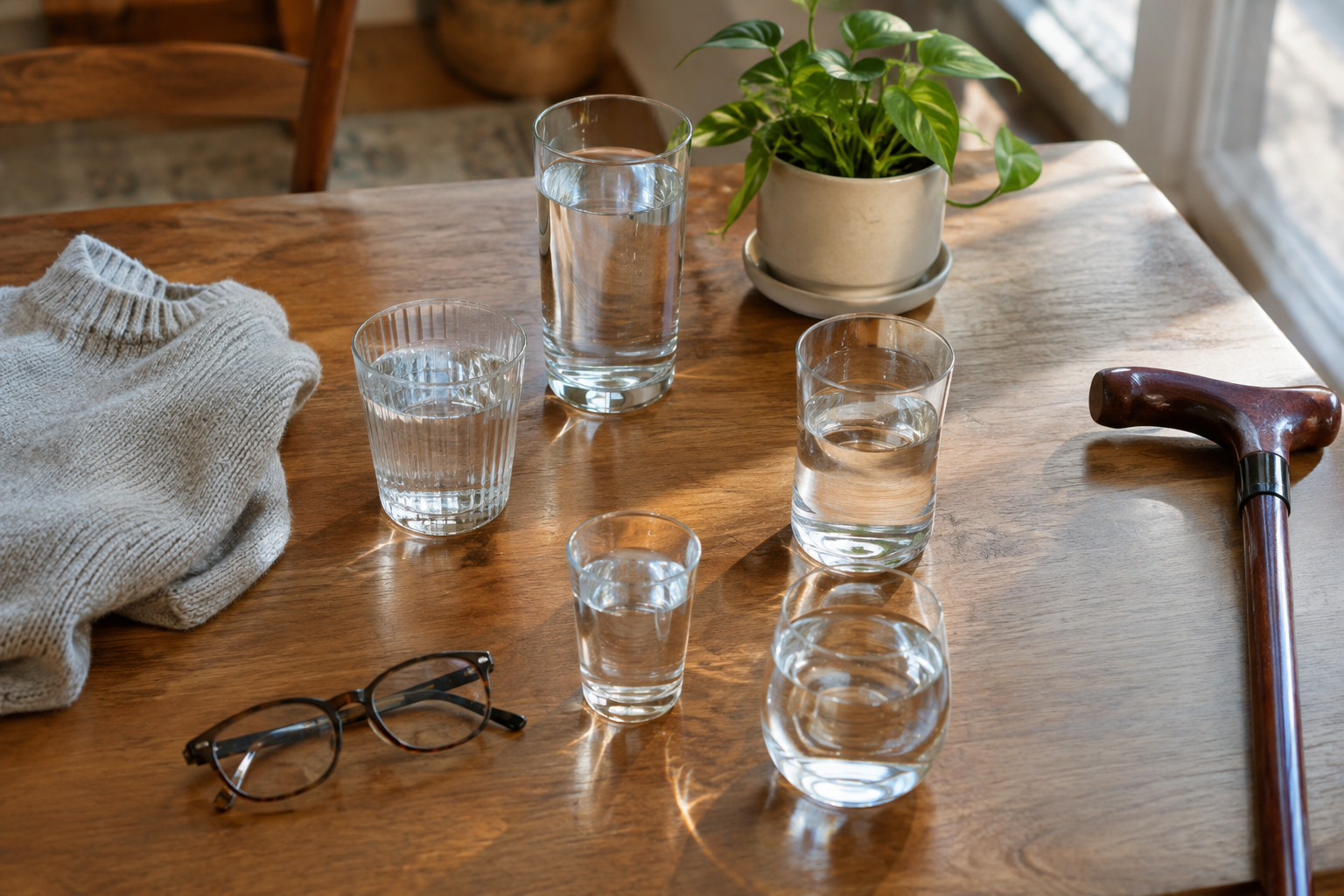
The “8×8 rule” (eight 8-ounce glasses a day) never had strong science behind it in the first place, and it definitely doesn’t account for the variables that matter most as you age. A sedentary 75 year old sitting in an air-conditioned house needs a lot less fluid than an active 68 year old doing yard work in July.
Here are the main factors that change how much fluid you actually need:
- Activity level: A brisk walk, a strength training session, or even a longer chair workout increases fluid loss through sweat, even if you don’t feel particularly sweaty.
- Weather and humidity: Hot, humid days increase fluid needs significantly. Indoor heating in winter can also dry you out more than you’d expect.
- Diet: Soups, fruits, and vegetables contribute meaningful water to your daily intake. A diet heavy in processed or salty foods increases your fluid needs.
- Medications: Diuretics, some blood pressure medications, and certain laxatives all affect fluid balance, sometimes in opposite directions.
- Medical conditions: Diabetes, kidney function, and heart health all change how your body handles fluid.
This is also why hydration and exercise are so closely linked. If you’re doing regular strength or cardio work, whether that’s a chair workout or a longer walk with walking poles, your fluid needs on those days will naturally run higher than on rest days. Muscle cramps during or after exercise are often one of the first signs that your fluid intake didn’t match your activity level, which is covered in more detail in this guide on hydration and muscle cramps in seniors.
When Fluid Restrictions Change the Picture Entirely
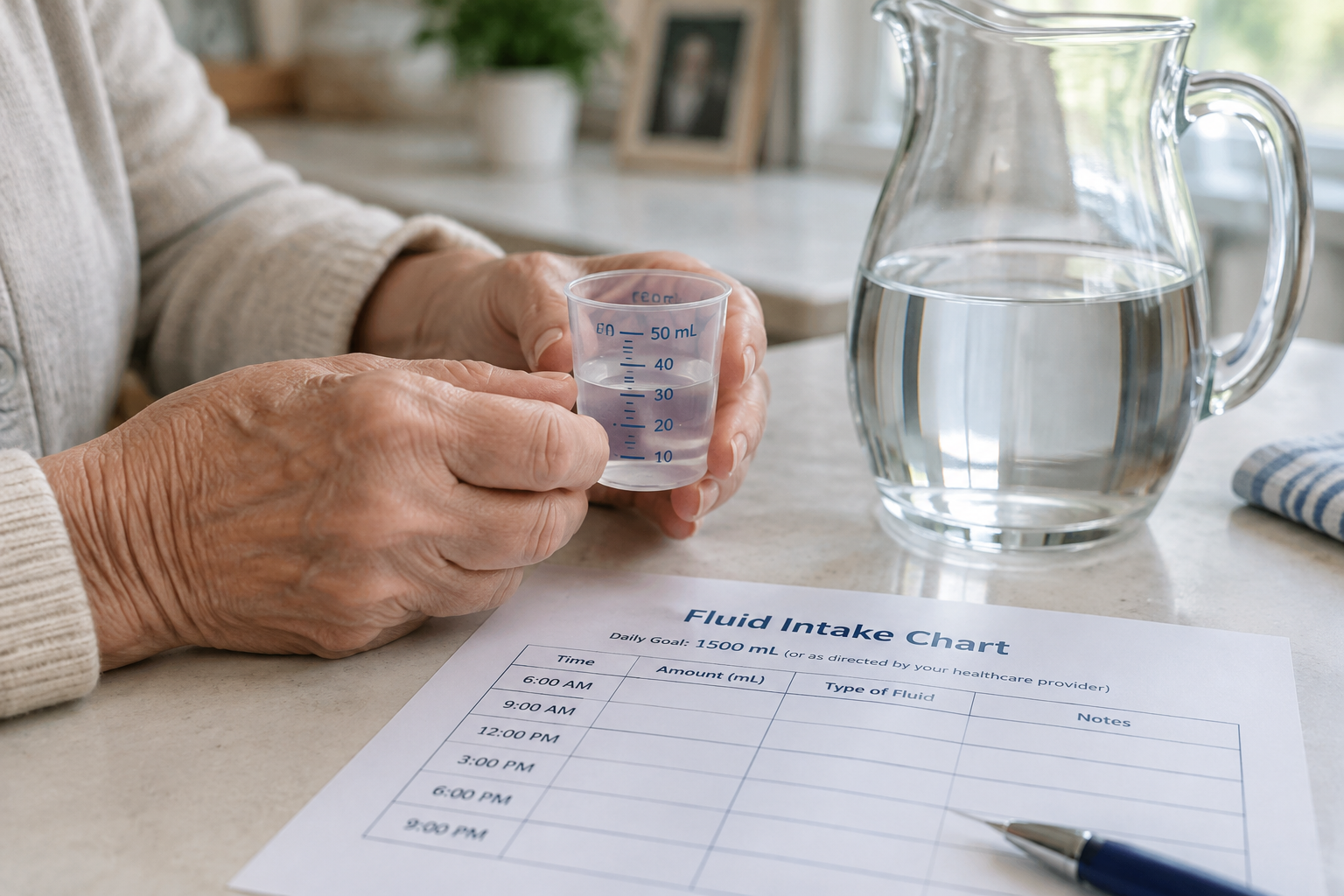
For some seniors, the question isn’t “how much water should I drink” but “how much water am I allowed to drink.” Certain heart conditions, kidney disease, and liver disease can make excess fluid dangerous rather than helpful. In these cases, a cardiologist or nephrologist may set a specific daily fluid limit, sometimes as low as 48 to 64 ounces total, including food moisture.
If you’ve been given a fluid restriction, it overrides any general hydration advice you read online, including this article. Restrictions like this are typically based on lab work, heart function tests, or fluid retention symptoms, and they’re adjusted over time as your condition changes. Never increase your fluid intake past a clinician-set limit because you read a general guideline suggesting more water is better.
On the flip side, if you’re on a diuretic or have a condition that causes you to lose fluid more easily, your doctor might actually recommend drinking more than average. This is another reason a personalized conversation with your care team matters more than any generic number.
Practical Signs You’re Not Drinking Enough
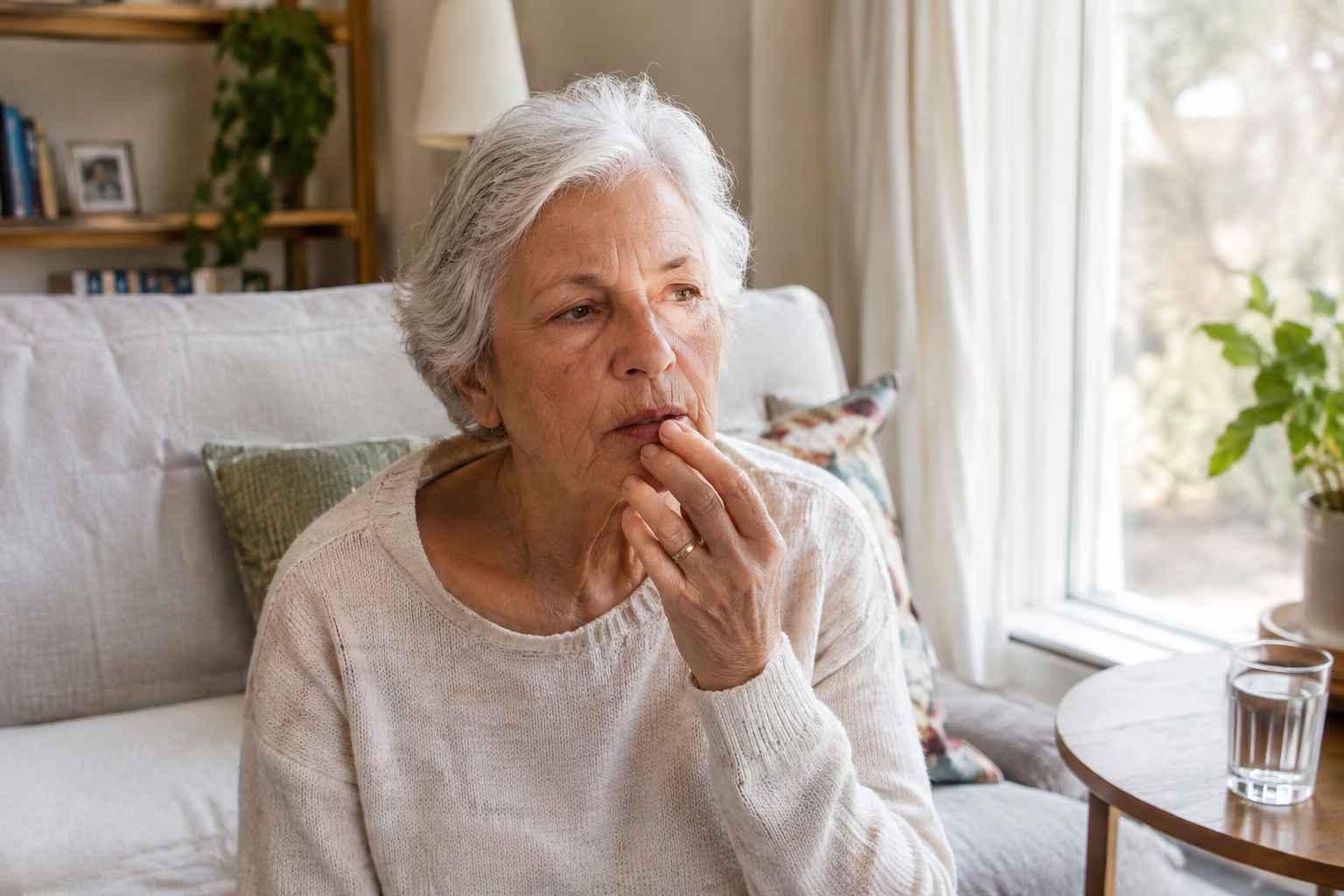
Since there’s no universal target to hit, it helps to watch for signs your body gives you instead of counting ounces. Urine that’s consistently dark yellow, feeling unusually tired, dry mouth, dizziness when standing up, and headaches can all point to inadequate fluid intake.
Dizziness in particular is worth paying attention to, since dehydration can worsen balance issues and increase fall risk. If you’ve noticed lightheadedness along with reduced fluid intake, it’s worth reading through dizziness and balance exercises for seniors and mentioning the symptom to your doctor rather than assuming it’s just part of aging.
Making hydration easier also comes down to having the right tools on hand. If gripping a heavy glass or twisting a tight bottle cap is difficult due to arthritis, a bottle designed for easier handling can make a real difference in how consistently you drink throughout the day. This roundup of the best water bottles for seniors with easy-open lids covers several options worth considering.
Frequently Asked Questions
Does coffee or tea count toward daily fluid intake?
Yes. While caffeine has a mild diuretic effect, research shows that moderate coffee and tea consumption still contributes positively to overall hydration for most people. You don’t need to subtract these drinks from your fluid total, though water should still make up the bulk of what you drink.
Should I drink more water before or after exercise?
Both matter, but timing depends on the activity and duration. For shorter sessions like a 10 to 15 minute chair workout, drinking normally before and after is usually enough. For longer or more intense sessions, especially in warm weather, sipping fluids during the activity itself helps prevent the dizziness and cramping that can come from fluid loss.