Exercise reduces the frequency and severity of hot flashes by 40-60% in multiple studies, but it can also trigger hot flashes during the session if you’re not strategic about timing, intensity, and environment. The key is getting the long-term benefits (fewer hot flashes overall) while minimizing the short-term trigger (a flash during the workout). With the right approach, exercise becomes part of the solution rather than another source of the problem.
Before starting any new exercise program, talk with your doctor, especially if you have cardiovascular conditions, joint issues, or are managing multiple menopausal symptoms. What works varies by individual, and your healthcare provider can help you build a plan that’s safe and effective for your specific situation.
How Exercise Helps Hot Flashes Long-Term
Hot flashes are caused by dysfunction in the thermoregulatory center of the brain (the hypothalamus), which becomes hypersensitive to minor temperature changes after estrogen drops. Regular exercise recalibrates this thermoregulatory system. Your body becomes more efficient at managing heat: sweating starts at more appropriate temperatures, blood vessel dilation becomes more precise, and the hypothalamic trigger point widens.
Over 8-12 weeks of consistent exercise, the net result is fewer and less intense flashes throughout the day and night.
The mechanism isn’t just physical adaptation. Exercise also affects neurotransmitters that influence the hypothalamus. Regular movement increases endorphin production and stabilizes serotonin levels, both of which help moderate the erratic temperature signaling that causes hot flashes. Women who exercise consistently report not just fewer flashes, but flashes that are less disruptive when they do occur, shorter duration, less intense sweating, quicker recovery.
The improvement builds over time. The first few weeks may show minimal change. By week six, many women notice they’re sleeping better because night sweats have decreased. By week twelve, daytime flashes typically drop by nearly half. The consistency matters more than the intensity. Three 30-minute moderate walks per week outperform sporadic intense sessions.
How Exercise Can Trigger Hot Flashes Short-Term
Exercise raises your core temperature, which is the exact trigger for a hot flash. If your core temperature rises above the narrowed thermoneutral zone (the temperature range where your body doesn’t trigger a heat-dissipation response), a flash fires. This is why some women experience hot flashes specifically during or immediately after exercise, even though exercise reduces flashes overall.
The thermoneutral zone in menopausal women can be as narrow as 0.4 degrees Celsius. A non-menopausal woman’s zone is typically three times wider. This means you have very little thermal buffer. A workout that raises your core temperature by just half a degree can push you past the threshold and trigger a cascade response: sudden vasodilation, profuse sweating, heart palpitations, the full flash experience.
The intensity of the flash during exercise often surprises women who are otherwise managing their symptoms well. You might go hours without a flash, start a brisk walk, and find yourself drenched within ten minutes. This doesn’t mean exercise is counterproductive. It means your body is still adjusting, and you need to work within a narrower temperature envelope until the thermoregulatory recalibration kicks in.
Best Timing for Exercise
Early Morning (Best Option)
Your core body temperature is lowest in the early morning (typically between 6-9 AM). Exercising during this window means you start from a lower thermal baseline, giving you more room to raise your temperature through exercise before hitting the flash trigger point. For more on timing considerations, see our guide on morning vs evening exercise for seniors.
Morning exercise also syncs well with cortisol rhythms. Cortisol naturally peaks in the early morning, providing energy for activity. Exercising during this natural energy window feels easier and produces less physiological stress than forcing a workout when cortisol has dropped in the evening. Lower stress means less adrenaline, which is another hot flash trigger.
If you’re not naturally a morning person, this adjustment takes time. Start with just ten minutes of gentle movement when you wake up. Your body will gradually adapt to the new pattern, and after a few weeks, morning exercise often becomes the easiest part of the day.
Avoid Late Afternoon and Evening
Core temperature peaks in the late afternoon (4-6 PM). Exercising at this time starts you closer to the flash trigger threshold, making exercise-induced flashes more likely. Evening exercise also raises core temperature when your body needs to cool down for sleep, potentially triggering night sweats.
The evening problem is compounded by accumulated heat from the day. If you’ve already had several hot flashes during the day, your thermoregulatory system is already sensitized by late afternoon. Adding exercise on top of that existing thermal load makes flashes almost inevitable.
If your schedule only allows evening exercise, push it as late as safely possible (8-9 PM), then take a cool shower immediately after. This allows enough time for your core temperature to drop back to baseline before bed, reducing the risk of night sweats. Some women find that evening exercise, despite the flash risk during the workout, actually helps them sleep better because the post-exercise cooling phase coincides with bedtime.
Post-Flash Timing
If you’ve just had a hot flash, there’s a brief refractory period (15-30 minutes) where the threshold for another flash is higher. Some women find that starting exercise shortly after a flash naturally resolves gives them a flash-free exercise window.
The refractory period exists because your body has just expended energy dissipating heat. The vasodilation and sweating response has already fired, and your system needs time to reset the trigger mechanism. During this reset window, you can exercise with less risk of immediately triggering another episode.
This timing strategy works best when combined with monitoring your flash patterns. If you typically get a hot flash mid-morning around 10 AM, you could plan to exercise at 10:20 AM, right in that refractory window. Track your flashes for a week to identify predictable patterns, then schedule exercise accordingly.
Intensity Management
Moderate Is Better Than Vigorous
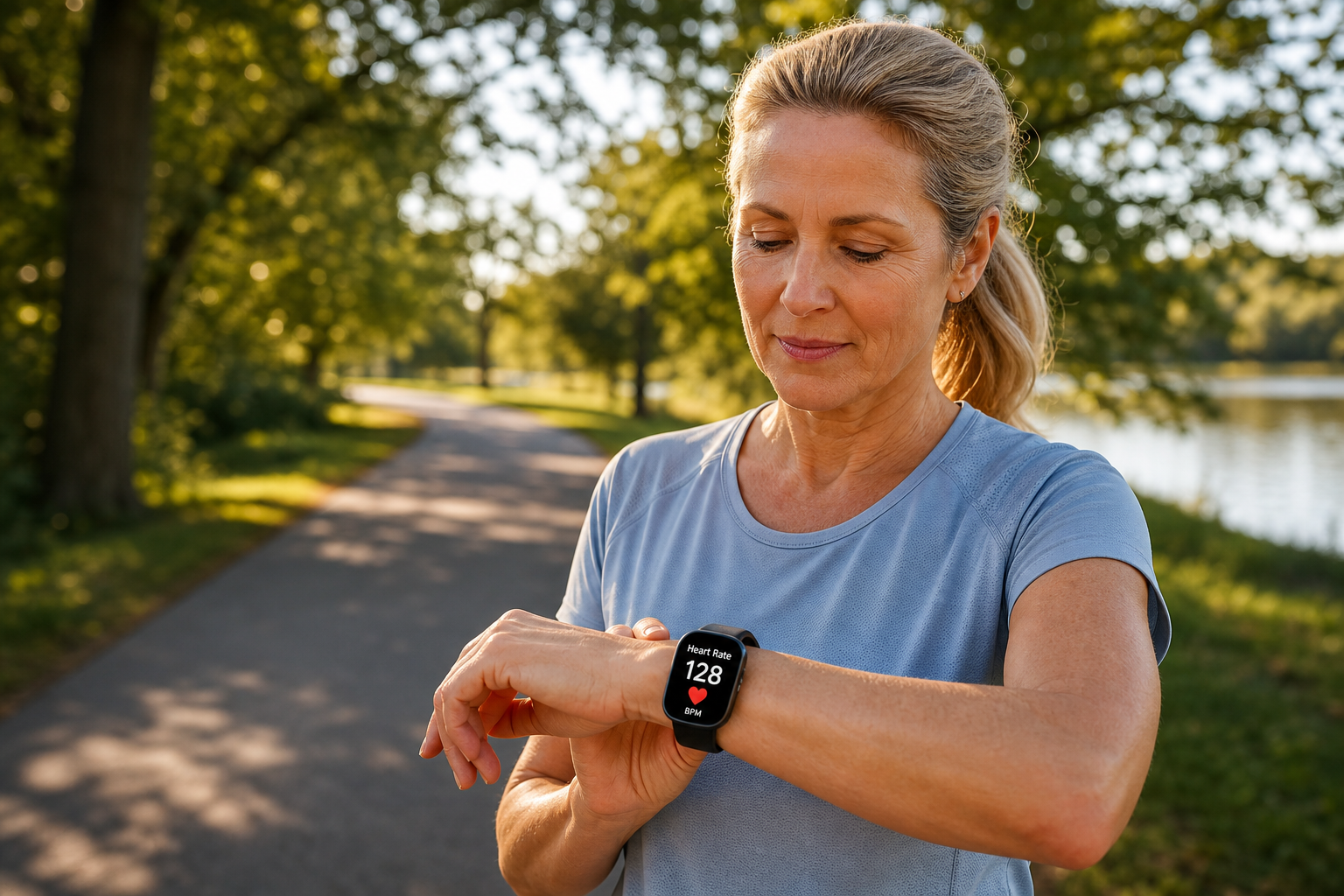
High-intensity exercise produces the greatest core temperature spike, which makes it the most likely to trigger a flash. Moderate-intensity exercise (walking at a brisk pace where you can speak in short sentences, cycling at a comfortable resistance, swimming at a steady pace) raises core temperature more gradually and often stays below the flash trigger point.
The research shows that moderate exercise provides the same long-term hot flash reduction as vigorous exercise, so you’re not sacrificing benefit by choosing the lower intensity.
Moderate intensity is defined as 50-70% of your maximum heart rate. For most women in midlife, this translates to a heart rate of 90-120 beats per minute during exercise. You should feel like you’re working, but not gasping for air. The “talk test” is reliable: if you can speak a full sentence but couldn’t comfortably sing, you’re in the moderate zone.
Vigorous exercise pushes you into 70-85% of max heart rate. The cardiovascular benefits are real, but during perimenopause and early menopause, the flash-triggering risk often outweighs those benefits. Once your thermoregulatory system has recalibrated (usually after 12-16 weeks of consistent moderate exercise), you can gradually add short vigorous intervals if you want them. But there’s no need to push hard to get results.
Interval Approach
If continuous moderate exercise triggers flashes after 15-20 minutes, try intervals: exercise for 10 minutes, rest for 2-3 minutes (allowing partial cooling), then resume. The brief cooling breaks prevent core temperature from building to the trigger point while still providing cardiovascular and strength benefits.
The rest intervals don’t need to be complete stops. Walk slowly, sit with a fan, sip cold water, or do gentle stretching. The goal is active recovery that lets your core temperature drift down a fraction of a degree without losing the momentum of the workout.
Some women find that three 10-minute exercise blocks spread throughout the day work better than one 30-minute session. Each short block raises core temperature, but the hours of cooling time between blocks prevent cumulative heat buildup. This approach delivers the same total exercise volume with far fewer flashes.
Environmental Strategies
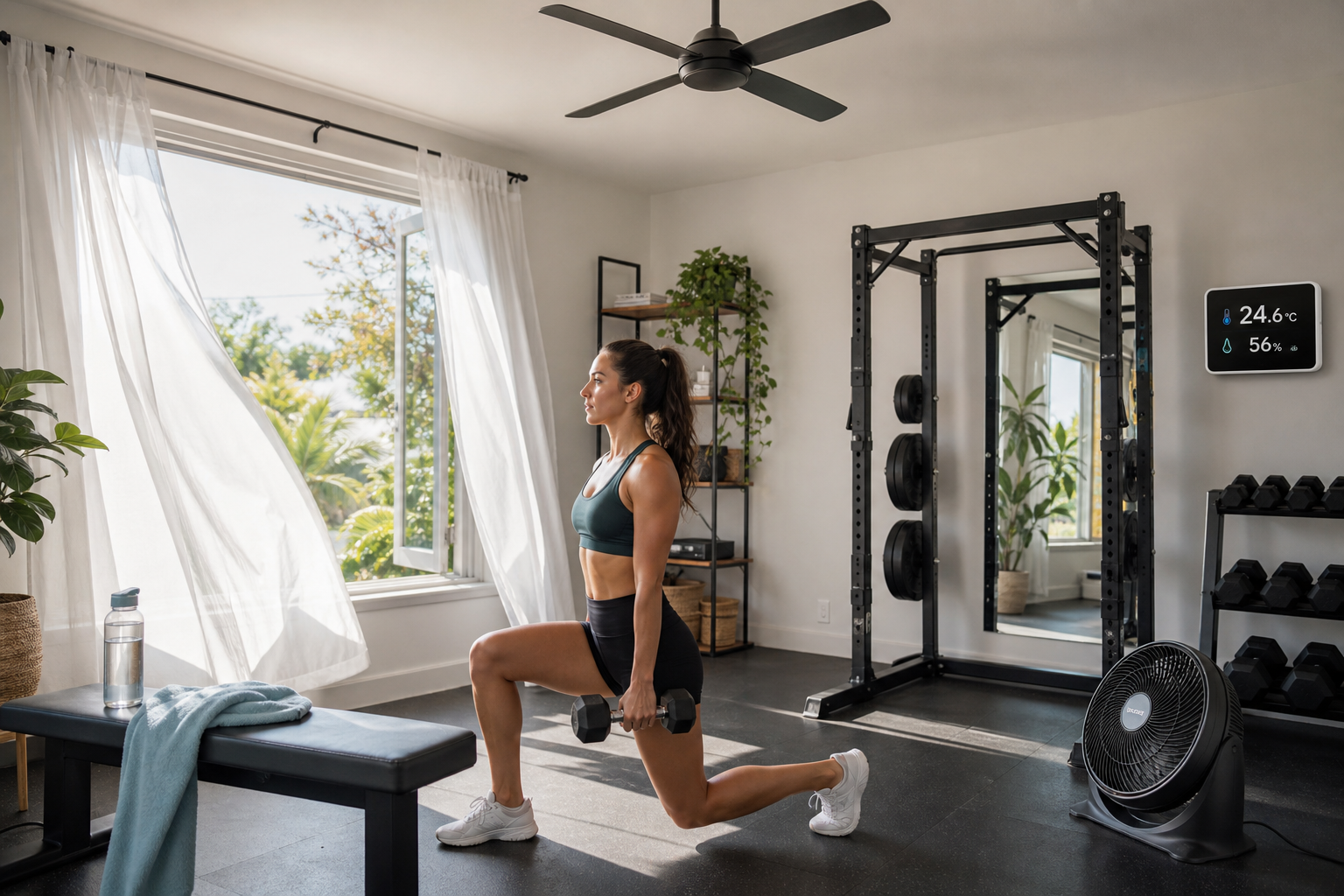
Temperature control is the single most effective strategy for preventing exercise-triggered hot flashes. A well-ventilated room at 65-68 degrees gives you the widest thermal buffer. If you’re exercising outdoors, early morning is ideal not just for your internal temperature rhythm, but because outdoor air temperature is coolest then.
Consider these environmental modifications:
- Exercise in a cool environment. Air conditioning, fans, or outdoor exercise in cool weather keep your external temperature low, giving your core temperature more room to rise before triggering a flash. For outdoor exercise, check out our hot weather workout safety guide and cold weather exercise tips.
- A cooling towel around your neck during exercise provides evaporative cooling that holds your core temperature down.
- Cold water. Drink ice water before and during exercise. The internal cooling effect of cold fluid helps buffer the core temperature rise.
- Moisture-wicking clothing. Sweat-soaked cotton traps heat against your skin. Moisture-wicking fabrics pull sweat away for evaporation, which is your body’s primary cooling mechanism.
- Avoid hot, humid environments. Hot yoga, outdoor exercise in summer heat, and poorly ventilated gym spaces are the most flash-triggering exercise environments.
Humidity matters as much as temperature. High humidity blocks evaporative cooling, which is your body’s most efficient heat-dissipation method. A humid 75-degree day feels hotter and triggers more flashes than a dry 85-degree day because your sweat can’t evaporate to cool you. Check the dew point, not just the temperature. Dew points above 60 make outdoor exercise significantly more flash-prone.
Personal cooling devices have improved. Neck fans, handheld misters, and evaporative cooling vests designed for outdoor workers can all reduce exercise-triggered flashes. These aren’t expensive. A simple battery-powered neck fan makes a measurable difference.
Best Types of Exercise for Hot Flash Reduction
Swimming
The water absorbs your body heat, making temperature-triggered flashes almost impossible during the session. Pool exercise is the most flash-proof exercise available.
Water conducts heat away from your body 25 times faster than air. Even vigorous swimming rarely triggers hot flashes because the cooling effect of the water outpaces the heat production from the exercise. Water aerobics, lap swimming, or just walking back and forth in chest-deep water all provide this benefit.
Water temperature matters. Pools heated above 82 degrees reduce the cooling benefit. Look for pools kept at 78-80 degrees. Some women find that even cooler water (75-78 degrees) is ideal for flash management, though it feels shockingly cold for the first few minutes.
One caution: chlorine and indoor pool humidity can be respiratory irritants for some women. If you notice breathing difficulty or persistent cough after pool workouts, try outdoor pools or pools using saltwater or UV sanitization systems.
Walking
Moderate-pace walking in cool conditions produces the most consistent long-term flash reduction with the lowest risk of exercise-triggered flashes.
Walking is the most accessible form of exercise, requires no equipment beyond decent shoes, and can be adjusted instantly if a flash starts. You can slow down, stop in the shade, remove a layer, or cut the walk short without any consequence. That flexibility makes it the lowest-stress exercise option during the adjustment period when you’re still figuring out your triggers.
Walking pace matters. A leisurely 2 mph stroll provides some benefit, but 3-3.5 mph (a brisk pace where you cover a mile in 17-20 minutes) hits the moderate-intensity sweet spot for hot flash reduction. Use a fitness tracker or smartphone app to check your pace for the first few weeks until you internalize what the right speed feels like.
Arm swing increases calorie burn and cardiovascular benefit without raising core temperature as much as increasing leg speed would. Focus on purposeful arm movement coordinated with your stride. This small adjustment makes walking more effective without making it more flash-prone.
Yoga
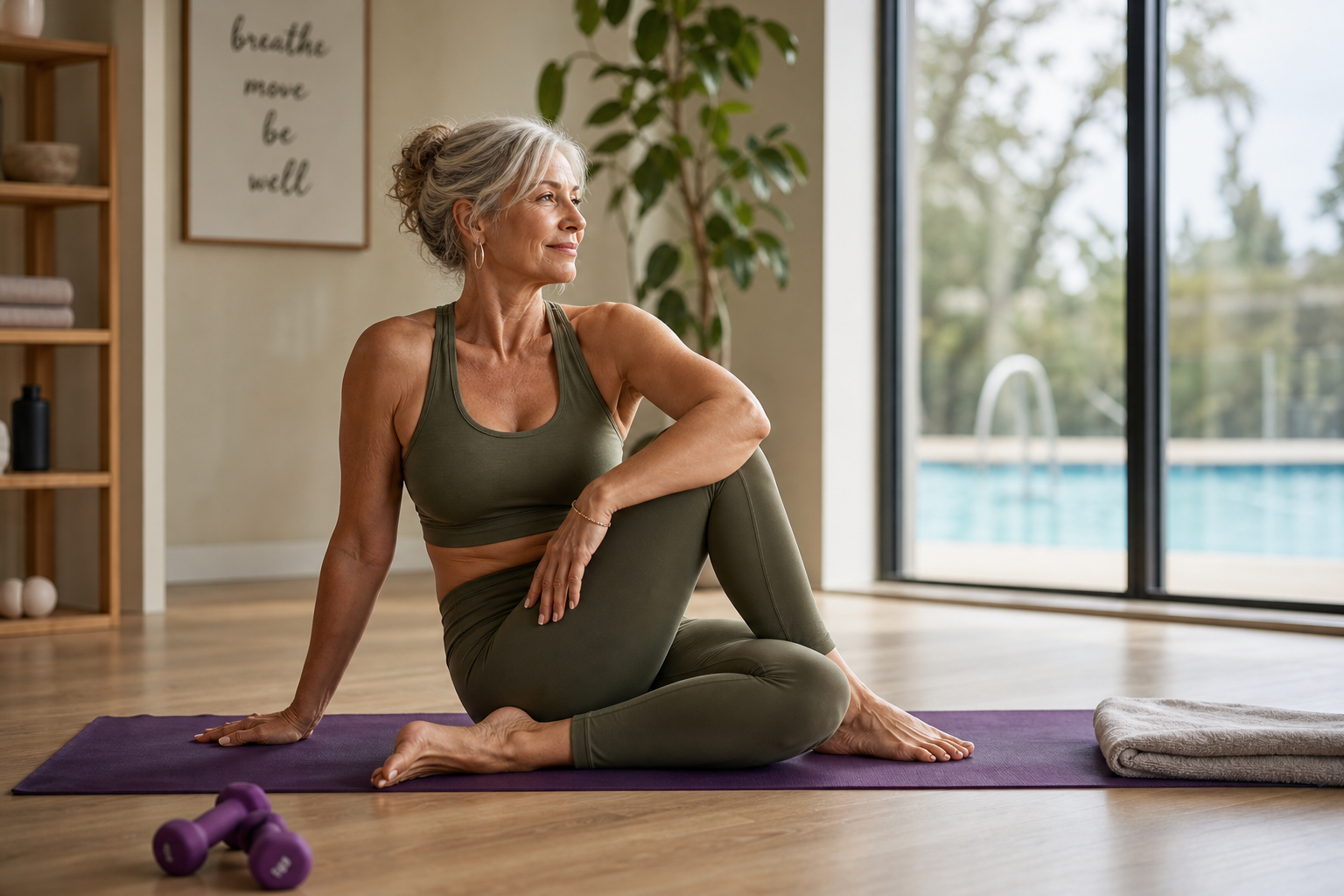
Studies specifically on yoga and hot flashes show 30-40% reduction in flash frequency over 12 weeks. The breathing component (which activates the parasympathetic nervous system) may contribute to thermoregulatory recalibration beyond what pure aerobic exercise provides. Avoid hot yoga.
Yoga’s benefit comes partly from the physical practice and partly from the nervous system regulation. The slow, controlled breathing patterns taught in yoga activate the parasympathetic nervous system, which opposes the sympathetic “fight or flight” response that often accompanies hot flashes. Regular yoga practice can make you less reactive to flash triggers overall.
Not all yoga styles are equally helpful. Restorative and Hatha yoga, which emphasize slower movements and longer holds, produce better hot flash outcomes than vigorous Vinyasa or Power yoga. The goal is to build strength and flexibility without spiking your heart rate or core temperature. For a comparison of different gentle practices, see our article on yoga vs tai chi for seniors.
Skip Bikram or any “hot yoga” format. Exercising in a room heated to 95-105 degrees is specifically designed to induce sweating, which directly opposes your goal of avoiding temperature triggers. The fact that hot yoga has “detox” marketing doesn’t change the physiology: it will trigger flashes.
Resistance Training
Strength training with resistance bands or light dumbbells produces less core temperature rise than continuous cardio, making it less likely to trigger flashes during the session while still contributing to long-term flash reduction.
Resistance training has the added benefit of addressing other menopausal concerns: bone density loss, muscle mass decline, and metabolic changes. Strength work twice a week helps maintain bone mineral density, which drops rapidly in the first few years after menopause. It also builds muscle, which improves insulin sensitivity and makes weight management easier. For more on resistance training benefits, check out our 12-week strength building program.
The rest periods between strength sets allow partial cooling, similar to the interval approach. A typical strength session might include 10-12 exercises with 60-90 seconds of rest between sets. Those rest breaks prevent the continuous core temperature buildup that happens during cardio.
Start with light resistance and focus on form. Muscular fatigue is the goal, not heavy weight. Resistance bands are ideal for beginners because they provide variable resistance that’s gentler on joints and easier to control than free weights. A set of three bands (light, medium, heavy) gives you enough resistance to work every major muscle group.
What to Expect in the First Few Weeks
The first two to four weeks of a new exercise program can feel discouraging. You may experience more frequent flashes during and immediately after workouts. Your body is still operating with the old, hypersensitive thermoregulatory settings, and you’re adding a new temperature challenge.
Push through this adjustment period. The exercise-triggered flashes usually peak in week two or three, then start declining as your thermoregulatory system begins adapting. By week six, most women find that exercise triggers fewer flashes than it did