Getting older doesn’t mean you have to accept stiffness and limited mobility as your new normal. If you struggle to bend down and tie your shoes, or turning to check your blind spot while driving has become uncomfortable, you’re dealing with flexibility issues that can actually improve with the right approach. The key is starting where you are right now, not where you think you should be.
Many seniors avoid stretching because past attempts felt painful or didn’t seem to help. But flexibility training works differently than strength or cardio exercise. It requires patience, consistency, and a realistic understanding of what your body needs at this stage. Let’s build a program that meets you at your current level and gradually expands what you can do.
Understanding Static vs. Dynamic Stretching
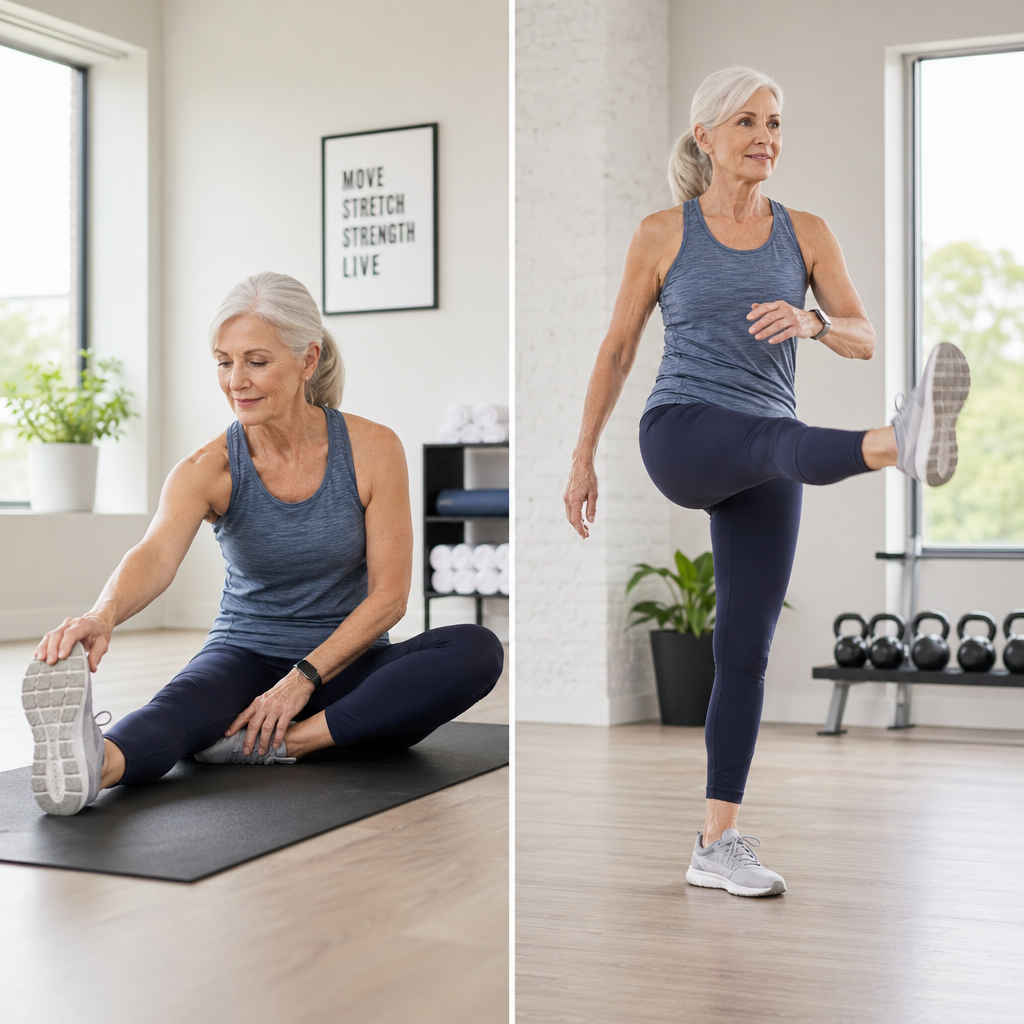
Static stretching means holding a position without movement. You stretch your hamstring and stay there for 30 seconds. Dynamic stretching involves controlled movements that take your joints through their range of motion, like leg swings or arm circles.
For seniors with limited flexibility, static stretching forms the foundation of your program. Your muscles and connective tissues need time to adapt, and static holds provide that opportunity. Dynamic stretching can come later, once you’ve built some baseline flexibility.
Here’s what matters: static stretching should happen when your muscles are warm. Don’t stretch first thing in the morning when you’re stiff and cold. Instead, do some light movement first. Walk around your house for five minutes, march in place, or do some gentle arm movements. Even a warm shower beforehand helps.
Dynamic stretching works better as a warm-up before activities. Once you’ve progressed past the beginner stage, gentle leg swings or shoulder rolls prepare your body for walking, gardening, or other activities. But in the early weeks, focus on static holds.
Starting Position: Where You Are Right Now
Your first stretches should feel almost too easy. If you can barely reach past your knees when bending forward, that’s your starting point. Don’t compare yourself to the instructor in a video who touches the floor effortlessly.
Begin with seated stretches. Sitting removes balance concerns and lets you focus entirely on the stretch itself. A sturdy chair with arms provides support and security. You’ll do most of your initial flexibility work from this position.
Start with neck rolls, seated spinal twists, and ankle circles. These require minimal flexibility and get your body accustomed to the sensation of stretching. Your goal in week one is simply building the habit and learning what a proper stretch feels like.
A proper stretch creates mild tension, never pain. You should feel a gentle pull in the muscle, but you should be able to breathe normally and hold a conversation. Pain means you’ve pushed too far. Back off immediately.

Stretching Strap with Loops
Essential tool that extends your reach and provides multiple grip positions for different flexibility levels
How Long to Hold Each Stretch
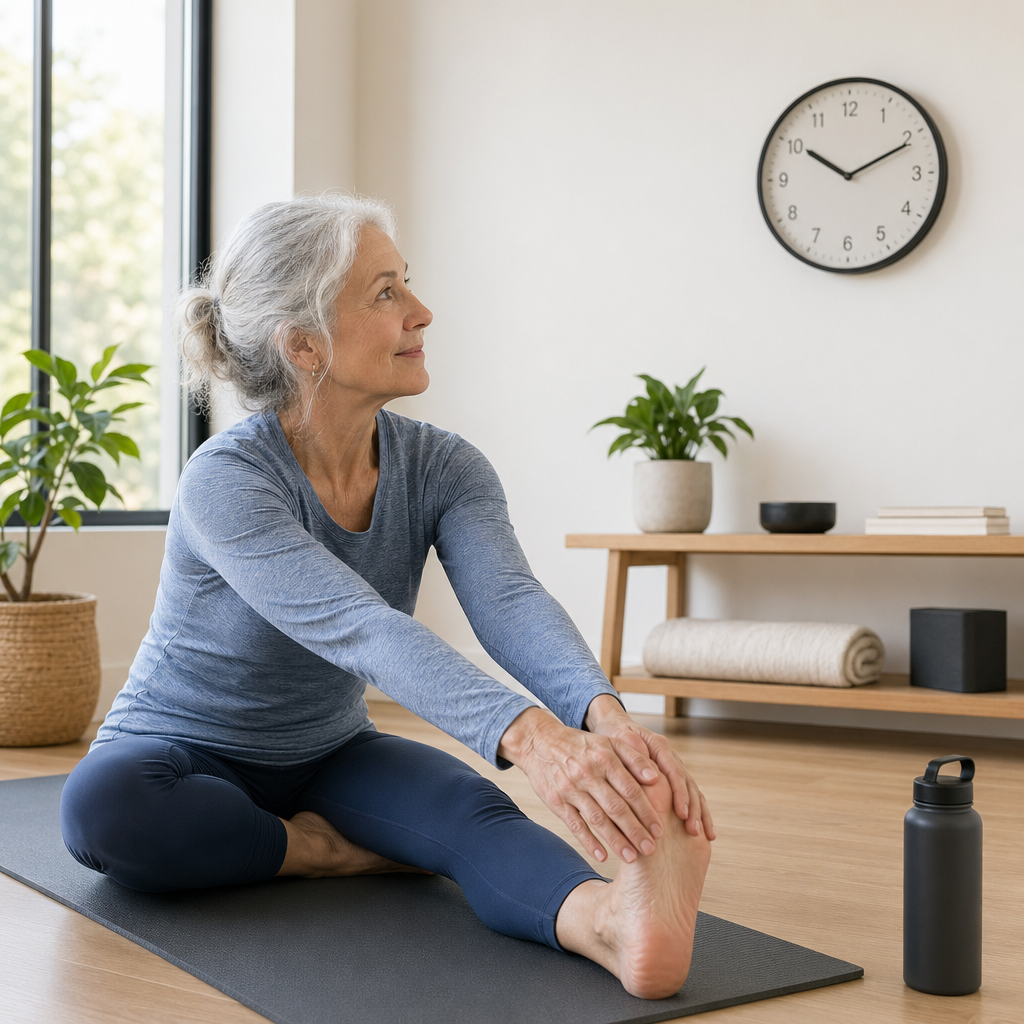
Research shows that holding a stretch for 15 to 30 seconds produces improvements in flexibility. Longer holds don’t necessarily work better for most people. But here’s what studies often miss: seniors with very tight muscles benefit from working up to those durations gradually.
In your first two weeks, hold stretches for 10 to 15 seconds. Your body needs time to trust this new activity. Shorter holds feel less intimidating and reduce the risk of pushing too hard too soon.
After two weeks, increase to 20 to 30 seconds per stretch. This becomes your standard hold time for most stretches. You can stay at this duration indefinitely. There’s no need to progress to minute-long holds unless you want to.
Repeat each stretch two to three times. The first repetition rarely produces your best range of motion. Your muscles relax more with each repetition, letting you stretch a bit further. Just make sure to rest for 10 to 15 seconds between repetitions.
Frequency matters more than duration. Stretching for 15 minutes every day produces better results than stretching for an hour once a week. Your tissues need regular, consistent stimulus to adapt and lengthen.
Essential Props and Modifications
The right equipment makes stretching accessible when your flexibility is severely limited. These aren’t shortcuts or crutches. They’re tools that let you stretch effectively while working within your current range of motion.
A yoga strap or stretching strap extends your reach by two or three feet. Can’t reach your toes? Loop the strap around your foot and hold the ends. You’ve just made a hamstring stretch possible. Straps with loops at various intervals let you adjust the length as your flexibility improves.
Yoga blocks provide height when the floor feels too far away. Place blocks under your hands during a forward fold, and suddenly the stretch becomes achievable. You can stack two blocks for even more height, then remove one as you progress. These simple foam or cork rectangles cost less than a nice dinner out and last for years.

Foam Yoga Blocks Set
Lightweight blocks that bring the floor closer to you during standing and seated stretches
A foam roller helps with muscle tension that limits flexibility. Tight, knotted muscles don’t stretch well. Rolling on a foam roller for a few minutes before stretching can make a noticeable difference in your range of motion. Start with a softer roller if you have sensitive tissues.
Resistance bands with handles work similarly to straps but provide more options for upper body stretching. The handles are easier to grip if you have arthritis or reduced hand strength. You can also use them for gentle strength work, making them a versatile addition to your routine.
A firm cushion or folded blanket provides support during floor stretches. Sitting on a cushion tilts your pelvis forward, making seated forward folds much more accessible. It reduces the stretch intensity, which is exactly what you want as a beginner.
Progressive Stretching Program: 12 Weeks
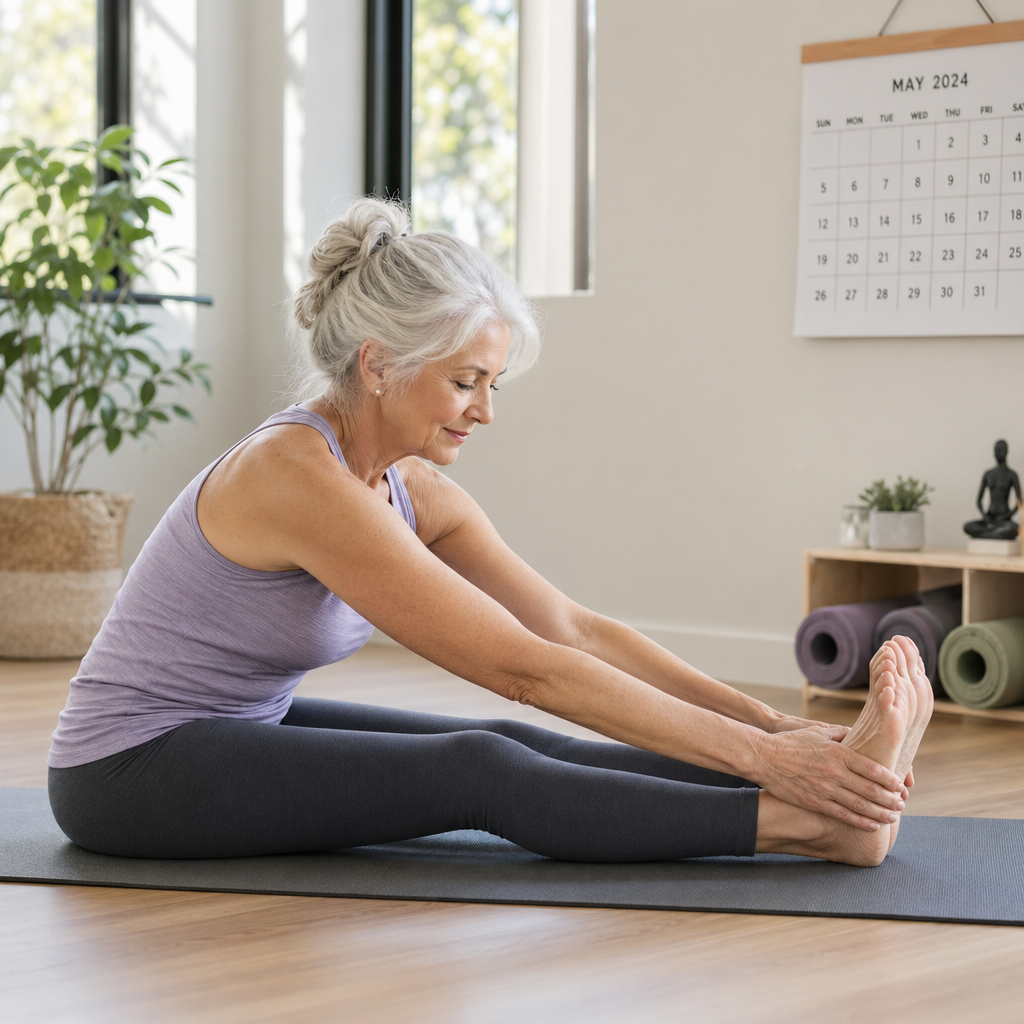
This program assumes you’re starting with very limited flexibility. Adjust the timeline if you progress faster or need more time at each stage. There’s no prize for rushing through.
Weeks 1 to 2: Foundation Phase
Stretch five to six days per week for 10 to 15 minutes. Focus entirely on seated stretches. Work on neck rotations, seated spinal twists, ankle circles, wrist circles, and gentle shoulder rolls. Hold each stretch for 10 seconds, repeat twice.
Your only goal is consistency. You’re building the habit and teaching your nervous system that stretching is safe. Don’t worry about seeing dramatic improvements yet. Small increases in range of motion count as wins.
Weeks 3 to 4: Adding Lower Body
Continue your seated routine, but add hamstring and calf stretches using a strap. Sit with legs extended, loop the strap around one foot, and gently pull. Keep your knee slightly bent if needed. Hold for 15 to 20 seconds now.
Add seated hip stretches. Cross one ankle over the opposite knee and gently lean forward. This opens up your hips without requiring you to get on the floor.
Weeks 5 to 8: Standing Stretches
Introduce standing stretches while keeping your seated routine. Use a chair back or counter for balance. Add standing quad stretches (pull your heel toward your glutes), calf stretches against a wall, and gentle standing side bends.
Increase hold times to 25 to 30 seconds. You should notice that positions that felt challenging in week one now feel comfortable. Your body is adapting.
Weeks 9 to 12: Floor Work and Integration
Add gentle floor stretches if you can get down and up safely. Cat-cow stretches on hands and knees, child’s pose with support, and supine hamstring stretches work well. Use cushions and blocks liberally to make positions accessible.
Start incorporating five minutes of gentle dynamic stretching before activities. Leg swings, arm circles, and torso twists prepare your body for movement. Your static stretching routine continues separately, ideally in the evening when your body is warmest.
Realistic Timelines for Improvement
You’ll notice small changes within two to three weeks. Movements that felt restricted will have a bit more give. But significant improvements take longer, especially if you’ve been tight for years or decades.
Most seniors see meaningful flexibility gains after eight to twelve weeks of consistent practice. Meaningful means you can put on your socks more easily, pick something up off the floor with less difficulty, or turn your head further while driving. These functional improvements matter more than touching your toes.
After twelve weeks, progress continues but at a slower rate. You might spend three months reaching another inch closer to your toes. This is normal. Your connective tissues become less plastic as you age, so changes happen more gradually.
Some limitations may never fully resolve. If you have arthritis, bone spurs, or previous injuries, your maximum potential range of motion might be less than someone without these conditions. Focus on improving what you can and maintaining the flexibility you gain.
Missing a few days won’t erase your progress, but missing a few weeks will. Flexibility is more temporary than strength gains. Your muscles and fascia start tightening up again within a week or two of stopping your routine. Think of flexibility training as ongoing maintenance, not a project with an end date.

Flexibility and Stretching Guide Book
Detailed reference with illustrations showing proper form and modifications for every major stretch
Common Mistakes to Avoid
Bouncing during stretches is the biggest error people make. Ballistic stretching (bouncing) triggers a protective reflex that makes your muscles contract, fighting against your effort. You’re trying to convince your muscles to relax and lengthen. Bouncing sends the opposite message.
Holding your breath creates unnecessary tension throughout your body. Breathe slowly and steadily during every stretch. Some people find it helpful to deepen the stretch slightly on each exhale, when your muscles naturally relax a bit.
Stretching cold muscles increases injury risk. Always warm up first with light movement. Your muscles need increased blood flow before they’ll stretch safely and effectively.
Comparing yourself to others leads to pushing too hard. Your neighbor might have maintained flexibility through yoga for years. You’re starting from a different place. Only compare yourself to where you were last week or last month.
Skipping rest days seems productive but can backfire. Your body needs recovery time to adapt. Stretching every single day works fine for most people, but if you feel sore or notice decreased range of motion, take a day off. Three to five sessions per week still produces good results.
Frequently Asked Questions
Should I stretch before or after exercise?
Static stretching works best after exercise or as a separate session when your muscles are warm. Before walks or other activities, do gentle dynamic movements instead. Save the longer static holds for later in the day. Many seniors find that stretching in the evening, after dinner, works well because their body is naturally warmer and more pliable from the day’s activities.
Is it normal to feel stiff again the next morning even though I stretched the night before?
Yes, this is completely normal. Your body stiffens during sleep because you’re not moving for hours. Morning stiffness doesn’t mean your stretching isn’t working. Over time, you’ll notice that your morning stiffness becomes less severe and resolves more quickly. A few gentle movements after waking up will help. You might even want to do a short five-minute stretching session each morning in addition to your main evening routine.
How do I know if pain during stretching is normal or a warning sign?
A stretching sensation feels like mild pulling or tension in the muscle belly. You should be able to breathe normally and hold the position without grimacing. Sharp, burning, or shooting pain signals a problem. Stop immediately if you feel pain in your joints rather than muscles. Feeling sore the next day, similar to after any exercise, is normal. But pain during the stretch itself, or pain that gets worse instead of better after a few seconds in the position, means you’ve pushed too far.
Can I improve flexibility if I have arthritis?
Yes, but you need to work carefully around your limitations. Gentle stretching actually helps maintain joint mobility with arthritis. Focus on moving through comfortable ranges of motion rather than pushing to maximum stretch. Use props extensively to support your joints. Warm water therapy, like stretching in a pool or after a warm shower, helps significantly. On days when your arthritis is flaring, do gentler movements or skip your session entirely. Consistency matters more than intensity.
Making It Stick
The best stretching program is the one you’ll actually do. Pick a specific time each day and treat it like any other appointment. Many people succeed by stretching while watching a favorite TV show. The distraction actually helps them hold positions longer.
Track your progress somehow. Take photos of how far you can reach at the beginning, or keep a simple log of which stretches you did. Seeing improvement over weeks and months provides motivation when daily changes feel invisible.
Your flexibility can improve at any age. The process takes patience and consistency, but the payoff in easier daily movement and reduced stiffness is worth the investment. Start today with just five or ten minutes of gentle seated stretches. Your body six months from now will thank you. For additional exercises that complement your stretching routine, consider exploring mobility exercises for seniors, Pilates moves for seniors, or learning about common flexibility mistakes to avoid.
This article contains affiliate links. We may earn a small commission at no extra cost to you.