Sitting at a desk for hours on end takes a toll on your body, especially as you get older. Your muscles tighten, your posture suffers, and that stiffness you feel at the end of the day becomes harder to shake off. But you don’t need to leave your desk or change into workout clothes to combat these effects.
The right exercises done throughout your day can keep your body moving, reduce pain, and maintain your mobility. These simple movements fit into your routine without disrupting your work, and many require nothing more than your chair and a bit of space.
Quick Posture Checks You Can Do Right Now

Before you start any exercises, take a moment to assess how you’re sitting. Poor posture compounds the negative effects of sitting all day, putting extra strain on your neck, shoulders, and lower back.
Your feet should rest flat on the floor with your knees at a 90-degree angle. If your feet don’t reach, place a small footrest or a sturdy box under them. Your back should touch the backrest of your chair, and your screen should be at eye level so you’re not constantly looking down.
Check in with your shoulders every hour. Roll them back and down, away from your ears. Most people let their shoulders creep up toward their ears when focused on work, creating tension that leads to headaches and neck pain.
Set a timer on your phone or computer to remind you every 30 minutes. When it goes off, do a quick body scan. Are you slouching? Is your head jutting forward? Make the adjustment immediately rather than waiting until pain sets in.
Seated Stretches That Release Tension
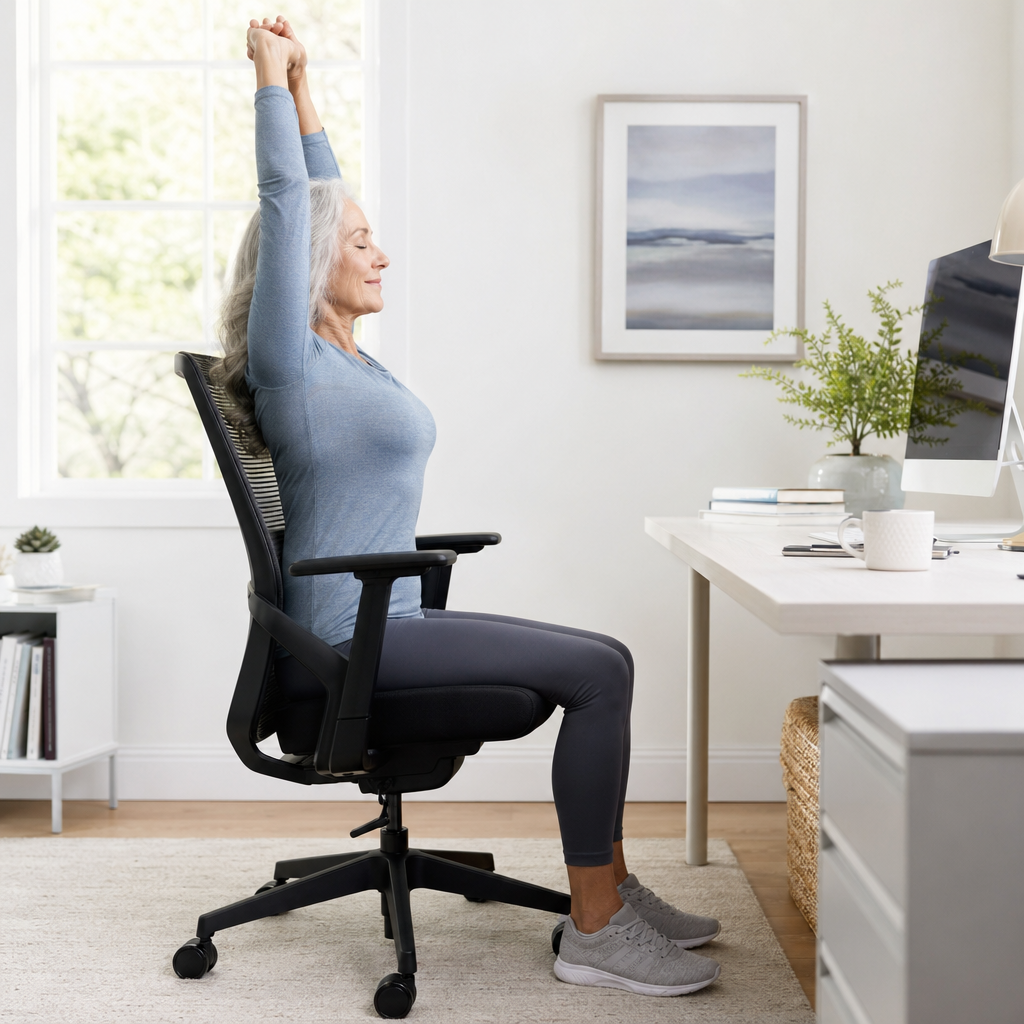
Stretching at your desk doesn’t need to be elaborate. These movements take less than a minute each but make a real difference when done consistently.
Start with a seated spinal twist. Sit up tall, place your right hand on the outside of your left knee, and gently twist to the left. Hold for 15-20 seconds, then switch sides. This relieves lower back tension and keeps your spine mobile.
For your neck, try chin tucks. Pull your chin straight back like you’re making a double chin, hold for 5 seconds, and release. Do 10 repetitions. This counters the forward head posture that comes from staring at screens all day.
Shoulder blade squeezes help open up your chest. Pull your shoulder blades together behind you as if you’re trying to hold a pencil between them. Hold for 5 seconds and repeat 10 times. You’ll feel your chest open up and your upper back engage. If you experience persistent shoulder discomfort, consider incorporating gentle rotator cuff exercises into your routine.
Don’t forget your hips. Sit at the edge of your chair, extend one leg straight out, and gently flex your foot toward you. You’ll feel a stretch in your hamstring. Hold for 20 seconds on each leg. Your hips and hamstrings tighten considerably from constant sitting, and addressing this tension can help prevent hip pain from developing.
Strengthening Moves You Can Do Seated

Building strength doesn’t always require weights or equipment. These exercises use your body weight and chair to maintain muscle tone.
Seated marches get your blood flowing and engage your core. Sit tall and lift one knee as high as comfortable, then lower it and repeat with the other leg. Do 20 alternating lifts. This activates your hip flexors and abdominal muscles.
Chair squats are perfect for maintaining leg strength. Stand up from your chair without using your hands, then slowly lower yourself back down without fully sitting. Pause just above the seat, then stand again. Start with 5-10 repetitions and build from there. This exercise is particularly valuable for those recovering from knee surgery or looking to maintain knee strength and stability.
For your arms, try desk pushups. Stand a few feet from your desk, place your hands on the edge, and do pushups at an incline. This modified version is easier on your joints while still building upper body strength. Aim for 10-15 repetitions.
Ankle circles and calf raises prevent swelling and improve circulation in your legs. While seated, lift one foot off the ground and rotate your ankle clockwise 10 times, then counterclockwise. For calf raises, stand and lift up onto your toes, hold for a second, then lower. Do 15-20 repetitions.
Under-Desk Equipment That Actually Helps
Adding a few pieces of equipment under your desk can increase your movement options without taking up office space. Not every gadget is worth it, but a few genuinely make a difference.
An under desk elliptical lets you keep your legs moving while you work. The low-impact motion doesn’t distract from your tasks but keeps blood circulating through your legs. Look for models with adjustable resistance so you can vary the intensity.

Under Desk Elliptical
Keeps your legs moving throughout the day with smooth, quiet operation that won’t disturb coworkers.
A balance disc on your chair forces your core muscles to engage as you sit. These inflatable cushions create an unstable surface that requires constant small adjustments to maintain balance. It’s subtle but effective for building core strength over time.
Resistance bands are incredibly versatile and take up almost no space. Keep a set in your desk drawer for quick arm and shoulder exercises. You can do rows, chest presses, and shoulder pulls right from your chair. Look for bands with handles for easier gripping.

Resistance Bands with Handles
Perfect for desk-based strength training with multiple resistance levels to match your fitness.
An under desk footrest improves your posture by keeping your feet properly positioned. Some models rock or tilt, encouraging subtle movement throughout the day. This is particularly helpful if your chair doesn’t adjust low enough for your feet to rest flat on the floor.
Creating a Movement Routine That Sticks
Having exercises available doesn’t help unless you actually do them. Building a realistic routine makes movement automatic rather than something you have to remember.
Start small. Pick three exercises and commit to doing them twice during your workday. Once at mid-morning and once mid-afternoon. Don’t try to overhaul everything at once or you’ll quit within a week.
Link your exercises to existing habits. Do neck stretches every time you finish a phone call. Do seated marches whenever you’re waiting for a file to load. These habit stacks make new behaviors stick faster. If you struggle with flexibility, adapting gentle yoga movements to your desk routine can provide additional benefits.
Stand up every 30 minutes, even if just for 30 seconds. Walk to the water cooler, do a lap around your office, or simply stand and stretch. Breaking up prolonged sitting matters more than the specific activity you choose.
Write your routine on a sticky note and put it on your monitor. When you’re deep in work, visual reminders help. List your three core exercises with checkboxes for morning and afternoon. The act of checking boxes provides a small sense of accomplishment that reinforces the habit.
Track how you feel. Notice if your back hurts less at the end of the day or if you have more energy. These positive changes motivate you to keep going when the novelty wears off.
Frequently Asked Questions
How often should I take movement breaks?
Aim to stand up and move for at least 2-3 minutes every 30 minutes. This doesn’t mean doing a full workout every half hour. Simply standing, walking a few steps, or doing some basic stretches is enough to counteract prolonged sitting. Research shows that frequent short breaks are more beneficial than one long break.
Can desk exercises really make a difference for back pain?
Yes, when done consistently. Most desk-related back pain comes from muscle imbalances, poor posture, and lack of movement rather than serious structural problems. Regular stretching and strengthening exercises address these root causes. You should see improvement within 2-3 weeks of daily practice, though severe or persistent pain requires medical evaluation.
What if I feel self-conscious doing exercises at work?
Most desk exercises are subtle enough that coworkers won’t notice. Seated stretches, posture checks, and ankle movements look like normal fidgeting. Save more obvious exercises like chair squats or desk pushups for when you’re alone or step into a private area. Many workplaces now encourage movement breaks, so you might inspire others to join you rather than face judgment.
Related Articles
- Post-Knee Replacement Exercises For Seniors
- Yoga for Seniors with Limited Flexibility: A Complete Guide
- Managing Hip Pain Through Exercise: 12 Gentle Movements That Help
- Shoulder Pain Relief Exercises: 8 Moves for Rotator Cuff Health
This article contains affiliate links. We may earn a small commission at no extra cost to you.