Ankle weights are one of the simplest, most affordable tools for building lower body strength at home, and they work especially well for older adults who want to stay active without jumping into a gym routine. A small amount of added resistance can make a real difference in muscle tone, balance, and joint stability over time. The key is using them correctly and starting lighter than you think you need to.
This guide covers what to look for when buying ankle weights, our top picks for seniors, and a set of safe exercises you can do seated or standing. If you’ve been curious about adding a little resistance training to your daily routine, ankle weights are a practical place to start.
What to Look for in Ankle Weights for Seniors
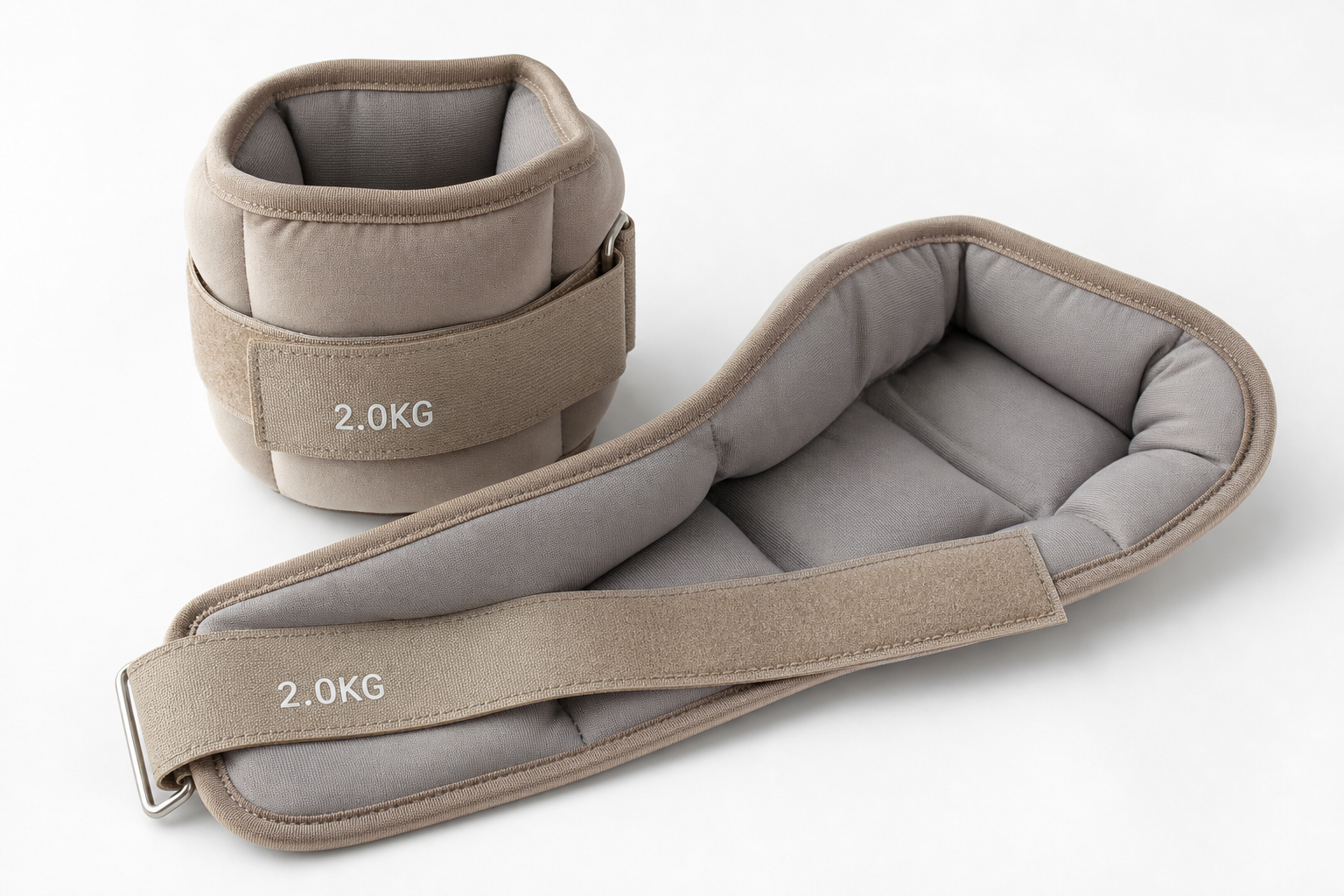
Not all ankle weights are created equal. For older adults, comfort and adjustability matter far more than maximum weight capacity. Here’s what to prioritize:
- Adjustable weight: Look for weights with removable inserts so you can start at 0.5 or 1 pound per ankle and increase gradually. Fixed-weight options don’t give you that flexibility.
- Wide, padded straps: Narrow straps dig into the skin and cut off circulation. A wide neoprene or fabric strap distributes pressure evenly and stays comfortable during longer sessions.
- Secure fastening: Hook-and-loop (Velcro-style) closures are the easiest to manage, especially if you have limited hand strength. Check our guide to grip strength exercises if fastening straps is a challenge.
- Lightweight total capacity: For most seniors, a set that maxes out at 5 pounds per ankle is more than enough. You don’t need the heavy-duty options marketed to athletes.
- Machine washable: They’ll absorb sweat. Easy cleaning is a real practical advantage.
Skip anything that feels stiff or has a hard plastic casing. Your ankle and shin area is bony and sensitive, and you want padding between you and the weight.
Our Top Picks
The following options consistently get strong reviews from older adults for comfort, ease of use, and durability. All are adjustable and use soft, wide strap designs.
The Bala Bangles are a popular option for very light resistance work. They’re sleek, comfortable, and easy to put on without dealing with straps. That said, they’re fixed weight, so they work best as a starting point rather than a long-term solution.
For true adjustability, the removable-insert style ankle weights from brands like All Pro and Sportneer are our go-to recommendation for most seniors. You can pull out individual weight pouches to fine-tune the resistance session by session.

All Pro Adjustable Ankle Weights
Soft neoprene construction with removable weight inserts make these one of the most senior-friendly ankle weights available.
If you have any issues with swelling or circulation in your lower legs, pair your ankle weight routine with a good pair of compression socks worn after your workout rather than during, and talk to your doctor if you notice any increased puffiness.
For those who prefer a softer, more flexible feel, the Gaiam adjustable ankle weights are a solid budget-friendly option with good strap width and a comfortable fit for narrower ankles.

Gaiam Ankle Weights
A budget-friendly pick with a soft, flexible design and wide strap that works well for seniors with narrower ankles or sensitive skin.
Watch: Ankle Weight Exercises for Seniors
Before we get into the written exercise descriptions, this video walks through several safe ankle weight movements that are appropriate for older adults. It’s a great visual reference to watch once before you start your first session.
Safe Exercises with Ankle Weights for Seniors
These movements are organized from easiest to slightly more challenging. Start with the seated exercises if you’re new to resistance training or have balance concerns. If you deal with vertigo or dizziness during movement, our article on vertigo and balance exercises for seniors has helpful guidance before you add any external resistance.
Seated Exercises
Seated Leg Extensions: Sit tall in a chair with your feet flat on the floor. Slowly straighten one leg until it’s parallel to the floor, hold for two seconds, then lower it back down. Do 10 to 12 reps per leg. This targets the quadriceps and is gentle on the knees when done through a pain-free range.
Seated Ankle Dorsiflexion: With your foot flat, slowly lift the front of your foot off the floor while keeping your heel down. This strengthens the tibialis anterior, which plays a big role in preventing trips and falls. Do 15 reps per side.
Seated Hip Abduction: Sit with your knees together, then slowly press one knee outward against light resistance from your hand or a folded towel. The ankle weight adds subtle extra load. Do 12 reps per side. This strengthens the outer hip, which supports better gait mechanics.
Standing Exercises
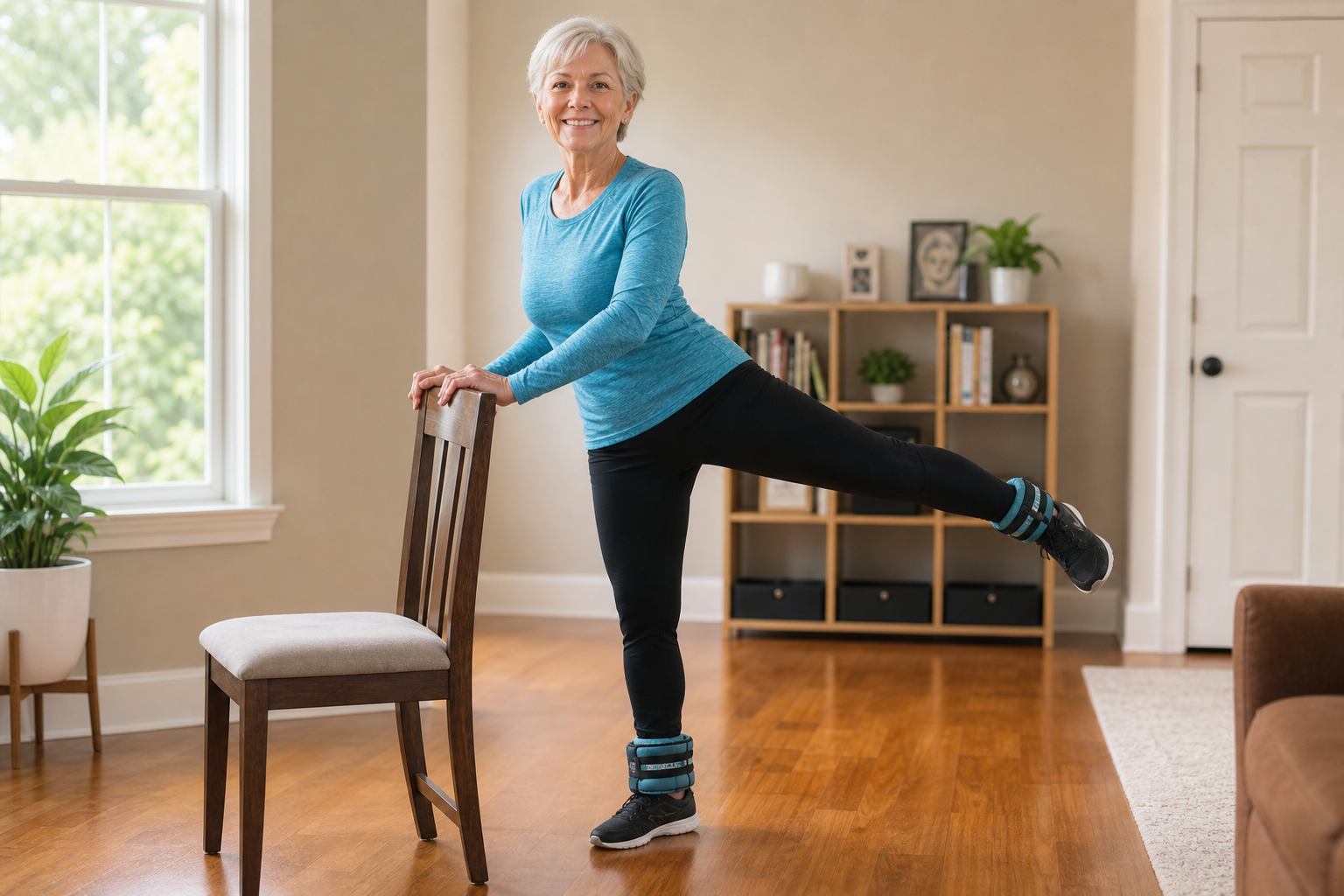
Standing Leg Lifts (Side): Stand behind a sturdy chair and hold the back for balance. Slowly lift one leg out to the side about 12 inches, hold briefly, then lower. Keep your upper body upright and don’t lean. Do 10 to 15 reps per side.
Standing Knee Raises: Still holding the chair back, slowly lift one knee toward your hip, hold for one to two seconds, then lower. This works your hip flexors and challenges your standing balance leg at the same time. Do 10 reps per side.
Standing Kickbacks: Keeping a slight bend in your standing knee, slowly extend one leg straight back behind you. Squeeze your glute at the top. Don’t arch your lower back. Do 10 reps per side. This is excellent for glute strength, which supports both posture and fall prevention.
If you’re managing a specific condition like osteoporosis or arthritis, be sure to check our osteoporosis exercise plan and arthritis-friendly exercise guide to make sure these movements align with your situation.
How to Progress Safely
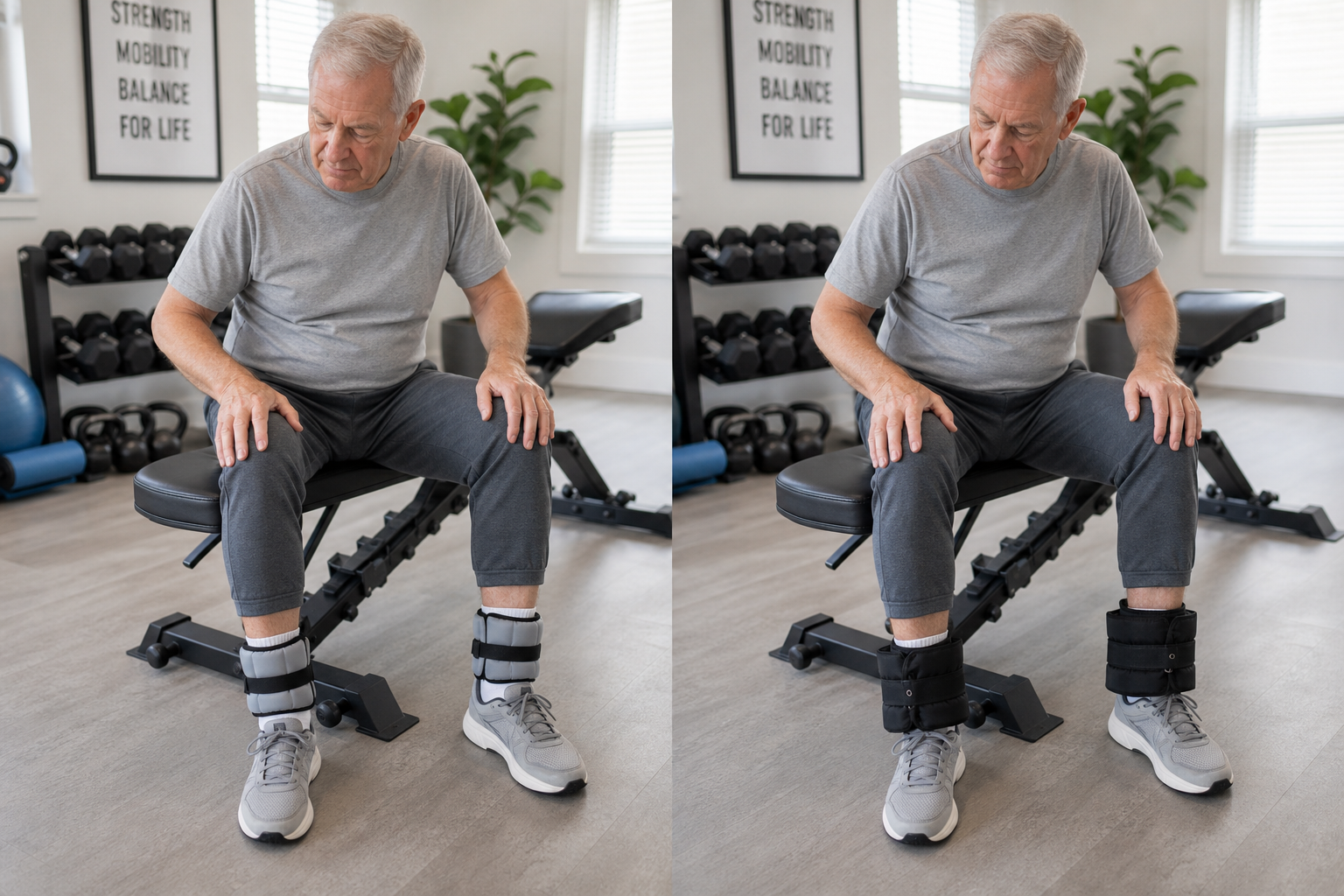
This is where most people go wrong. Starting with 2 or 3 pounds per ankle might not sound like much, but after 12 to 15 repetitions of multiple exercises, that adds up fast. Muscle soreness the next day is a sign you pushed too hard, not a badge of honor.
A better approach: start with 0.5 to 1 pound per ankle for the first two weeks. If you finish a set of 15 reps and feel like you could easily do 20 more, then you can add a little weight. This kind of progressive resistance approach is what actually builds strength without causing setbacks.
Also pay attention to how your joints feel during and after. Mild muscle fatigue is normal. Sharp joint pain or swelling is a signal to stop and reassess.
After your session, a light snack with protein and carbohydrates helps muscle recovery. Our article on post-workout recovery meals for seniors has practical, easy ideas if you’re not sure what to eat after exercise.
Frequently Asked Questions
How heavy should ankle weights be for seniors?
Most seniors do best starting between 0.5 and 1 pound per ankle. Even 1 pound becomes significant across multiple sets and exercises. Only increase when the current weight feels genuinely easy for all reps in a session, not just the first few.
Can seniors use ankle weights every day?
It’s better to allow at least one rest day between resistance sessions to let muscles recover. Using ankle weights three to four times per week is a more effective long-term approach than daily use. On off days, walking or light stretching is fine.
Are ankle weights safe for people with knee or hip replacements?
In many cases, light ankle weights are used in physical therapy after joint replacements, but the timing and movements matter a lot. Always follow your surgeon’s or physical therapist’s guidance first. Our post-knee replacement exercise guide is a useful reference once you’ve been cleared for resistance work.
Final Thoughts
Ankle weights are a low-cost, low-risk way to add meaningful resistance training to your routine without a gym membership or heavy equipment. The right pair, used with proper form and smart progression, can make a noticeable difference in leg strength, balance, and overall mobility over a few months.
Start lighter than feels necessary, focus on controlled movement over speed, and give your body time to adapt. That approach will serve you far better than pushing hard and having to take weeks off due to soreness or strain.
Check current pricing on Amazon for the adjustable ankle weights that work best for your needs, and consider pairing them with a budget-friendly home gym setup if you’re building out a fuller routine at home.
This article contains affiliate links. We may earn a small commission at no extra cost to you.