If you’ve started taking creatine to support your strength training after 60, you’ve probably wondered whether you actually need to take it on the days you’re not lifting weights. It’s a fair question, and the answer isn’t as intuitive as most supplement labels make it sound. Creatine doesn’t work like a pre-workout energy drink that you time around your gym session. It works more like a mineral your body slowly builds up and maintains a reserve of, and that changes how you should think about dosing it on rest days.
How Creatine Actually Works in the Body
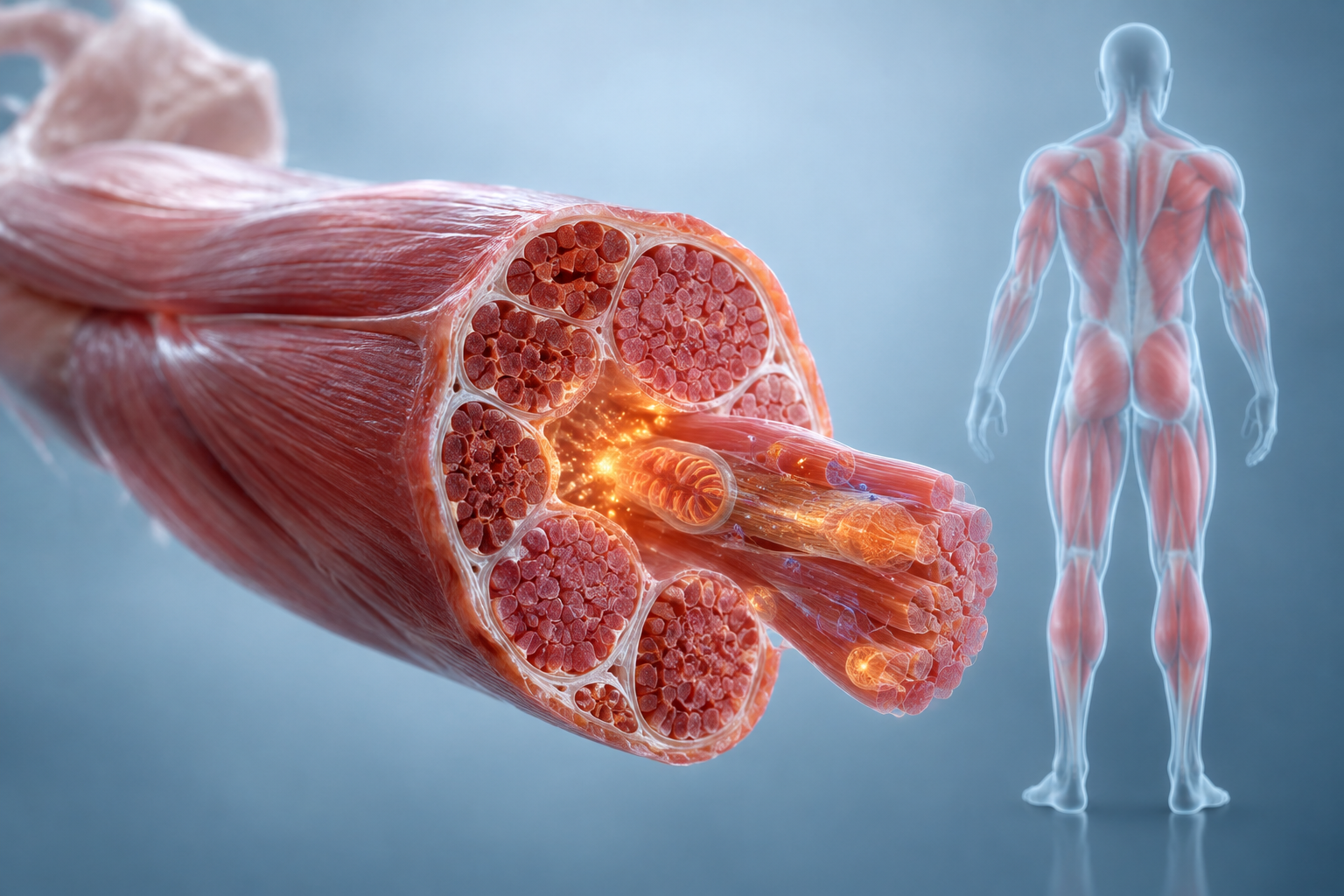
Creatine monohydrate is stored primarily in your skeletal muscle as phosphocreatine, a molecule your muscles tap into for quick bursts of energy. The point of daily supplementation isn’t to fuel a single workout. It’s to gradually raise your total muscle creatine stores over days and weeks, so more of that fuel is available whenever you need it, whether that’s during a strength session or just getting up out of a low chair.
Research on older adults suggests that once those muscle stores are saturated, they stay elevated as long as you keep taking a maintenance dose consistently. That’s the key detail people miss. Creatine isn’t cleared out of your system the moment you skip a workout. It stays in muscle tissue and gets used gradually, which is why the “only take it on lifting days” approach doesn’t match how the compound actually behaves.
What the Research Says About Rest-Day Dosing
Most of the studies showing benefits for older adults, things like improved lean muscle mass, strength gains when paired with resistance training, and better performance in daily functional tasks, used daily creatine dosing regardless of whether training occurred that day. Researchers weren’t cycling the dose around workouts. They gave a consistent daily amount, typically in the range of three to five grams, for weeks or months at a time.
That consistency appears to matter more than timing. Since creatine works by keeping your muscle stores topped off rather than by giving you an immediate hit of energy, taking it on rest days helps maintain that saturation instead of letting it dip. Skipping rest-day doses won’t undo your progress overnight, but it does create unnecessary peaks and valleys in your muscle creatine levels when the goal is steady, reliable saturation.
Should You Take It Every Day, Including Rest Days?
For most healthy older adults using creatine to support strength training and muscle maintenance, taking it daily, including rest days, lines up with how the supplement is actually studied and how it functions physiologically. It also simplifies things. Instead of trying to remember which days call for creatine and which don’t, you fold it into a daily habit, similar to how you might already handle a morning protein shake or a daily vitamin.
This is especially relevant if you’re following a structured strength routine like the ones outlined in our guide to sets and reps for seniors, where rest days are built in intentionally to let muscles recover. Recovery is actually when a lot of the adaptation from training happens, so keeping creatine levels steady on those days supports the same muscle-building process your workout days set in motion. If you’re also working on progressively increasing your training load, as covered in how to increase your weights safely after 60, having consistent creatine stores may help support that steady progression rather than leaving gaps in your supplementation that coincide with your recovery periods.
Choosing a Creatine Supplement for Daily Use

Since you’ll likely be taking creatine every day if you go this route, it makes sense to pick a plain, well-tested monohydrate powder rather than a flavored blend loaded with extra ingredients you don’t need. Look for a product that lists creatine monohydrate as the only active ingredient, ideally one that uses the micronized form, which tends to mix more easily into water or a protein shake.
Creatine Monohydrate Powder
A simple, no-frills daily creatine option that mixes easily and works well whether you’re training or resting.
Since creatine needs adequate water intake to work comfortably, especially at a consistent daily dose, it’s worth pairing it with good hydration habits throughout the day. If you tend to forget to drink enough water, an easy-to-grip bottle with clear markings can help, something we cover in more detail in our guide to arthritis-friendly water bottles for seniors. Staying properly hydrated also matters for muscle function generally, which we get into further in hydration and muscle cramps in seniors.
Many seniors already take a daily protein supplement to support muscle maintenance, and creatine pairs naturally with that habit since both are typically mixed into a shake or smoothie. If you haven’t settled on a protein powder yet, our protein supplement buying guide for seniors walks through what to look for in terms of protein quality and digestibility.
When to Talk to Your Doctor First

Creatine monohydrate has a long track record of research in adults, but that doesn’t mean it’s automatically appropriate for everyone. If you have diagnosed kidney disease or reduced kidney function, you should talk with your doctor before adding creatine to your routine, since your kidneys are responsible for clearing the byproducts of creatine metabolism.
The same goes if you’re managing a significant chronic illness, take multiple prescription medications, or are on blood pressure medication, diuretics, or anything that affects fluid balance or kidney function. Your doctor or pharmacist can look at your specific health history and medication list and tell you whether daily creatine use makes sense for you, and at what dose. This is general supplement information, not medical advice, and it isn’t meant to diagnose, treat, or replace guidance from a healthcare provider familiar with your health situation.
It’s also worth mentioning that creatine supplementation works best as part of a broader approach to strength and mobility, not as a substitute for it. Pairing it with consistent resistance training, like the routines in our guide to the critical muscles that prevent falls in seniors, and general daily movement habits described in daily habits that support strength and mobility after 60, gives you a much better return than the supplement on its own.
Frequently Asked Questions
Do I need to take a larger “loading dose” of creatine before starting daily use?
Loading phases, typically a higher dose for five to seven days followed by a lower daily maintenance dose, can saturate your muscle stores faster, but they aren’t required. Many older adults do well simply starting with a steady daily maintenance dose and reaching full saturation over three to four weeks instead. If you have any kidney concerns, skipping the loading phase and starting with a lower, steady dose is generally the more cautious approach, and your doctor can help you decide which makes sense for you.
Will taking creatine on rest days cause weight gain or bloating?
Some people notice a small amount of water retention within muscle tissue when they first start creatine, and this can happen regardless of whether it’s a training day or rest day. This is generally a sign that your muscle cells are drawing in more fluid along with the creatine, not fat gain. It typically levels off after the first couple of weeks of consistent use.
Can I take creatine at the same time as my protein shake on rest days?
Yes, mixing creatine monohydrate powder into a protein shake or smoothie on rest days is a common and convenient approach, and there’s no research suggesting it reduces effectiveness. Since consistency matters more than precise timing, pairing it with a shake you already drink regularly is often the easiest way to make sure you don’t forget a dose.
This article contains affiliate links. We may earn a small commission at no extra cost to you.