If you’ve ever finished a strength workout feeling great, only to wake up two days later still sore and wondering if you’re allowed back in the gym, you’re asking the right question. Rest days aren’t just filler time between workouts. For seniors, they’re often the difference between building real strength and ending up injured or burned out.
The answer isn’t one-size-fits-all, but there is a solid range to work from, along with clear signals for when you need to adjust it. Let’s break down exactly how many rest days you need and what changes that number.
The Short Answer: 48 to 72 Hours Per Muscle Group

For most seniors doing strength training, 48 to 72 hours of rest between workouts that hit the same muscle groups is the sweet spot. That means if you do a full-body strength session on Monday, your next full-body session should land on Wednesday or Thursday, not Tuesday.
This isn’t arbitrary. Muscle repair after resistance exercise takes longer as we age because protein synthesis (the process your body uses to rebuild muscle fibers) slows down. Research on older adults consistently shows it takes longer to recover the same percentage of strength compared to someone in their 20s or 30s.
If you’re doing two to three strength sessions per week, which is the range recommended in our guide on how many sets and reps seniors should do for strength training, spacing them with a rest day in between usually works well. A Monday, Wednesday, Friday schedule is a common and effective pattern.
How Training Experience Changes the Number

Someone who just started strength training three weeks ago and someone who’s been lifting weights for five years don’t need the same recovery window, even if they’re the same age.
Beginners tend to experience more muscle soreness because their bodies aren’t used to the mechanical stress of resistance training. This soreness, known as delayed onset muscle soreness or DOMS, typically peaks at 24 to 48 hours after a new or unfamiliar exercise. For a beginner, that often means needing the full 72 hours, sometimes longer, before hitting the same muscles again.
Once you’ve been training consistently for several months, your body adapts. Connective tissue gets stronger, your nervous system gets more efficient at recruiting muscle fibers, and soreness becomes less severe and shorter-lived. At that point, 48 hours is often plenty, and some experienced lifters can even train the same muscle group on back-to-back days if the effort is moderate.
If you’re newer to weights and unsure how quickly to push your loads up, our article on how to increase your weights safely after 60 walks through pacing that alongside your recovery.
Exercise Selection Matters More Than People Think
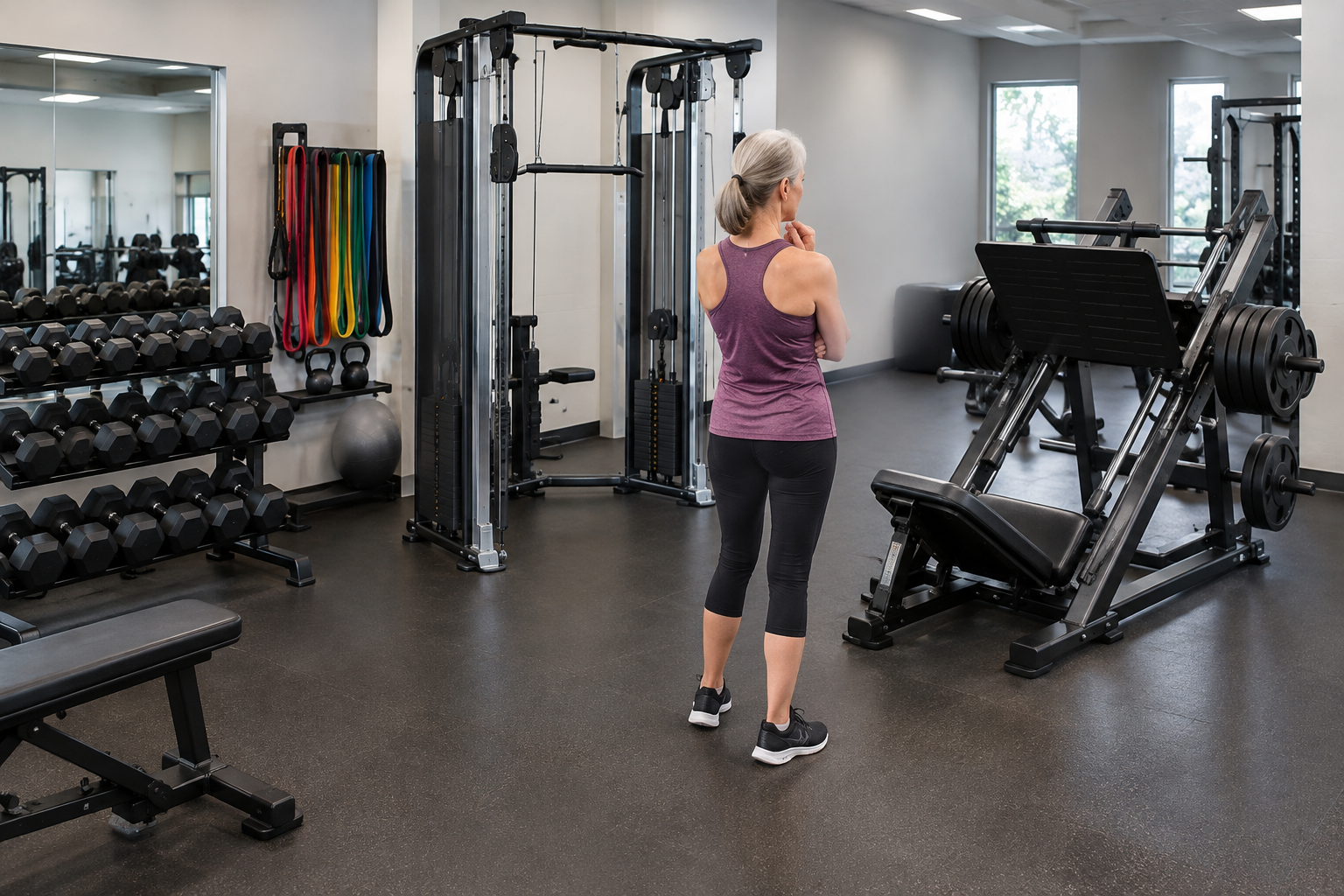
Not all strength workouts demand the same recovery. A session of seated arm curls with light dumbbells is a very different stress on your body than a session of squats, lunges, and deadlift variations.
Large compound movements that involve multiple joints and muscle groups, like squats or rows, create more overall fatigue and need more recovery time. Smaller, isolated movements, like the ones in our seated arm exercises for seniors routine, tax the body less and allow for quicker turnaround.
This is why many trainers recommend splitting workouts by body region instead of always doing full-body sessions. If you work your upper body on Monday and lower body on Tuesday, you’re not actually violating the 48-hour rule because you’re not hitting the same muscles two days in a row. This is a useful strategy if you want to strength train more frequently without overloading any single muscle group. The 15-minute chair workout for seniors is a good example of a session that leans more toward full-body, lower-intensity work, which needs less recovery than heavier compound lifting.
Effort Level Changes How Much Recovery You Need
Two workouts can look identical on paper and require completely different recovery windows, depending on how hard you actually pushed.
If you’re lifting light weights for high reps and stopping well before muscle fatigue, your body won’t need as long to bounce back. But if you’re working close to muscle failure, using heavier loads, or trying a new exercise your body isn’t used to, you’ve created more microscopic muscle damage that needs repair time.
A simple way to think about it: the harder the workout felt, the more rest you should plan on. If you finish a session and could have easily done more, 48 hours is probably enough. If you finish feeling wiped out or notice soreness the next day, lean toward 72 hours or more before repeating that same muscle group.
Choosing the right resistance also affects this. Our guide on how heavy dumbbells should be for seniors can help you calibrate effort so you’re challenging your muscles without overdoing it every session.
Health Status and Recovery Signals
Chronic conditions change the math too. Arthritis, osteoporosis, diabetes, and cardiovascular conditions can all slow recovery or make certain movements riskier without proper warm-up.
If joint pain lingers well past 48 hours after a workout, that’s a signal your body needs more time or that the exercise itself needs modifying. The same goes for unusual fatigue that doesn’t improve with a normal night’s sleep. Warming up properly before every session, as covered in our strength-training and warm-up content, also reduces the soreness and joint stress that drives up your recovery needs in the first place.
Pay attention to these signs that you need more rest, not less:
- Soreness that gets worse instead of better after 48 hours
- Joint pain that changes how you walk or move
- Noticeably reduced strength or coordination compared to your last session
- Ongoing fatigue that doesn’t resolve with sleep
- Trouble sleeping, which itself slows muscle recovery
If chronic joint discomfort is a regular issue, it’s worth reading our piece on knee pain when standing and which strengthening exercises help, since the right exercise choices can reduce how much recovery time you need overall.
When to Stop and Seek Medical Help
Normal muscle soreness is uncomfortable but predictable. It fades gradually and doesn’t come with other symptoms. Some warning signs are not normal recovery and need immediate attention, not more rest days.
Stop exercising immediately and seek emergency care if you experience:
- Chest pain, tightness, or pressure that feels different from muscle soreness
- Fainting or feeling like you’re about to pass out
- Severe shortness of breath that doesn’t improve with rest
- Sudden, sharp joint or muscle pain suggesting an acute injury, such as a tear or sprain
- Numbness, tingling, or weakness on one side of your body
These symptoms are not something to push through or wait out. If any of them happen during or after a workout, stop immediately and contact your doctor or emergency services.
If you experience a fall or injury during a session, our guide on how to get up from the floor safely after a fall is worth reviewing ahead of time, so you know what to do if it happens.
Frequently Asked Questions
Can I do strength training every day if I use light weights?
You can train daily if you’re rotating muscle groups and keeping effort low, but hitting the same muscles hard every day without rest increases injury risk and slows progress. Most seniors do better alternating muscle groups or taking at least one full rest day between similar workouts.
Is it normal to still be sore three days after a strength workout?
Soreness lasting two to three days is common, especially with new exercises or heavier loads, but it should be gradually improving, not getting worse. If soreness is severe, sharp, or affecting one specific joint more than the surrounding muscle, treat it as a signal to check in with a doctor rather than just resting longer.
Do rest days need to mean total inactivity?
No, and for most seniors, they shouldn’t. Light activity like walking, gentle stretching, or balance work on rest days supports circulation and recovery without adding strength-training stress. Something like a short walk or a session from our heel-to-toe walking balance drill is a good example of active recovery that keeps you moving without taxing the muscles you just worked.