If you’ve noticed yourself hunching forward more than you used to, you’re not alone. Rounded shoulders, forward head posture, and a curved upper back are incredibly common after 60, and they can lead to neck pain, back fatigue, and even breathing problems. A posture corrector seems like an easy fix, and the market is full of them. But before you order one, there are a few things worth understanding about what these devices actually do.
The honest answer is that posture correctors work best as a reminder tool, not a cure. They can cue your muscles to pull back and sit up straight, but they won’t strengthen the muscles that keep you upright on their own. Think of them like training wheels: useful while you’re building better habits, but not something you want to rely on forever. This guide breaks down which types work well for seniors, what to look for in terms of comfort and fit, and how to get the most out of whichever one you choose.
Do Posture Correctors Actually Work for Seniors?

Studies on posture correctors are mixed, but the practical evidence is fairly clear: they help most when used as part of a broader routine. Wearing one for 20 to 30 minutes while doing desk work or light activity can reinforce muscle memory and reduce slouching in that moment. Over time, with consistent use alongside targeted exercises, many people do see genuine improvement.
Where they fall short is when people wear them all day expecting passive results. Your postural muscles need resistance and movement to get stronger. Relying entirely on a brace can actually allow those muscles to weaken further because the device is doing the work for them. The sweet spot is wearing a corrector as a cue during specific activities, while also putting time into the posture correction exercises that build real, lasting strength.
Types of Posture Correctors Worth Considering
Clavicle Braces
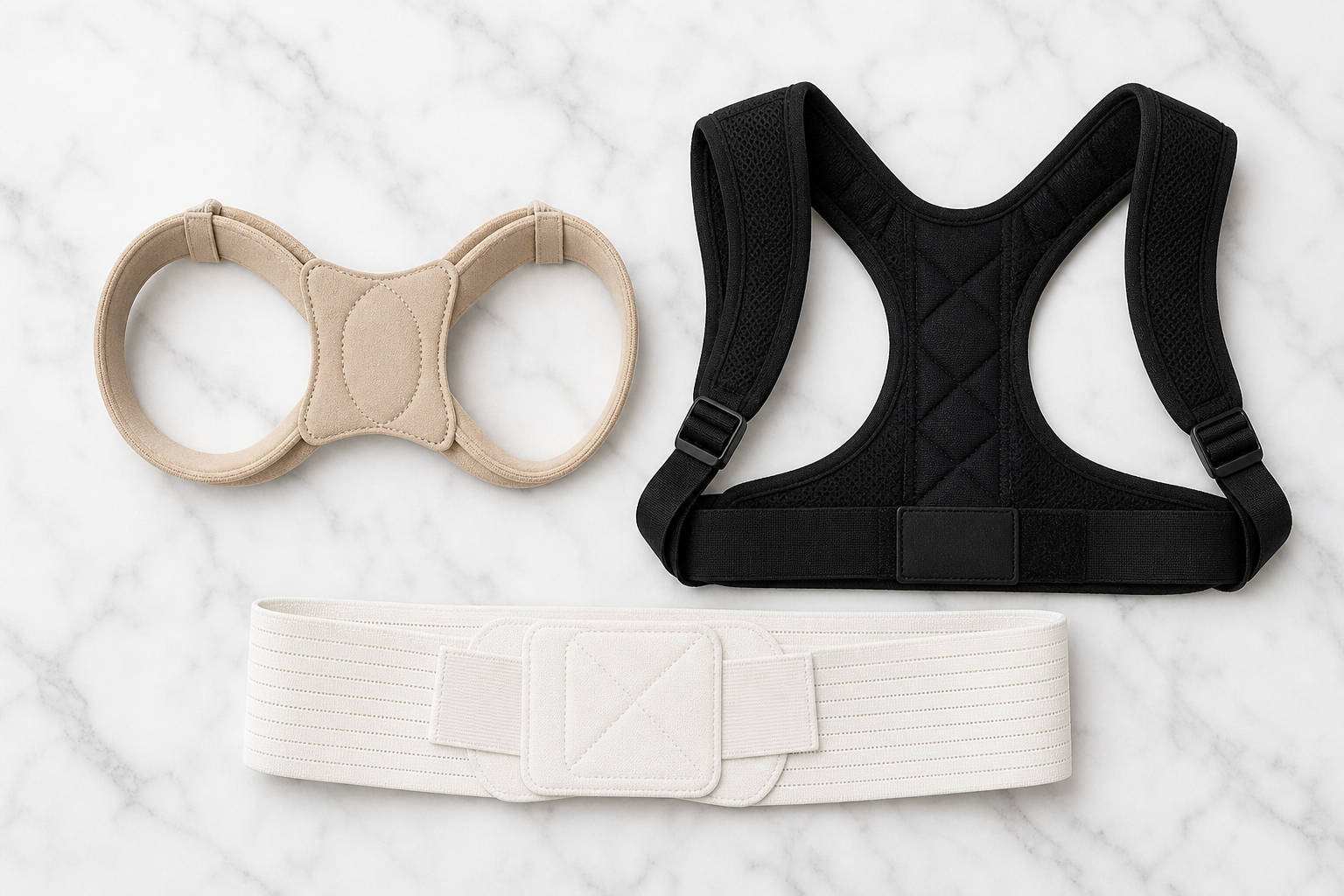
These figure-eight style braces loop around both shoulders and gently pull them back. They’re simple, low-profile under clothing, and typically the most affordable option. Models like the ComfyBrace posture corrector and similar designs use padded straps that sit in the armpit area. Fit matters enormously here since straps that are too tight can dig in or restrict circulation.

ComfyBrace Posture Corrector
A well-reviewed, adjustable clavicle-style brace with padded straps that’s comfortable enough for daily reminder use without being bulky.
Clavicle braces are a good starting point for mild to moderate rounding. They’re not ideal if you have shoulder injuries or limited arm mobility, since putting them on requires reaching behind your back.
Back and Shoulder Support Vests
These look more like a lightweight vest or sports brace and offer broader coverage across the mid and upper back. They tend to feel more secure and are easier to put on independently, which matters a lot for seniors with arthritis or limited shoulder range of motion. The Evoke Pro back posture corrector is a popular choice in this category with a wide, adjustable fit range.
Vest-style correctors are also more breathable in most cases, which matters if you plan to wear one while doing light activity or exercise.
Electronic Posture Trainers
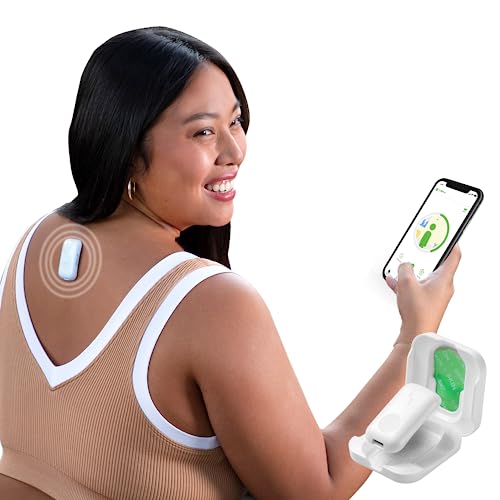
Devices like the Upright GO 2 attach to your upper back with an adhesive strip and vibrate when you slouch. They’re not braces at all, but they do provide real-time feedback. For seniors who are tech-comfortable and motivated to track progress, these can be surprisingly effective. Pair one with a fitness tracking app and you have a simple system for monitoring improvement over time.
Upright GO 2 Posture Trainer
A discreet vibration-based posture trainer that gives real-time feedback without restricting movement, ideal for seniors who want data-driven habit building.
What to Look For: Comfort and Adjustability
For seniors, these two factors matter more than anything else on the spec sheet. A corrector that causes discomfort will end up in a drawer after three days. Here’s what to prioritize:
- Padded contact points: Anywhere the device touches your skin, especially under the arms or across the shoulders, should have soft padding. Hard edges cause skin irritation quickly.
- Wide adjustment range: Bodies change with age, and you’ll want a device that fits well both right after a meal and first thing in the morning. Look for multiple adjustment points, not just a single strap.
- Breathable material: Neoprene traps heat. Look for mesh panels or lighter fabrics if you tend to run warm.
- Easy to put on alone: If you can’t comfortably reach behind your back, choose a front-closure or vest-style design.
- Lightweight construction: Heavy braces add fatigue. A good posture corrector for seniors should feel barely noticeable after a few minutes of wear.
If you already deal with chronic upper back or neck pain, it’s worth pairing a corrector with other supportive strategies. Our guide on chronic pain management through movement covers complementary approaches that can amplify your results.
Getting the Most Out of Your Posture Corrector
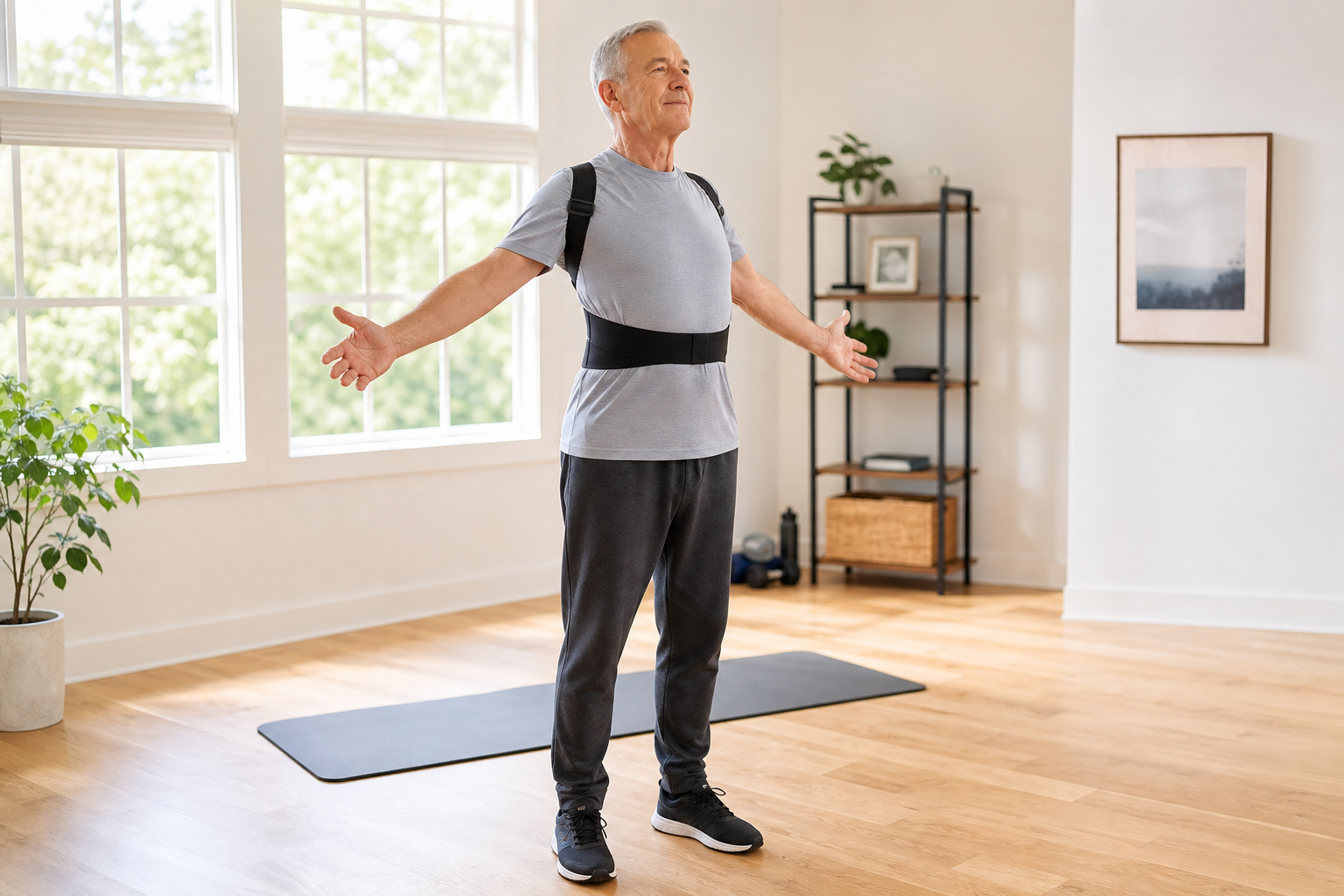
Start with short sessions of 15 to 20 minutes rather than wearing it all day. Pay attention to what your body is doing while you wear it. The goal is to train your muscles to replicate that position on their own, not to outsource the job to a brace permanently.
Pair your corrector use with a basic upper back and core strengthening routine. Exercises like rows, chin tucks, wall angels, and scapular squeezes directly target the muscles responsible for upright posture. If you’re also working on bone density through an osteoporosis exercise plan, many of those movements overlap nicely with posture work.
Nutrition plays a supporting role too. Muscles that support posture need protein to stay strong, and bone health underpins the whole structure. Making sure you’re getting enough vitamin D for bone and muscle health and adequate dietary protein are both worth attention if posture is a priority for you.
If you’re a caregiver, posture correctors can also be particularly useful given how much bending and lifting that role involves. Protecting your own alignment is part of staying healthy enough to keep helping others. Take a look at our guide on caregiver fitness for more on that.
Frequently Asked Questions
How long should seniors wear a posture corrector each day?
Most physical therapists recommend starting with 15 to 30 minutes per session, one to two times daily. As your muscles adapt, you can extend sessions slightly, but avoid wearing any corrector for more than two hours at a stretch. The device should remind your muscles what good posture feels like, not replace their function entirely.
Can a posture corrector help with kyphosis (dowager’s hump)?
A posture corrector can slow progression and reduce discomfort associated with kyphosis, but it won’t reverse structural changes in the spine that have developed over years. For best results with kyphosis, combine a corrector with targeted strengthening exercises and consult your doctor or a physical therapist to rule out any underlying causes like osteoporosis.
Are posture correctors safe if you have arthritis or a past shoulder injury?
Many seniors with arthritis use posture correctors comfortably, but fit is critical. A poorly fitted clavicle brace can place uncomfortable pressure on arthritic shoulder joints. If you have a history of shoulder injury or significant arthritis, a vest-style corrector or an electronic trainer like the Upright GO 2 is usually a better fit. Always check with your doctor if you’re unsure whether a brace is appropriate for your specific situation.
Bottom Line
Posture correctors are genuinely useful tools, especially for seniors who want a tactile reminder to sit and stand taller throughout the day. They won’t do the work for you, and they won’t fix decades of muscle imbalance on their own. But used consistently alongside strengthening exercises and good nutrition, they can be a meaningful part of standing taller and feeling better in your body.
Browse current options and check current pricing on Amazon: posture correctors for seniors.
This article contains affiliate links. We may earn a small commission at no extra cost to you.