If you’ve ever tried to touch your toes and felt like your hamstrings were made of concrete, you’re not alone. Flexibility naturally decreases with age, and when you can’t quite reach your foot or ankle for a stretch, you often end up skipping it entirely. That’s where a good stretching strap makes a real difference. It bridges the gap between where your hands can reach and where they need to be, letting you get a full, controlled stretch without straining your back or shoulders in the process.
This guide covers the two main types of stretching straps, which one tends to work better for older adults, and how to use them for three of the most important stretches you’re probably not doing as well as you could be.
Looped Straps vs. Plain Straps: Which One Is Better for Seniors?
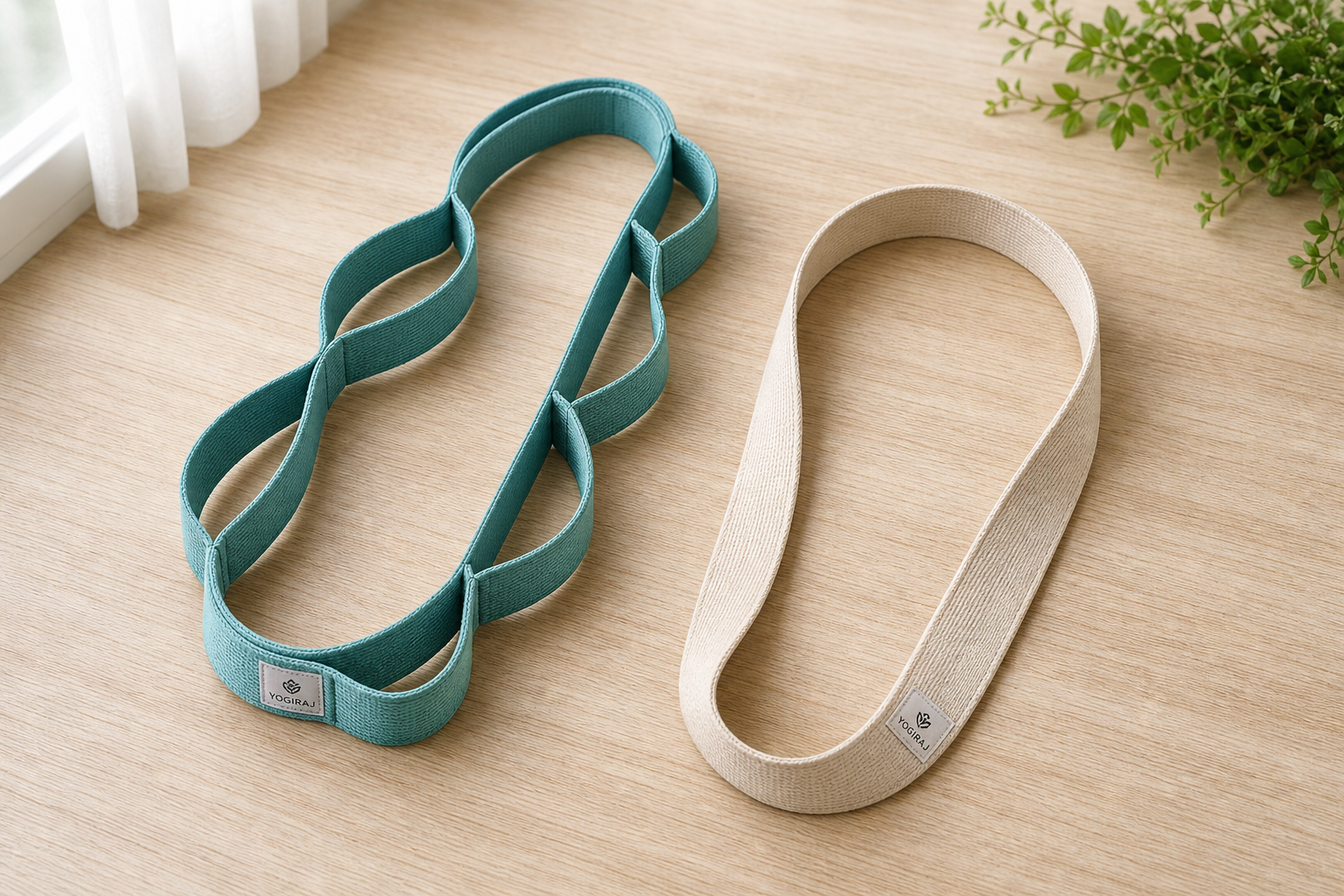
Both types do the same basic job, but they feel very different in practice. Understanding the distinction will help you pick the right one instead of wasting money on something you won’t use.
Plain Straps
A plain stretching strap is basically a long, flat band, usually made of nylon or cotton, with no loops. You wrap it around your foot or leg and hold both ends. The problem for many older adults is that you have to grip the strap tightly the whole time, which can be tiring if you have arthritis or reduced hand strength. You also have to decide how much length to give yourself, which isn’t always easy when you’re already focused on holding a stretch.
Plain straps do have advantages. They’re typically thinner, pack flat, and work well if you have good grip strength and already know how to position yourself. They’re also a solid choice for travel workout routines since they take up almost no space in a bag.
Looped Straps
A looped strap has multiple loops sewn along its length, usually six to ten of them. Instead of holding on for dear life, you simply slip your hand into whichever loop gives you the right amount of reach. This makes it much easier to adjust the stretch gradually, and you don’t need a strong grip to maintain tension. For most seniors, this is the better option.
The loops also give you more control during the stretch. You can work your way through the loops one at a time as your flexibility improves, which creates a natural progression over weeks and months. If you’re also dealing with conditions like arthritis or neuropathy, the ability to use your wrist or forearm instead of just your fingers is a significant benefit. Anyone managing nerve sensitivity might also want to read our guide on neuropathy-safe exercises for seniors for additional movement strategies.

Stretching Strap with Loops
A multi-loop design that lets you gradually adjust your stretch without needing a strong grip, making it ideal for older adults with arthritis or limited flexibility.
Watch: How to Use a Stretching Strap
Before we get into the individual stretches, take a few minutes to watch this helpful demonstration. Seeing proper strap positioning in action makes a big difference when you’re learning the technique for the first time.
Three Key Stretches and How the Strap Helps
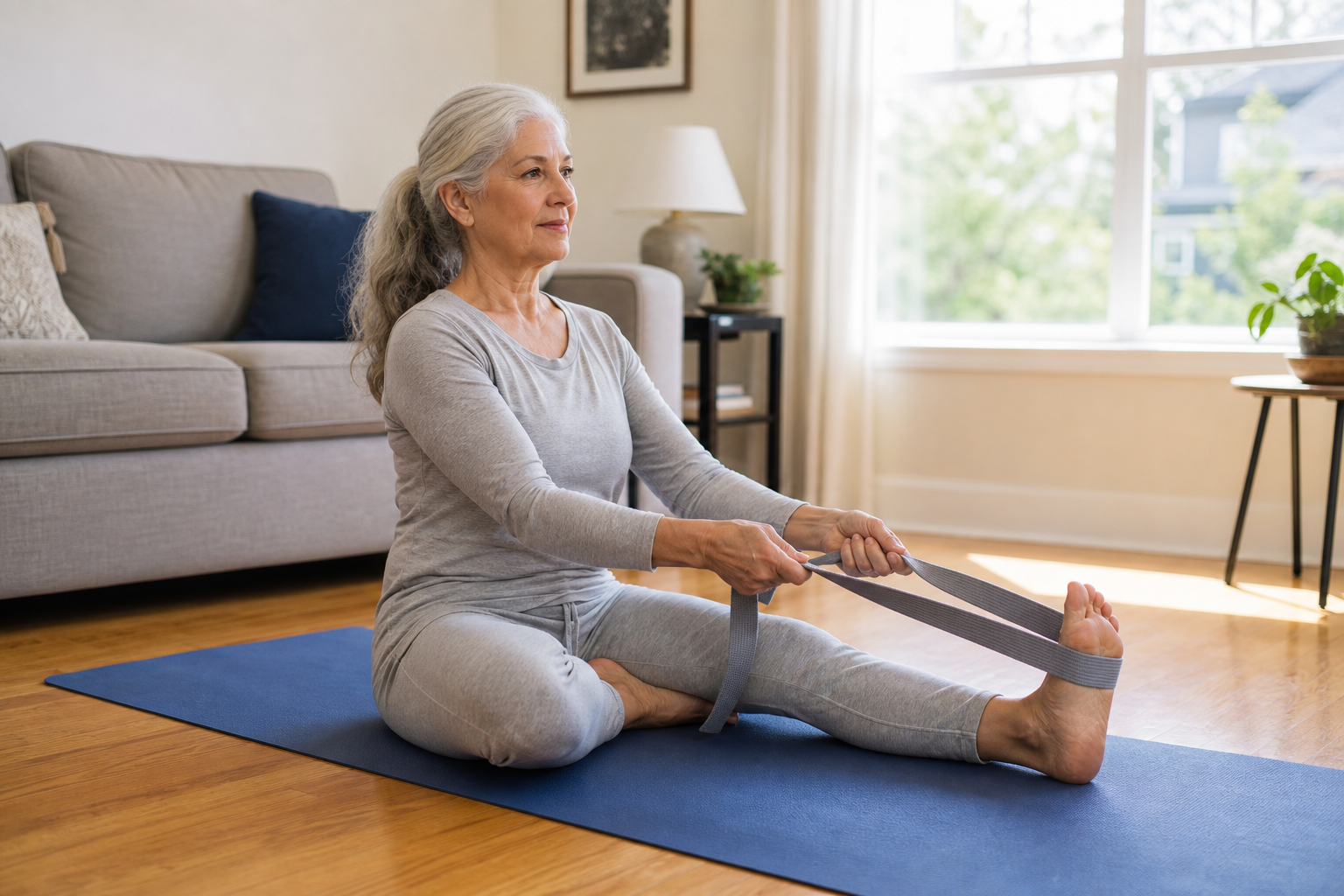
These three stretches target areas that tend to get chronically tight in older adults: the hamstrings, the calves, and the shoulders. All three are much easier to do correctly with a strap than without one.
1. Supine Hamstring Stretch
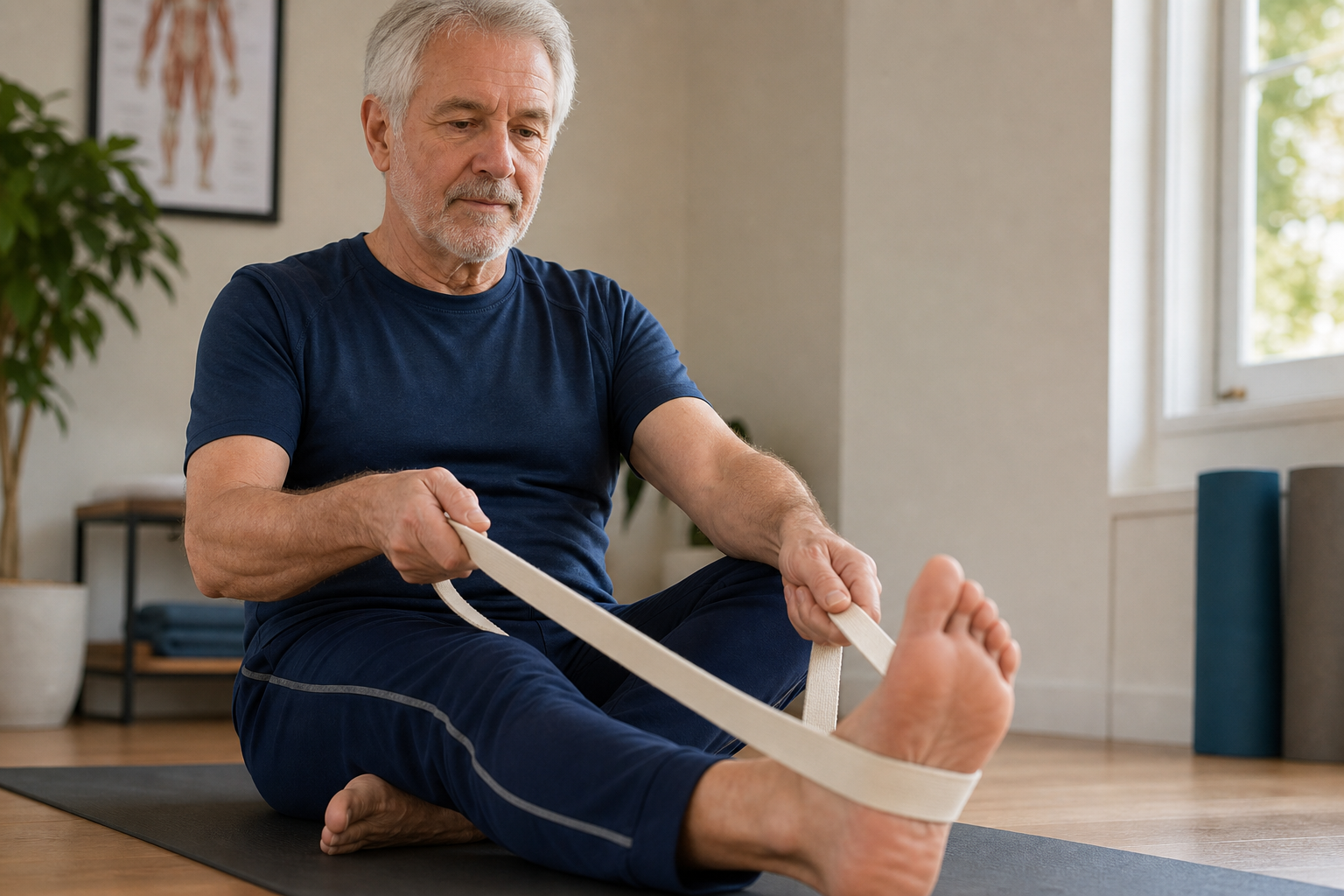
Lie on your back with both legs flat on the floor. Loop the strap around the ball of your right foot and hold one end in each hand, or slip both hands into loops that feel comfortable. Slowly lift your right leg toward the ceiling, keeping your knee as straight as your flexibility allows. Hold for 30 to 60 seconds, breathing steadily.
Without a strap, most people either bend their knee too much to reach their leg, or they yank on their leg with their arms and create tension in the lower back. The strap lets your leg do the work while your arms simply maintain light, steady tension. This is one of the best stretches you can do for lower back comfort, and it pairs well with the work described in our article on managing sciatica through exercise.
2. Standing or Seated Calf Stretch
Sit on the floor or on a firm bed with your legs extended in front of you. Place the strap around the ball of one foot and gently pull the toes back toward your shin. Hold for 20 to 30 seconds, then switch sides. You can also do this lying down if sitting on the floor is uncomfortable.
Tight calves contribute to poor ankle mobility, balance problems, and even plantar fasciitis. Reaching your toes to pull them back manually is difficult for many people, especially those with a rounder midsection or limited hip mobility. The strap makes the stretch accessible without rounding your spine to compensate. If balance is something you’re working on, this stretch complements the exercises covered in our vertigo and balance exercises for seniors guide.
3. Shoulder and Chest Opener
Hold the strap behind your back with both hands, one hand near the top and one near the bottom. Gently work your hands closer together along the strap until you feel a stretch across your chest and the front of your shoulders. Hold for 20 to 30 seconds. You can also hold the strap overhead with both hands shoulder-width apart and slowly lower it behind your head.
This is the stretch where a plain strap actually works a little better than a looped one, since you need a continuous grip to slide your hands along it. Either way, the strap replaces the towel most people use and gives you better control over the range of motion. For anyone working on forward head posture or rounded shoulders, this stretch is a natural fit with the advice in our article on posture correction exercises for seniors.

Vive Stretching Strap
A well-reviewed option with clearly marked loops and a comfortable width that works for both floor stretches and overhead shoulder work.
Tips for Getting the Most Out of Your Strap
- Never yank or force a stretch. The strap gives you leverage, but the goal is gentle, sustained tension, not aggressive pulling.
- Hold each stretch for at least 30 seconds. Shorter holds don’t give the muscle enough time to release properly.
- Stretch after movement, not before. A short walk or five minutes of light movement warms up the muscles and makes stretching much more effective. Check the timing advice in our guide on morning vs evening exercise for seniors for ideas on building a consistent routine.
- Use the strap daily if you can. Flexibility responds to consistent, gentle work better than occasional intense sessions.
- Pair stretching with recovery support. Nutrition matters for muscle recovery too. Reading about post-workout recovery meals for seniors can help you support your muscles from the inside out.
If you already use a foam roller for muscle recovery, a stretching strap works well alongside it. The two tools target different aspects of flexibility and muscle tension. Our article on best foam rollers for senior muscle recovery is worth reading if you want to build out a simple home recovery routine.
Yoga Stretching Strap Plain Nylon
A durable plain strap that’s a good choice for shoulder stretches and anyone who prefers sliding their grip rather than using fixed loops.
Frequently Asked Questions
Are stretching straps safe for seniors with osteoporosis?
Generally yes, but with some care. Stretching straps promote gentle, controlled movement rather than high-impact stress, which makes them appropriate for most people with osteoporosis. The key is to avoid overpulling and to stop if you feel any sharp pain. Speak with your doctor or physical therapist if you have significant bone density loss before adding new stretches to your routine. You might also find useful background in our osteoporosis exercise plan for bone strength.
How long does it take to see flexibility improvements?
Most people notice meaningful improvement within three to four weeks of daily stretching. The muscles and connective tissue respond gradually, so patience matters more than intensity. Going slowly and staying consistent will get you further than occasional aggressive sessions.
Can I use a resistance band instead of a stretching strap?
You can use a resistance band in a pinch, but it’s not ideal. Resistance bands are designed to stretch and add load, which means they’ll pull back against you during a stretch. A dedicated stretching strap is inelastic, meaning it holds firm and gives you a stable anchor point. That firm tension is what makes a strap more effective and safer for stretching purposes.
Bottom Line
A stretching strap is one of the most underrated tools for older adults who want to maintain or improve their flexibility without putting stress on their joints or back. For most seniors, a looped strap is the better choice because it’s easier to grip, easier to adjust, and safer to use independently. Start with the three stretches above, work through the loops gradually, and stretch consistently rather than intensely. Your hamstrings, calves, and shoulders will thank you for it.
This article contains affiliate links. We may earn a small commission at no extra cost to you.