Neck stiffness is one of those problems that can quietly take over your day. You wake up and can’t turn your head to check your blind spot. You sit at the computer and your neck starts aching within twenty minutes. For seniors, this is extremely common, and it’s often made worse by years of posture habits, changes in spinal discs, and plain old muscle tightness that doesn’t bounce back the way it used to.
The good news is that most neck stiffness responds well to gentle, consistent movement. You don’t need a gym or special equipment. You just need to know which stretches are actually safe for an aging spine, and which ones to skip entirely.
Watch First: Gentle Neck Stretches for Seniors
Before jumping into the written instructions, this video walks through a safe, slow neck stretch routine designed specifically for older adults. It’s worth watching through at least once before you try the stretches on your own.
Important Safety Notes Before You Start
Not all neck pain is the same, and some types need a doctor’s attention before you stretch anything. Please read this section carefully.
Stop and call your doctor if you notice any of the following:
- Numbness or tingling that runs down your arm or into your fingers
- Sharp pain with any movement, especially rotation
- Dizziness, sudden headaches, or visual disturbances when you move your neck
- Weakness in your hands or arms
These symptoms can point to nerve compression or cervical spine issues that need professional evaluation first. Stretching in the wrong direction with a compressed disc or bone spur can actually make things worse.
Also, avoid fast rotations. This is a big one for seniors. Spinning your head quickly can put sudden stress on already-stiff joints and, in some cases, can briefly reduce blood flow through the vertebral arteries. Slow and controlled is always the rule here. If a movement feels wrong, don’t push through it.
If you’re dealing with other nerve-related conditions, our article on neuropathy-safe exercises for seniors covers similar precautions that apply to the neck and upper body as well.
Posture: The Root of Most Neck Stiffness
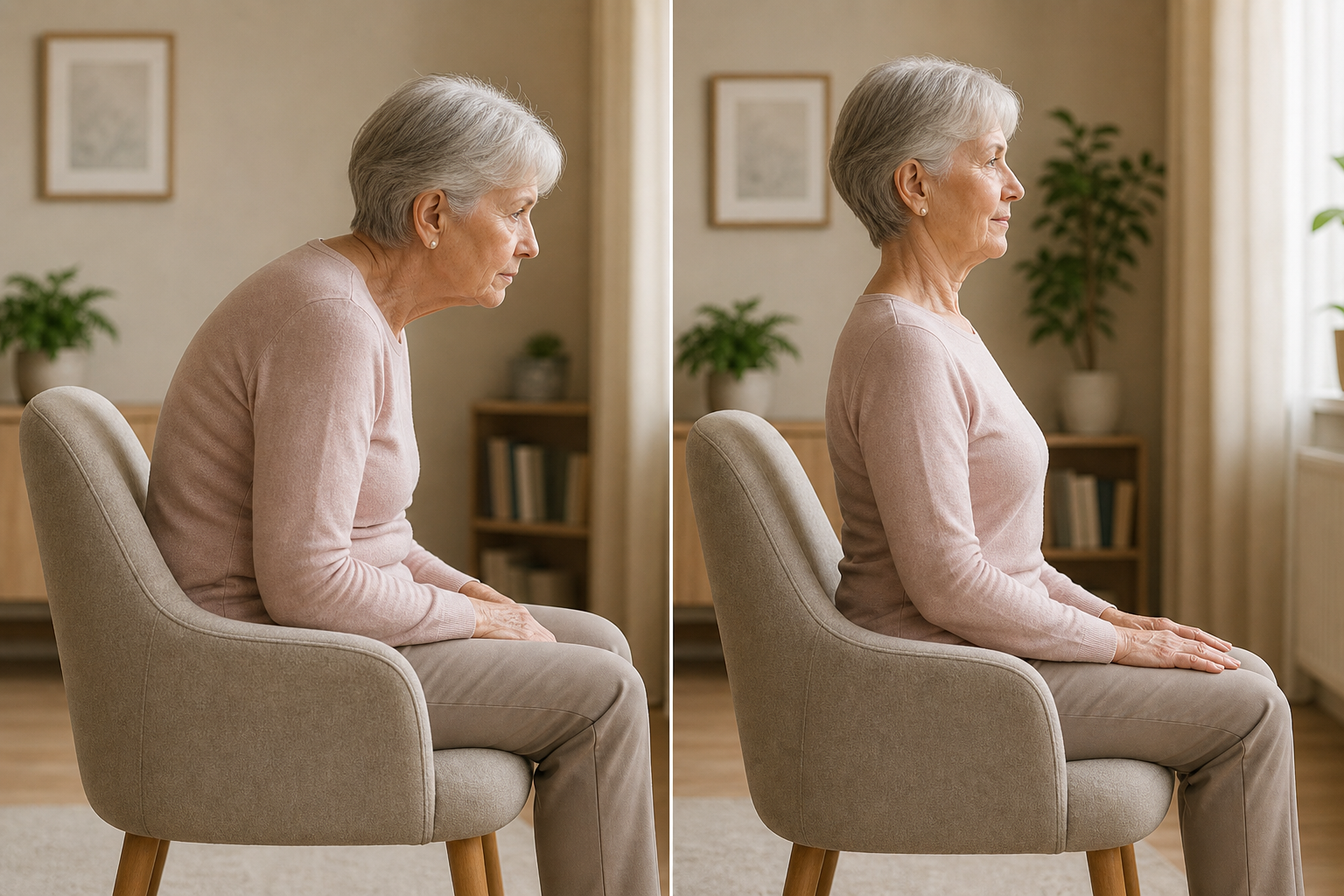
Before you can stretch your way out of neck pain, it helps to understand what’s probably causing it. For most seniors, the culprit is forward head posture. Your head weighs around ten to twelve pounds. Every inch it drifts forward from your shoulders adds roughly ten extra pounds of stress on your cervical spine.
Hours of reading, TV watching, and screen time all encourage this posture. Over time, the muscles at the back of your neck stay chronically tight trying to hold your head up, while the muscles in the front get short and weak.
If this pattern sounds familiar, our posture correction exercises for seniors article goes much deeper into fixing forward head posture and upper back slouching. It pairs well with the stretches below.
Quick Posture Reset You Can Do Right Now
Sit up in your chair with your feet flat on the floor. Gently pull your chin straight back (think “double chin”), not down. Hold for five seconds and release. This is called a chin tuck, and it’s one of the most effective exercises for neck alignment. Do it ten times, and do it several times throughout your day.
Gentle Neck Stretches That Actually Work

Do these stretches seated in a sturdy chair with your feet flat on the floor. Move slowly into each position. Never bounce or jerk. Hold each stretch for fifteen to thirty seconds and breathe normally.
1. Side Neck Tilt
Slowly tilt your right ear toward your right shoulder until you feel a gentle pull on the left side of your neck. Keep your left shoulder down. Hold, then return to center and repeat on the other side. Do two to three reps per side.
2. Chin Tuck Stretch
Pull your chin straight back as described above. Then very gently add a slight downward nod, bringing your chin toward your chest. You’ll feel a stretch along the back of your neck and upper back. Hold for fifteen seconds. This one is excellent for reducing tension headaches too.
3. Partial Rotation (Slow and Controlled)
Turn your head slowly to the right, only about halfway. You don’t need to look over your shoulder completely. Hold for fifteen seconds, return to center, then turn left. This is enough range of motion to loosen the rotator muscles without stressing the vertebral joints. Do not do fast full rotations.
4. Shoulder Rolls
This isn’t technically a neck stretch, but tight shoulders and a stiff neck almost always go together. Slowly roll your shoulders backward in large circles five times, then forward five times. You’ll often feel immediate relief in the base of your neck.
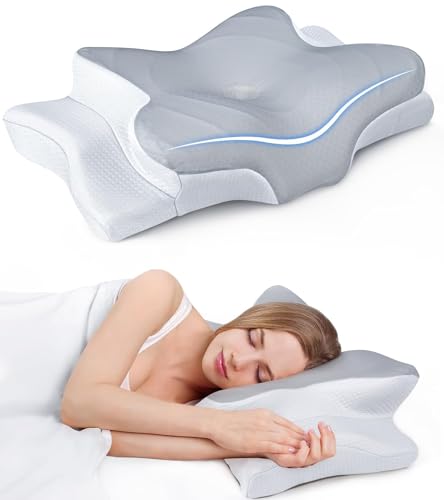
Cervical Neck Support Pillow
A contoured cervical pillow can support proper neck alignment overnight, which helps prevent the morning stiffness that undoes all your daytime stretching work.
Setting Up Your Sleep and Sitting Environment

Your stretching routine will only go so far if you’re spending eight hours a night sleeping in a position that strains your neck. Most neck specialists recommend sleeping on your back or your side with a pillow that keeps your head level with your spine, not propped up too high or dropped too low.
A cervical neck support pillow with a contoured design can make a real difference. Look for one that matches your sleep position and is firm enough to hold its shape through the night.
For sitting, the most important adjustment is your screen height. Whether you’re watching TV or using a computer, the screen should be roughly at eye level so your chin stays neutral, not dropped down or craned up.

Neck Heating Pad
Applying gentle heat to the neck before stretching helps loosen tight muscles and makes your stretches more effective and comfortable.
Applying warmth to your neck for ten to fifteen minutes before you stretch can make a noticeable difference in how the muscles respond. A neck heating pad wrap is a practical tool to keep nearby for this purpose. Just don’t stretch immediately after intense heat if you’re prone to dizziness.
If chronic pain across multiple areas of your body is something you’re managing, the article on chronic pain management through movement covers strategies that complement gentle stretching routines like this one.
Nutrition That Supports Joint and Muscle Health
Stretching gets the credit, but what you eat also plays a role in how quickly your neck muscles recover and how much inflammation you’re dealing with on a daily basis. Omega-3 fatty acids in particular have been studied for their role in reducing joint inflammation.
Our article on omega-3 supplements for senior joint health explains what the research actually shows and what dosage is worth considering. Pair that with the principles in our anti-inflammatory diet for active seniors guide for the best overall effect.

Posture Corrector for Seniors
A lightweight posture corrector worn during daily activity can retrain your upper back and shoulder position, reducing the forward pull that strains your neck.
Frequently Asked Questions
How often should seniors do neck stretches?
Daily is ideal for maintaining mobility, especially if your neck stiffens up in the morning or after sitting for long periods. Even five minutes once or twice a day adds up significantly over weeks. If you’re recovering from a flare-up of pain, start with once a day and see how your neck responds before adding a second session.
Is it normal for the neck to crack or pop during stretches?
Occasional popping or cracking with slow movement is generally harmless and comes from gas bubbles releasing in the joint fluid. If cracking is accompanied by pain, grinding sensations, or follows a sudden movement, that’s worth mentioning to your doctor. Don’t force movements to create a crack, and avoid self-manipulation of the cervical spine.
Can neck stiffness cause headaches and shoulder pain too?
Yes, frequently. The muscles at the base of the skull and along the top of the shoulders are closely connected to the cervical spine. Tightness in the neck often radiates upward into tension headaches and downward into the shoulder blades. Treating the neck with the stretches above often helps both issues. If shoulder pain is a significant part of your problem, working with a physical therapist to address the full kinetic chain is a smart move.
A Final Word
Neck stiffness doesn’t have to be a permanent fixture in your day. Consistent gentle stretching, attention to your posture, smarter sleep setup, and a little patience can make a significant difference within two to four weeks for most people. Take it slow, don’t push through pain, and if you have any symptoms of nerve involvement, get checked out before continuing.
Small daily habits tend to beat aggressive short-term fixes when it comes to neck health. You’ve got the tools. Use them consistently.
This article contains affiliate links. We may earn a small commission at no extra cost to you.