You notice a dark purple bruise on your arm from holding a dumbbell, or a spread of blue-black marks on your thighs after foam rolling. You don’t remember bumping into anything. Easy bruising after exercise is common in adults over 60, and while it’s usually harmless, understanding why it happens (and when it might signal something worth investigating) helps you exercise with confidence.
Most exercise-related bruising in older adults is a cosmetic issue, not a medical emergency. You can reduce it significantly with simple adjustments to your routine and equipment choices.
Why Seniors Bruise More Easily
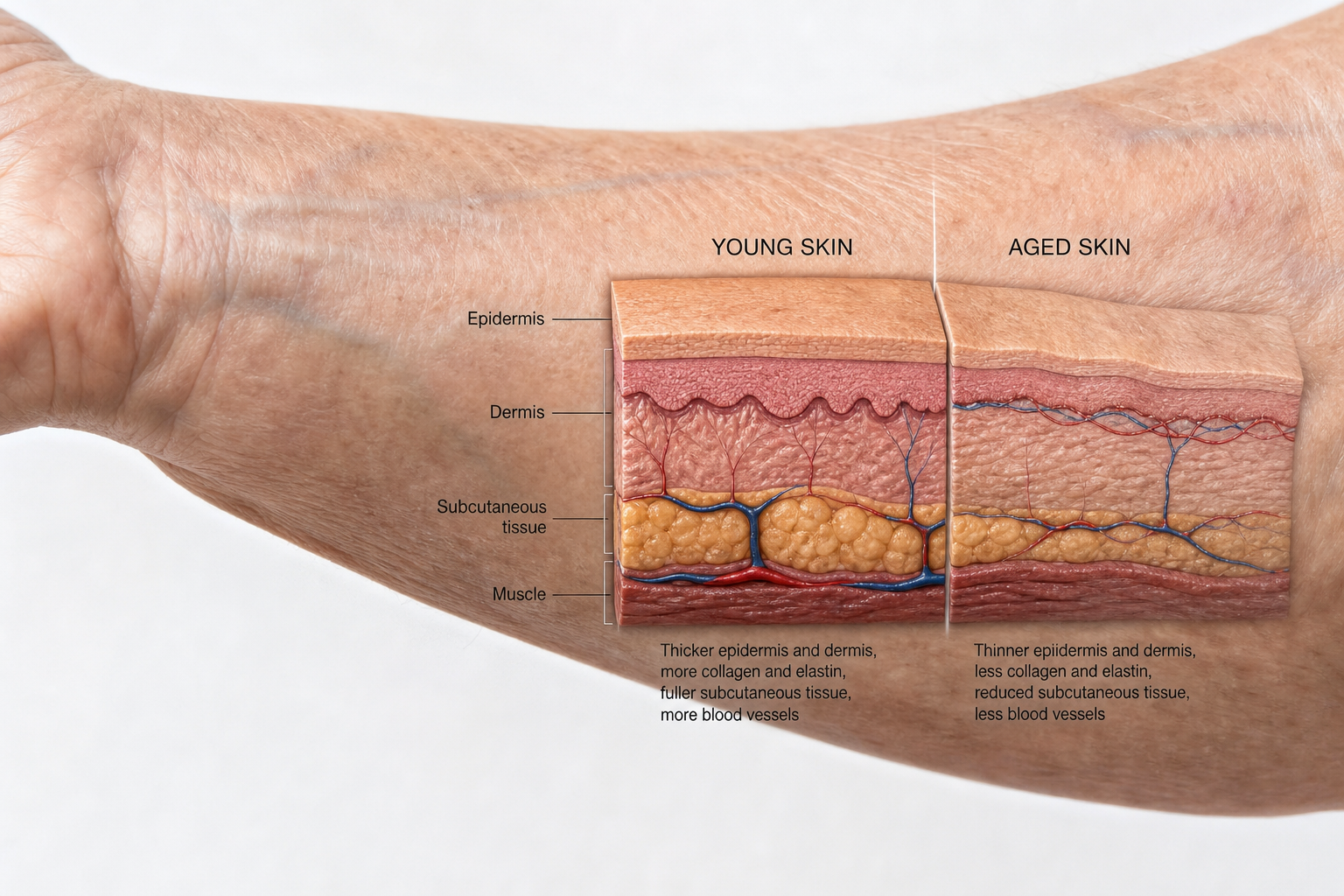
Thinner Skin and Less Subcutaneous Fat
As you age, your skin loses collagen and elastin, becoming thinner and more fragile. The layer of fat beneath the skin that cushions blood vessels also thins. This means minor pressure or friction that wouldn’t have left a mark at 40 now ruptures tiny capillaries, producing a bruise.
The areas most affected are the forearms, backs of the hands, and shins, where the skin is thinnest and closest to bone.
The dermis (the skin’s middle layer) can thin by up to 20% as you age. That reduction matters because the dermis is where your blood vessels live. Less cushioning around those vessels means more vulnerability to mechanical stress from weights, bands, and foam rollers.
Blood Thinners and Medications
Aspirin, warfarin, clopidogrel (Plavix), apixaban (Eliquis), and rivaroxaban (Xarelto) all impair your blood’s ability to clot, meaning that even minor capillary damage bleeds more and produces larger bruises. Fish oil supplements, vitamin E, and even garlic supplements can also thin the blood.
If you’re on any blood thinner, exercise-related bruising will be more pronounced.
Nonsteroidal anti-inflammatory drugs (NSAIDs) like ibuprofen and naproxen also affect platelet function. Many older adults take NSAIDs regularly for arthritis pain without realizing they’re adding to bruising risk. If you take a daily NSAID and notice increased bruising, that’s likely a contributing factor.
Corticosteroid Use
Long-term use of corticosteroids (prednisone, hydrocortisone) thins the skin further and weakens blood vessel walls. Even inhaled corticosteroids for asthma or COPD can cause easy bruising on the skin of the arms and legs over years of use.
Topical corticosteroid creams applied regularly to eczema or psoriasis can thin the skin in treated areas. If you use a steroid cream on your arms or legs, those spots become more bruise-prone during exercise.
Age-Related Blood Vessel Fragility
Blood vessel walls lose their elasticity with age, making them more prone to rupture from the mechanical stress of exercise. The medical term for this age-related bruising is “senile purpura” (an unfortunate name for a harmless condition). The bruises are typically flat, don’t hurt much, and resolve over 1-3 weeks.
You’ll often see senile purpura on the backs of the hands and forearms where sun damage has further weakened the skin. These bruises appear with minimal trauma. What looks like a dramatic injury often came from something as minor as pulling off a sweater or carrying grocery bags.
Reduced Platelet Function
Platelet counts typically remain normal with age, but platelet function can decline. Your platelets may not stick together as efficiently to form clots, meaning small vessel breaks bleed longer and create larger bruises.
This is a natural part of aging, not a disease process, though it’s worth checking if bruising becomes excessive.
Exercise Activities Most Likely to Cause Bruising
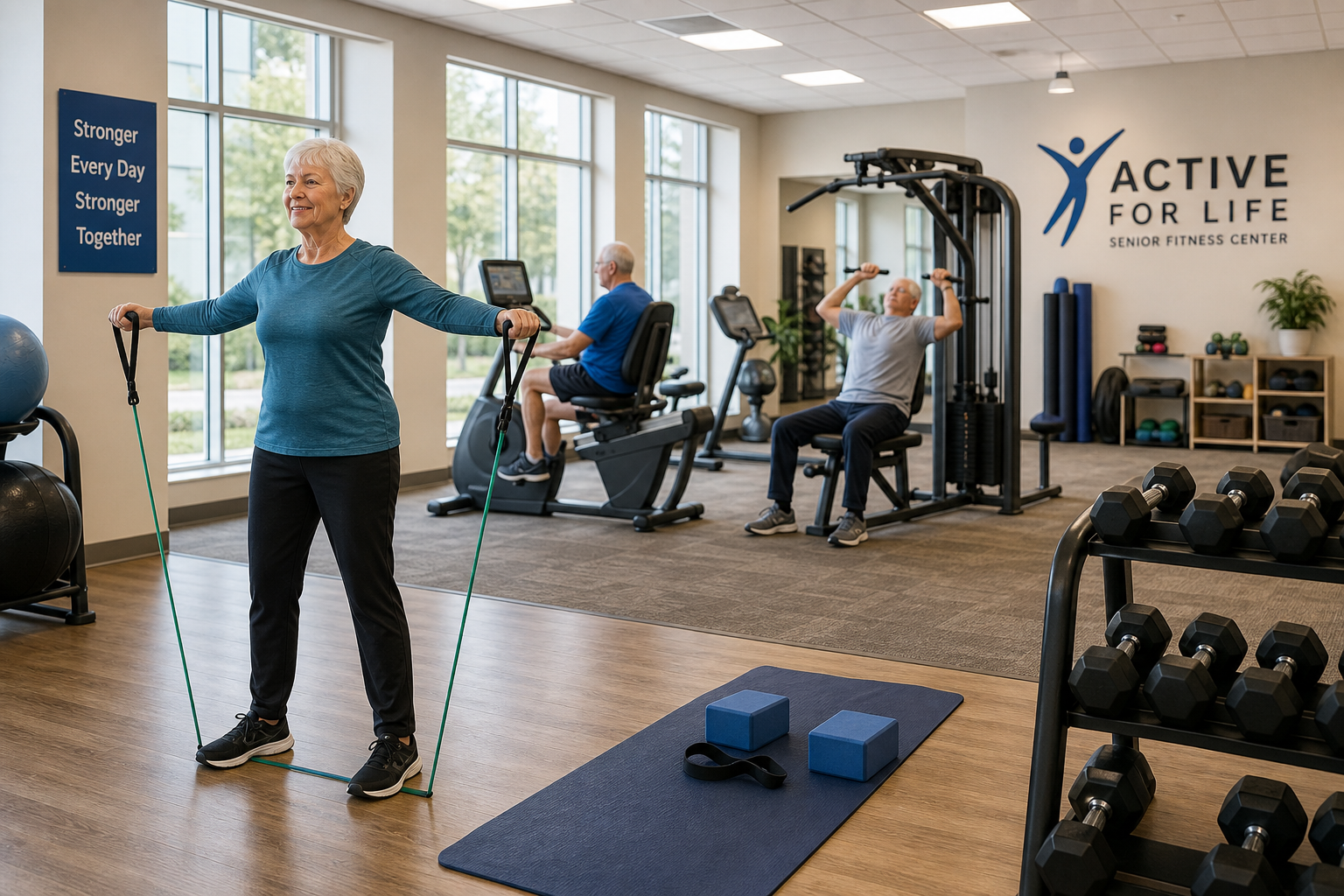
- Foam rolling: The direct pressure compresses blood vessels against muscle and bone. Soft-density rollers cause less bruising than firm ones.
- Resistance band work: Bands can snap against the skin or create friction marks on the forearms.
- Dumbbell exercises: Gripping dumbbells compresses the palms and fingers. Resting dumbbells on the thighs between sets can bruise thin-skinned thighs.
- Balance exercises with handhold: Gripping a chair back or railing during balance work can bruise the palms and fingers.
- Contact with exercise equipment: Bumping into machine frames, bench edges, and doorways during exercise creates bruises that may not appear for 24-48 hours.
- Yoga and floor exercises: Pressing bony parts (knees, elbows, shins) into hard floors during planks, side planks, and kneeling poses creates pressure bruises. A thin yoga mat isn’t enough cushioning for many older adults.
- Cable machine exercises: The cable attachment can strike the forearm during certain movements. Cable flyes and tricep pushdowns are common culprits.
- Pool edge contact: Getting in and out of the pool, or doing water exercises near the pool edge, creates bruises from bumps you barely felt at the time.
How to Minimize Exercise-Related Bruising
Equipment Modifications
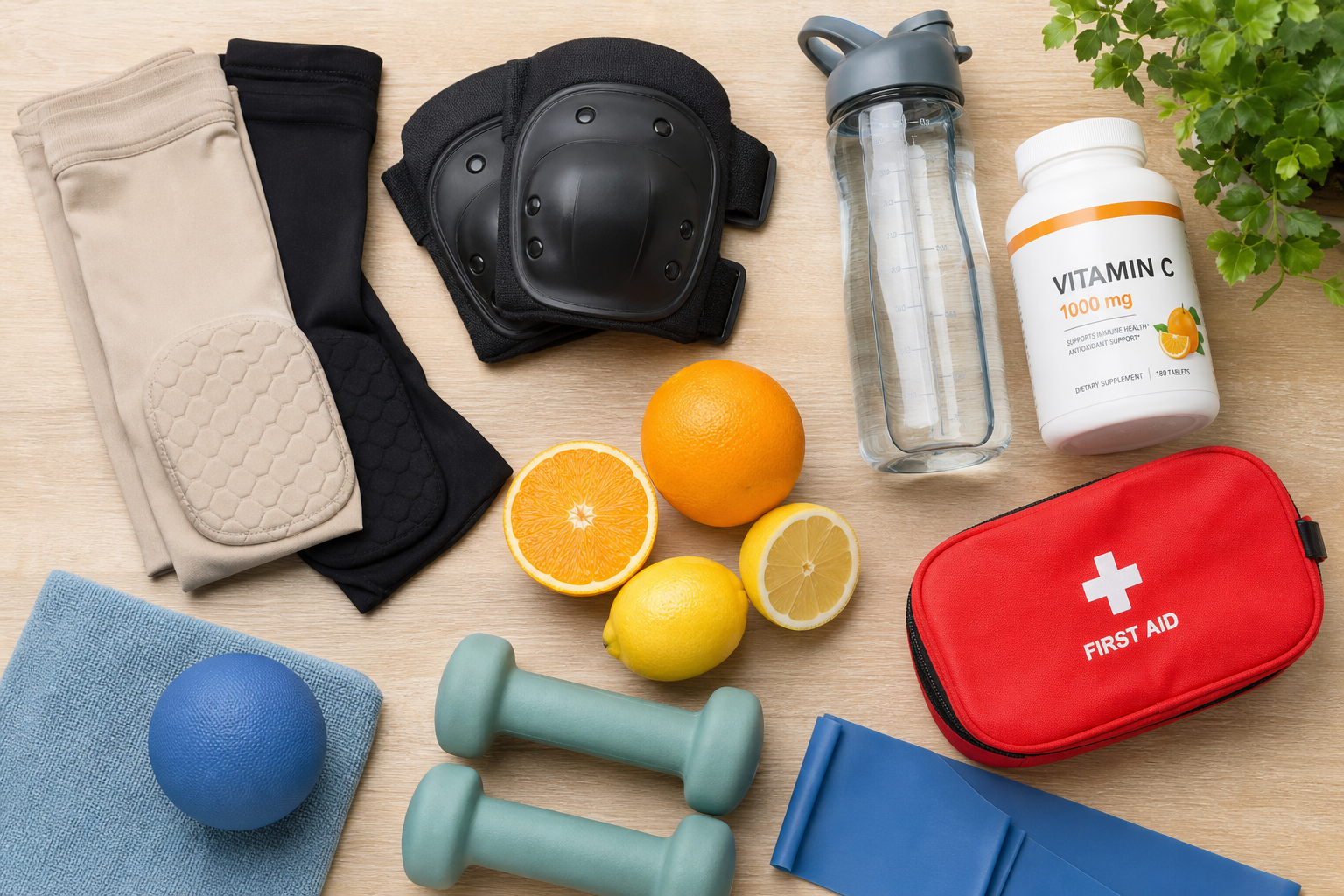
Use padded equipment. Padded lifting gloves cushion your palms during dumbbell and bar work. Long sleeves protect forearms during band exercises.

Padded Weight Lifting Gloves
Full-finger padding protects your palms and reduces compression bruising during resistance training
Choose soft foam rollers. A soft-density roller provides muscle relief with less capillary damage than a firm roller. Roll gently rather than pressing hard. For detailed guidance on proper foam rolling techniques that minimize bruising, check out our foam roller guide for seniors.

Soft Density Foam Roller
Gentler on fragile blood vessels while still providing effective muscle release
Double up yoga mats. If floor exercises cause knee or elbow bruising, stack two mats or use a thick cushioned mat designed for physical therapy work. The extra padding reduces point pressure on bony prominences.
Switch to lighter dumbbells with larger grips. Neoprene-coated dumbbells with thicker handles distribute pressure more evenly across your palm. A 5-pound dumbbell with a slim metal handle concentrates force into a smaller area than a 5-pound dumbbell with a padded, wider grip.
Technique Adjustments
Apply less pressure. During foam rolling and self-massage, use lighter pressure for shorter duration. Your goal is muscle release, not deep-tissue torture.
Rest weights on a towel. When you set dumbbells on your thighs between sets, place a folded towel across your lap first. The cushioning prevents compression bruises.
Avoid gripping too hard. Many older adults grip weights, railings, and resistance bands harder than necessary out of fear of dropping them. Consciously relax your grip to the minimum needed for control. Over-gripping crushes the small blood vessels in your palms and fingers. Our grip strength exercises guide can help you build confidence and control.
Move slowly and deliberately. Rushing through transitions between exercises increases the chance of bumping into equipment. Slow down, especially in crowded gym spaces.
Protective Measures
Protect thin-skinned areas. Wear long sleeves and compression garments during exercise to add a protective layer over vulnerable skin. Compression wear also supports circulation and can reduce bruise severity.
Ice bumps immediately. If you bump into something during exercise, applying ice for 10 minutes constricts blood vessels and reduces the size of the resulting bruise.
Apply arnica gel. Some people find that topical arnica reduces bruise severity when applied soon after impact. Research on arnica is mixed, but it’s safe to try and may help.
Time your workouts around medication. If you take aspirin or other blood thinners once daily, schedule your workout before your dose rather than after, when blood-thinning effects peak. This timing shift won’t eliminate bruising but may reduce severity.
When Bruising Warrants a Doctor Visit
Easy bruising by itself is usually harmless, but see your doctor if:
- Bruises appear without any known cause or contact
- Bruising has increased noticeably over recent weeks
- You have nosebleeds, bleeding gums, or blood in your urine or stool alongside easy bruising
- Bruises are very large (palm-sized or bigger) from minor contact
- You recently started a new medication and bruising worsened
These patterns may indicate a platelet disorder, clotting factor deficiency, liver dysfunction, or medication interaction that needs investigation. A simple complete blood count (CBC) and coagulation panel can rule out the concerning causes.
Certain patterns raise more concern than others. Bruising concentrated on your torso (rather than arms and legs) is less typical of age-related or medication-induced bruising and warrants evaluation. Bruises that develop a hard lump underneath may be hematomas that need drainage.
Bruising accompanied by fatigue, weight loss, or fever suggests something beyond normal aging.
If you start a new medication and bruising increases sharply within weeks, call your prescriber. The medication may be interacting with your existing blood thinner, or it may affect platelet function on its own. Common culprits include SSRIs (antidepressants like sertraline and citalopram), which can impair platelet aggregation, and certain antibiotics.
Living With Exercise-Related Bruising
Most older adults who exercise regularly develop a baseline level of bruising that’s cosmetically annoying but medically insignificant. Once you’ve confirmed with your doctor that your bruising isn’t a sign of an underlying problem, acceptance becomes part of the equation.
Some practical considerations: if you’re self-conscious about bruises on your arms and legs, choose workout clothes that provide coverage. Compression sleeves and full-length leggings serve double duty, offering both protection during exercise and coverage after.
Track your bruising patterns for a month. Note which exercises produce bruises and which don’t. You may find that certain movements (like a specific cable machine angle) reliably cause bruising while similar exercises don’t. Swap out the problematic ones.
Consider the alternative. Avoiding exercise to avoid bruising means giving up strength, balance, cardiovascular health, and independence. A few bruises are a reasonable tradeoff for those benefits. Adjust your approach, but don’t quit.
Whether you’re working on progressive resistance training or recovering from joint replacement surgery, the modifications outlined here will help you continue exercising safely while minimizing bruising.
Frequently Asked Questions
Should I stop exercising if I bruise easily?
No. The health benefits of exercise far outweigh the cosmetic concern of bruising. Modify your approach (lighter pressure, protective clothing, padded equipment) rather than stopping. If you’re on blood thinners, avoid contact sports and high-impact activities, but continue with walking, swimming, resistance training, and flexibility work.
Talk to your doctor before starting or intensifying an exercise program if you’re on anticoagulants. They can advise on activity modifications specific to your medication and dosage.
Can supplements help with easy bruising?
Vitamin C supports collagen production and blood vessel integrity. A deficiency (rare but possible in seniors with poor dietary variety) can increase bruising. Eating citrus fruits, bell peppers, and strawberries, or taking a vitamin C supplement (500 mg daily), may modestly improve skin and vessel health over time.
Vitamin K supports clotting, but supplementation should only be done under medical guidance, especially if you’re on blood thinners. Collagen supplements are marketed for skin health, but research on whether oral collagen reduces bruising is limited. If you try it, give it at least 8-12 weeks before deciding if it helps.
How long should exercise bruises take to heal?
Most exercise-related bruises in seniors resolve within 2-3 weeks, progressing through purple, green, yellow, and brown stages as the trapped blood is reabsorbed. Bruises that don’t improve within 4 weeks, grow larger instead of fading, or become hard or painful may indicate a hematoma that needs medical evaluation.
Bruise healing slows with age because your body clears the breakdown products of hemoglobin less efficiently. A bruise that would have disappeared in 10 days at age 30 may take 20 days at age 70. That’s normal.
Can exercise actually reduce bruising over time?
Possibly. Regular cardiovascular exercise improves circulation and may strengthen blood vessel walls, which could theoretically reduce bruising over months. Strength training builds muscle mass, which provides more cushioning for blood vessels. Neither effect is dramatic, but consistent exercise supports overall vascular health.
You won’t see a transformation where bruising disappears entirely, but some older adults report that bruising becomes less severe after months of regular exercise, even though they’re still doing the same activities that initially caused bruising.
This article contains affiliate links. We may earn a small commission at no extra cost to you.