If you’ve spent any time on YouTube lately, you’ve probably come across videos promising to “boost leg circulation 1,000x” with one weird trick. Those videos are mostly noise. The actual science of improving leg circulation is far less dramatic and far more doable: move your ankles, raise your calves, take walking breaks, and put your feet up. That’s genuinely most of it.
Poor leg circulation is a real issue for a lot of older adults, and it’s worth addressing properly. Swollen ankles, tired heavy legs, cold feet, and that creeping numbness after sitting too long are all signs your blood isn’t moving as efficiently as it should. The good news is that the fixes are simple, free, and something you can start today.
Why Leg Circulation Gets Harder With Age
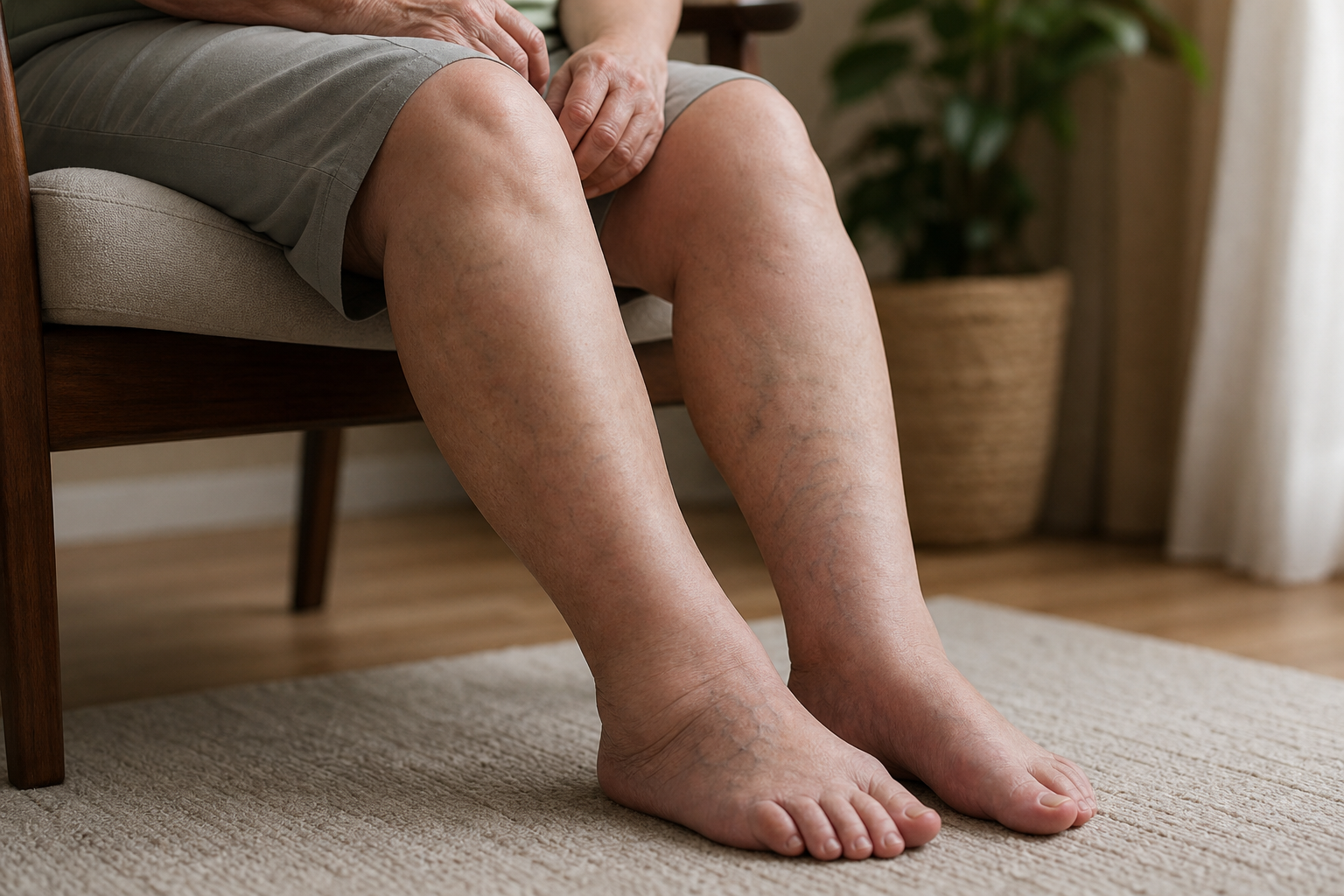
Your calf muscles act as a second pump for your cardiovascular system. Every time you take a step or flex your foot, the calf squeezes blood back up toward your heart against gravity. As we age and become less active, that pumping action slows down. Blood can pool in the lower legs, contributing to swelling, discomfort, and in more serious cases, clot risk.
Prolonged sitting makes everything worse. Even if you exercise regularly, long stretches of sitting can counteract some of that benefit. This is why short movement breaks matter so much, not just long workouts.
The Four Best Daily Exercises for Leg Circulation
1. Ankle Pumps
This is the single most underrated exercise for circulation, and it requires zero equipment and zero standing. Sit in a chair or lie on your back, then flex your foot up toward your shin and point it back down. Repeat 20 to 30 times per foot. You can do this while watching TV, at your desk, or even in bed after waking up.
Ankle pumps directly activate the calf muscle pump and are commonly prescribed after surgery precisely because they’re so effective at preventing blood from pooling. If you’re interested in how movement like this fits into post-surgical recovery, our post-surgery exercise guide covers the progression in detail.
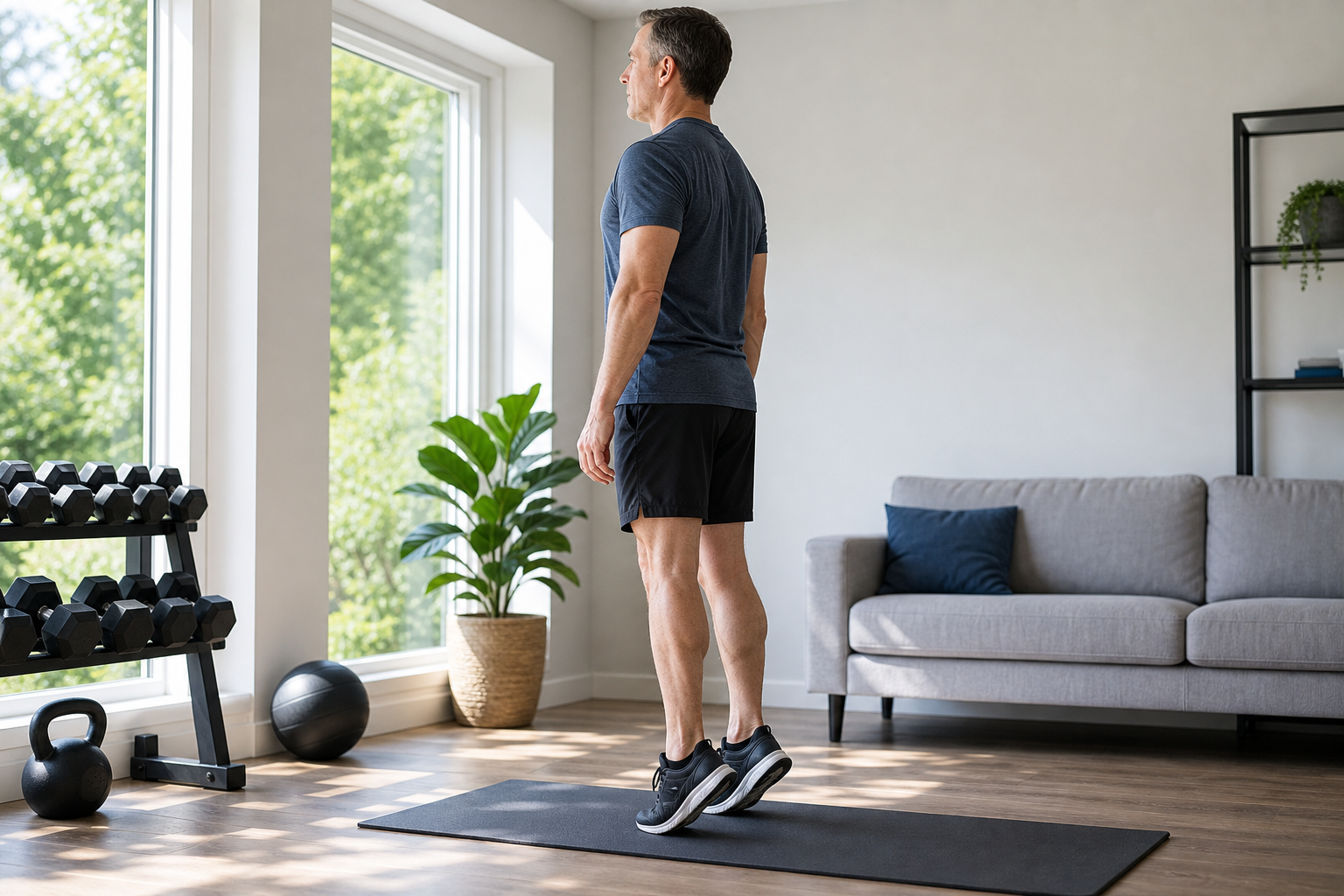
2. Calf Raises
Stand behind a sturdy chair with both hands lightly resting on the back for balance. Rise up onto your toes slowly, hold for two seconds at the top, then lower back down with control. Aim for 15 to 20 repetitions, one to three sets.
Calf raises are more demanding than ankle pumps and also build strength, which matters for balance and fall prevention. If you have balance concerns, check out our article on vertigo and balance exercises before adding standing work to your routine.
3. Walking Breaks
You don’t need a 45-minute walk to keep circulation moving. A two to three minute walk every 30 to 60 minutes does a remarkable job of interrupting the pooling that happens during long sits. Set a timer if you need the reminder.
If you’re looking for an enjoyable way to add more walking to your day without it feeling like exercise, activities like disc golf are a surprisingly effective option that keeps you moving across terrain for an hour or more.
4. Leg Elevation
Elevating your legs above heart level for 15 to 20 minutes gives gravity a chance to drain excess fluid back toward the core. You don’t need a special device. Lying on your back with your calves resting on the seat of a couch or stacked pillows works perfectly.
Do this once or twice a day, especially after long periods of sitting or if your ankles tend to swell in the afternoon. It’s passive, but it genuinely helps.
Supporting Tools That Actually Help
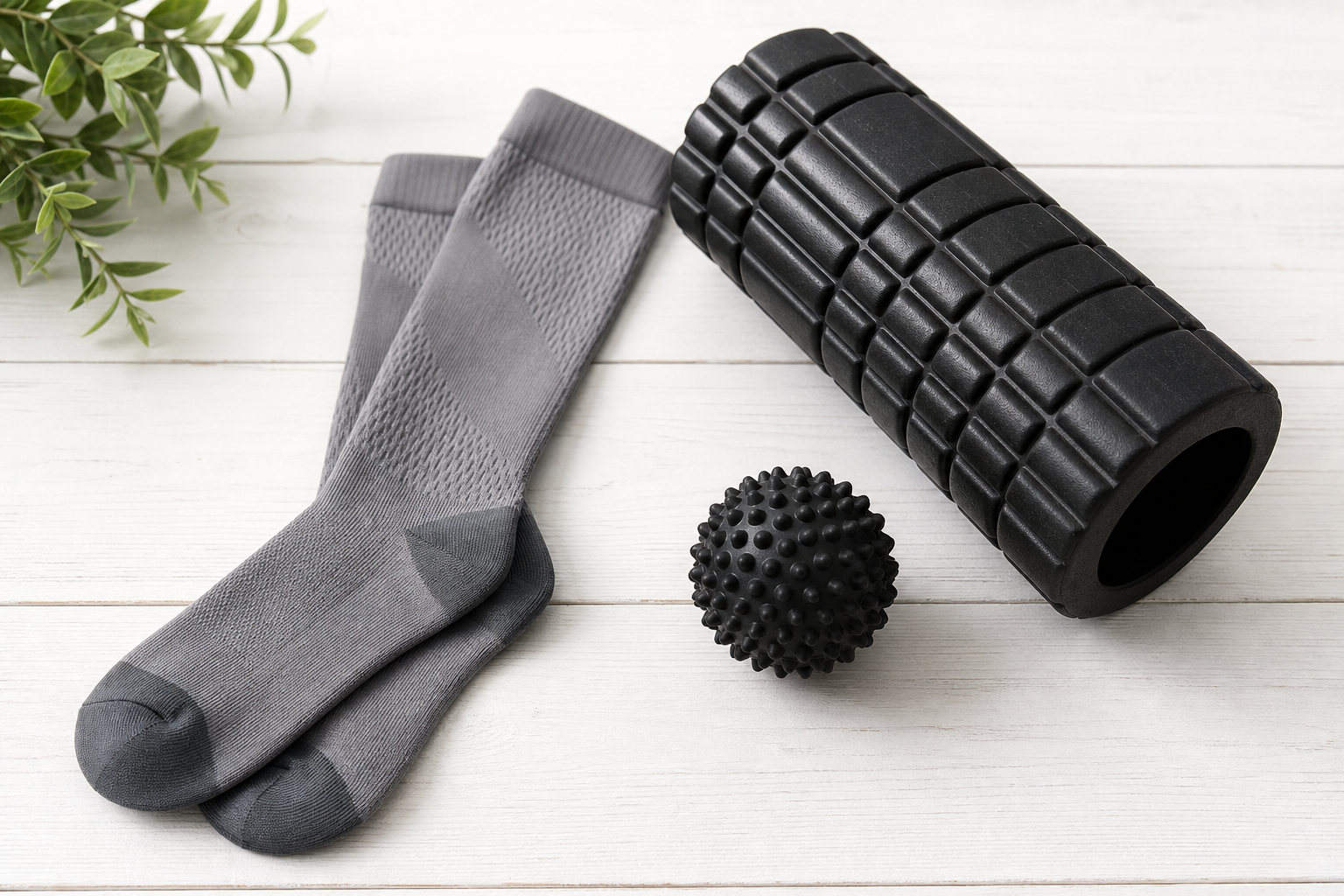
Compression socks are one of the most evidence-backed tools for managing poor leg circulation. They apply graduated pressure, tightest at the ankle and gradually looser up the calf, which helps blood move upward more efficiently. They’re especially useful during long car rides, flights, or days when you know you’ll be on your feet or seated for hours.
Our detailed review of the best compression socks for active seniors walks through what compression level to look for and which styles hold up best for daily wear.
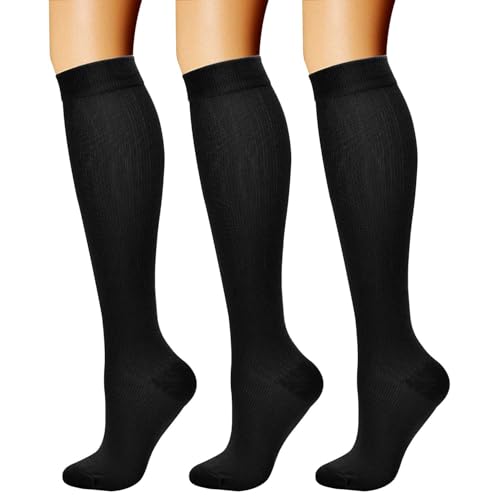
Compression Socks for Seniors
Graduated compression socks are one of the most practical, doctor-recommended tools for reducing leg swelling and improving circulation during daily activity or travel.
A foam roller can also help. Rolling out the calves for a few minutes helps release tension in the tissue surrounding the veins and arteries, which can improve blood flow through the lower leg. It’s not magic, but it’s a nice complement to the exercises above, especially after a long day on your feet. Our guide to foam rollers for senior muscle recovery has specific recommendations worth checking out.

Foam Roller for Calf Massage
A medium-density foam roller works well for rolling out tight calves and improving circulation through the lower legs without being too aggressive on sensitive tissue.
Diet plays a role too. Staying well-hydrated keeps blood viscosity in check, and anti-inflammatory eating patterns can reduce the chronic vessel inflammation that contributes to circulation problems. Our anti-inflammatory diet guide for active seniors is a good companion read.
When to See a Doctor
Exercise and lifestyle changes help a lot of people, but some circulation problems need medical evaluation. Please don’t rely on ankle pumps alone if you notice any of the following:
- Sudden swelling in one leg that doesn’t match the other
- Pain, redness, or warmth in a specific area of the calf (possible deep vein thrombosis)
- Leg ulcers or open wounds that aren’t healing
- Persistent numbness or tingling that may point toward neuropathy (see our neuropathy-safe exercise guide if this sounds familiar)
- Leg pain that consistently appears during walking and goes away with rest (a pattern called claudication)
These symptoms can indicate peripheral artery disease, deep vein thrombosis, or other vascular conditions that require professional assessment, not just more movement. If you’re on blood pressure medications, it’s also worth reading about blood pressure medication and exercise precautions before significantly ramping up your activity level.
Frequently Asked Questions
How often should I do these circulation exercises?
Ankle pumps and short walks can be done throughout the day, every day. Calf raises work well as a once or twice daily routine of one to three sets. Elevation works best as a once or twice daily 15 to 20 minute session. Consistency matters more than intensity here. Doing a little every day beats doing a lot once a week.
Can poor circulation be reversed with exercise alone?
It depends on the cause. For most age-related circulatory slowdown, regular movement makes a meaningful difference over time. For conditions like peripheral artery disease or chronic venous insufficiency, exercise helps but usually needs to be combined with medical treatment. Getting a proper diagnosis first means you’re not guessing at the cause.
Are compression socks safe for everyone?
Most people tolerate compression socks well, but they’re not appropriate for everyone. People with peripheral artery disease, certain skin conditions, or congestive heart failure may need medical guidance before using them. If you’re unsure, ask your doctor or podiatrist before making them part of your daily routine.
This article contains affiliate links. We may earn a small commission at no extra cost to you.