You’ve been stretching your hamstrings faithfully for weeks, maybe months, and they’re just as tight as the day you started. Every toe-touch attempt ends in the same frustrating place. Before you conclude that your hamstrings are permanently shortened, consider this: the tightness you feel might not be a flexibility problem at all. It might be a stability problem, a nerve problem, or a strength imbalance, and stretching will never fix any of those.
The hamstrings are three muscles that run down the back of your thigh from your sit bones to just below your knee. When they feel tight, the natural response is to stretch them. But in many cases, that tightness is a symptom, not the root problem. Your body is smart. If it’s keeping those muscles locked down, there’s usually a reason.
4 Reasons Stretching Isn’t Working

1. Protective Tension (Your Brain Is the Problem)
Your nervous system can lock down muscle tension as a protective mechanism when it senses instability elsewhere. If your core is weak, your pelvis is unstable, or your lower back is vulnerable, your brain tightens the hamstrings like guy-wires on a tent to prevent your pelvis from tilting too far forward. Stretching the hamstrings temporarily overrides this protective tension, but the tightness returns within hours because the underlying instability hasn’t been addressed.
This mechanism is called neurogenic tension. Your central nervous system is constantly monitoring joint position and muscle length. When it detects that something isn’t stable (a weak core, an unstable pelvis), it cranks up muscle tone in the hamstrings to limit range of motion. It’s not trying to inconvenience you. It’s trying to protect your spine from injury.
The problem is that this protection comes at a cost. Chronically tight hamstrings alter your gait, reduce hip mobility, and force your spine to compensate during bending movements. Over time, this can lead to lower back pain and stiffness in other areas. But stretching the symptom won’t turn off the protective response. You have to address what the nervous system is protecting.
How to tell: You can touch your toes on a good day or after a long warm-up, but the tightness returns quickly. Your flexibility varies significantly day to day. You also have lower back stiffness or weakness. You might notice that your hamstrings feel looser after core exercises, which is a strong signal that stability, not length, is the issue.
The fix: Strengthen your core and glutes instead of stretching your hamstrings. Dead bugs, bird dogs, glute bridges, and planks address the instability that’s causing the protective tension. Many people find their hamstring “tightness” resolves within 3-4 weeks of consistent core work, even without additional stretching.
Start with dead bugs: lie on your back, knees bent at 90 degrees, shins parallel to the floor. Press your lower back into the ground. Slowly extend one leg while reaching the opposite arm overhead. Return and switch sides. The key is maintaining that lower back contact with the floor throughout. If your back arches, shorten the range. Do 3 sets of 8 per side daily.
Bird dogs work similarly but from a hands-and-knees position. Extend one arm and the opposite leg, keeping your hips level and your core braced. Hold for 3 seconds, return, switch sides. These teach your core to stabilize your pelvis during movement, which is exactly what it struggles with when hamstring tightness is neurogenic.
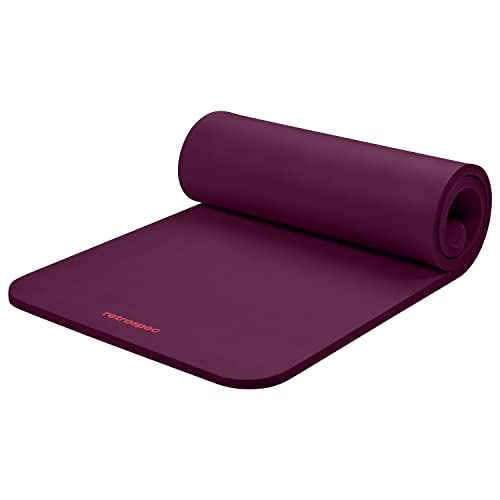
Exercise Mat
A thick, cushioned mat makes floor exercises like dead bugs and bird dogs more comfortable on joints
2. Neural Tension (Sciatic Nerve Involvement)
The sciatic nerve runs from your lower back through your buttock and down the back of your leg, following the same path as your hamstrings. When this nerve is irritated (from a disc issue, piriformis tension, or spinal stenosis), it creates a pulling sensation that mimics hamstring tightness. Stretching the hamstring also stretches the nerve, which can actually make the problem worse.
Nerves don’t like being stretched aggressively. Unlike muscles, which have elastic properties and respond well to sustained stretching, nerves need to glide smoothly through surrounding tissue. When a nerve is irritated or adhered, aggressive stretching can inflame it further, creating more tightness and pain.
The sciatic nerve is particularly vulnerable because it has to navigate through several tight spaces on its path down the leg. It passes through the piriformis muscle in your buttock, runs alongside your hamstrings, and eventually splits into smaller branches below the knee. Any compression or irritation along this path can create symptoms that feel exactly like tight hamstrings.
How to tell: The “tightness” is more of a pulling, burning, or electrical sensation than a muscle stretch. It may radiate from your buttock or lower back down the back of your leg. Stretching produces a sharp pulling rather than a gradual stretch sensation. The tightness is often worse on one side. You might also notice tingling, numbness, or a pins-and-needles feeling in your calf or foot.
Another test: lie on your back and lift one leg straight up, keeping the knee locked. Have someone slowly push your foot toward your shin (dorsiflexion). If this produces sharp pulling or electrical sensations that shoot down your leg, that’s neural tension, not muscular tightness.
The fix: Stop aggressive hamstring stretching. Instead, address the nerve itself with nerve glide exercises (also called neural flossing). Seated nerve glides: sit with one foot on the floor, extend the other leg, and gently alternate between pointing your toes down (which slackens the nerve) and pulling your toes back (which tensions it). Perform 10 gentle oscillations per leg. This mobilizes the nerve without aggravating it. The movement should be smooth and pain-free. If it hurts, reduce the range.
You can also try supine nerve glides: lie on your back, lift one leg toward the ceiling with the knee bent, then gently straighten and bend the knee while keeping the thigh still. Again, 10 gentle reps per side. The goal is to get the nerve moving through its surrounding tissue without stretching it to its end range.
See a physical therapist if you suspect sciatic nerve involvement, especially if you have numbness, weakness, or pain that radiates below the knee. These can signal more significant nerve compression that needs professional evaluation. For specific exercises targeting sciatica, check out our complete guide to managing sciatica through exercise.
3. Anterior Pelvic Tilt
An anteriorly tilted pelvis (where the front of your pelvis drops forward and the back rises) places the hamstrings in a chronically stretched position. They feel tight because they’re already at their functional end range, not because they’re shortened. Stretching them further pulls your pelvis into even more tilt, potentially worsening back pain.
Think of your pelvis as a bowl. In neutral alignment, the bowl is level. With anterior tilt, the bowl tips forward, spilling imaginary water out the front. This tilt is often driven by tight hip flexors (which pull the front of the pelvis down) and weak glutes and abdominals (which fail to pull the back of the pelvis down to counterbalance).
When the pelvis tilts forward, the hamstrings, which attach to the bottom back of the pelvis, are pulled into a lengthened position. They’re on constant stretch just from your standing posture. Your nervous system responds by increasing tone in those muscles to resist being pulled further. The result feels like tightness, but it’s actually the opposite: the muscles are too long for the position they’re being held in.
This is why stretching doesn’t help. You’re trying to lengthen muscles that are already overstretched. What you actually need is to restore neutral pelvic alignment so the hamstrings can return to their normal resting length.
How to tell: You have an exaggerated curve in your lower back when standing. Your belly pushes forward even if you’re not overweight. Lying flat on your back, there’s a significant gap between your lower back and the floor. From the side, your belt line tilts down in front and up in back. You might also have hip flexor tightness and find that your lower back aches after standing for extended periods.
A simple test: stand sideways in front of a mirror and relax into your natural posture. Look at the angle of your pelvis. If your belt buckle points down toward the floor rather than straight ahead, you have anterior tilt.
The fix: Address the tilt, not the hamstrings. Strengthen your abdominals (dead bugs, pelvic tilts) and glutes (bridges, clamshells) to pull the pelvis back to neutral. Stretch your hip flexors (kneeling lunge stretch, 30 seconds per side) which are the muscles that pull the pelvis forward. As pelvic alignment improves, hamstring tension resolves.
Pelvic tilts are a good starting point: lie on your back with knees bent, feet flat. Gently tilt your pelvis to press your lower back into the floor, then release. This teaches you what neutral feels like. Once you can control the tilt lying down, practice it standing. Place your hands on your hip bones and gently tilt your pelvis back so your belt buckle points more forward. This is the position you want to strengthen and maintain.
Kneeling hip flexor stretches target the muscles pulling your pelvis forward. Kneel on one knee with the other foot forward, knee bent at 90 degrees. Gently push your hips forward while keeping your torso upright. You should feel a stretch in the front of the hip on the kneeling side. Hold 30 seconds, switch sides. Do this twice daily.
For more guidance on fixing postural issues, see our article on posture correction exercises for seniors.
4. Insufficient Warm-Up Before Stretching
Stretching cold muscles is less effective than stretching warm ones. Muscle tissue is viscoelastic, meaning it stretches more easily when it’s warm and blood flow is increased. If you’re stretching your hamstrings first thing in the morning or before any activity, the tissue is at its stiffest and least responsive. You’re fighting against your own physiology.
Muscle temperature matters. Cold muscle fibers are less pliable and more resistant to lengthening. Warm muscles have increased blood flow, which delivers oxygen and nutrients that make the tissue more elastic. The difference isn’t trivial. Research shows that stretching warm muscles can improve flexibility gains by 20 to 30 percent compared to stretching cold.
Older adults are particularly affected by this because muscle temperature tends to drop faster with age, and circulation may not be as robust. If you’ve been stretching cold muscles for months without progress, this might be the missing piece.
The fix: Walk for 5-10 minutes before stretching. The increased blood flow and muscle temperature make stretching more effective. Post-exercise stretching is even better because your muscles are at their warmest and most pliable. If you prefer morning stretching, do some light movement first: marching in place, gentle leg swings, or a few bodyweight squats. Anything that gets blood moving to the legs will help.
Another option is to use heat before stretching. A warm shower, heating pad, or warm towel applied to the hamstrings for 10 minutes before stretching can increase tissue temperature and improve results. This is especially useful if you’re stretching in a cool room or first thing in the morning.

Heating Pad
Moist heat therapy pads are particularly effective for warming muscles before stretching
What to Do Instead of More Stretching
If traditional hamstring stretching hasn’t worked after 4-6 weeks of consistent effort, shift your approach:
- Strengthen your core: Dead bugs (3 sets of 8 per side), planks (3 holds of 20-30 seconds), and pelvic tilts (3 sets of 10) daily.
- Strengthen your glutes: Bridges (3 sets of 12) and clamshells (3 sets of 15 per side) daily.
- Stretch your hip flexors: Kneeling lunge stretch (30 seconds per side) twice daily.
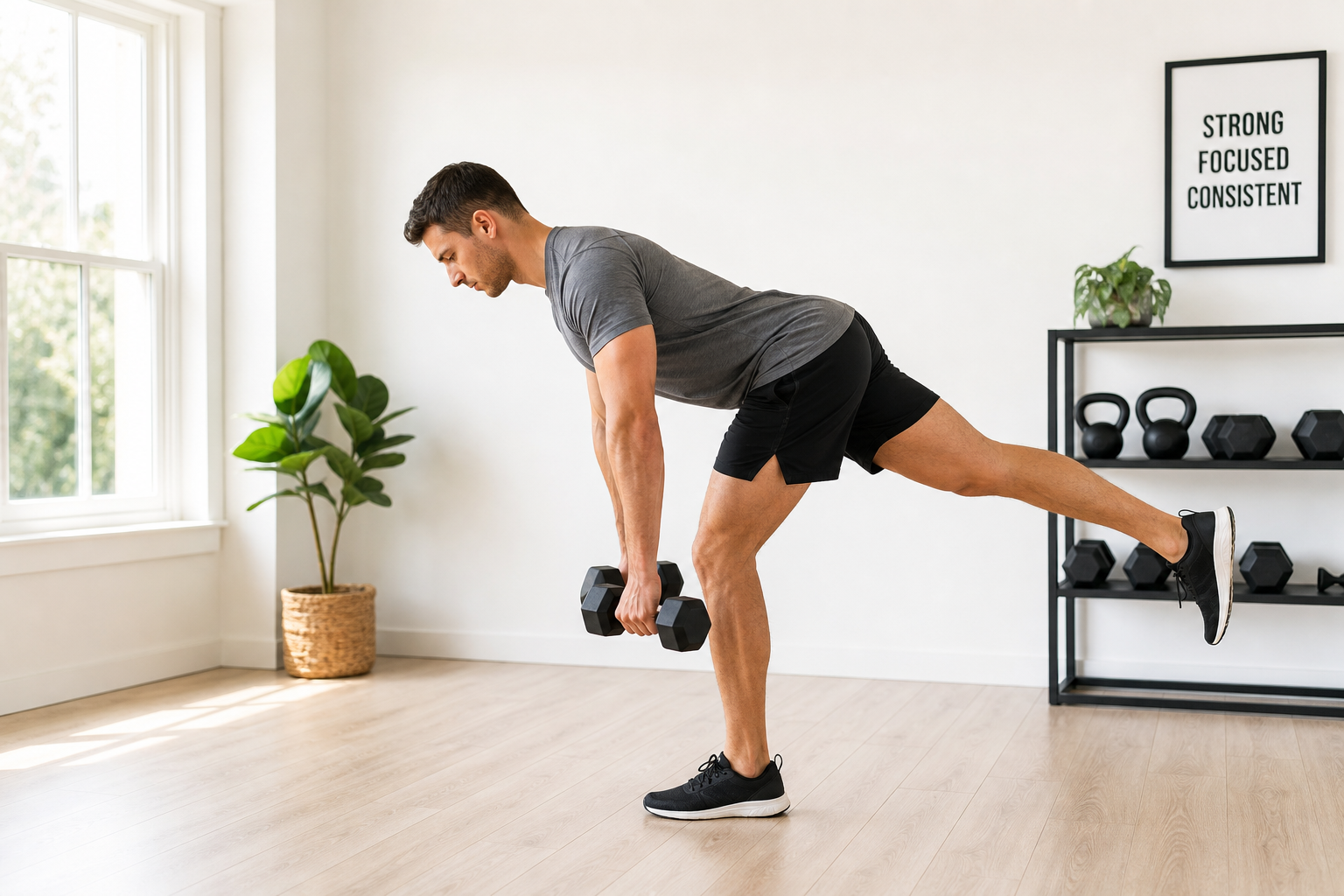
- Try active hamstring lengthening: Romanian deadlifts with very light dumbbells strengthen the hamstrings through their lengthened range, which often improves functional flexibility more than passive stretching.
Romanian deadlifts deserve special attention. Unlike passive stretching, which simply pulls on the muscle, Romanian deadlifts train the hamstrings to control movement through a long range. Start with 5-pound dumbbells or even no weight. Stand with feet hip-width apart, slight bend in the knees. Hinge at the hips, pushing your buttocks back while keeping your back neutral, and lower the weights toward the floor. You should feel a stretch in your hamstrings. Return to standing by squeezing your glutes. The movement should be slow and controlled. Do 3 sets of 10 reps, 2-3 times per week.
This approach builds strength at the end range of motion, which is often more functional than just being able to passively stretch into a position. You’re teaching your hamstrings to lengthen under load, which is what they need to do during walking, bending, and other daily activities.
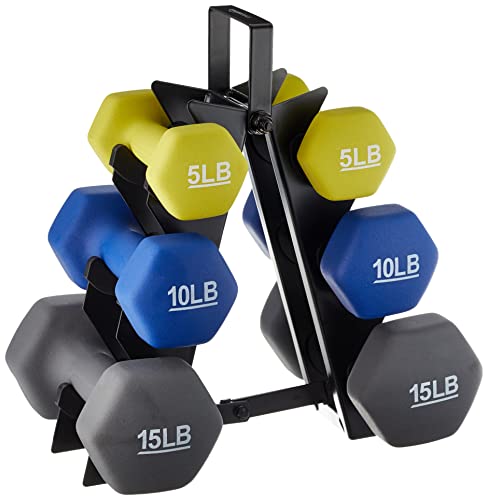
Light Dumbbells
Neoprene-coated light dumbbells are easier to grip and won’t damage floors if dropped
Consider also whether your daily habits are working against you. If you sit for long periods, your hip flexors shorten and your glutes weaken, both of which contribute to anterior pelvic tilt and hamstring tension. Taking standing or walking breaks every hour helps. When sitting, avoid slouching, which increases posterior pelvic tilt and can create a compensation pattern when you stand.
If you’ve tried these approaches for 6-8 weeks and still aren’t seeing improvement, talk to your doctor or a physical therapist. Persistent hamstring tightness that doesn’t respond to strengthening and stretching can sometimes indicate a structural issue (like a herniated disc compressing the sciatic nerve) that needs professional evaluation.
Frequently Asked Questions
Should I stop stretching my hamstrings completely?
Not necessarily. Gentle stretching after exercise (held for 30 seconds, not forced) is still beneficial for maintaining current range. The point is that if stretching alone isn’t improving your flexibility, more of it won’t help. Address the root cause (core weakness, neural tension, pelvic tilt) and your stretching will become more effective.
When you do stretch, focus on quality over intensity. A gentle, sustained stretch that you can breathe through comfortably is more productive than forcing yourself into a painful position. If you’re grimacing or holding your breath, you’re stretching too hard. Your nervous system responds to aggressive stretching by increasing muscle tone as a protective response, which defeats the purpose.
Is it normal for hamstrings to tighten with age?
Some loss of hamstring flexibility is normal with aging, driven by changes in muscle elasticity and connective tissue. However, flexibility responds to training at any age. If your hamstrings aren’t responding to stretching, the issue is almost always one of the four causes above, not an irreversible age-related change.
Collagen in tendons and fascia becomes less elastic over time, and there’s some decrease in muscle fiber length that occurs naturally. But studies consistently show that older adults can improve flexibility with consistent training. The