Getting older doesn’t mean you have to give up on staying active. Water aerobics offers one of the most effective and enjoyable ways for seniors to maintain fitness without the wear and tear that comes with traditional exercise. The pool environment naturally supports your body while providing resistance that builds strength and endurance.
Whether you’re recovering from an injury, managing arthritis, or simply looking for a low-impact workout that won’t leave you sore for days, water-based exercise delivers results. You’ll find yourself moving in ways that feel impossible on land, all while burning calories and improving your overall health.
Why Water Aerobics Works So Well for Seniors
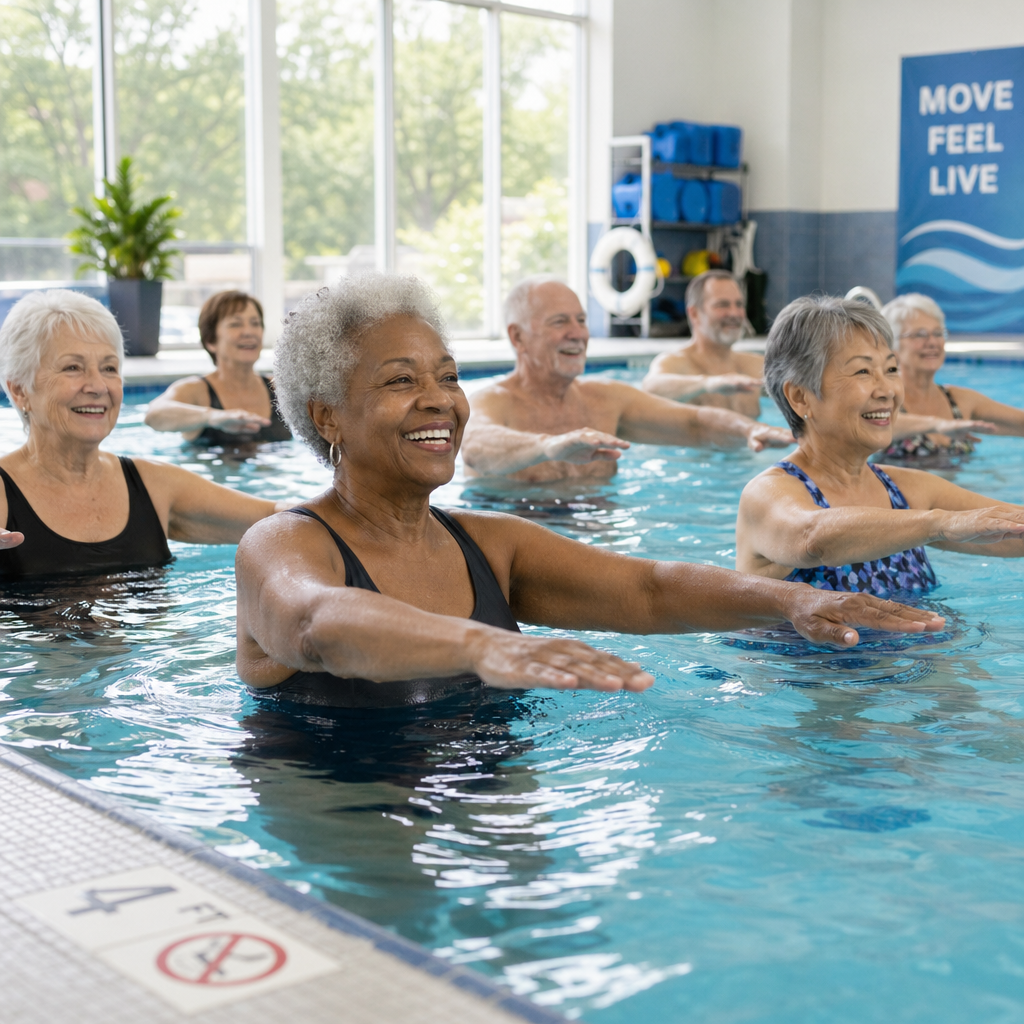
The buoyancy of water reduces the impact on your joints by up to 90% when you’re submerged to chest level. This means you can perform movements that might cause pain on land without the same risk of injury or discomfort. Your body weight in water drops significantly, taking pressure off your knees, hips, and lower back.
Water provides natural resistance in all directions, making every movement a strength-building exercise. You don’t need to lift heavy weights to challenge your muscles. Simply pushing your arms through the water creates 12 times more resistance than moving them through air.
The hydrostatic pressure of water also improves circulation. As you move in the pool, the water pressure helps push blood back toward your heart, which can reduce swelling in your legs and feet. This gentle pressure also provides sensory feedback that improves balance and body awareness.
Temperature matters too. Most water aerobics classes use pools heated between 83 and 88 degrees Fahrenheit, warm enough to keep your muscles relaxed but cool enough to prevent overheating during exercise.
Major Health Benefits You’ll Experience
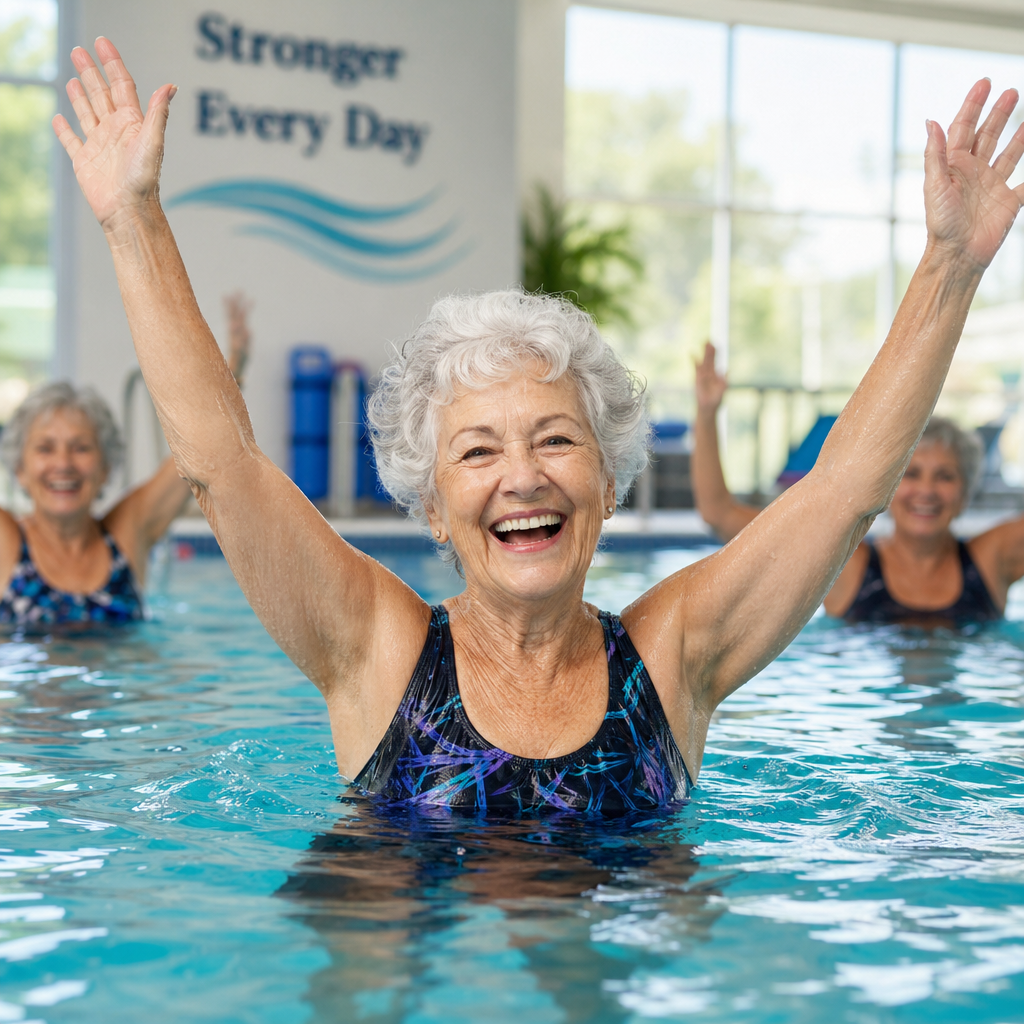
Your cardiovascular system gets a serious workout in the pool. Studies show that regular water aerobics can lower blood pressure, reduce resting heart rate, and improve overall heart health. The resistance of water makes your heart work harder to pump blood, strengthening it over time without the joint stress of running or high-impact aerobics.
Flexibility improves dramatically with consistent water exercise. The warm water relaxes tight muscles and allows for a greater range of motion in your joints. Many seniors find they can stretch further in the pool than they ever could on a yoga mat.
Balance and coordination get better too. Moving through water challenges your stabilizer muscles in ways that land-based exercise can’t match. This translates to fewer falls and more confidence in your daily activities.
Mental health benefits are significant. The social aspect of group classes combats isolation, while the repetitive nature of water movement has a calming, almost meditative quality. Regular participants often report better sleep and reduced anxiety.
Essential Pool Exercises for Shallow Water
You don’t need to be a strong swimmer to benefit from water aerobics. Most senior-friendly exercises happen in shallow water where you can stand comfortably with your head above water.
Water walking is the perfect starting point. Walk forward, backward, and sideways across the pool, using your arms to push through the water. This simple movement works your entire body and improves balance. Try walking on your toes or heels to challenge different muscle groups.
Leg lifts target your hips and thighs. Stand with your back against the pool wall for support, then lift one leg forward, hold for a few seconds, and lower it slowly. Repeat with side lifts and back lifts. The water resistance makes these more effective than doing them on land.
Arm circles strengthen your shoulders and upper back. Stand in chest-deep water with your arms extended to the sides just below the water surface. Make small circles forward for 30 seconds, then reverse direction. Increase the circle size as you get stronger.
Pool noodles add variety and support to your workout. Pool noodles can be used for flotation during leg exercises or as resistance tools for upper body work. Place a noodle under your arms and practice bicycle kicks, or hold it vertically in the water and push it down for an excellent core workout.

Water Aerobics Exercise Equipment Set
A complete set with foam dumbbells and resistance gloves helps maximize your pool workout effectiveness.
Heel raises improve ankle strength and calf flexibility. Stand in waist-deep water and slowly rise up on your toes, hold for two seconds, then lower back down. The water provides gentle resistance while supporting your balance.
Flutter kicks work your core and legs. Hold onto the pool edge or use a noodle for support, then extend your body horizontally and kick your legs in a controlled flutter motion. This exercise strengthens your lower back and abdominal muscles without strain.
Safety Guidelines for Pool Exercise
Always enter and exit the pool using the stairs or ladder, never jump or dive into the pool during exercise sessions. Take your time getting in and out, and use the handrails. Wet surfaces are slippery, so wear water aerobics shoes with non-slip soles both in the pool and on the deck.
Stay hydrated even though you’re in water. You’re still sweating and losing fluids during exercise, but you won’t notice it the same way you would on land. Keep a water bottle at the pool edge and take regular sips.
Know your limits and listen to your body. Water exercise feels easier while you’re doing it because of the buoyancy, but you can still overdo it. Start with 20 to 30 minute sessions and gradually increase duration as your fitness improves.
Check with your doctor before starting any new exercise program, especially if you have heart conditions, recent surgeries, or open wounds. Some medications affect your ability to regulate body temperature in warm water.
Never exercise alone if possible. Buddy systems work well, or join a supervised class. Make sure a lifeguard or instructor is present, particularly when you’re first starting out.

Waterproof Fitness Tracker
Track your heart rate and activity levels during water workouts to monitor your progress and stay in your target zone.
Be aware of pool chemical levels. Properly maintained pools should have a chlorine smell that’s barely noticeable. Strong chemical odors can indicate imbalanced water that may irritate your skin, eyes, or respiratory system.
What to Expect from Your First Water Aerobics Class
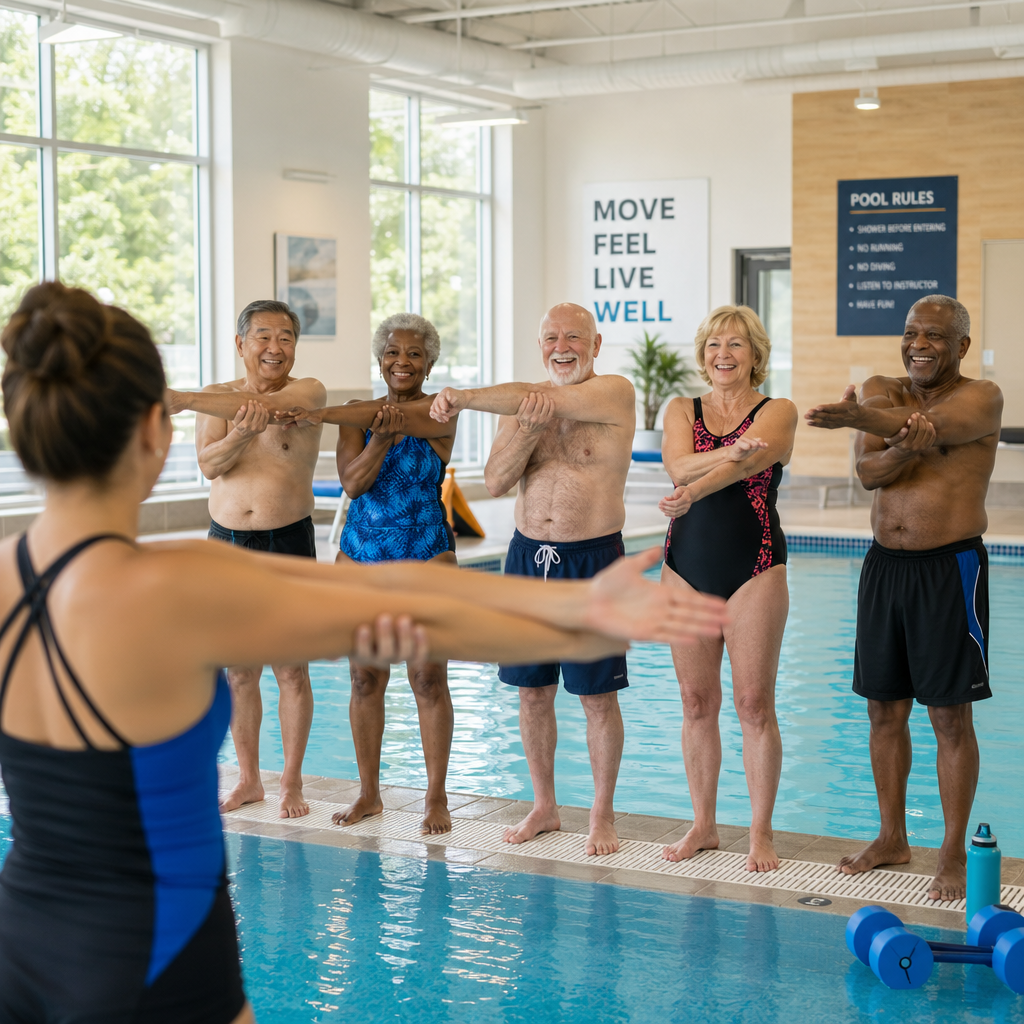
Most senior water aerobics classes run 45 to 60 minutes and follow a similar structure. You’ll start with a warm-up of gentle movements to get your blood flowing and muscles ready. This typically includes easy walking and simple arm movements.
The main workout section includes a variety of exercises targeting different muscle groups. Your instructor will demonstrate each movement from the pool deck or in the water with you. Don’t worry about keeping up with everyone else initially. Each person works at their own pace and intensity level.
Music often accompanies the exercises, providing rhythm and making the workout more enjoyable. Instructors choose upbeat but not overwhelming tempos that match the movement pace appropriate for seniors.
Expect to use equipment like foam dumbbells, kickboards, resistance bands, and noodles. The facility usually provides these items, but some regular participants prefer bringing their own. An aquatic exercise belt can be helpful for deep water exercises if your class includes them.
The cool-down period involves slower, stretching movements that help prevent muscle soreness and gradually lower your heart rate. This is also when many instructors incorporate relaxation techniques or balance exercises.
Class sizes vary, but smaller groups of 10 to 20 participants allow for more individual attention. You’ll find a mix of fitness levels, and the supportive atmosphere makes it easy to connect with others who share similar health goals.
Getting Started with the Right Gear
Your swimsuit should fit comfortably and stay in place during movement. One-piece suits with chlorine-resistant fabric work well for women, while men typically prefer swim trunks or jammers. Look for suits designed specifically for exercise rather than casual swimming.
Water shoes protect your feet from rough pool surfaces and provide traction. Choose styles with drainage holes and secure closures that won’t slip off during exercises. The thin, flexible soles allow you to feel the pool bottom while protecting your feet.

Chlorine-Resistant Swimsuit
Purpose-built exercise swimsuits last much longer than regular suits in chlorinated pools and maintain their fit through repeated use.
Consider swim goggles if you’re sensitive to chlorine or plan to put your face in the water during certain exercises. Anti-fog coating and UV protection are useful features.
A swim cap keeps hair out of your face and protects it from chlorine damage. Silicone caps are more durable and comfortable than latex versions.
Bring a towel, water bottle, and a change of clothes. A mesh bag works well for transporting wet items after class. Some people also bring a small waterproof bag for keeping valuables like keys and phones nearby.
Finding the Right Class or Program
Local community centers, YMCAs, and senior centers frequently offer water aerobics classes specifically designed for older adults. These programs understand the unique needs of senior participants and adjust intensity accordingly.
Many public pools offer open swim times where you can practice water fitness exercises independently. This works well once you’ve learned basic movements and feel confident working on your own.
Private gyms with pools often include water aerobics in their membership packages. Visit several facilities to compare pool temperatures, class schedules, and instructor experience before committing.
Ask about instructor certifications. Look for teachers trained in aquatic fitness instruction through organizations like the Aquatic Exercise Association or who hold specialized senior fitness certifications.
Consider class timing carefully. Morning classes work well for people with arthritis, as warm water helps reduce morning stiffness. Afternoon or early evening classes might fit better with your daily routine.
Most facilities allow you to observe or try a class before signing up. Take advantage of free trial sessions to see if the instructor’s style and class atmosphere suit you.
Frequently Asked Questions
Do I need to know how to swim to participate in water aerobics?
No swimming skills are required for most senior water aerobics classes. The exercises take place in shallow water where you can stand with your head comfortably above water. You’ll always have the pool floor beneath your feet, and instructors keep exercises in areas where everyone can touch bottom safely. Some advanced classes might include deep water work, but these are clearly marked and require flotation belts or vests that keep you upright without any swimming effort.
How many times per week should I do water aerobics?
Two to three sessions per week provides excellent health benefits for most seniors. This frequency allows your body time to recover between workouts while building consistent progress. You can safely exercise more often if you feel good, as the low-impact nature of water exercise causes less muscle fatigue than land-based workouts. Many active seniors attend classes four to five times weekly without issues. Start with twice weekly and increase gradually based on how your body responds.
Will water aerobics help me lose weight?
Water aerobics burns between 120 and 160 calories per 30 minutes for most seniors, depending on intensity level. Combined with healthy eating habits, regular water exercise contributes to weight loss and weight maintenance. The muscle building aspect of water resistance also increases your resting metabolism, meaning you burn more calories throughout the day. Many participants notice improved body composition even if the scale doesn’t change dramatically, as they lose fat while gaining lean muscle mass.
What if I have a fear of water?
Many people with water anxiety successfully participate in water aerobics by starting slowly in very shallow areas. Talk to the instructor before class about your concerns so they can provide extra support and modifications. Begin by standing in waist-deep water near the pool edge where you can easily hold onto the side. As you become more comfortable, you can gradually move to slightly deeper areas. The group setting often helps people feel more secure, and the structured nature of the exercises keeps your mind focused on movements rather than fear.
This article contains affiliate links. We may earn a small commission at no extra cost to you.