You’ve probably noticed how much harder it is to maintain your balance these days. Maybe you’ve had a close call on an icy sidewalk, or you grip the handrail a little tighter going down stairs. Balance naturally declines with age, but it doesn’t have to be inevitable.
Tai chi offers something different from typical balance exercises. Instead of isolated movements and static poses, this ancient Chinese practice combines flowing motions with focused breathing and mental concentration. Research shows it’s one of the most effective fall prevention strategies available, and you don’t need special equipment or athletic ability to start.
What Makes Tai Chi Different for Balance Training
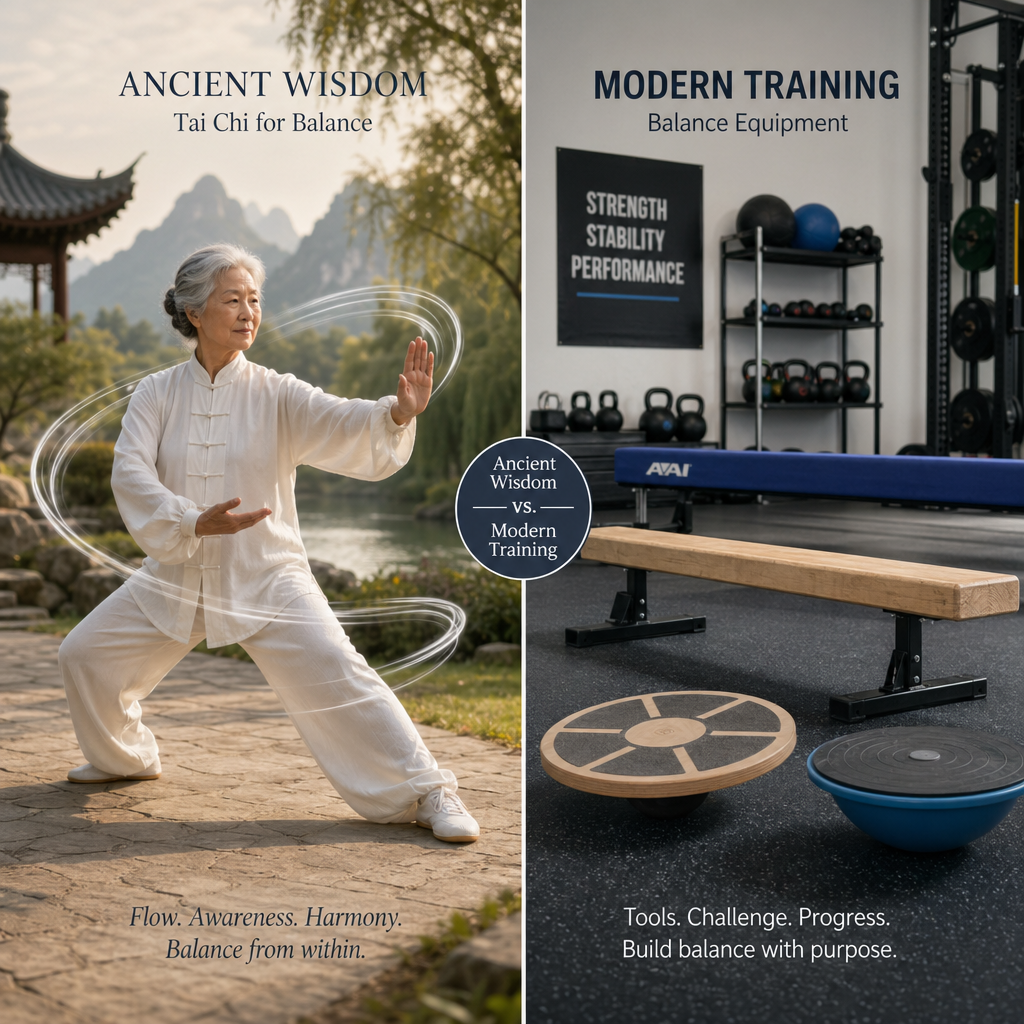
Unlike vestibular exercises that target specific balance systems, tai chi trains your entire body as an integrated unit. You’re constantly shifting your weight, rotating your torso, and coordinating your arms and legs in deliberate patterns. This mirrors real-world scenarios where you need to recover from an unexpected stumble or reach for something while standing.
The slow, controlled pace gives your nervous system time to process balance signals. When you move through tai chi forms, you’re strengthening the connection between your brain and muscles. Your proprioception (your body’s sense of where it is in space) improves with every practice session.
The weight-shifting component is particularly valuable. Most tai chi movements involve standing on one leg while the other moves through space. You’re building single-leg strength and stability without the jarring impact of traditional exercise. Your ankle and hip stabilizers get stronger, which directly reduces fall risk. This is especially important since weak ankles increase your risk of sprains and compromise overall stability.
Key Movements and Principles for Seniors
You don’t need to master complex forms to benefit from tai chi. Three fundamental movements provide substantial balance improvements when practiced regularly.
The “weight shift” is the foundation of everything else. Stand with feet shoulder-width apart, then slowly transfer your weight to your right foot as you lift your left heel slightly. Hold for a few seconds, then reverse. This simple exercise trains the controlled weight transfer you need when walking or turning.
The “cloud hands” movement involves shifting weight side to side while your arms trace circular patterns at chest height. Your eyes follow your hands, which adds a visual tracking component that challenges your vestibular system. This movement improves lateral stability, which helps prevent sideways falls.
“Single whip” combines rotation and balance. You turn your waist to one side while extending your arms in opposite directions, then slowly shift weight from back foot to front foot. This movement strengthens your core rotational stability and teaches you to maintain balance while your upper and lower body move independently.
Start with 5-10 minutes of practice daily. You’ll see improvements within a few weeks, but the benefits compound over months of consistent practice. If you want to add variety to your routine, incorporating equipment like a Bosu ball can provide complementary balance challenges.

Tai Chi for Seniors DVD
An instructional DVD provides clear visual guidance for learning proper form at your own pace.
Breathing Techniques That Enhance Stability
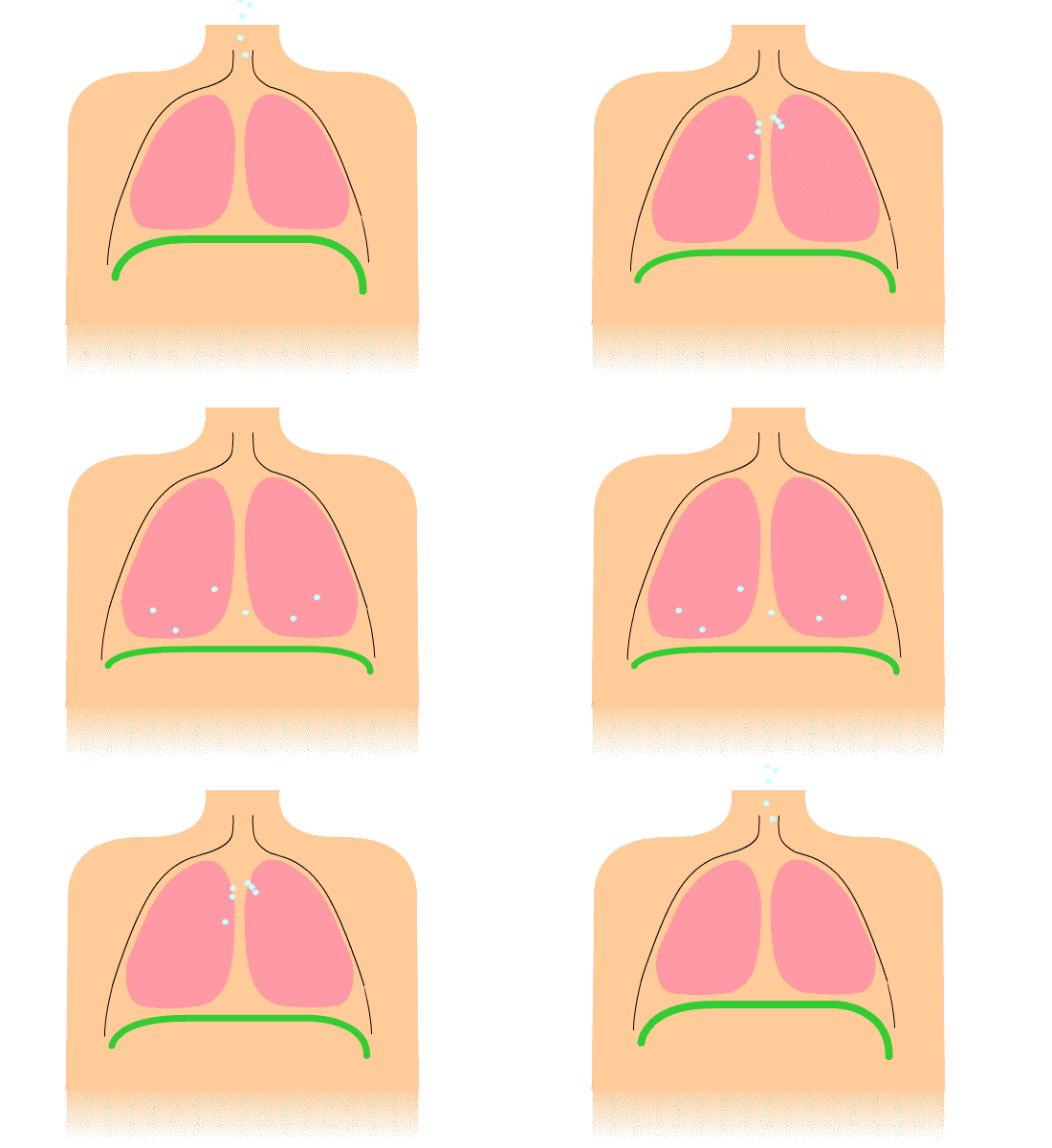
Tai chi breathing differs from your normal respiratory patterns. You coordinate each breath with specific movements, which creates a rhythm that steadies your body and calms your nervous system.
The basic principle is simple: inhale during opening movements when your arms expand outward, exhale during closing movements when your arms draw inward. Deep abdominal breathing engages your diaphragm and core muscles, which stabilizes your spine and improves your center of gravity. This is important because improper core engagement can lead to back pain during balance training.
Breathing through your nose helps regulate the pace. You can’t rush through movements when you’re matching them to slow, nasal breaths. This natural speed limit prevents you from moving faster than your balance systems can handle.
The mental focus required to coordinate breath and movement keeps your mind present. When you’re concentrating on inhaling as your arm rises, you’re not worrying about other things. This mindfulness component reduces anxiety about falling, which often creates muscle tension that actually increases fall risk.
Mental Health Benefits Beyond Balance
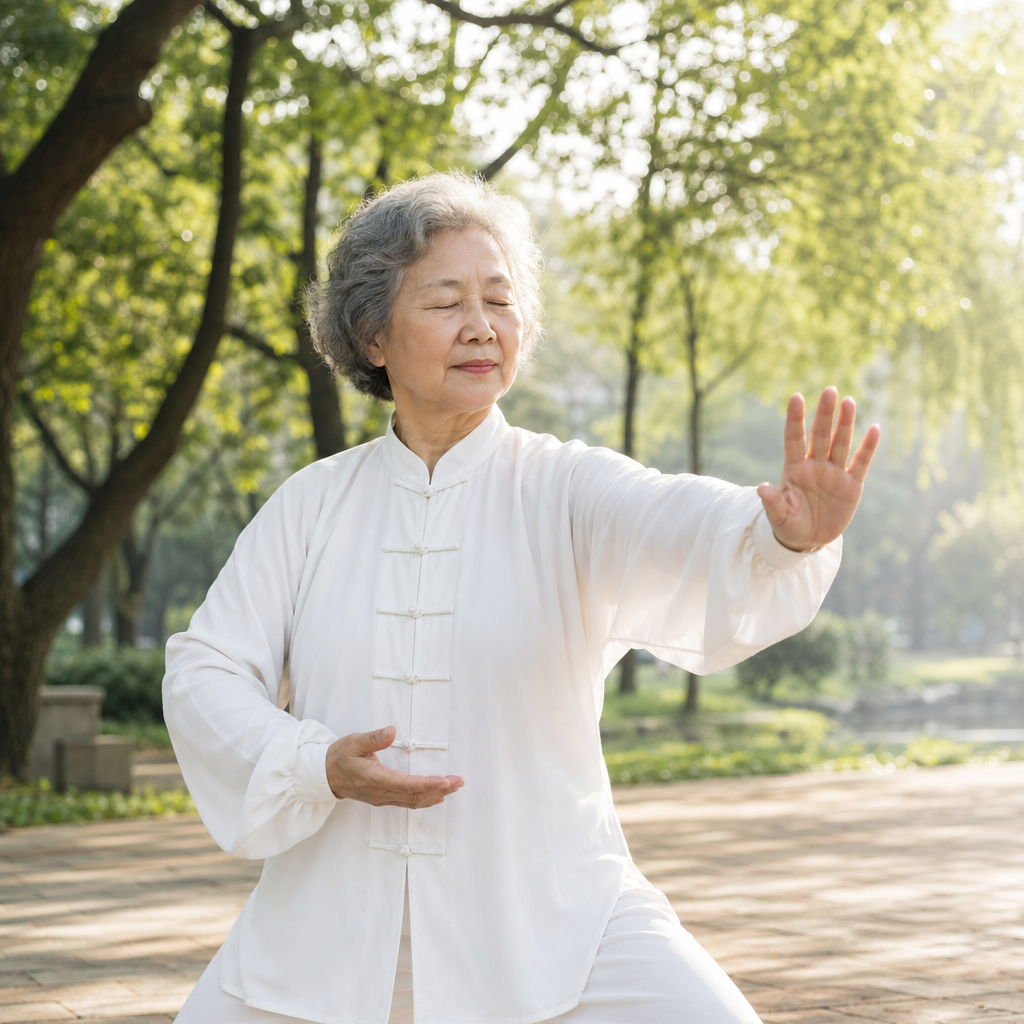
The physical improvements get most of the attention, but tai chi’s effects on your mental state contribute significantly to fall prevention. Studies show that fear of falling often becomes a self-fulfilling prophecy. You move less, your muscles weaken, and your balance deteriorates further.
Tai chi builds confidence through progressive mastery. Each session where you successfully complete movements on one leg proves to your brain that you can maintain balance. This psychological shift makes you move with more assurance in daily life.
The practice also reduces stress hormones like cortisol. Lower stress levels improve sleep quality, which is when your body consolidates motor learning and repairs muscle tissue. Better sleep means better balance the next day.
Many practitioners report improved mood and reduced symptoms of depression. The social aspect of group classes provides connection and accountability. Having classmates who understand your challenges creates a supportive environment that keeps you coming back.
What the Research Shows About Fall Prevention
The evidence for tai chi as a fall prevention strategy is substantial. A 2012 meta-analysis published in the Journal of the American Geriatrics Society found that tai chi reduced fall rates by 43% among older adults compared to standard care.
More recent research from Oregon Research Institute tracked 670 adults over 70 who practiced tai chi twice weekly for six months. The tai chi group experienced 58% fewer dangerous falls (those requiring medical attention) than the control group doing standard balance exercises.
The improvements persist after you stop formal classes if you continue practicing at home. A 2019 study found that participants who maintained at least two home practice sessions weekly retained 80% of their balance gains one year after their tai chi program ended.
Interestingly, tai chi appears more effective than strength training alone for preventing multiple falls. A University of Sydney study compared tai chi, strength training, and combined programs. The tai chi-only group had the lowest rate of experiencing two or more falls during the 18-month study period.
How to Start Your Tai Chi Practice
Look for classes specifically designed for seniors or beginners. Many community centers, senior centers, and YMCAs offer tai chi programs taught by certified instructors. The social aspects of group classes increase adherence, and having an instructor correct your form prevents you from reinforcing poor movement patterns.
Try different styles if possible. Yang style is most common and features slow, expansive movements that are easier to learn. Sun style involves higher stances and smaller steps, which some seniors find more comfortable. Your local offerings may limit your choices, but any legitimate tai chi program will provide balance benefits.
Wear comfortable clothing that allows free movement and flat, flexible shoes. You need to feel your feet connecting with the ground. Avoid thick-soled athletic shoes that interfere with balance signals from your feet.

Tai Chi Exercise Mat
A non-slip mat provides stable footing for home practice and cushions your joints on hard floors.
Practice near a sturdy chair or countertop when you’re learning. You can use it for light support during single-leg movements until your strength improves. There’s no shame in modifying movements to match your current ability level.
Consider starting with a beginner’s book or video if classes aren’t accessible. While in-person instruction is ideal, home-based practice is better than no practice. Many instructors now offer online classes that provide some personalized feedback.
Frequently Asked Questions
How long before I notice balance improvements from tai chi?
Most people notice subtle improvements within 2-3 weeks of regular practice. You’ll probably feel more stable during the movements themselves first. Functional improvements in daily activities typically become apparent after 6-8 weeks of consistent practice (at least three sessions weekly). Significant fall risk reduction shows up in research studies after 3-6 months of regular training.
Can I practice tai chi if I use a walker or cane?
Absolutely. Many tai chi instructors work with students who use mobility aids. You can adapt movements to practice while holding onto a chair back or countertop for support. Some forms can even be done seated. The key principles of weight shifting, controlled movement, and breathing coordination still apply. Talk with instructors beforehand to ensure they’re comfortable modifying the class for your needs.
Is tai chi safe if I’ve already had falls or have osteoporosis?
Tai chi is generally very safe for people with a history of falls, and research suggests it reduces future fall risk even in this high-risk population. The slow, controlled movements minimize injury risk during practice. For osteoporosis, tai chi provides the weight-bearing exercise that strengthens bones without high-impact stress. However, you should consult your doctor before starting any new exercise program, especially if you have specific health conditions or recent injuries. Bring a list of any balance-affecting medications to your first class so your instructor can monitor you appropriately.
This article contains affiliate links. We may earn a small commission at no extra cost to you.
Related Articles