Staying active throughout the year becomes more nuanced as you age, but it’s absolutely essential for maintaining strength, balance, and independence. The changing seasons bring different challenges and opportunities for senior fitness, and what works in July might need serious adjustments come January. Your body doesn’t stop needing movement just because the weather changes.
The key to year-round fitness isn’t pushing through regardless of conditions. It’s about smart adaptations that keep you safe while maintaining consistency. Let’s explore how to adjust your exercise routine across all four seasons in 2026, with practical tips you can start using immediately.
Summer Exercise: Beating the Heat Safely
Hot weather poses real risks for seniors, particularly if you’re on medications that affect temperature regulation or sweating. Heat exhaustion and dehydration happen faster when you’re over 65, so you need to be proactive rather than reactive.
Schedule your outdoor activities for early morning or after 6 PM when temperatures drop. Between 10 AM and 4 PM, the sun’s intensity peaks and heat-related problems multiply. This timing shift alone can make the difference between an energizing walk and a dangerous situation.
Hydration starts before you exercise. Drink 16 ounces of water about two hours before heading out, then sip consistently during activity. Don’t wait until you feel thirsty, as that’s already a sign of mild dehydration. For walks longer than 30 minutes, carry a water bottle or plan your route around water fountains.
Clothing matters more than you might think. Light-colored, loose-fitting clothes made from moisture-wicking fabrics help your body regulate temperature. A wide-brimmed hat protects your face and neck from direct sun exposure. Apply sunscreen 30 minutes before going outside, and reapply if you’re out for more than an hour.
Watch for warning signs like dizziness, nausea, excessive fatigue, or confusion. These symptoms mean you need to stop immediately, find shade, and cool down. There’s no shame in cutting a workout short when conditions aren’t cooperating with your body.
Winter Fitness: Staying Active When It’s Cold

Cold weather brings its own set of challenges, from icy sidewalks to the way cold air affects your lungs and joints. Winter doesn’t mean hibernation, but it does require thoughtful preparation.
Layer your clothing so you can adjust as your body warms up. Start with a moisture-wicking base layer, add an insulating middle layer, and top it with a windproof outer shell. You’ll likely want to remove a layer after 10 minutes of activity, so make sure everything’s easy to take off and carry.
Pay special attention to extremities. Cold hands and feet aren’t just uncomfortable, they can lead to frostbite in severe conditions. Wear gloves or mittens (mittens are warmer), thick socks, and a hat that covers your ears. You lose significant body heat through your head.
Extend your warm-up time in winter. Cold muscles are more prone to strains and pulls, so spend at least 10 minutes doing gentle movements indoors before heading out. This gets your blood flowing and prepares your joints for movement.
Ice and snow create fall hazards that can have serious consequences for seniors. Invest in traction cleats that slip over your regular shoes for icy conditions. The Yaktrax Walk is specifically designed for walking and provides excellent grip without being bulky. Alternatively, choose indoor activities when conditions are particularly treacherous. Check out our Cold Weather Exercise Tips For Seniors for more detailed guidance.
Indoor Exercise Alternatives for Any Season
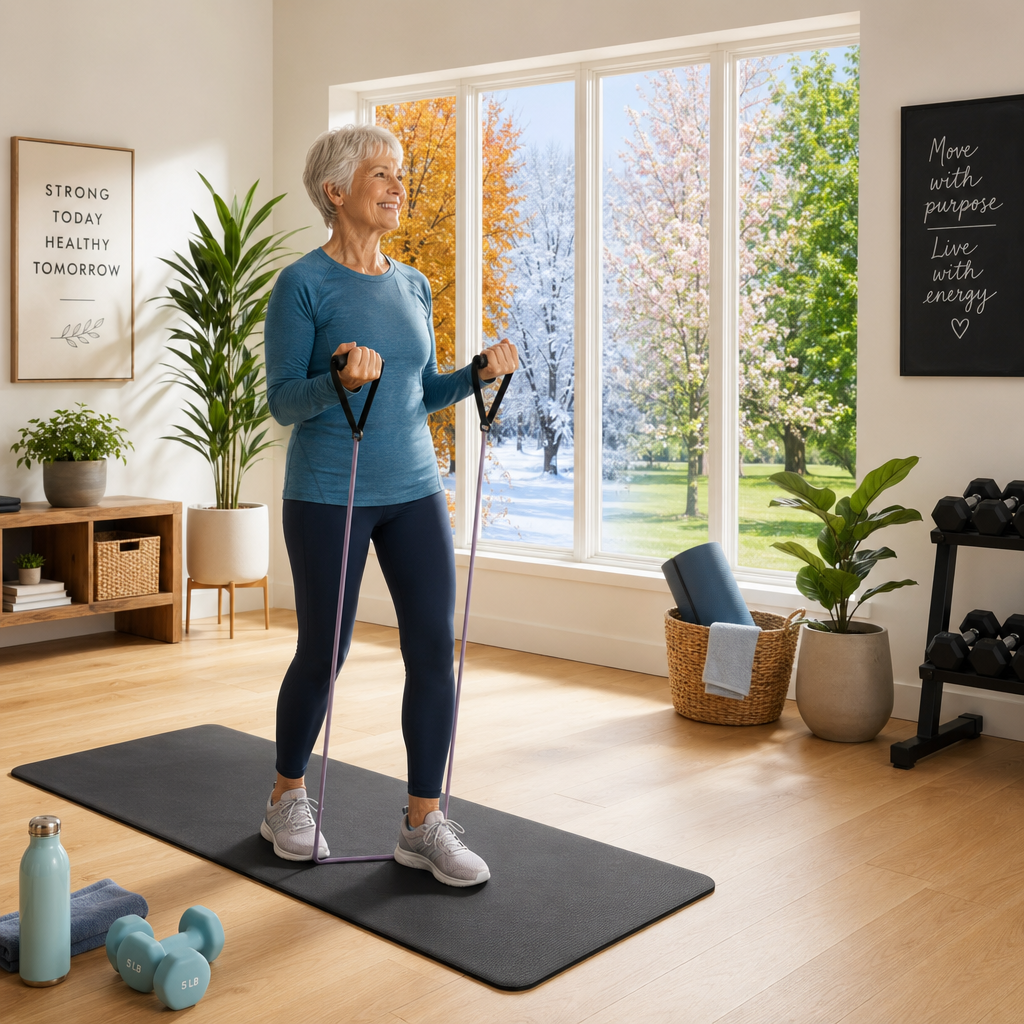
Having solid indoor options means weather never becomes an excuse to skip exercise entirely. You don’t need a home gym or expensive equipment to stay active indoors.
Mall walking has become increasingly popular among seniors for good reason. The controlled temperature, smooth surfaces, and social atmosphere make it ideal for year-round fitness. Many malls open early specifically for walkers, creating a community of regular exercisers. You get your steps in while window shopping and catching up with friends.
Community centers and senior centers often offer exercise classes designed specifically for older adults. Water aerobics, and gentle strength training classes provide structure and social connection. The instructors understand senior-specific needs and can modify exercises for different ability levels.
YouTube has transformed home exercise with free, high-quality senior fitness videos. Search for “senior chair exercises” or “senior strength training” to find dozens of options. Have Fun Teaching Seniors, Senior Shape Fitness, and Sit and Be Fit are all excellent channels worth exploring.
Resistance bands offer an inexpensive way to maintain strength at home. The TheraBand Resistance Band Set comes in different resistance levels with clear color coding. You can do a full-body workout with these bands in about 20 minutes, targeting all major muscle groups.
Spring and Fall: The Sweet Spots for Outdoor Activity
Moderate temperatures make spring and fall ideal for outdoor exercise. Take advantage of these comfortable seasons to establish routines and build your fitness base.
Spring brings longer daylight hours and renewed energy after winter. Use this time to gradually increase your outdoor activity duration and intensity. Start with 15-minute walks and add five minutes each week. The mild temperatures mean you can exercise comfortably without extreme heat or cold precautions.
Fall offers beautiful scenery and crisp air that makes outdoor activity genuinely enjoyable. This is an excellent time to try new activities like hiking on easy trails or outdoor tai chi in the park. The cooler temperatures also make it easier to exercise during traditional afternoon hours.
Both seasons require flexibility in your schedule. Spring rain and fall’s unpredictable weather mean having a backup indoor plan. Don’t let a rainy Tuesday derail your entire week. Shift to an indoor alternative rather than skipping exercise altogether.
Maintaining Motivation Across Changing Seasons
Consistency matters more than intensity for senior fitness. The biggest challenge isn’t any single season, it’s maintaining your exercise habit through all the transitions.
Set season-specific goals rather than year-long objectives. Commit to walking three times per week during summer months, then adjust to indoor strength training twice weekly in winter. These smaller, achievable goals feel more manageable than vague promises to “exercise more.”
Track your activity using a simple calendar or a basic fitness tracker like the Fitbit Inspire 3. Seeing your streak of consecutive active days creates powerful motivation to keep going. Even a competitively priced wall calendar with checkmarks works if technology isn’t your preference.
Find an exercise buddy or join a group. You’re far more likely to show up when someone else is counting on you. Social accountability works better than willpower alone, especially on days when motivation is low.
Celebrate seasonal milestones. Completed every scheduled walk in July’s heat? Treat yourself to a new water bottle. Made it through January without missing a week? That deserves recognition. These small celebrations reinforce the habit you’re building.
Frequently Asked Questions
How cold is too cold for seniors to exercise outside?
When the temperature drops below 32°F (0°C) or the wind chill reaches 0°F (-18°C), consider moving indoors. These thresholds increase risks of hypothermia and frostbite, especially if you have circulation issues or heart conditions. Always check the wind chill, not just the temperature, as wind makes cold air much more dangerous. Listen to your body. If your chest feels tight or you’re struggling to breathe comfortably, head inside regardless of the thermometer reading.
Should I exercise differently during allergy season?
Spring and fall allergies can make outdoor exercise miserable and may trigger breathing problems. Check daily pollen counts and exercise indoors on high-pollen days, typically early morning and windy days. After outdoor exercise, shower and change clothes immediately to remove pollen. Consider exercising later in the evening when pollen counts drop. Some seniors find taking their allergy medication an hour before outdoor exercise helps prevent symptoms. Don’t push through severe allergy symptoms, as they can develop into more serious respiratory issues.
What’s the minimum amount of exercise I need to maintain fitness?
The CDC recommends 150 minutes of moderate-intensity activity per week for older adults, plus strength training twice weekly. This breaks down to 30 minutes five days per week, or you can split it into 10-minute sessions throughout the day. You don’t lose fitness overnight, but going more than two weeks without activity leads to measurable strength and endurance losses. During challenging weather or when you’re not feeling well, even 10 minutes of gentle movement helps maintain your baseline better than complete rest.