Staying active as you get older doesn’t have to mean solitary trips to the gym or lonely walks around the neighborhood. When you exercise with your partner, you transform fitness from a chore into quality time together. You’ve got a built-in spotter, motivator, and cheerleader all rolled into one person who already knows how to push your buttons in the best way possible.
Partner exercises offer unique benefits for senior couples beyond just social connection. You can help each other with balance, provide gentle resistance, and keep each other accountable. Plus, you’re both more likely to stick with a routine when you’re doing it together. Let’s look at specific exercises that work particularly well for two people.
Resistance Exercises You Can Do Together
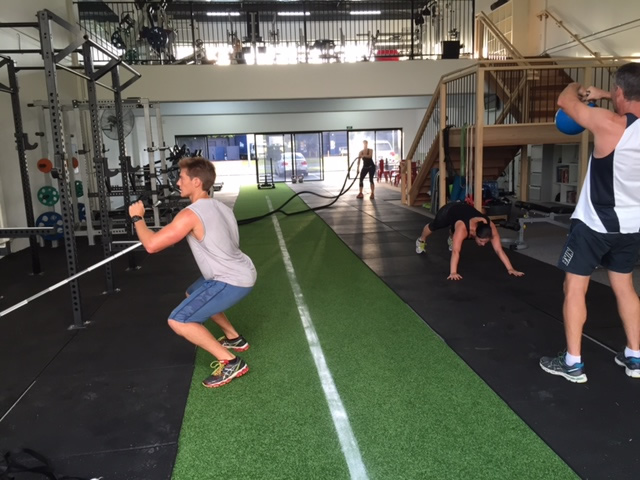
You don’t need fancy equipment when you’ve got a willing partner. Resistance band exercises become more effective and safer when your partner helps control the tension and watches your form.
Try seated row pulls where one person holds the resistance band while the other pulls back, working their upper back and shoulders. You can alternate sets, giving each person a workout and a rest period. The person holding the band provides steady resistance while watching for proper posture and breathing.
Wall push-ups work great side by side. Stand facing a wall at arm’s length, place your hands flat against it, and do push-ups together. You can count out loud for each other and maintain the same pace. This builds upper body strength without the strain of floor push-ups.
For lower body work, try assisted squats. Stand facing each other, hold hands or wrists, and squat down together. Your partner’s support helps with balance and lets you squat deeper than you might alone. Start shallow and gradually increase depth as you both get stronger. These types of exercises complement resistance training programs designed for seniors over 65, which can significantly improve strength and mobility.
Balance Work With Built-In Support
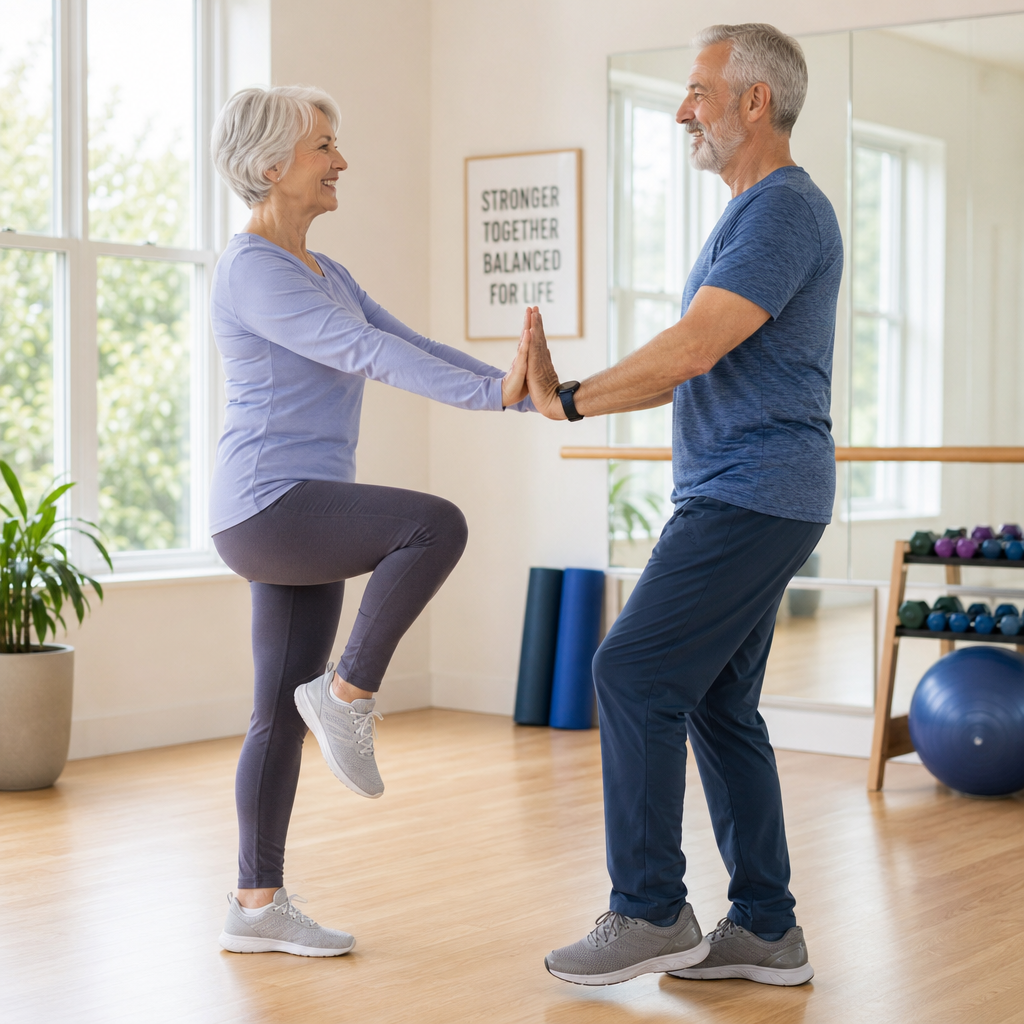
Balance exercises are critical for fall prevention, but they’re intimidating when you’re alone. Having your partner nearby provides both physical support and confidence.
Stand side by side, holding hands or touching shoulders lightly. Each person lifts their outside leg and holds for 10-30 seconds. You can feel when your partner wobbles and provide just enough support to prevent a fall without doing the work for them. Progress to tandem walking, where you walk heel-to-toe in a straight line while your partner walks alongside as a spotter.
Single-leg stands become more challenging when you add gentle perturbations. While one partner balances on one foot, the other very gently pushes their shoulder from different directions. This mimics real-world balance challenges like bumping into furniture or stepping on uneven ground. Many of these movements can also be adapted as chair-based exercises for additional support.
Partner Stretching for Better Flexibility
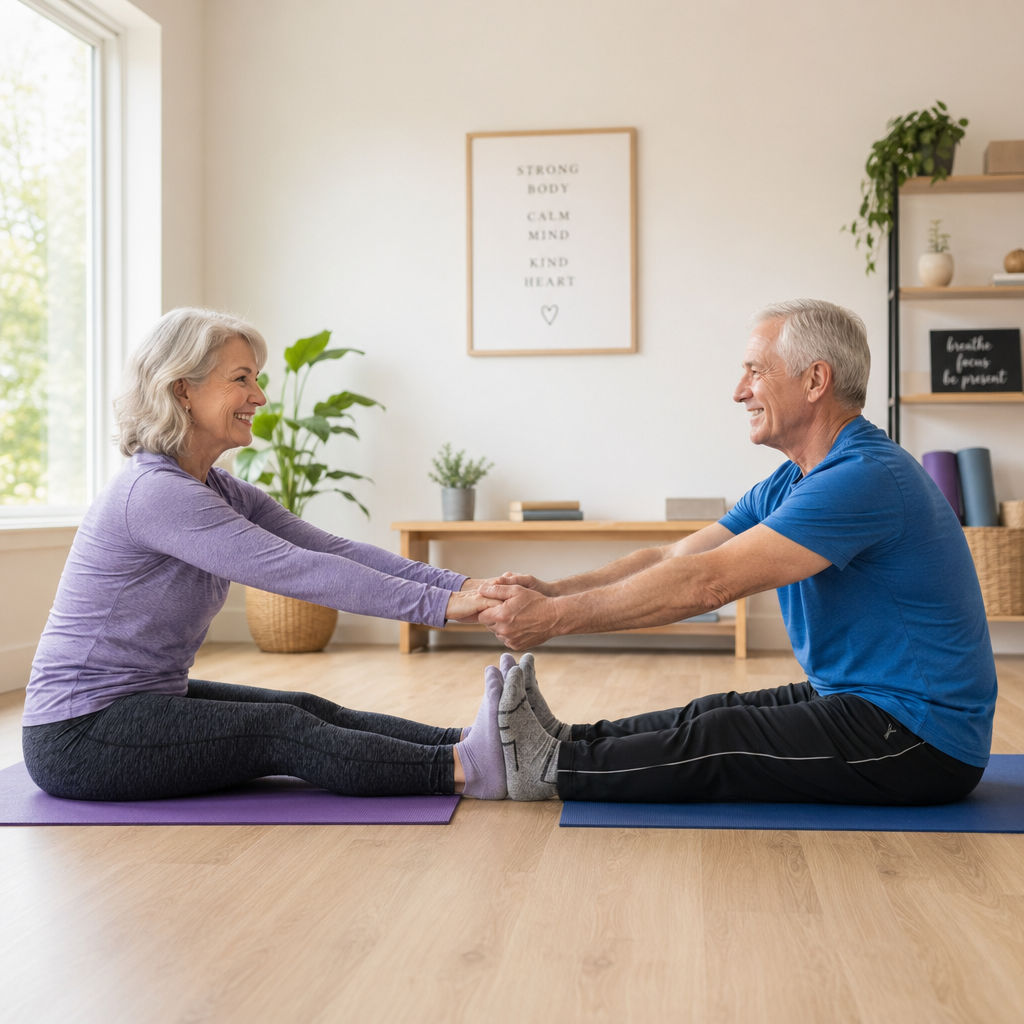
Stretching feels better and goes further when someone helps you. Partner-assisted stretches can reach ranges of motion you can’t achieve alone, but communication is key. The person stretching always controls the intensity by giving clear feedback.
Sit facing each other with legs extended and feet touching. One person reaches forward while the other gently pulls their hands, providing a deeper hamstring and lower back stretch. The person stretching should feel tension but never pain.
For shoulder flexibility, sit back-to-back and pass a small towel or light ball from one person to the other, alternating going over one shoulder and under the other side. This mobilizes the shoulders through their full range of motion in a playful way.
Seated spinal twists work beautifully together. Sit back-to-back and both twist to the right, reaching back to hold hands or touch shoulders. Hold for 20-30 seconds, return to center, then twist left. You provide gentle resistance for each other.
Why Partner Workouts Actually Work
The research backs up what common sense tells us. You’re significantly more likely to stick with an exercise program when you’ve got a partner expecting you to show up. You can’t skip when someone’s counting on you, and that accountability translates to better health outcomes.
You also push each other just a bit harder than you’d push yourself. When you see your partner completing another rep, you’re more likely to match them. This friendly competition keeps workouts effective without becoming dangerous or discouraging.
Set a regular schedule, even if it’s just 15-20 minutes three times per week. Consistency matters more than duration. Many couples find that morning workouts before the day gets busy work best, but evening sessions can be a nice way to unwind together too. If you prefer exercising at home, you can build an effective complete workout routine that requires no gym membership.
Frequently Asked Questions
What if my partner and I have different fitness levels?
Different fitness levels aren’t a problem, they’re just a fact to work around. The stronger partner can do more reps, add light hand weights, or perform harder variations of the same exercise. During assisted exercises like squats or stretches, you simply adjust how much support each person provides based on who needs more help. The key is that you’re both working at an appropriate intensity for your own body, not trying to match each other exactly.
How do we avoid injury when helping each other with exercises?
Communication prevents almost all partner exercise injuries. Establish a clear “stop” word that immediately ends any stretch or assisted movement. The person being stretched or assisted should always control the intensity by giving constant feedback. Start every exercise with minimal assistance or resistance and gradually increase only as comfort allows. Never bounce or make sudden movements during stretches, and always warm up with 5-10 minutes of walking or gentle movement before starting your routine. If you want to add variety to your home workouts, consider affordable exercise equipment options under $100.
Related Articles
- Chair Exercises That Lower Blood Sugar for Seniors
- Complete Home Workout Routine After 60: No Gym Needed
- Benefits of Resistance Training for Seniors Over 65
- Best Home Exercise Equipment for Seniors in 2026 Under $100