Exercising at home in regular socks on hard floors is a fall waiting to happen. Your feet slide during lunges, slip during balance exercises, and lose traction during anything involving lateral movement. But exercising in athletic shoes feels clunky for yoga, floor work, and balance training where you need ground feedback through your feet. Non-slip grip socks bridge the gap: they provide traction on smooth surfaces while keeping you connected to the floor.
If you’re doing home workouts on tile, hardwood, or laminate flooring, grip socks are a safety essential, not a comfort upgrade. They let you move confidently through exercises that require weight shifts, pivots, and balance challenges without the constant fear of your foot shooting out from under you.
Why Regular Socks Are Dangerous for Exercise
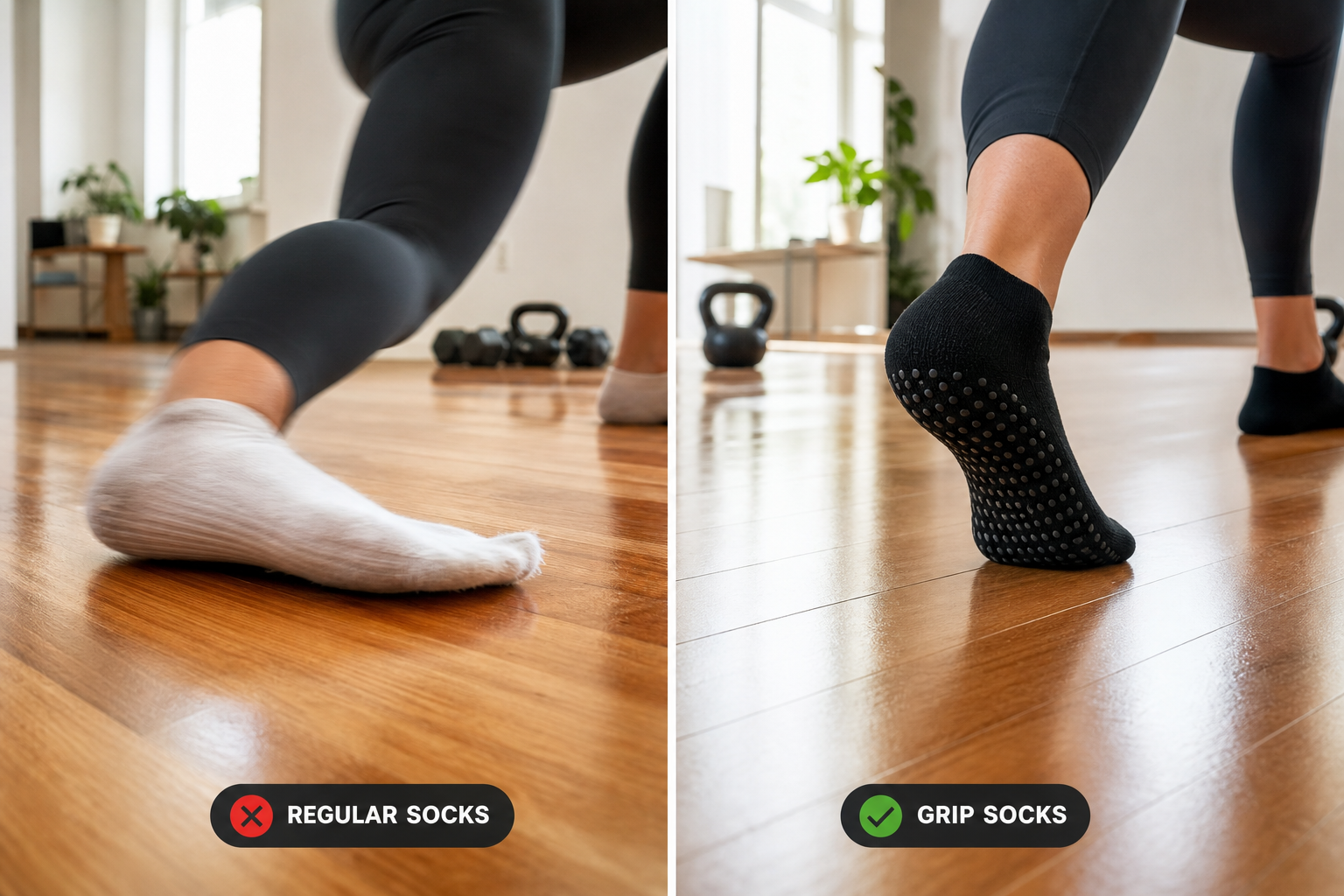
Standard cotton and polyester socks have smooth soles designed for comfort inside shoes, not for gripping floors. On tile, hardwood, or laminate, they provide almost zero friction. The moment you shift your weight laterally (stepping to the side, pivoting, or catching your balance), your foot slides. For seniors whose balance recovery reactions are slower, this sliding can easily become a fall.
The risk isn’t just during intense movement. Even gentle exercises like tai chi, standing stretches, or modified yoga poses involve subtle weight shifts that can trigger a slip. Your body makes constant micro-adjustments to maintain balance, and regular socks eliminate the friction your nervous system expects to find under your feet. That mismatch between expected and actual grip is where falls happen.
Bare feet are better than regular socks for traction, but they leave your feet unprotected from cold floors, vulnerable to catching toes on mat edges, and without the cushioning that sensitive or neuropathic feet need. Cold floors also stiffen joints and reduce circulation, making balance and flexibility exercises less effective and comfortable.
What to Look for in Non-Slip Socks
Grip Pattern
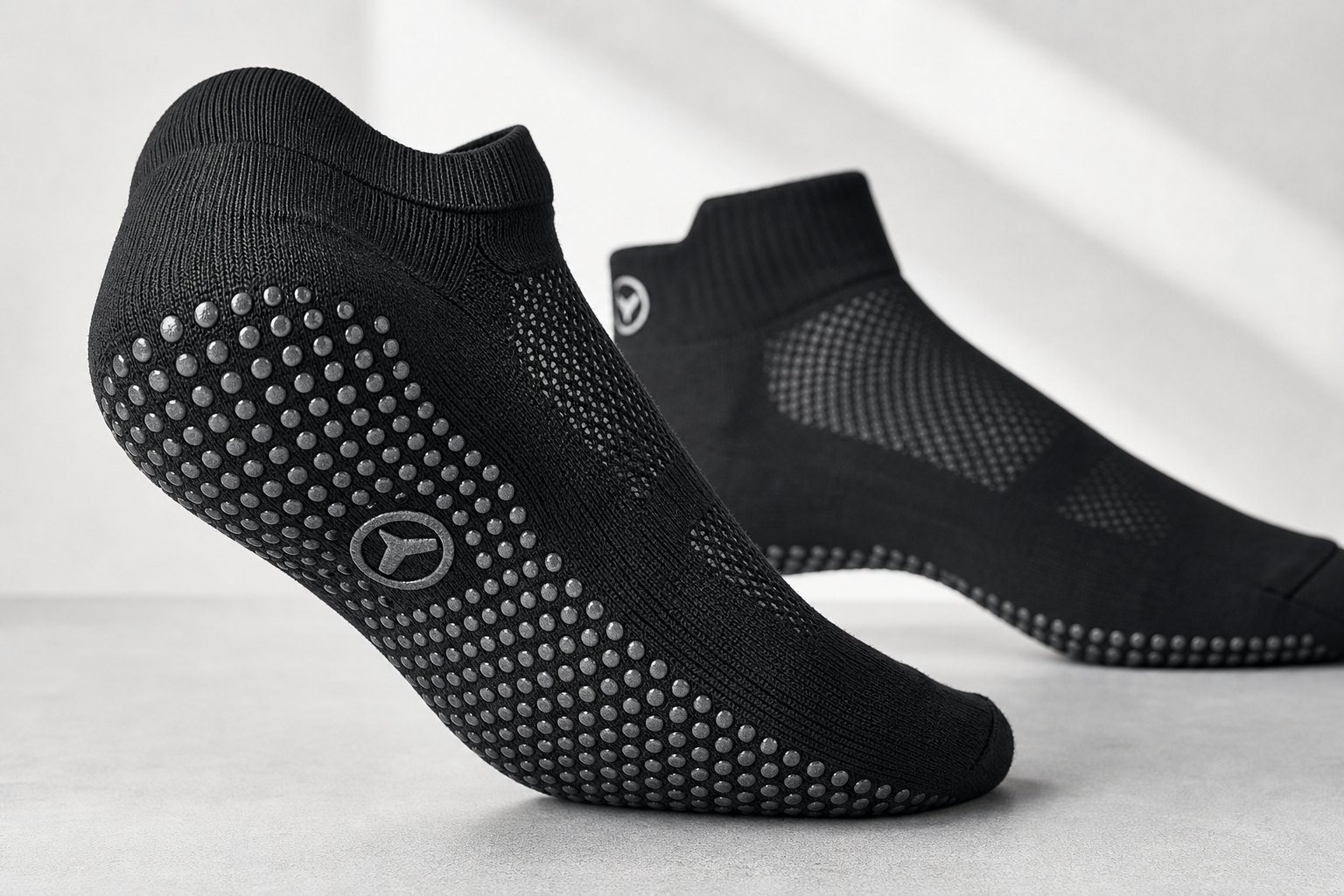
The rubber or silicone tread on the bottom is the critical feature. Full-sole coverage (grip material across the entire bottom surface) provides the most traction. Some socks only have grip dots on the ball and heel, leaving the arch slippery. For exercise, full-sole coverage is significantly safer. Look for raised, textured patterns that grip in multiple directions, not just front-to-back.
The pattern matters as much as coverage. Deep, raised treads grip better than flat rubber coating. Circular or hexagonal patterns provide multi-directional traction, which matters when you’re moving laterally or pivoting. Some socks use wavy lines that only grip front-to-back, which helps with forward lunges but does nothing when you step sideways.
Fit
Grip socks must fit snugly. A loose sock bunches under your foot, creating uneven pressure and reducing the grip’s effectiveness. Look for socks with arch compression bands and elastic cuffs that hold the sock in position during movement. Socks that slide around on your foot are nearly as dangerous as socks without grips.
Check the sizing chart carefully. Most grip sock brands run slightly small because a tight fit is part of the design. If you’re between sizes, go with the larger size only if you have high arches or wider feet. For average feet, the smaller size usually provides better grip security.
Cushioning
For seniors with thin foot pads, neuropathy, or sensitive soles, lightly cushioned grip socks provide comfort that bare feet and thin socks can’t. A terry-cloth interior or padded forefoot adds meaningful cushioning without the bulk of a shoe.
Cushioning also improves proprioception (your awareness of where your foot is in space) for people with neuropathy. The slight padding gives your nervous system more sensory input than a thin sock or bare foot, which can improve balance during exercises. Too much cushioning, though, and you lose the ground feedback that makes grip socks useful in the first place. Look for light to medium cushioning, not thick athletic sock padding.
Breathability
Exercise produces foot sweat, which can make the inside of a sock slippery even if the outside has great grip. Mesh ventilation zones and moisture-wicking materials keep your feet dry and the socks functional during longer sessions.
Cotton socks absorb sweat but hold onto it, keeping your feet damp. Synthetic blends or cotton-synthetic mixes wick moisture away from your skin and dry faster. If you have circulation issues that make your feet cold, cotton blends retain more warmth. If you have sweaty feet or do longer workouts, go for synthetic moisture-wicking materials.
Material Durability
Cheap grip socks lose their traction within weeks. The rubber or silicone tread flattens or peels off after repeated washing. Higher-quality socks bond the grip material to the fabric more securely and use denser rubber that maintains its texture longer. Read reviews specifically for how long the grip lasts, not just how comfortable the sock feels initially.
Top Non-Slip Socks for Seniors

Muezna Non-Slip Yoga Socks
Budget-friendly multi-packs with full-sole silicone grip for versatile home workouts
Muezna Non-Slip Yoga Socks
The Muezna yoga socks feature full-sole silicone grip that covers the ball, arch, and heel. They come in multiple packs at a budget-friendly price. The cotton-blend material is breathable and machine-washable. The mid-calf length stays in place during active movement.
These socks provide good all-around grip for general home exercise. The full-sole coverage makes them versatile across different movements and floor surfaces. The mid-calf height prevents the sock from sliding down into your shoe if you put sneakers on after your workout. Available in multi-packs, they’re practical if you exercise several times per week and want to rotate fresh socks without constant laundry.
Best for: Budget-conscious buyers who want reliable grip for general home workouts, and anyone who prefers full foot coverage rather than open-toe designs.
Gaiam Grippy Yoga Socks
Open-toe design for better ground connection during yoga and balance work
Gaiam Grippy Yoga Socks
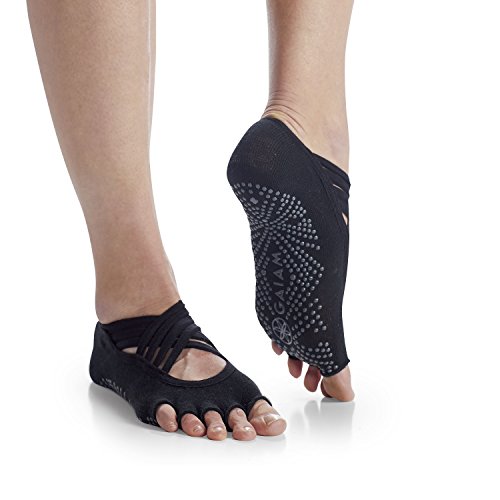
The Gaiam grippy socks are a well-known brand in the yoga world. They feature a toe-less design (open at the tips for tactile feedback) with rubber grip dots covering the ball and heel. The open-toe design gives you better ground connection during balance exercises while the grip prevents sliding. Arch compression keeps the sock in place.
The open-toe design allows your toes to spread naturally during balance poses and weight-bearing exercises. This toe spread improves stability and engages the small stabilizing muscles in your feet. The trade-off is less protection for your toes if you catch them on something and slightly less warmth on cold floors.
Best for: Yoga and balance work where toe dexterity and ground feel are priorities, and for people who find closed-toe socks too constricting during floor exercises.
Hospital-Style Non-Slip Socks
Hospital-style non-slip socks are the most affordable option, often available in bulk packs. They feature rubber treads on both the top and bottom (useful for people who sometimes get the sock on the wrong foot) and are typically one-size-fits-most with elastic at the ankle. They’re not as form-fitting as yoga-specific socks but provide adequate grip for basic home exercises.
These socks prioritize function over form. The grip-on-both-sides design means there’s no wrong way to put them on, which matters if you have vision problems, arthritis that makes fine manipulation difficult, or memory issues. The loose fit makes them easier to get on and off but provides less feedback during precise balance work. The grip treads are usually less aggressive than fitness-specific socks, which is fine for gentle movement but not ideal for dynamic exercise.
Best for: Budget buyers, general home safety (wearing around the house on hard floors), and seniors who want grip socks for everyday use beyond just exercise.

LA Active Grip Socks
Durable compression fit with aggressive tread for dynamic workouts
LA Active Grip Socks
LA Active grip socks feature dense silicone tread coverage with deep, raised patterns. They come in ankle and crew lengths with reinforced heel and toe areas for durability. The fabric blend includes spandex for compression fit and moisture-wicking properties. These socks hold up well to repeated washing and maintain their grip texture longer than budget options.
The compression fit makes them feel tight initially, but that snugness keeps the sock stable during movement. The raised grip pattern is noticeably more aggressive than budget socks, providing better traction during lateral movements and quick direction changes. The reinforced heel and toe areas prevent the common problem of these high-stress zones wearing through before the rest of the sock.
Best for: Active seniors doing more dynamic home workouts (barre, low-impact aerobics, standing strength training) who need reliable grip during faster movements.
When to Wear Grip Socks vs. Shoes
- Grip socks: Yoga, Pilates, balance training, floor exercises, tai chi, stretching, and any exercise where you need ground feedback through your feet.
- Athletic shoes: Walking (treadmill or outdoor), resistance training with heavy weights, step aerobics, and any high-impact activity where ankle support and cushioning are needed.
- Bare feet: Only on surfaces with natural grip (rubber flooring, carpet, yoga mat). Never on tile, hardwood, or laminate.
The general rule: if the exercise involves your feet leaving the ground with force (jumping, running, hopping), wear shoes. If the exercise keeps your feet on the ground and requires balance, flexibility, or controlled movement, grip socks are usually better.
For resistance training, it depends on the exercise and how much weight you’re using. Bodyweight exercises and light resistance bands work fine in grip socks. If you’re using dumbbells over 10-15 pounds or any barbell, switch to athletic shoes. The added weight increases the forces on your joints, and shoes provide the stability and cushioning those forces require.
Sizing Considerations for Different Foot Types
Wide Feet
Many grip socks run narrow. Look for brands that specifically offer wide sizes or check reviews from people with wide feet. LA Active and some hospital-style socks tend to be more accommodating for width. Avoid socks with aggressive arch compression if you have wide feet, as the compression band will feel too tight across the top of your foot.
High Arches
High arches need extra support through the arch area. Look for socks with padded arch zones, not just a compression band. The cushioning fills the gap between your arch and the floor, improving stability. Gaiam and Muezna both offer models with padded arches.
Swelling or Edema
If your feet swell during the day or you have edema, tight grip socks can restrict circulation. Look for hospital-style socks with looser elastic or socks marketed for diabetics, which typically have non-binding tops. The trade-off is less stability during exercise, so you might need to accept doing gentler movements or shorter sessions to avoid making swelling worse.
You might also consider compression socks for circulation support between workouts, switching to grip socks only during exercise sessions.
Bunions or Hammertoes
Open-toe grip socks reduce pressure on bunions and give hammertoes room to sit naturally. Closed-toe socks with stretchy fabric can work if they’re a half-size larger than you’d normally wear, giving the toes space without the whole sock being loose.
Care and Replacement
Machine wash grip socks in cold water and air dry. The dryer’s heat degrades the silicone/rubber grips faster than air drying. Turn socks inside out before washing to protect the grip surface. Replace grip socks when the tread becomes smooth or flattened, typically after 6-12 months of regular use. Worn grips provide a false sense of security.
Avoid fabric softener and dryer sheets, which leave a coating on the grip material that reduces traction. If you must use the dryer, use the lowest heat setting and remove the socks while they’re still slightly damp to finish air drying.
Inspect your grip socks regularly for wear. Hold them up to the light and look at the grip material. If it’s become shiny, cracked, or peeling, the sock has lost effectiveness. Don’t wait until you feel a slip to replace them. The grip degrades gradually, and you may not notice the reduced traction until a close call happens.
Pairing Grip Socks with Exercise Mats
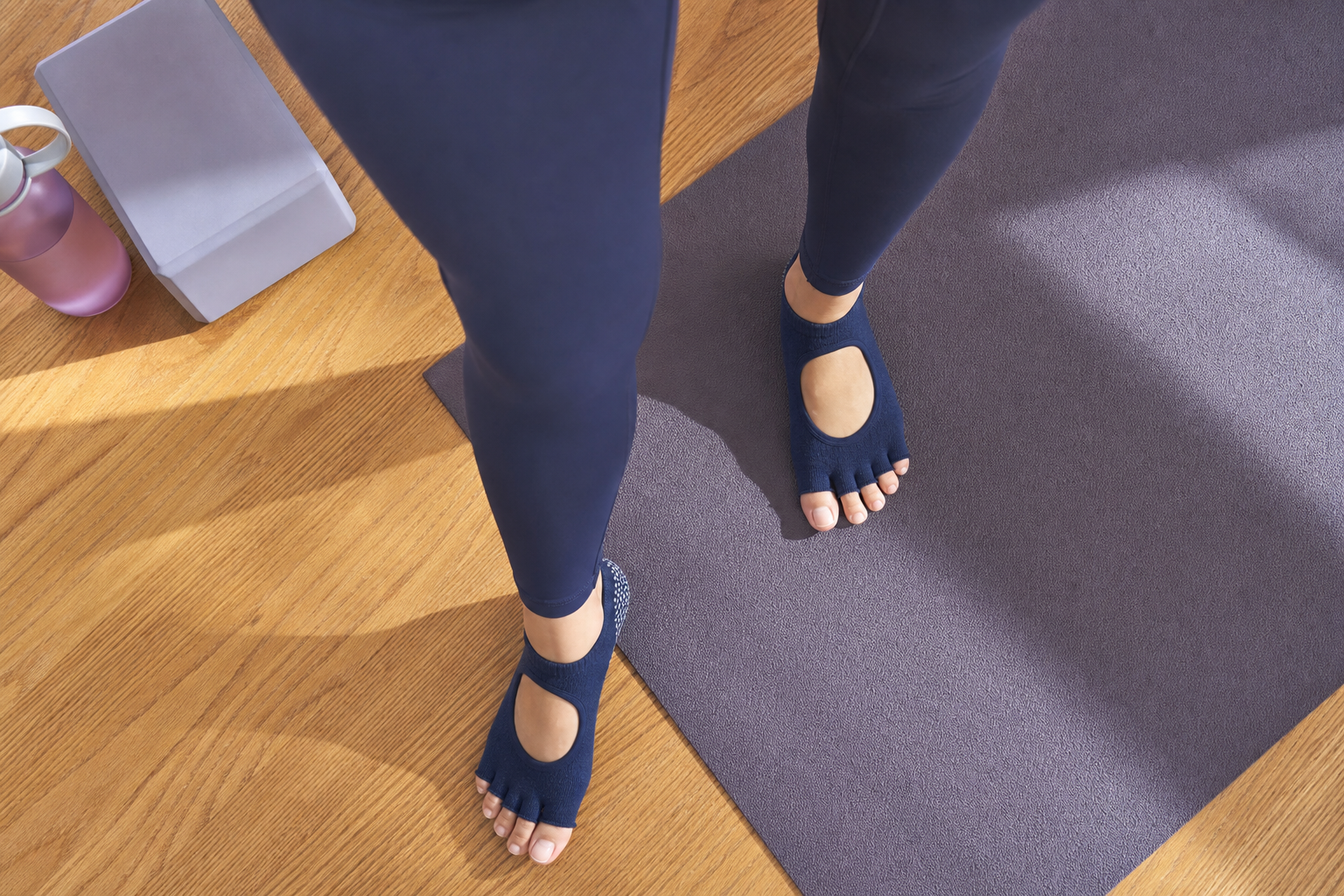
Grip socks and yoga mats both provide traction, but they work through different mechanisms. A yoga mat grips your foot through friction and slight stickiness. Grip socks use raised rubber treads. Together, they can sometimes create too much friction, where your foot catches and doesn’t slide smoothly when you need it to.
For yoga and Pilates, grip socks work better on hard floors than on sticky yoga mats. If you’re exercising on a mat, test whether you prefer grip socks or bare feet. Some people find bare feet on a quality yoga mat provides the best combination of grip and controlled slide.
For balance exercises on hard floors, use both the mat and grip socks. The mat provides cushioning and a defined practice area, while the grip socks prevent your foot from sliding off the mat onto the slippery floor.
Common Mistakes to Avoid
Wearing Worn-Out Socks
The biggest mistake is continuing to use grip socks after the tread has flattened. The sock still feels normal on your foot, so you don’t realize the grip is gone until you slip. Set a replacement schedule based on use frequency: every six months if you exercise daily, annually if you exercise a few times per week.
Wrong Size for the Sock Type
Athletic grip socks should fit tight. Hospital socks should fit loosely. Don’t try to make a loose-fitting sock work for active exercise or force a tight athletic sock onto swollen feet. Match the sock style to your needs.
Skipping the Break-In Period
New grip socks, especially those with aggressive tread patterns, can feel odd during your first workout. The grip catches in unexpected ways, and your movements feel less smooth than in regular socks or shoes. Give yourself two or three sessions to adjust. Your nervous system needs time to recalibrate to the new level of traction.
Using Them as House Slippers
Grip socks work for general household fall prevention, but wearing them