You’ve probably had this debate with yourself more than once: lace up and head out the door, or stay inside where it’s climate-controlled and predictable. The truth is that both options can support your heart, joints, and balance, but they work a little differently, and the right choice often depends on the day, the weather, and how your body feels that morning.
Instead of picking a permanent winner, it helps to understand what each setting does well so you can match it to your goals and energy level.
What Outdoor Walking Does Better
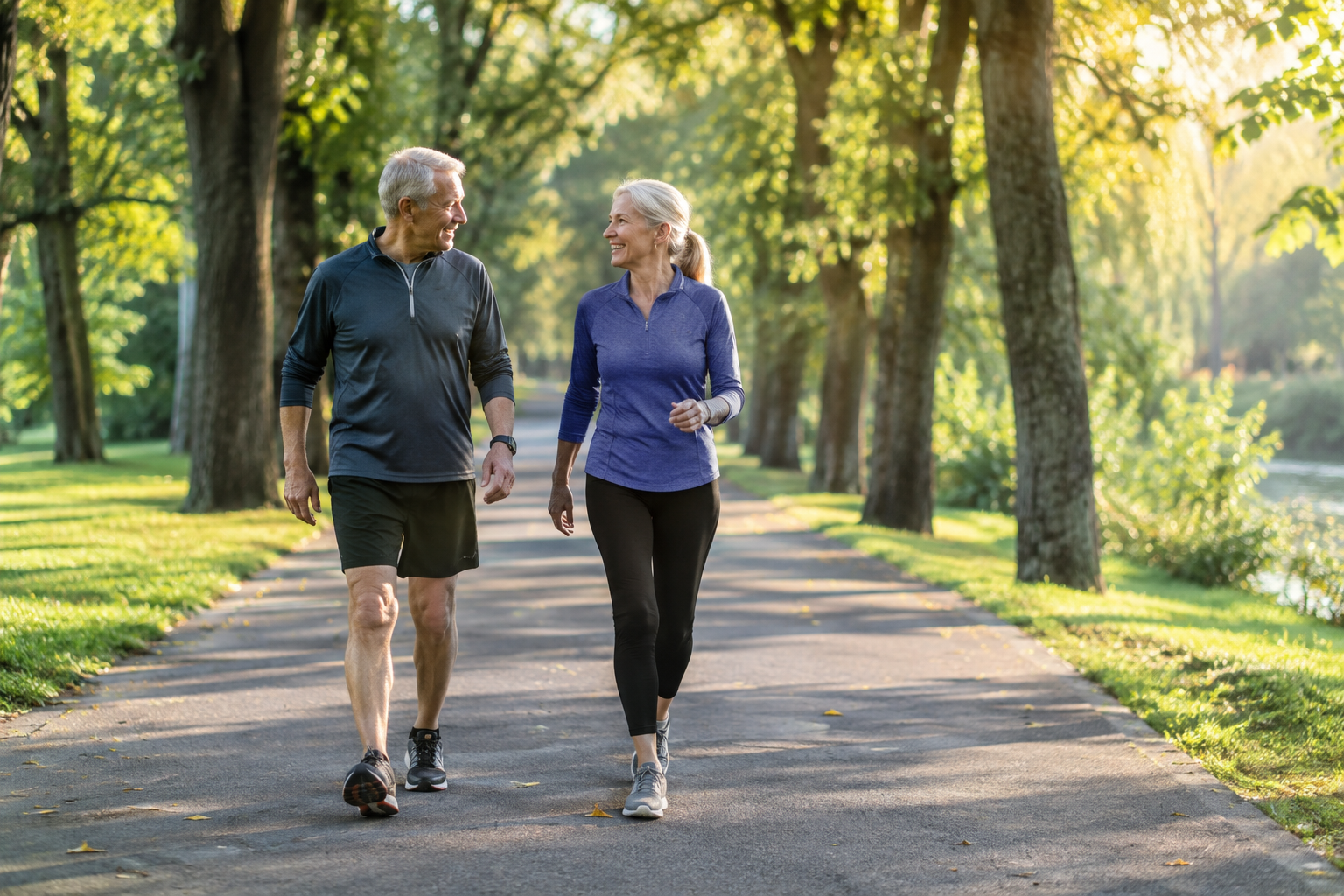
Walking outside gives you varied terrain, which means your legs, ankles, and core have to make small adjustments with every step. That kind of uneven ground, curbs, slight inclines, cracked sidewalks, actually builds functional balance in a way that a flat treadmill belt never will. If you’ve read about how vision changes can affect your balance and fall risk, you already know that scanning a changing environment keeps those visual-balance pathways sharp too.
Fresh air and sunlight are also legitimate benefits, not just a nice bonus. Sunlight exposure supports vitamin D levels, and being outside tends to boost mood more than indoor exercise does, according to several studies comparing green-space workouts to gym sessions.
The tradeoffs are real, though. Weather, uneven pavement, and lack of nearby seating can turn a good walk into a risky one if you’re not prepared. If stability is a concern, a set of walking poles can add meaningful confidence on outdoor routes, and proper footwear matters more outside than in. If arthritis makes every step ache, it’s worth checking out our guide to the best walking shoes for seniors with arthritis before your next outing.
What Indoor Walking Does Better
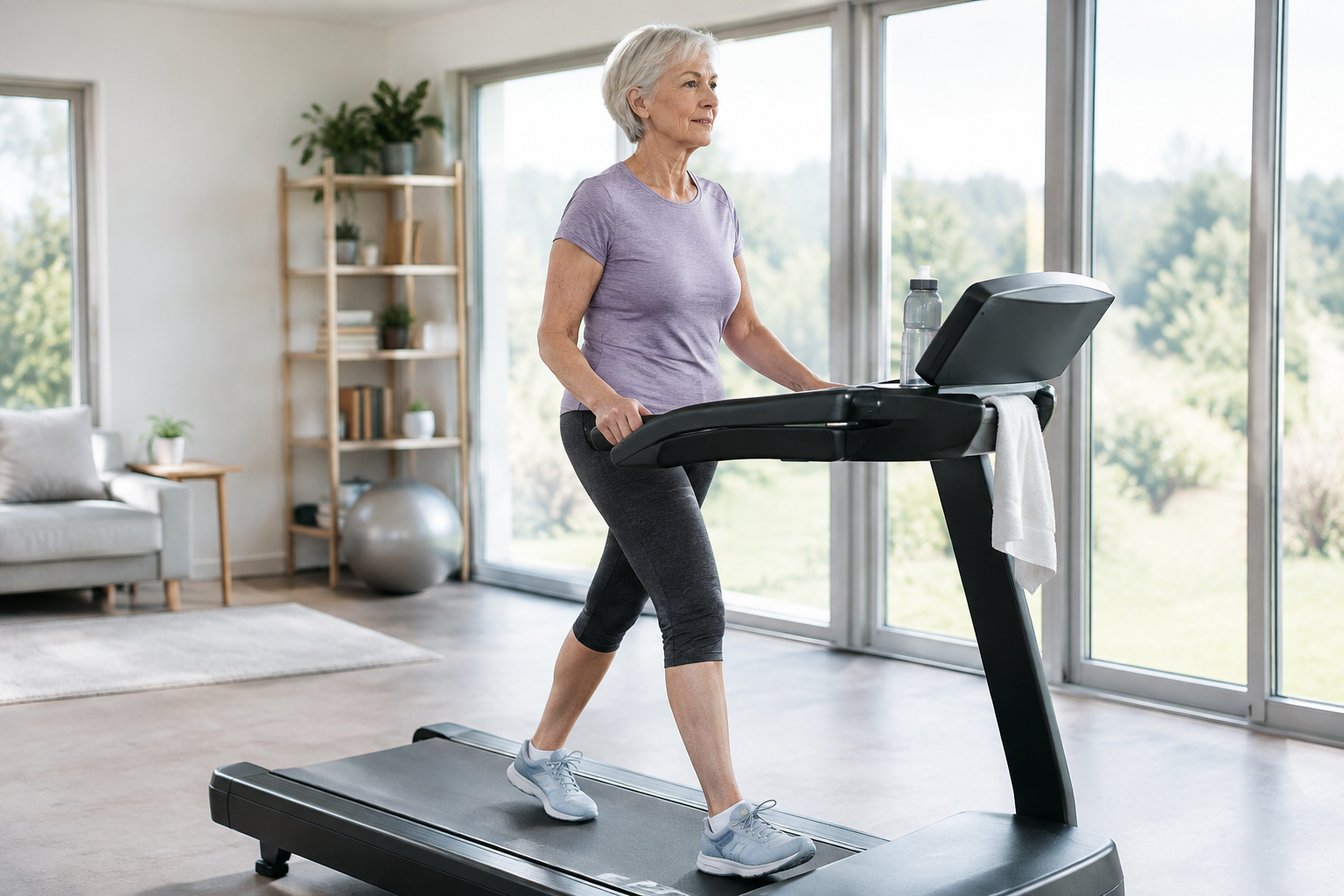
Indoor walking, whether on a treadmill, around a mall, or in a community center hallway, wins on consistency. The surface is flat and predictable, the temperature doesn’t swing, and there’s no ice or glare to worry about. That predictability makes it a smart choice on days when your energy or balance feels a little off.
A treadmill also gives you control over pace in a way sidewalks don’t. You can start slow, hold a steady speed, and increase incline gradually without ever worrying about traffic or tripping hazards. If knee pain has kept you off pavement, our roundup of the best treadmills for seniors with bad knees covers cushioned decks that make a real difference. And if you naturally walk at a slower pace, look at options built for that in our guide to treadmills for seniors who walk at low speeds.
The downside indoors is that flat, repetitive surfaces don’t challenge your stabilizing muscles the way outdoor terrain does. If you rely on indoor walking most of the time, it’s worth adding balance-specific work separately, like heel-to-toe walking drills, so you’re not missing out on that side of fitness.
How to Choose Based on Effort and Progression, Not a Fixed Number
Rather than chasing a specific step count or distance, pay attention to your effort level. A good target for most seniors is a pace where you can talk in full sentences but would struggle to sing. If you’re gasping for air or can’t get a sentence out, slow down regardless of whether you’re indoors or outside.
Time on your feet matters more than mileage when you’re building a habit. Start with 10 to 15 minutes at a comfortable pace and add a few minutes every week or two as it starts to feel easy. This applies whether you’re circling the living room or walking the block, the progression principle doesn’t change with the setting.
Outdoor walks are a natural fit for longer, steady-state sessions since scenery and fresh air make time pass faster. Indoor sessions work well for shorter, more controlled efforts, especially when you want to focus on pace or incline changes without distraction. Many people find the best results come from mixing both across the week rather than committing fully to one.
If you walk outdoors regularly, cooling down properly matters just as much as the walk itself. A quick post-walk stretching routine helps loosen tight calves and hips before you sit back down for the day.
When to Stop and Take It Seriously

No matter where you’re walking, certain symptoms mean you need to stop immediately and seek help. Don’t push through these to finish a lap or hit a personal goal.
- Chest pain, tightness, or pressure, even if it feels mild
- Sudden dizziness or a feeling like you might faint
- Severe shortness of breath that doesn’t ease when you slow down
- Unusual heart palpitations or a racing heartbeat at rest
If dizziness has been an occasional issue for you even outside of exercise, it’s worth reading about dizziness and balance exercises that may help identify the cause before it becomes a bigger problem on a walk.
Frequently Asked Questions
Is outdoor walking better for weight loss than indoor walking?
Not really, calories burned depend more on pace, duration, and incline than on your surroundings. A brisk indoor treadmill walk at an incline can burn just as much as a moderate outdoor walk. Consistency matters far more than the setting you choose.
Can I switch between indoor and outdoor walking without losing progress?
Yes, and it’s actually a smart approach. As long as your effort level and time on your feet stay consistent, alternating between the two keeps things interesting and reduces your risk of overuse issues from repeating the exact same surface every day.