Exercise is supposed to help you sleep better, and for most people, it does. But if you’re over 60 and finding yourself wide awake at midnight after an evening workout (or restless despite being exhausted from daytime exercise), something specific is going wrong. The connection between exercise and sleep changes as you age, and the fixes are different from what works for younger adults.
The fixes are manageable once you identify what’s happening. Often it’s a matter of timing, intensity, or recovery habits that worked fine when you were younger but now interfere with your ability to fall asleep and stay asleep. Let’s walk through the five most common causes and their practical solutions.
1. You’re Exercising in the Cortisol Window

Exercise raises cortisol, your body’s stress hormone. In younger adults, cortisol drops back to baseline within an hour or two. After 60, the recovery curve flattens, meaning cortisol can stay elevated for 3-4 hours post-exercise. When you finish a vigorous workout at 7 PM, your cortisol may not settle until 10 or 11 PM, right when you need it at its lowest to fall asleep.
This explains why you feel physically tired but mentally wired, a frustrating combination that leaves you staring at the ceiling. Your body needs rest, but your nervous system is still running in high gear.
The Fix: Timing Your Workouts
Finish moderate-to-vigorous exercise at least 4 hours before bedtime. For most seniors, this means wrapping up by 5 or 6 PM. Gentle activities like slow walking, light stretching, or restorative yoga are fine in the evening because they don’t trigger a significant cortisol spike. If your only available exercise time is after dinner, keep the intensity low: think leisurely neighborhood walk, not power walking.
Try this timing test: note when you finish exercising and track how long it takes before you feel genuinely calm and sleepy (not just physically tired). That window gives you a personalized sense of your cortisol clearance time. Some people can work out at 6 PM and sleep fine by 10. Others need that full four-hour buffer.
What counts as moderate-to-vigorous? Anything where you’re breathing hard enough that carrying on a full conversation becomes difficult. Brisk walking, water aerobics, cycling, strength training with challenging weights, swimming laps, and most group fitness classes all qualify. If you can easily chat while doing it, your cortisol response will be minimal.
For more guidance on optimal workout timing, check out our article on morning vs evening exercise for seniors.
2. You’re Showing Signs of Overtraining
Overtraining in seniors looks different than it does in athletes. You might not be running marathons, but doing too much too soon, or exercising intensely every day without rest days, pushes your nervous system into a chronically activated state. The result is a wired-but-tired feeling at bedtime where your body is exhausted but your brain won’t shut off.
This happens more easily after 60 because recovery takes longer. What used to be sustainable (working out five or six days straight) now leaves your system stuck in a stressed, hypervigilant mode. Sleep becomes shallow and fragmented even when you manage to fall asleep.
Signs to Watch For
Elevated resting heart rate (5-10 beats above your normal), persistent muscle soreness lasting more than 72 hours, irritability, decreased appetite, and a plateau or decline in your workout performance. You might also notice you’re getting sick more often, or small injuries that used to heal quickly now linger.
Morning heart rate is a reliable early warning. Check your pulse before getting out of bed. If it’s consistently higher than your typical resting rate, your body hasn’t recovered from recent exercise stress.
The Fix: Build in Recovery Days
Build in at least 2 full rest days per week. On rest days, you can still do light walking or gentle stretching, but skip anything that raises your heart rate above a conversational pace. If you’ve been training hard for several weeks, take a full recovery week where you cut your exercise volume by 50%. Your sleep will likely improve within 3-4 days of reducing your load.
A rest day doesn’t mean lying on the couch all day (unless you need that). It means avoiding structured, intentional exercise. Household tasks, gardening, walking the dog at an easy pace, these are fine. The goal is to let your nervous system downshift.
Many active seniors equate rest with laziness or worry about losing progress. The opposite is true. Adequate recovery is when your body actually gets stronger and your cardiovascular fitness improves. Training breaks down muscle and stresses systems. Rest is when the rebuilding happens.
For gentle recovery techniques, take a look at our foam roller guide for seniors.
3. Magnesium Depletion

Magnesium is essential for muscle relaxation and nervous system calm. Exercise depletes magnesium through sweat, and many seniors are already deficient because absorption decreases with age. Low magnesium causes muscle tension, restless legs, and an inability to relax at bedtime, all of which sabotage sleep.
You might notice leg cramps at night, twitchy muscles as you try to fall asleep, or a general sense that your body won’t settle down no matter how tired you are. These are classic signs of insufficient magnesium.
Common medications also contribute to the problem. Diuretics (water pills), proton pump inhibitors for acid reflux, and some diabetes medications all interfere with magnesium levels. If you take any of these, you’re at higher risk for depletion, especially when you add regular exercise to the mix.
The Fix: Increase Magnesium Intake
Magnesium-rich foods include spinach, almonds, pumpkin seeds, dark chocolate, and avocados. If your diet falls short, a magnesium glycinate supplement (200-400 mg taken with dinner or before bed) is well-absorbed and has a calming effect. Glycinate is the preferred form because it’s gentle on the stomach and specifically supports relaxation, unlike magnesium citrate, which is more of a digestive aid.
Start with 200 mg and see how you respond. Some people notice a difference within a few days (better sleep, fewer muscle cramps), while others need a couple of weeks to rebuild stores. Don’t exceed 400 mg without talking to your doctor, especially if you have kidney issues. Too much magnesium can cause diarrhea or interfere with certain medications.
Timing matters. Taking magnesium with your evening meal or an hour before bed gives it time to start working as you wind down. Pairing it with a small amount of fat (like the healthy fats in your dinner) can improve absorption.
4. Temperature Regulation Changes
Your body temperature needs to drop by about 1-2 degrees to initiate sleep. Exercise raises your core temperature, and after 60, your body is slower to cool down. When you exercise within 2-3 hours of bedtime, you may still be running warm when you hit the pillow, making it difficult to fall asleep and stay asleep.
This is especially noticeable if you exercise indoors in a heated space, or if you work out during warm weather. The cooling process takes longer than it used to, and your sleep suffers while your body struggles to reach the lower temperature it needs for deep, restorative rest.
Hot flashes and night sweats (common in women, less so but still possible in men due to hormonal shifts) compound the issue. If you’re already dealing with temperature regulation challenges, adding the heat from exercise can push you past the point where you can comfortably fall asleep.
The Fix: Cool Down Strategically
A warm shower or bath 60-90 minutes before bed paradoxically helps your body cool down faster (it dilates blood vessels at the skin surface, allowing heat to escape). Keep your bedroom between 65-68 degrees Fahrenheit. A cooling pillow or lightweight, breathable bedding can also make a noticeable difference. When you exercise in the afternoon, your body should have enough time to thermoregulate naturally before bed.
If a full bath or shower isn’t practical every night, try washing your face, neck, and arms with warm water and then letting the moisture evaporate. This mimics the cooling effect on a smaller scale.
Dress in lightweight, moisture-wicking sleepwear. Cotton tends to trap heat and hold moisture. Bamboo or performance fabrics designed for athletic use keep you cooler through the night.
A small fan pointed toward your bed (not directly at your face) helps with air circulation and gives you control over your immediate environment, even if you can’t adjust the whole room’s temperature.
For more tips on managing exercise in warm conditions, see our guide on hot weather workout safety for seniors.
5. Stimulant Interactions
Pre-workout supplements, caffeine, and even some medications can interact with exercise to keep you wired long after your workout ends. Some seniors drink coffee before morning exercise and don’t connect it to poor sleep 14-16 hours later, but caffeine’s half-life extends significantly with age, sometimes lasting 8-10 hours in adults over 60.
The problem gets worse if you’re a slow metabolizer of caffeine (genetics play a role here) or if you take multiple sources throughout the day without realizing it. That afternoon iced tea, the chocolate you had after lunch, the pain reliever that contains caffeine, they all add up.
Pre-workout supplements marketed to older adults often contain ingredients that sound harmless but have stimulant properties. Green tea extract, guarana, bitter orange extract (synephrine), and even high doses of B vitamins can keep your nervous system activated for hours.
The Fix: Cut Off Stimulants Early
Cut off all caffeine by noon, including tea, chocolate, and any supplements containing green tea extract or guarana. Read the labels on any pre-workout or energy supplements, many contain caffeine, synephrine, or other stimulants. If you’re taking a decongestant or certain asthma medications (which are stimulants), talk to your doctor about timing them earlier in the day.
If you’ve been using a pre-workout supplement, try going without it for two weeks and see if your sleep improves. Most seniors don’t need them. A small snack with protein and carbohydrates (banana with a tablespoon of peanut butter, or a few whole-grain crackers with cheese) provides steady energy without the sleep-disrupting stimulants.
Check over-the-counter medications too. Some pain relievers, cold medicines, and allergy pills contain caffeine or pseudoephedrine. Ask your pharmacist about non-stimulating alternatives if you take these regularly.
A Sample Evening Routine for Recovery and Sleep
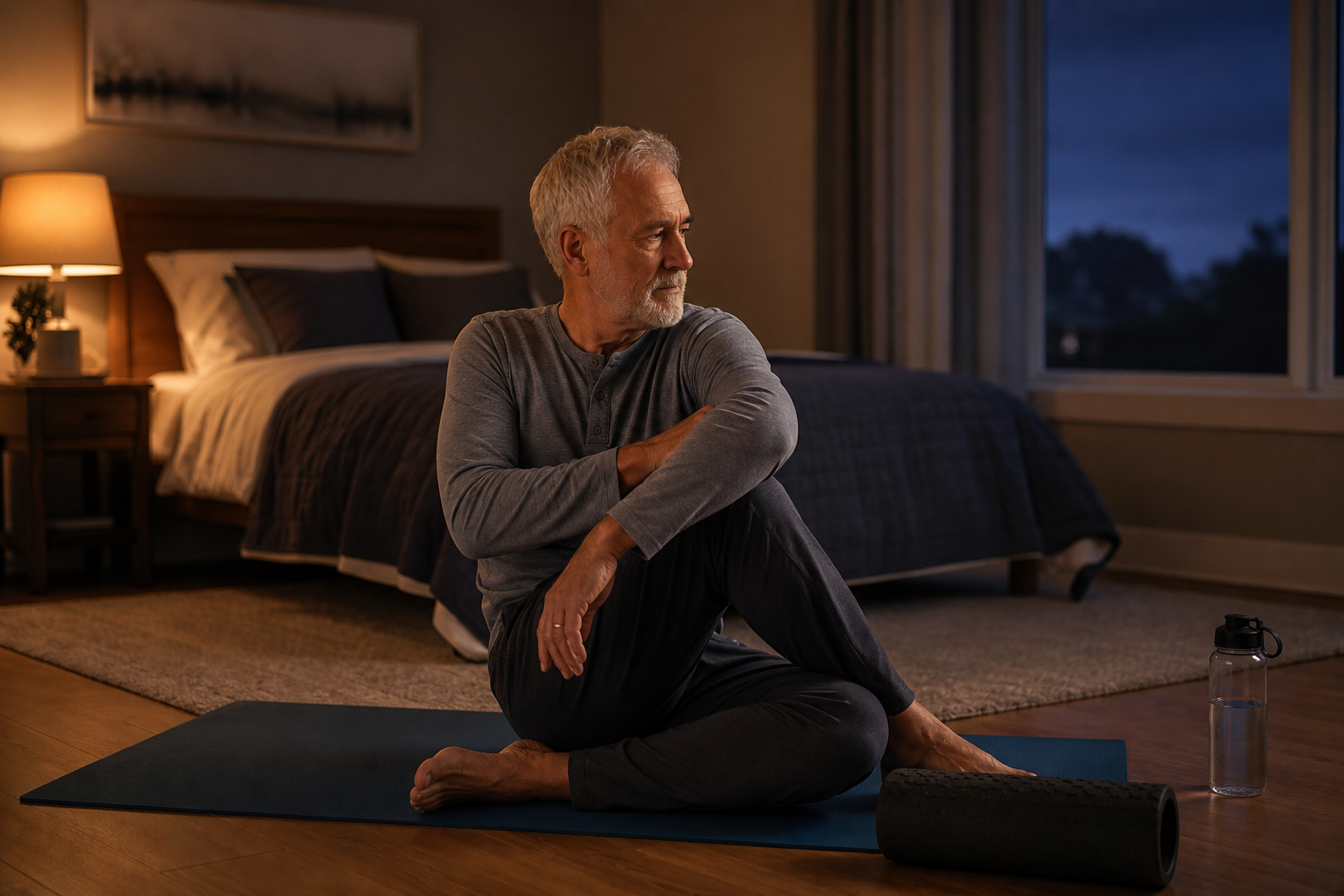
If you exercise in the afternoon or early evening, follow this wind-down sequence to promote both physical recovery and quality sleep:
Immediately after exercise: Drink 8-12 ounces of water with electrolytes. Eat a recovery snack containing protein and carbohydrates (Greek yogurt with berries, or a small turkey and cheese roll-up). This helps stabilize blood sugar and starts the muscle repair process.
2 hours before bed: Do 10 minutes of gentle stretching or restorative yoga focused on the muscles you worked. This signals your nervous system to shift from “go” mode to recovery mode. Focus on long, slow stretches held for 30 seconds each, nothing bouncy or intense.
90 minutes before bed: Take a warm (not hot) shower or bath for 10-15 minutes. The temperature shift afterward helps initiate your body’s natural cooling process.
60 minutes before bed: Dim the lights, put away screens, and take magnesium if you supplement. Lower lighting tells your brain to start producing melatonin. Blue light from phones and tablets blocks that signal.
30 minutes before bed: Practice 5 minutes of deep belly breathing (inhale for 4 counts, hold for 4, exhale for 6). This activates the parasympathetic nervous system and lowers cortisol. You can do this sitting in a comfortable chair or lying in bed.
This routine won’t work miracles the first night, but consistency pays off. Within a week or two, your body starts to recognize the pattern and responds more quickly to the wind-down cues.
When to Involve Your Doctor
Sleep problems after exercise sometimes point to underlying issues that need medical attention. See your doctor if:
- You’re following all the fixes here and still can’t sleep after three weeks.
- Your resting heart rate stays elevated for days at a time.
- You experience chest pain, dizziness, or shortness of breath during or after exercise.
- You have new or worsening restless legs that don’t respond to magnesium.
- You suspect a medication you’re taking is interfering with sleep.
Your doctor can run bloodwork to check for deficiencies (magnesium, iron, vitamin D), review your medications for sleep-disrupting side effects, and rule out conditions like sleep apnea or thyroid problems that exercise can unmask or worsen.
A sleep study may be worth considering if you snore heavily, wake up gasping, or feel exhausted despite getting seven or eight hours in bed. Exercise increases oxygen demand, and if you have undiagnosed sleep apnea, physical activity can make the nighttime breathing disruptions more pronounced.
Adjusting Your Exercise Routine Without Losing Progress
When these fixes require changing your workout schedule or intensity, you might worry about losing the progress you’ve worked hard to build. Here’s what actually happens:
Shifting your workout to earlier in the day doesn’t reduce its effectiveness. In fact, many people find their performance improves when they exercise in the morning or early afternoon because they’re starting fresh instead of tired from a full day.
Taking more rest days or dialing back intensity for a recovery period won’t erase your fitness. You might lose a small amount of conditioning during a full recovery week, but you’ll regain it quickly once you resume. The tradeoff (better sleep, reduced injury risk, more sustainable training) is worth it.
If you’re strength training, you can maintain muscle and even continue making gains with just two or three sessions per week, as long as those sessions are well-structured. Quality matters more than volume, especially for older adults whose recovery capacity is limited.
Learn more about maintaining muscle as you age in our guide on how to maintain muscle mass after 70.
Frequently Asked Questions
Does morning exercise help sleep better than evening exercise?
For most seniors, yes. Morning exercisers tend to fall asleep faster and enjoy deeper sleep because their cortisol levels have a full day to normalize. However, the best exercise time is whenever you’ll actually do it consistently. Moderate morning exercise is ideal, but light evening exercise is still better than no exercise.
If morning workouts aren’t realistic (you have stiffness or joint pain that takes a while to loosen up, or you’re not a morning person and would skip exercise entirely if forced to do it early), aim for midday or early afternoon. That still gives you a solid buffer before bedtime.
Can melatonin help if exercise is disrupting my sleep?
Melatonin can help with sleep onset, but it doesn’t address the root cause if cortisol, temperature, or overtraining is the issue. If you try melatonin, start with the lowest dose available (0.5-1 mg)