The idea that exercise protects your brain sounds like wishful thinking, but the evidence is among the strongest in all of exercise science. Regular physical activity reduces the risk of Alzheimer’s disease and dementia by 30-40%, increases the size of the hippocampus (your brain’s memory center), improves processing speed and executive function, and stimulates the growth of new neurons and blood vessels in the brain.
For seniors concerned about cognitive decline, exercise may be the most powerful preventive tool available.
Before starting any new exercise program, talk to your doctor, especially if you have existing health conditions or haven’t been active recently. This is particularly important for brain health because the conditions that affect cardiovascular health (blood pressure, diabetes, heart disease) directly impact cognitive function. Your doctor can help you start at an appropriate intensity and progress safely.
How Exercise Protects the Brain
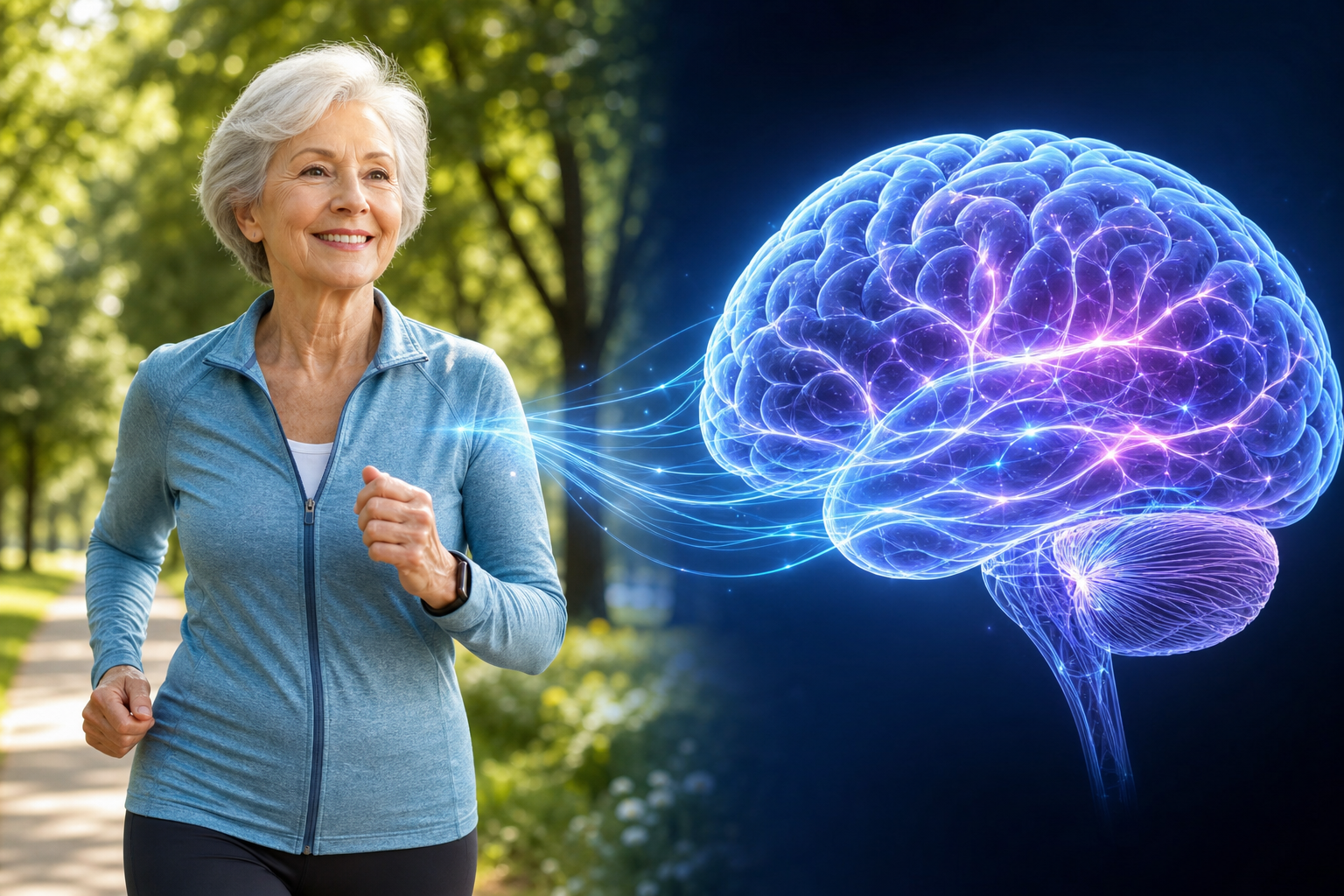
BDNF Release
Exercise stimulates the production of brain-derived neurotrophic factor (BDNF), a protein that acts like fertilizer for your brain. BDNF promotes the growth of new neurons (neurogenesis), strengthens existing neural connections (synaptic plasticity), and protects neurons from damage.
BDNF levels increase acutely after each exercise session and remain chronically elevated with regular training. Higher BDNF levels are consistently associated with better memory, learning, and cognitive resilience.
The BDNF response is dose-dependent: moderate-intensity exercise produces a measurable increase, while higher-intensity exercise (for those able to do it safely) generates an even larger spike. But you don’t need to push hard to see benefits. A 30-minute walk at a pace where you can talk but not sing produces significant BDNF elevation.
The response happens whether you’re 55 or 85, though the absolute levels may vary.
Increased Brain Blood Flow
Exercise increases cerebral blood flow by 15-20% during activity and produces lasting improvements in the brain’s vascular network. Better blood flow means more oxygen and nutrient delivery to brain cells, which supports their energy-intensive work of processing, storing, and retrieving information.
The brain uses 20% of your body’s oxygen despite being only 2% of your body weight. Any improvement in delivery has outsized effects.
This isn’t just about acute flow during exercise. Regular training builds new capillaries in the brain, expanding the overall vascular network. More blood vessels mean more pathways for oxygen and glucose delivery, which gives the brain better resources to work with even at rest.
The structural changes accumulate over months of consistent activity.
Hippocampal Growth
The hippocampus (the brain region critical for forming new memories) normally shrinks 1-2% per year after 55. A landmark study from the University of British Columbia found that one year of regular aerobic exercise increased hippocampal volume by 2%, effectively reversing 1-2 years of age-related shrinkage.
This structural change was accompanied by measurable improvements in memory performance.
The hippocampus is one of the few brain regions where neurogenesis (the birth of new neurons) continues throughout life, but the rate declines with age and sedentary behavior. Exercise ramps up neurogenesis in the hippocampus specifically, producing more new cells in the exact region responsible for memory formation.
This is a direct, measurable, structural change. Brain scans show it. Memory tests confirm it.
Reduced Neuroinflammation
Chronic low-grade inflammation in the brain contributes to cognitive decline and increases dementia risk. Exercise reduces neuroinflammatory markers, protecting brain cells from the inflammatory damage that accumulates with aging. The anti-inflammatory effect is systemic (whole-body) but has specific benefits in the brain.
Neuroinflammation damages neurons and disrupts the blood-brain barrier, allowing harmful substances to enter brain tissue. Regular physical activity dampens this inflammatory response through multiple pathways: it improves immune system regulation, reduces visceral fat (a major source of inflammatory compounds), and triggers the release of anti-inflammatory molecules during each exercise session.
The effect is cumulative. The longer you maintain regular activity, the more the inflammatory burden decreases. This is similar to how anti-inflammatory foods work to reduce systemic inflammation throughout the body.
Improved Vascular Health
Cardiovascular disease and dementia share many of the same risk factors: hypertension, high cholesterol, diabetes, obesity. Exercise addresses all of these, reducing the vascular damage that impairs blood flow to the brain. Vascular dementia (the second most common form) is directly caused by reduced brain blood flow, making cardiovascular exercise a primary prevention strategy.
Small vessel disease in the brain (tiny strokes and narrowed blood vessels) often flies under the radar but contributes to cognitive decline years before symptoms appear. Exercise keeps blood vessels flexible, reduces plaque formation, lowers blood pressure, and improves blood sugar regulation.
Each of these factors independently supports brain health. Combined, they create a protective environment that reduces the risk of both vascular dementia and Alzheimer’s disease.
The Best Exercises for Brain Health

Aerobic Exercise (Strongest Evidence)
Walking, cycling, swimming, and dancing have the most robust evidence for cognitive benefits. The minimum effective dose is 150 minutes per week of moderate-intensity activity. Greater benefits occur at 200-300 minutes per week.
A daily 30-minute brisk walk is the simplest and most sustainable approach for most seniors.
Moderate intensity means you can hold a conversation but wouldn’t want to sing. Your heart rate is elevated but not pounding. You’re breathing harder than usual but not gasping. If you’re just starting, 10-minute walks are fine. Build up gradually with a structured walking program for beginners.
Consistency matters more than any single long session.
For those with mobility limitations, chair-based aerobic exercises or water aerobics provide similar cardiovascular benefits without the impact stress. The brain benefits come from sustained elevation of heart rate and breathing, not from specific movements. If you can maintain moderate intensity for 20-30 minutes, you’re stimulating the brain-protective pathways regardless of the exact activity.
Coordination-Heavy Activities (Dual Benefit)
Activities that combine physical movement with cognitive demands produce greater brain benefits than simple repetitive exercise. Dance (learning choreography, matching rhythm, coordinating with a partner), tai chi (complex movement sequences, balance challenge), and racquet sports (reaction time, spatial planning) all provide simultaneous physical and cognitive training.
The cognitive component stimulates additional neural pathways beyond what aerobic exercise alone activates.
The dual-task nature of these activities is what makes them powerful. Your brain has to plan movements, remember sequences, adjust to music or a partner, and maintain balance all at once. This multi-tasking stimulates the frontal lobes (executive function) and strengthens connections between different brain regions.
Studies comparing dance to walking show larger cognitive improvements in the dance groups, even when total exercise time is matched.
Ballroom dancing, line dancing, and folk dancing are all accessible to most seniors. Community centers and senior centers often offer classes specifically designed for older adults. For those deciding between different mind-body practices, consider exploring yoga vs tai chi to see which fits your needs better.
If balance is a concern, chair-based dance or seated tai chi provides many of the cognitive benefits without the fall risk.
Resistance Training (Emerging Evidence)
Studies from the University of British Columbia and others show that resistance training (using bands, dumbbells, or body weight) 2-3 times per week improves executive function (planning, attention, multitasking) in older adults. The mechanism may involve BDNF release, improved insulin sensitivity (insulin resistance impairs brain function), and the cognitive demands of learning and performing exercise sequences.
Resistance training also combats sarcopenia (age-related muscle loss), which independently affects mobility, fall risk, and overall independence. Maintaining strength supports the ability to stay active in all the other exercise categories. You can’t take a long walk if you don’t have the leg strength to support it.
Start with light resistance. Bodyweight exercises (chair stands, wall pushups, seated leg lifts) are effective and require no equipment. Resistance bands provide adjustable difficulty and are joint-friendly.
If you’re new to strength training, work with a physical therapist or certified trainer for at least a few sessions to learn proper form and avoid injury. You can also follow a progressive 12-week resistance training program designed specifically for seniors.
Novel Activities (Neuroplasticity Bonus)
Learning a new physical skill at any age stimulates neuroplasticity (the brain’s ability to form new connections). Starting a new activity (swimming if you’ve only walked, yoga if you’ve only used machines, tai chi if you’ve only done gym workouts) challenges your brain to build new motor programs, which provides cognitive benefits beyond what your familiar routine offers.
Rotating in a new activity every 3-6 months keeps the neuroplasticity stimulus active.
The learning curve itself is the benefit. When you’re figuring out how to coordinate a new movement, how to balance differently, or how to time a stroke in swimming, your brain is working hard to wire new patterns. This active learning process stimulates growth in motor cortex and strengthens connections to other brain regions.
You don’t need to master the new activity. Even moderate competence is enough to drive neuroplasticity. The goal is to challenge your brain with unfamiliar movement demands, not to become an expert. If an activity stops feeling new and challenging, consider adding something different to the rotation.
A Brain-Health Exercise Week

- Monday: 30-minute brisk walk (aerobic + BDNF release)
- Tuesday: Resistance training 25 minutes (executive function)
- Wednesday: 30-minute walk with intervals (cardiovascular)
- Thursday: Tai chi or dance class 30 minutes (coordination + cognitive challenge)
- Friday: Resistance training 25 minutes
- Saturday: Longer walk or swim 40 minutes (extended aerobic base)
- Sunday: Gentle yoga or rest (recovery + stress reduction)
This schedule hits all the brain-health exercise categories: aerobic training (3-4 days), resistance training (2 days), coordination-heavy activity (1 day), and adequate recovery. Total weekly time is 3.5 to 4 hours, which falls in the optimal range for cognitive protection.
If this schedule feels like too much initially, cut it in half and build up over 8-12 weeks. Three 20-minute walks per week plus one resistance session is a solid starting point. Add activities as your fitness improves.
The worst thing you can do is start too hard, burn out, and quit. A sustainable routine you can maintain for years beats an aggressive program you abandon after six weeks.
For those managing chronic conditions, adjust intensity and duration as needed. Someone with severe arthritis might do arthritis-friendly exercises or pool walking instead of land walking, or split sessions into two 15-minute blocks instead of one 30-minute session. The framework stays the same: regular aerobic work, some strength training, and a coordination challenge when possible.
Additional Brain-Boosting Strategies That Complement Exercise
Social Engagement
Exercising with others provides social stimulation that independently supports cognitive health. Walking groups, fitness classes, and recreational sports leagues combine physical activity with regular social interaction. The conversation, shared goals, and accountability all contribute to brain health through mechanisms separate from the exercise itself.
Loneliness and social isolation increase dementia risk by 50%, making social connection a major protective factor. Group exercise kills two birds with one stone: you get the direct brain benefits of movement plus the cognitive and emotional benefits of social interaction.
When you have a choice between exercising alone or with others, choose the group when possible.
Adequate Sleep
Sleep is when the brain consolidates memories and clears metabolic waste (amyloid beta, a protein implicated in Alzheimer’s). Exercise improves sleep quality, which improves brain health, which supports more exercise. It’s a virtuous cycle.
Poor sleep disrupts memory formation and allows toxic proteins to accumulate in the brain. Regular physical activity helps regulate circadian rhythms, reduces sleep latency (time to fall asleep), and increases deep sleep (the most restorative stage).
Most people who start exercising consistently report better sleep within 4-6 weeks, though the effect varies individually.
Timing matters somewhat. Vigorous exercise too close to bedtime can interfere with sleep in some people. If you notice this, shift intense workouts to morning or early afternoon. Gentle activities like stretching or slow walking in the evening are fine and may actually improve sleep. For more on this, check out our guide on morning vs evening exercise for seniors.
Mediterranean Diet
Rich in omega-3 fatty acids, antioxidants, and anti-inflammatory compounds that support brain health, the Mediterranean diet emphasizes fish, olive oil, vegetables, fruits, nuts, and whole grains while limiting red meat and processed foods. The combination of exercise plus Mediterranean diet produces greater cognitive benefits than either alone.
The diet’s impact on brain health works through several pathways: it reduces inflammation, improves vascular health, provides building blocks for brain cell membranes (omega-3s), and supplies antioxidants that protect neurons from oxidative damage.
Population studies consistently show lower dementia rates in regions with high Mediterranean diet adherence.
You don’t need perfect adherence to see benefits. Adding more fish, using olive oil as your primary fat, eating more vegetables, and reducing processed foods moves you in the right direction. Small consistent changes compound over time. Learn more about omega-3 benefits and best sources for seniors.
Cognitive Engagement
Reading, puzzles, learning a language, and playing musical instruments complement the brain benefits of exercise by stimulating different cognitive domains. Exercise primarily benefits memory, processing speed, and executive function. Cognitively demanding activities add benefits for language, reasoning, and problem-solving.
The combination is more powerful than either alone. Think of exercise as building the brain’s hardware (more neurons, better blood flow, stronger connections) while cognitive activities optimize the software (mental skills, knowledge, processing strategies). Both are necessary for full brain health.
Cognitive activities don’t need to be formal or expensive. Crossword puzzles, card games, book clubs, learning to cook new recipes, or following complex knitting patterns all provide cognitive challenge. The activity should be genuinely demanding (not something you can do on autopilot) but still enjoyable enough to sustain long-term.
For specific mental exercises that complement physical activity, explore these brain fitness exercises and activities.
Common Mistakes That Reduce Brain Benefits
Inconsistent Exercise
The brain-protective effects of exercise require regular, sustained activity. Exercising hard for two weeks then stopping for a month doesn’t produce the structural brain changes (hippocampal