Getting older doesn’t mean giving up on fitness. In fact, staying active becomes more important than ever as we age. But let’s be honest, working out alone can feel like a chore. When you bring your partner into the mix, exercise transforms from a solo obligation into quality time together. You’re not just building strength and flexibility, you’re creating shared memories and keeping each other accountable.
Couples workouts offer unique advantages for seniors. You’ve got a built-in spotter, someone to celebrate your progress with, and a partner who knows exactly when you need encouragement or a gentle push. Plus, many exercises become safer and more effective when you have someone there to assist with balance, provide resistance, or simply ensure proper form.
Why Couples Workouts Work Better
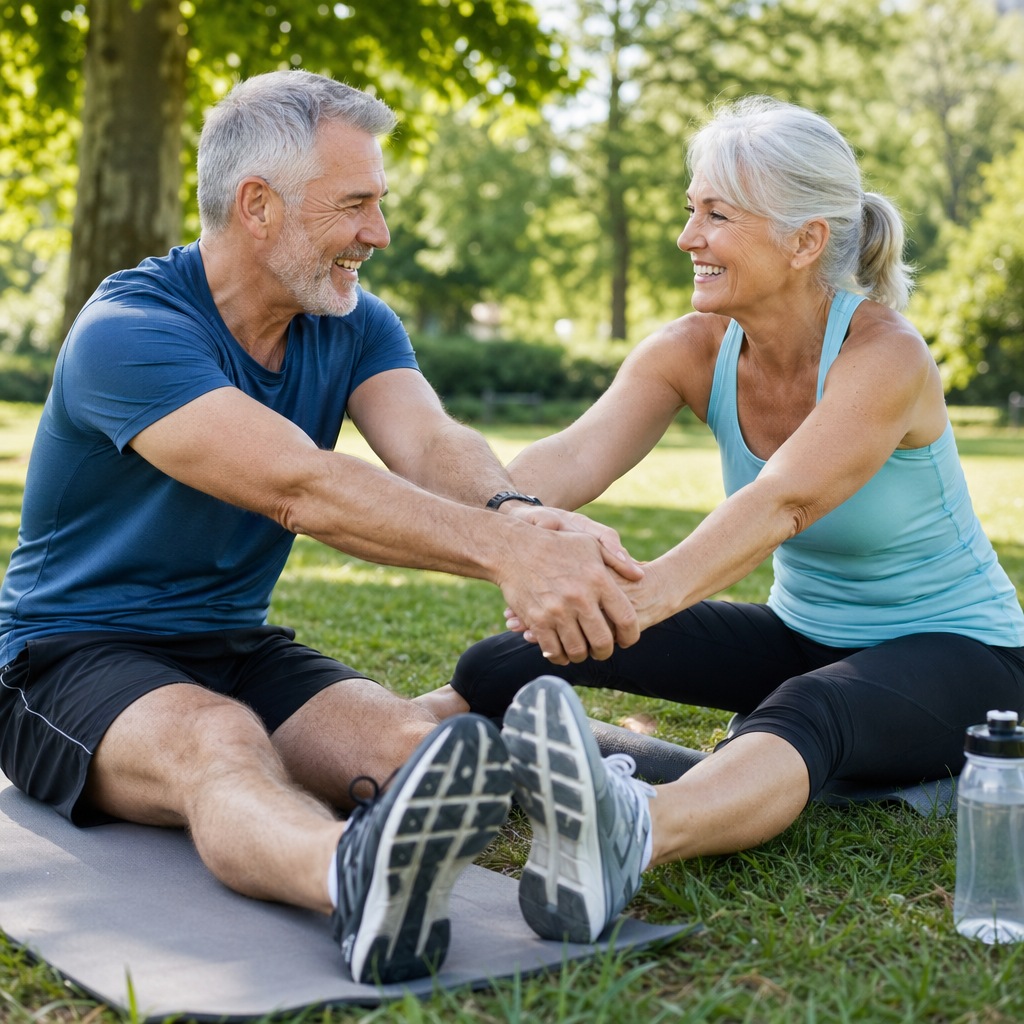
There’s real science behind why working out together makes you more likely to stick with it. Research shows that couples who exercise together have significantly higher adherence rates than those who go it alone. You’re less likely to skip your workout when someone else is counting on you to show up.
Beyond accountability, there’s the social connection aspect. As we age, maintaining strong relationships becomes crucial for mental health. Spending time together while doing something beneficial for your bodies checks multiple boxes at once. You’re investing in your physical health, emotional wellbeing, and relationship simultaneously.
Partner workouts also add an element of fun that’s often missing from solo exercise routines. You can joke around, celebrate small victories together, and turn fitness into something you genuinely look forward to rather than dread. When one person has a tough day, the other can provide motivation. When both of you are feeling strong, you can challenge each other to push a little harder.
Essential Equipment for Partner Workouts
You don’t need a home gym to get started with couples exercises. A few basic pieces of equipment can open up dozens of workout possibilities. Resistance bands top the list because they’re versatile, portable, and joint-friendly. You can use them individually or create partner resistance by pulling against each other.

Resistance Bands Set
Perfect for partner exercises with multiple resistance levels to match both fitness levels
A set of light dumbbells gives you options for matching routines where you exercise side by side. Start with 3 to 8 pound weights and progress from there. Having two sets means you can both work at your own pace while staying synchronized.
Consider adding a pair of yoga mats for floor exercises. These provide cushioning for your joints during stretching, core work, and balance exercises. Look for mats with good thickness and non-slip surfaces to prevent any sliding during partner-assisted moves.
An exercise ball can add variety to your routine. You can pass it back and forth during standing exercises, use it for support during certain moves, or incorporate it into core strengthening exercises that you do together.
Partner-Assisted Exercises That Build Strength
Partner-assisted exercises use your bodies to help each other achieve better form, deeper stretches, or added resistance. These moves often work better than going solo because you get immediate feedback and support.
Seated Row with Resistance Band
Sit facing each other with legs extended and feet touching. One person holds a resistance band while the other grasps the ends. The person pulling does a row motion, bringing their hands toward their chest while the other provides gentle resistance. Switch roles after 10 to 12 repetitions. This targets your upper back muscles and helps improve posture, which tends to suffer as we age.
Partner Wall Push
Stand facing each other, both with palms pressed together at chest height. One person pushes forward while the other resists, creating isometric tension. Hold for 5 to 10 seconds, then switch who’s pushing. This builds chest and arm strength without the joint stress of traditional push-ups.
Assisted Squats
Face each other and hold hands or wrists. Both of you squat down together, using each other for balance and support. You can go deeper and maintain better form when you have someone to hold onto. This makes squats accessible even if you struggle with balance or knee stability.

Balance Board for Two
Take turns using this while your partner provides stability support for enhanced balance training
Back-to-Back Chair Stands
Stand back-to-back with a sturdy chair in front of each of you. Use the chair for light support as both of you lower into a squat position simultaneously. The back-to-back contact helps you maintain proper alignment and adds a fun coordination element. Try for 8 to 10 repetitions together.
Synchronized Routines for Matching Fitness Levels
When you’re at similar fitness levels, synchronized routines let you exercise side by side while motivating each other through each set. These work particularly well if you both enjoy the camaraderie of doing exactly the same thing at the same time.
Mirror Marching
Stand facing each other and march in place, trying to mirror each other’s movements. Lift your knees to a comfortable height and swing your arms naturally. Start with 2 minutes and build up to 5. You can make it more challenging by increasing speed or adding arm movements like reaching overhead on every fourth step.
Tandem Stretching Flow
Create a stretching routine you both follow together. Start with neck rolls, move to shoulder circles, then gentle torso twists, standing quad stretches, and calf stretches. Going through the sequence together ensures you both get a complete warm-up or cool-down, and neither person rushes through important stretches. For couples interested in exploring more structured flexibility work, beginner yoga poses can be incorporated into your routine for added variety.
Side-by-Side Step Touches
Stand next to each other and step to the right, bringing your left foot to tap beside your right. Then step left and tap with your right foot. Move together in rhythm, and add arm reaches to the side as you step. This improves coordination and gets your heart rate up without high impact. If you want to progress beyond basic stepping, incorporating step workout routines can provide excellent cardiovascular benefits for both partners.
Modifications for Different Fitness Levels
One of you might be recovering from an injury, dealing with arthritis, or simply starting from a different baseline. That doesn’t mean you can’t work out together. Smart modifications let you do the same exercises at different intensities.
For strength exercises, the more fit partner can use heavier resistance bands or dumbbells while the other uses lighter ones. You’re still doing the same movement pattern and counting reps together, just at appropriate resistance levels for each person’s current strength.
During balance exercises, one person might need to hold onto a chair or counter while the other can do the same exercise hands-free. You’re still practicing balance together, just with different levels of support. The person using the chair shouldn’t feel like they’re falling behind. They’re training at their appropriate level, which is exactly what they should be doing.
For cardio moves like marching or stepping, height and speed are easy adjustments. One person can lift their knees higher or move faster while the other goes at a gentler pace. You stay synchronized by counting together, even if the intensity differs.

Adjustable Hand Weights
One set works for both partners since you can quickly change the weight between exercises
The key is communication. Check in with each other about how exercises feel. If something causes pain beyond normal muscle fatigue, speak up. Modify or skip that move and try something else. Your workout should challenge you without causing injury or excessive discomfort.
Balance and Core Work with a Partner
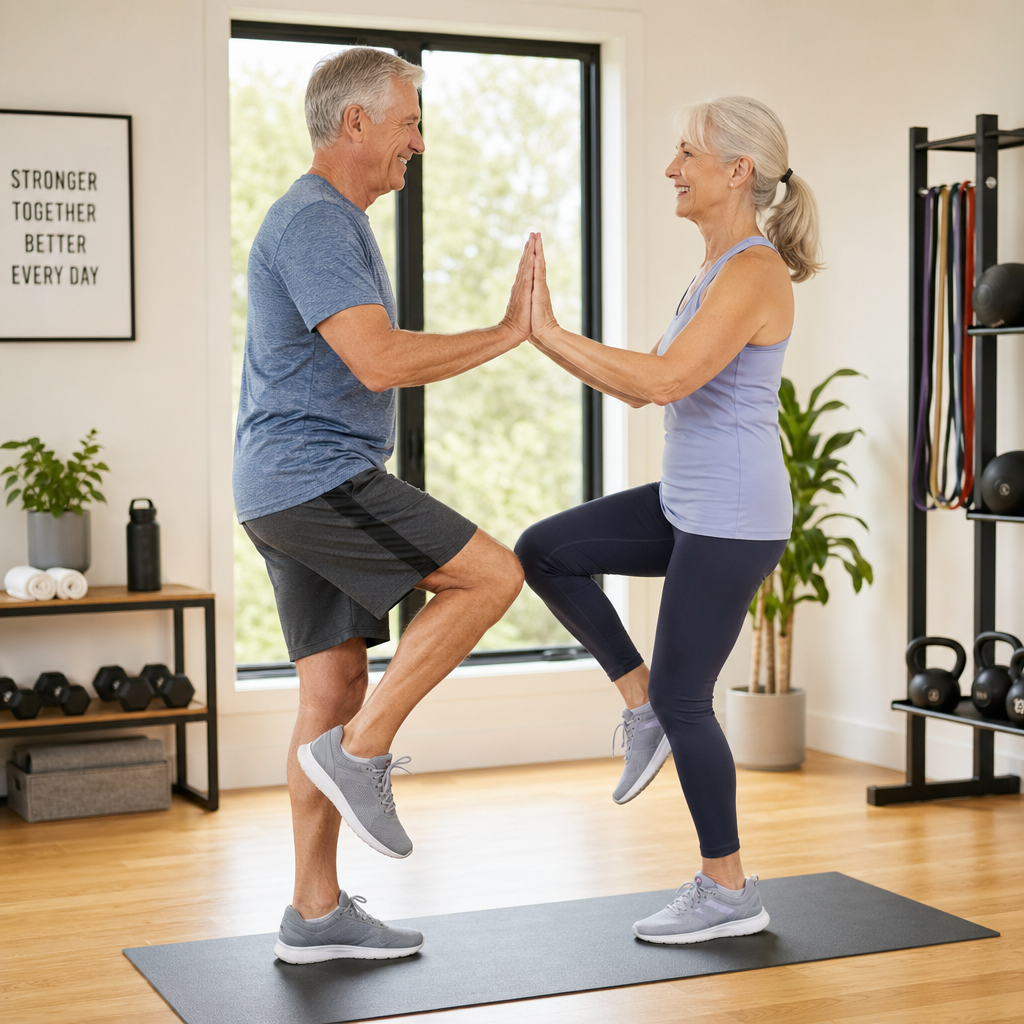
Balance tends to decline with age, making falls a serious concern. Training balance together adds a safety element while making these exercises more enjoyable. Your partner can provide a steadying hand when needed and spot signs of wobbling before you do.
Tandem Stand
Stand next to each other, both placing your right foot directly in front of your left foot, heel to toe. Hold hands lightly for balance support. Hold this position for 30 seconds, then switch feet. As you get stronger, try it while holding hands with just your fingertips touching, reducing the support.
Partner Tree Pose
Stand side by side and both shift your weight to your outside leg. Bring your inside foot to rest against your standing leg’s ankle, calf, or inner thigh (never directly on the knee). Link your inside arms together for mutual support while extending your outside arms out to the side. Hold for 20 to 30 seconds, then switch sides.
Seated Partner Twist
Sit back-to-back on the floor or on chairs. Both of you twist to the right, reaching your left hand to your partner’s right knee while your right hand goes to your own left knee. This creates a gentle spinal twist that you can enhance by pressing lightly against each other. Hold for 15 seconds, then twist to the other side. This builds core strength and improves spinal flexibility. If getting down to the floor is challenging, having strategies for safely getting up from the floor gives you confidence to try more floor-based exercises together.
Creating Your Weekly Routine Together
Consistency matters more than intensity when it comes to seeing results. Plan your weekly schedule together so both of you know when workouts are happening. Treat these times as appointments you can