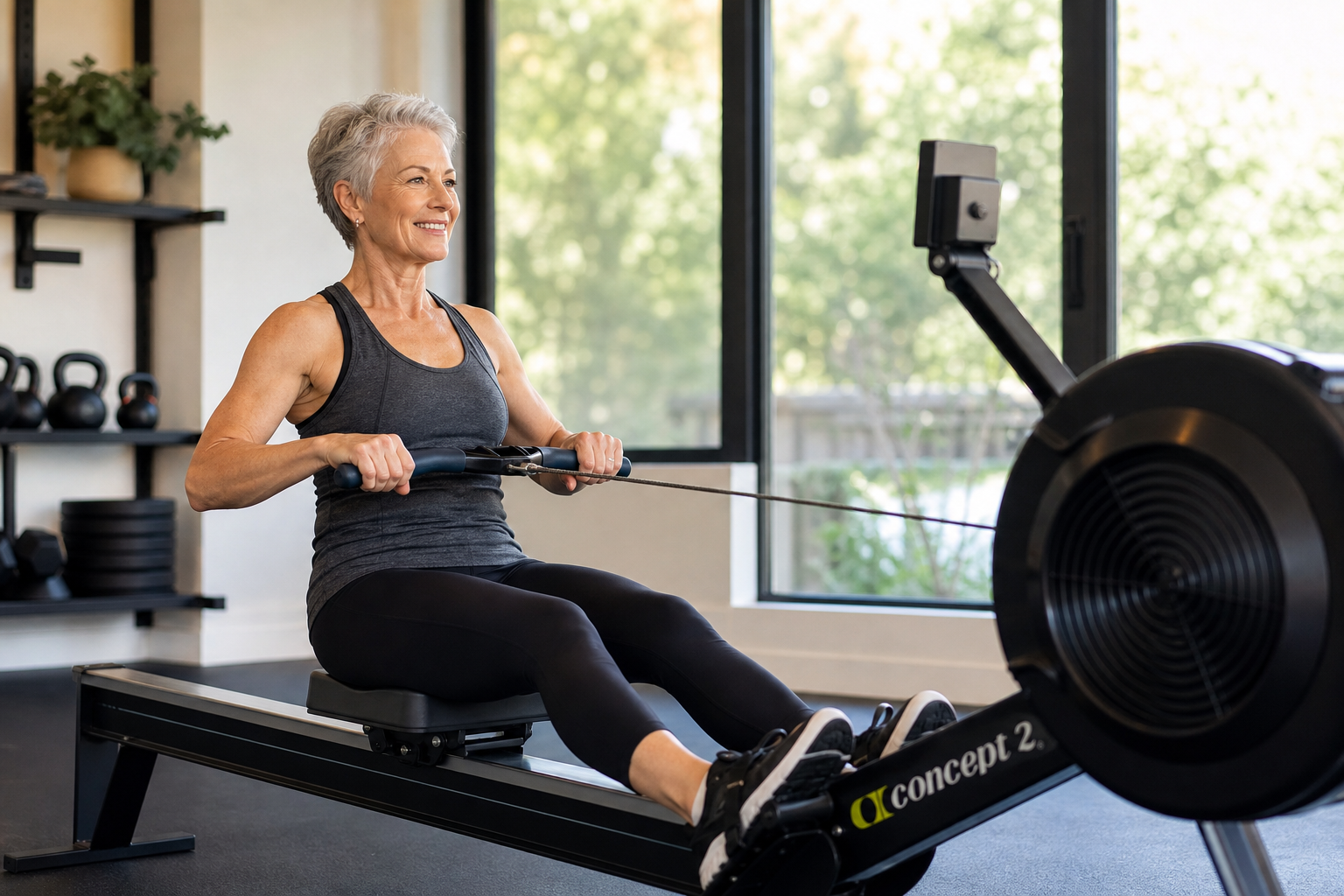
A rowing machine is one of the most efficient exercise machines available for seniors. Each stroke works 86% of your body’s muscles (legs, back, arms, core, shoulders) in a single, smooth, low-impact motion. There’s zero joint impact (your feet never leave the footrests), the resistance is fully adjustable from featherlight to challenging, and the seated position eliminates fall risk. For seniors looking for a single piece of equipment that provides both cardiovascular and strength training, a rower is hard to beat.
Why Rowing Works for Seniors
Full-Body Exercise
A rowing stroke engages your legs (60% of the power), back and core (20%), and arms (20%) in sequence. This means a 20-minute rowing session works your entire body, while 20 minutes on a bike works only your legs and 20 minutes of walking primarily targets the lower body. The efficiency is unmatched for time-constrained exercisers.
This muscle distribution also means rowing naturally balances your body development. Many cardio machines (bikes, ellipticals) focus almost exclusively on the lower body, which can create imbalances over time. Rowing strengthens the posterior chain (the muscles along your back and rear of your legs) that often weakens with age and contributes to poor posture.
Regular rowing can counteract the forward-hunched position many older adults develop from years of sitting. This makes rowing particularly relevant for seniors working on posture correction.
Zero Impact
The smooth, gliding motion produces no joint impact. Your feet stay planted, your body weight is supported by the seat, and the resistance comes from pulling against water, air, or magnetic force rather than from gravity. For seniors with knee arthritis, hip arthritis, or back pain that limits walking, rowing often feels comfortable when other exercises don’t.
The seated position also removes fall risk entirely. Balance challenges that make treadmills or outdoor walking anxiety-inducing are non-issues on a rower. You’re seated and stable throughout the entire movement, making it an appropriate choice even for seniors with balance impairment who would need supervision or assistance with standing exercises. For seniors seeking other seated options, pedal exercisers provide another low-impact alternative for cardiovascular conditioning.
Cardiovascular and Strength Combined
Rowing at moderate resistance builds muscular endurance while keeping your heart rate in the aerobic training zone. Higher resistance focuses more on strength, lower resistance focuses more on cardio. You can adjust the balance within a single session.
This dual benefit is particularly valuable for older adults with limited time or energy. A 20-minute rowing session provides cardiovascular conditioning comparable to a 30-minute walk, plus functional strength training for activities like lifting groceries, standing from a chair, or reaching overhead. The pulling motion strengthens grip and upper body in ways that few cardio machines do.
For seniors focused on building strength while maintaining cardiovascular health, rowing fits naturally into a progressive resistance training program.
Adjustable Intensity
Most rowing machines allow you to control intensity in two ways: resistance level (how hard it is to pull) and stroke rate (how many strokes per minute you take). This dual control means you can work at truly gentle levels when starting out or recovering, then progress gradually as your fitness improves. There’s no minimum fitness requirement to begin rowing, unlike some machines that feel harsh even at the lowest setting.
Types of Rowing Machines
Magnetic Resistance
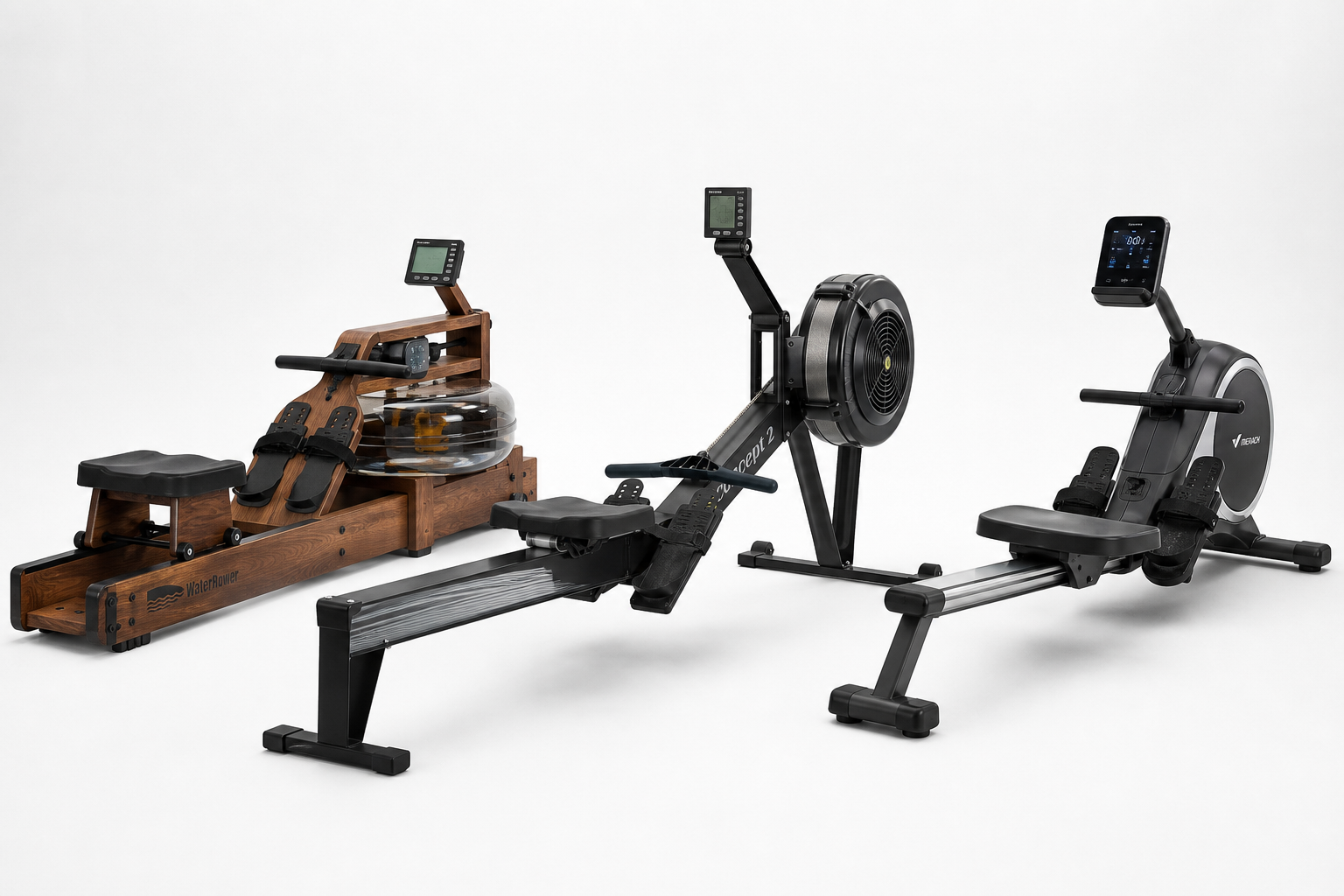
Uses magnets to create resistance. Virtually silent, smooth, and adjustable through a wide range. This is the best type for home use because the noise level is comparable to a whisper. The resistance is consistent throughout the stroke, which some rowers find less natural than water or air resistance.
Magnetic rowers typically offer 8 to 16 resistance levels controlled by a dial or button. The consistency of magnetic resistance makes it easier to maintain a steady effort during longer sessions. Many seniors appreciate the predictability: once you set level 4, you know exactly what level 4 will feel like throughout your workout.
The quiet operation is particularly valuable if you share living space with others or like to row while watching television. You can hold a conversation at normal volume while rowing on a magnetic machine, which is not true of air or water models.
Water Resistance
Uses paddles spinning through a water tank to create resistance. The feel closely mimics actual on-water rowing: resistance increases naturally as you pull harder. The swooshing sound of water is pleasant. Water rowers are often the most aesthetically appealing (they look like furniture rather than gym equipment). They’re louder than magnetic but not disruptively so.
The self-regulating resistance of water models means you don’t need to adjust settings manually. Pull gently for an easy warmup, pull harder for intense intervals, all without touching any controls. The natural resistance curve feels intuitive to most users.
Water rowers typically stand upright for storage, taking up minimal floor space. The polished wood frames common on water models (particularly WaterRower brand) blend into living spaces better than industrial-looking metal frames. If you’re keeping the rower in a bedroom or living room rather than a dedicated exercise space, aesthetics may matter.
The trade-off is maintenance: water tanks need occasional treatment with purification tablets to prevent algae growth. It’s minimal upkeep (every few months), but something to be aware of.
Air Resistance
Uses a fan (flywheel) to create resistance. The Concept2 rower (the standard in CrossFit gyms and rowing clubs worldwide) is air-based. Resistance increases with pull speed (pull harder for more resistance). Air rowers are louder than magnetic or water models, which may be a factor for apartment living or TV-room use.
The noise is a consistent whooshing sound, not disruptive but definitely present. Some people find it motivating (it provides immediate audible feedback on effort level), others find it annoying. If you’re considering an air rower for apartment use, it’s worth knowing the sound carries through walls and floors more than magnetic resistance.
Air resistance provides the most accurate simulation of on-water rowing, which matters if you have previous rowing experience or want to train for actual boat rowing. For pure fitness purposes without competitive rowing goals, the difference is academic.
Top Rowing Machines for Seniors
Concept2 RowErg (Model D)
Concept2 RowErg Model D
The gold standard rower used in competitive and rehabilitation settings, built to last decades with excellent performance tracking
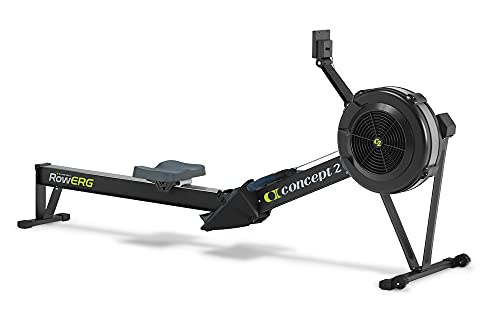
The Concept2 RowErg is the gold standard of rowing machines. Air resistance provides a natural feel, the PM5 performance monitor tracks every metric (distance, pace, calories, heart rate), and the build quality is virtually indestructible. It separates into two pieces for storage. This is the rower used in every competitive and rehabilitation setting.
The PM5 monitor connects to heart rate straps (sold separately) and displays real-time feedback on stroke rate, split time (your pace per 500 meters), and calories burned. You can save workouts to USB or sync with fitness apps. The display is large, clear, and backlit, important for users with vision changes.
Seat height is 14 inches off the ground, which is lower than a standard chair. Some seniors with hip or knee limitations find this challenging to get on and off. The included installation instructions for leg extensions can raise the seat by 10 inches if needed.
Concept2 machines are built to last decades. The company sells replacement parts for models going back 40 years. This longevity makes the upfront investment more reasonable when spread over 15-20 years of use.
Best for: Serious fitness enthusiasts who want the best performance and durability. Louder than magnetic or water alternatives.
Hydrow Wave
The Hydrow Wave uses electromagnetic resistance with a touchscreen that streams live and on-demand rowing classes led by coaches on actual waterways. The guided workouts provide structure and motivation. The magnetic resistance is nearly silent. The downside is the ongoing subscription cost for the workout content.
The 16-inch display shows the instructor in the center, with your workout metrics around the edges. Classes range from 10 to 45 minutes, covering beginner techniques, interval training, steady-state endurance, and recovery rows. The instruction is particularly valuable for newcomers who have never rowed before and aren’t confident they can learn proper form from written instructions.
The subscription runs competitively priced per month after a trial period. Without the subscription, the machine functions as a basic rower with no guided content. For seniors who thrive on structure and variety, the investment may be worthwhile. For those who prefer simple, self-directed exercise, it’s an expensive add-on.
The Hydrow Wave (the smaller model) has a shorter rail than the full-size Hydrow, making it appropriate for users up to about 6’2″. If you or a household member is taller, the full-size Hydrow is a better fit.
Best for: Seniors who want guided workouts and a quieter machine. The coaching is especially valuable for beginners learning proper technique.
Sunny Health SF-RW5515 Magnetic Rower

Sunny Health SF-RW5515
Budget-friendly magnetic rower with 8 resistance levels, perfect for seniors testing rowing before committing to a premium machine
The Sunny Health SF-RW5515 is the best budget magnetic rower. It’s quiet, has 8 resistance levels, a padded seat, and large foot pedals. At a fraction of premium models’ pricing, it provides perfectly adequate home rowing for seniors who want cardiovascular and strength training without a premium investment.
The LCD monitor tracks time, count, calories, and total count. It’s basic (no heart rate monitoring, no connectivity features), but it displays the information most users actually need during a workout. The display is small and may be difficult to read without reading glasses.
The machine supports users up to 250 pounds. The rail length accommodates most users under 6’4″. The seat is wider and more cushioned than the Concept2 seat, which some users with hip discomfort appreciate.
Build quality is adequate but not premium. The frame is steel, the flywheel is smooth, and the resistance levels are distinct. Expect this machine to last 3-5 years with regular use, not 20 years like a Concept2. For seniors testing rowing to see if they enjoy it before committing to a premium machine, this is a sensible entry point.
Best for: Budget-conscious seniors who want a quiet, functional rower for home use.
WaterRower Natural

WaterRower Natural