Finding the right exercise mat becomes more important as we age. Your knees, hips, and joints need proper cushioning during floor exercises, stretches, and yoga. But there’s a big difference between those thin yoga mats at the big box store and what actually works for senior fitness.
The ideal mat balances thickness for joint protection with stability for balance exercises. Too thin and you’ll feel every hard spot in your floor. Too thick and you might wobble during standing poses. Let’s break down what actually matters when choosing an exercise mat for your routine.
Thickness and Cushioning: How Much Do You Really Need?
Standard yoga mats run about 1/8 inch thick. They’re fine for younger practitioners, but most seniors need at least 1/2 inch of cushioning. Anything between 1/2 inch and 3/4 inch hits the sweet spot for floor work without sacrificing stability.
The extra thick yoga mats marketed at 1 inch or more can actually work against you during standing balance exercises. Your feet sink in too much, making it harder to feel grounded. Save those ultra-plush options for pure floor work like Pilates or stretching routines.

BalanceFrom GoYoga Extra Thick Mat
A reliable 3/4-inch option that provides excellent joint cushioning without compromising stability.
Material matters just as much as thickness. NBR foam (nitrile butadiene rubber) offers better density than basic PVC, meaning it won’t compress as quickly over time. TPE (thermoplastic elastomer) mats provide good cushioning and are lighter weight, making them easier to move around.
Non-Slip Features: The Safety Factor You Can’t Ignore
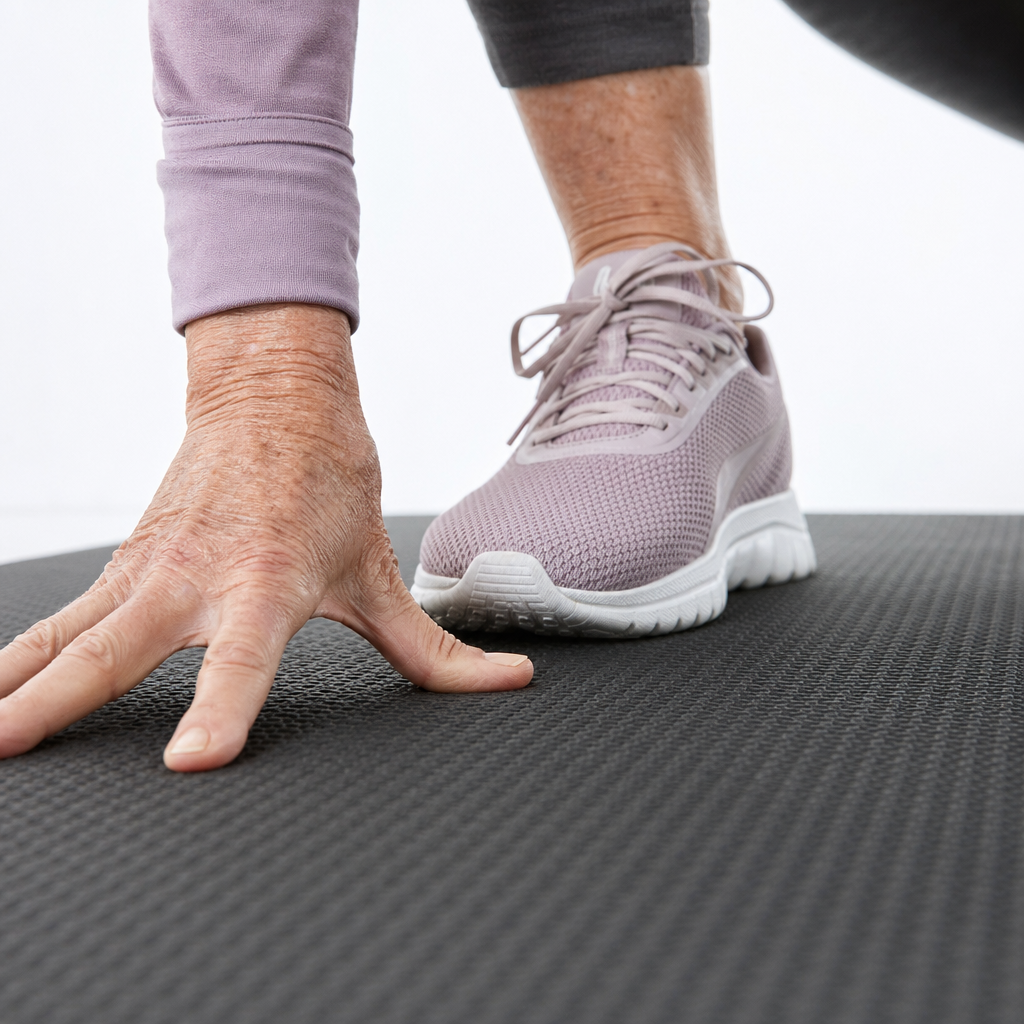
A mat that slides during exercise defeats the entire purpose. You need traction on both sides, top for your hands and feet, bottom to grip your floor. Textured surfaces work better than smooth ones, especially if your hands tend to sweat.
Test the grip before committing. Place the mat on your typical exercise surface (carpet, hardwood, or tile) and try a few basic movements. During a downward dog or standing pose, your hands shouldn’t slide forward even slightly. A stable mat surface is just as important as proper footwear for indoor exercise, both working together to reduce your risk of slips and falls.
Some non-slip exercise mats include alignment marks, which help maintain proper form during poses. These visual guides become particularly useful for exercises that require specific hand and foot placement.
Size, Portability, and Storage Considerations
Most standard mats measure 68 inches long by 24 inches wide. Taller individuals should look for 72-inch or 84-inch options. Width matters less unless you do exercises that require side-to-side movement.
Weight becomes a real consideration with thicker mats. A 3/4-inch mat can weigh 4-6 pounds, which might be challenging to roll and carry. Some seniors prefer keeping a dedicated mat in their exercise space rather than rolling it up daily.
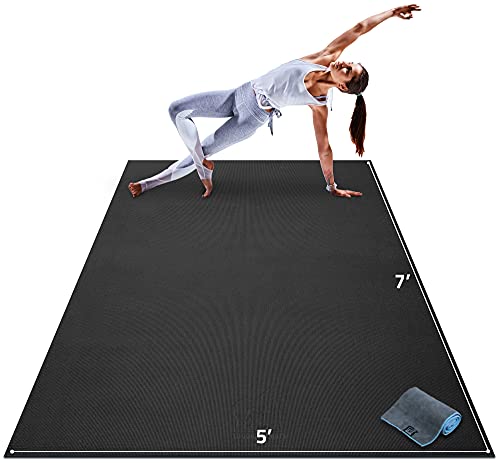
Gorilla Mats Premium Large Exercise Mat
Extra-long design with excellent thickness that stays put during workouts.
Look for mats with carrying straps or handles if you plan to transport yours. Better yet, consider getting a storage rack that keeps your mat flat and accessible without taking up floor space.
Maintenance Tips for Longevity
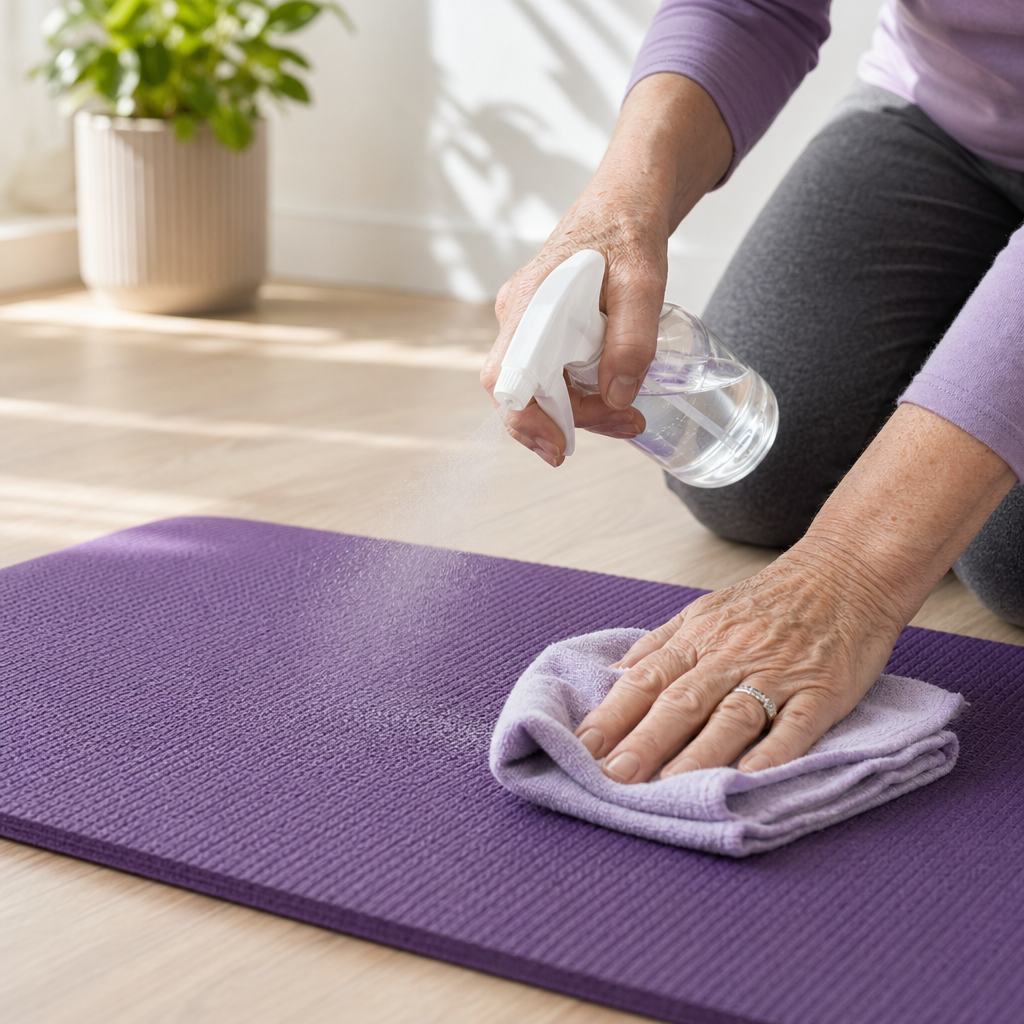
Clean your mat after every few uses with a simple solution of water and mild soap. Avoid harsh chemicals that break down foam materials. Let it air dry completely before rolling to prevent mildew.
Store your mat loosely rolled or flat when possible. Tight rolling over months can create permanent creases that affect performance. Keep it away from direct sunlight, which degrades foam and rubber materials faster than normal wear.
Most quality mats last 1-2 years with regular use. Once you notice significant compression in high-impact areas or the surface becomes slick, it’s time for a replacement. Your joints deserve fresh cushioning.
Frequently Asked Questions
Should seniors use yoga mats or thicker exercise mats?
Thicker exercise mats work better for most seniors. Traditional yoga mats at 1/8 inch thickness don’t provide enough cushioning for aging joints. A mat between 1/2 and 3/4 inch thick offers better protection during floor exercises while maintaining enough stability for standing poses. Save the thin yoga mats for travel or backup use. If you’re practicing tai chi for improved balance, the extra thickness can help cushion your knees during slower, deliberate movements.
How do I prevent my exercise mat from sliding on carpet?
Carpet actually provides natural grip for most mats, but low-pile or older carpet can be slippery. Look for mats with deep texture on the bottom surface rather than smooth backing. You can also place a thin rug gripper pad underneath if sliding persists. Avoid using mats designed specifically for hard floors on carpet, as they often have different grip patterns. Making sure you’re using proper form is key—learn about common exercise mistakes seniors make to ensure you’re maximizing your mat’s effectiveness. Whether you’re working with balance boards or doing mat-based exercises, the right surface makes all the difference in preventing falls.
This article contains affiliate links. We may earn a small commission at no extra cost to you.
Related Articles
- Best Indoor Exercise Footwear for Seniors: Safety & Support
- Fall Prevention Programs: Evidence-Based Exercises for Seniors
- Balance Board Exercises: Progressive Training for Seniors
- Tai Chi for Balance: Ancient Practice for Modern Seniors