Living with arthritis doesn’t mean you have to give up on staying active. In fact, the right kind of movement can actually reduce pain and stiffness while keeping your joints healthier for longer. The key is knowing which exercises protect your joints instead of wearing them down.
This guide focuses on gentle, joint-friendly exercises specifically designed for people dealing with arthritis. You’ll learn how to move safely, what equipment can help, and when to modify or stop an activity. Let’s get you moving without making pain worse.
Why Movement Matters for Arthritis

It might seem counterintuitive, but keeping your joints moving is one of the best things you can do for arthritis. When you stop using a joint, the surrounding muscles weaken and the joint itself becomes stiffer. This creates a downward spiral where pain leads to less movement, which leads to more pain.
Regular, gentle exercise lubricates your joints, strengthens the muscles that support them, and can even reduce inflammation over time. Studies show that people with arthritis who exercise regularly report less pain and better function than those who remain sedentary.
The difference between helpful and harmful exercise comes down to choosing low-impact movements that don’t stress already-irritated joints. High-impact activities like running or jumping can accelerate joint damage, while the exercises below protect your joints while keeping you mobile.
The Essential Warm-Up Routine
Never skip your warm-up. Cold, stiff joints are much more vulnerable to injury and pain. Spend at least 5-10 minutes warming up before any exercise session.
Start with gentle range-of-motion movements. Slowly circle your wrists, ankles, and shoulders. Gently bend and straighten your knees and elbows. These movements wake up your joints and get synovial fluid flowing, which acts as natural lubrication.
Apply warmth before exercising if your joints feel particularly stiff. A warm shower, heating pad, or arthritis hand warmers can make a noticeable difference. Some people find that exercising later in the day, after they’ve been moving around, works better than morning sessions when joints tend to be stiffer.
Hand and Wrist Exercises
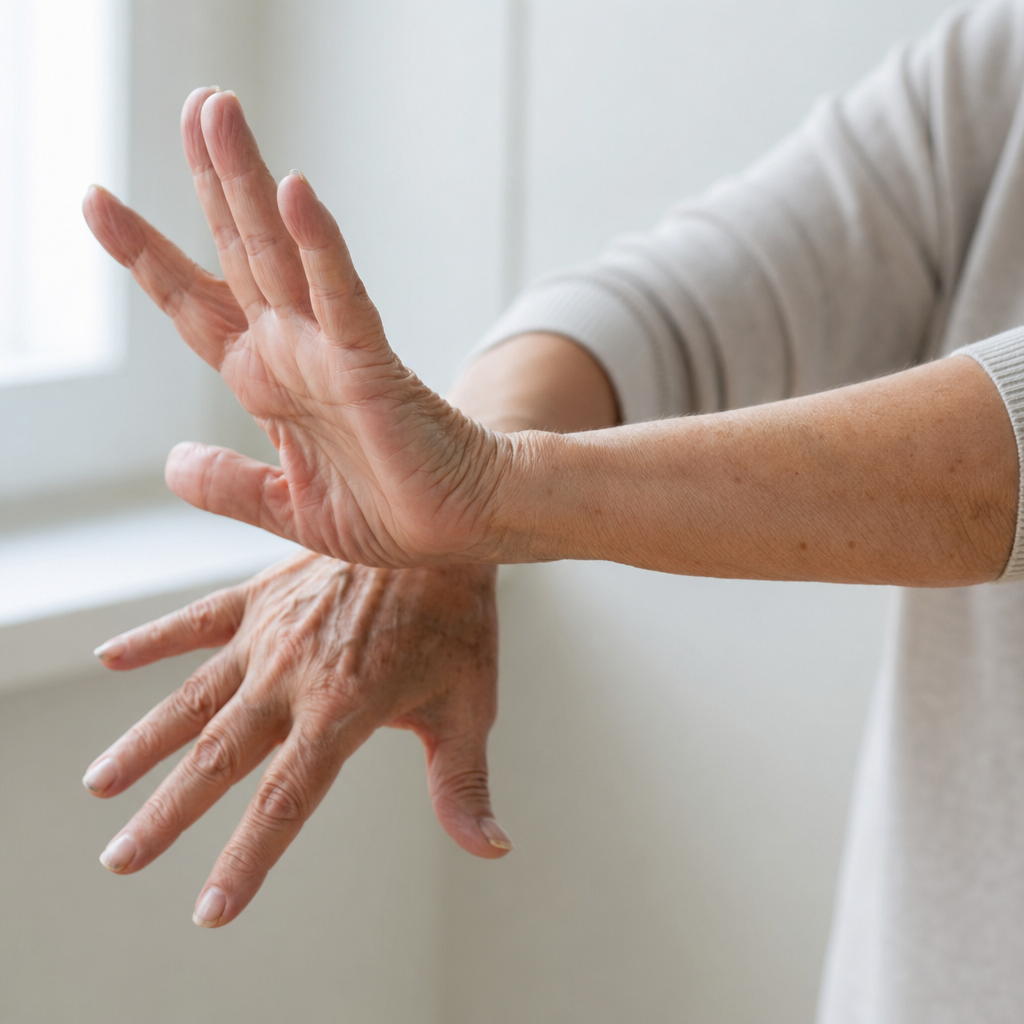
Arthritis in the hands can make everyday tasks frustrating. These exercises maintain grip strength and finger flexibility without stressing delicate finger joints.
Finger Bends
Start with your fingers straight. Slowly bend each finger to touch the base of that finger, forming a hook shape. Hold for 3-5 seconds, then straighten. Repeat 5-10 times per hand. This exercise is safe to do multiple times throughout the day.
Thumb Touches
Touch the tip of your thumb to the tip of each finger, one at a time, forming an “O” shape. Move slowly and only go as far as comfortable. This maintains the opposable movement that’s essential for gripping objects.
Therapy Putty Exercises
Therapy putty provides gentle resistance that builds hand strength without the jarring impact of squeezing hard objects. Pinch, squeeze, and roll the putty between your fingers and palms. Therapy putty comes in different resistance levels, so start with soft and progress gradually.

Arthritis Compression Gloves
These provide gentle support and warmth during hand exercises and daily activities.
Knee-Friendly Lower Body Exercises
Your knees bear significant weight during daily activities, making them particularly vulnerable to arthritis pain. These exercises strengthen the muscles around your knees without putting damaging pressure on the joint itself.
Seated Leg Extensions
Sit in a sturdy chair with your back supported. Slowly straighten one leg until it’s parallel to the floor (or as far as comfortable). Hold for 5 seconds, then lower slowly. This strengthens your quadriceps, which are critical for knee stability. Start with 5-10 repetitions per leg and build up gradually.
Wall Sits (Modified)
Stand with your back against a wall. Slide down slightly, bending your knees to about 30 degrees (not the full 90-degree squat). Hold for 10-15 seconds, then slide back up. This modified version builds leg strength without the deep knee bend that can aggravate arthritis.
Heel and Toe Raises
Stand behind a chair, holding it lightly for balance. Rise up on your toes, hold for 3 seconds, then lower. Next, lift your toes while keeping your heels on the ground. This works your calf and shin muscles, which support knee function, without stressing the knee joint itself.
Hip Exercises That Don’t Hurt
Hip arthritis can make walking, sitting, and standing painful. These exercises maintain hip mobility and strength while protecting the joint.
Hip Marching (Seated)
Sit in a chair with your feet flat on the floor. Slowly lift one knee a few inches off the seat, hold for 3 seconds, then lower. Alternate legs. This gentle movement maintains hip flexor strength without the impact of standing exercises.
Side Leg Raises (Standing)
Stand behind a chair, holding it for balance. Keeping your leg straight, slowly lift it out to the side 6-12 inches. Hold briefly, then lower. This strengthens the hip abductors, which stabilize your pelvis during walking. Keep your toes pointing forward, not up.
Hip Circles
Lie on your back with one knee bent, foot flat on the floor. Extend the other leg. Slowly rotate the extended leg in small circles, moving from the hip. Do 5 circles in each direction, then switch legs. This maintains the hip’s full range of motion.

Resistance Bands for Seniors
Light resistance bands add gentle strengthening to hip and leg exercises without joint stress.
Water Exercise: The Arthritis-Friendly Option

Water exercise might be the single best option for people with arthritis. The buoyancy reduces stress on your joints by up to 90%, while the water’s resistance provides gentle strengthening.
You don’t need to know how to swim. Many gyms and community centers offer water aerobics classes specifically designed for arthritis. Simple walking in chest-deep water provides excellent exercise. The water supports your body weight while the resistance strengthens your muscles.
Warm water pools (83-88 degrees) are particularly beneficial. The warmth helps relax muscles and ease stiffness. Many facilities have arthritis-specific warm water programs. An aquatic exercise belt can help you stay upright during water exercises if balance is a concern.
When to Modify or Stop
Understanding the difference between discomfort and harmful pain is critical. Some mild discomfort during exercise is normal, especially when you’re starting out. Sharp pain, significant swelling, or pain that lasts more than two hours after exercising means you’ve done too much.
Use the two-hour rule. If you experience increased pain or stiffness that persists beyond two hours after exercising, reduce the intensity or duration next time. You might need to do fewer repetitions, move more slowly, or take an extra rest day.
Respect flare-ups. During arthritis flare-ups when joints are particularly inflamed and painful, reduce your exercise intensity significantly or stick to gentle range-of-motion movements only. Don’t push through severe pain. Once the flare settles, you can gradually return to your regular routine.
Watch for these warning signs to stop immediately: sharp, stabbing pain; joint pain that gets progressively worse during the exercise; significant swelling or warmth in a joint; or any feeling of joint instability or giving way.
Building Your Exercise Routine
Start small and be consistent. Three 10-minute sessions per week are better than planning an hour-long workout you’ll never actually do. As your body adapts, you can gradually increase duration and frequency.
Mix different types of exercises throughout the week. Combine range-of-motion exercises (which you can do daily) with strengthening exercises (2-3 times per week) and low-impact aerobic activity like walking or water exercise (most days of the week).
Track your progress and pain levels. Keep a simple log of what exercises you did and how you felt during and after. This helps you identify which activities work best for your body and when you might be overdoing it.

Exercise Mat with Extra Cushioning
Extra cushioning protects joints during floor exercises and stretching routines.
Frequently Asked Questions
Should I exercise on days when my arthritis pain is worse than usual?
It depends on the severity. Mild to moderate pain days still benefit from gentle range-of-motion exercises and stretching. Move slowly and reduce intensity by about 50%. On severe pain days or during flare-ups, limit yourself to very gentle movements or take a rest day. Complete rest for extended periods typically makes stiffness worse, so try to do at least minimal movement even on difficult days.
How long before I notice improvement in my arthritis symptoms?
Most people notice reduced stiffness within 2-3 weeks of consistent exercise. Strength improvements typically become noticeable around 4-6 weeks. Pain reduction varies more widely, with some people feeling better within a few weeks and others taking 2-3 months. The key is consistency. Exercising 3-4 times per week will produce better results than occasional intense workouts.
Can exercise actually damage my joints if I have arthritis?
Low-impact, properly performed exercises protect joints rather than damage them. High-impact activities like running on hard surfaces or exercises that involve jumping can accelerate joint damage. Stick to the gentle exercises outlined here, listen to your body’s pain signals, and avoid pushing through sharp pain. When done correctly, exercise strengthens the muscles supporting your joints and maintains the cartilage you have left.
This article contains affiliate links. We may earn a small commission at no extra cost to you.