If you’ve started taking creatine after 60 and noticed the scale creeping up a pound or two in the first week, you’re not imagining things. It’s one of the most common questions we hear from older adults trying creatine for the first time: is this fat, muscle, or something else entirely? The short answer is that it’s usually water, and understanding why can help you decide whether to stick with it.
Creatine monohydrate is one of the most researched supplements available, and its effect on body water is well documented. But most of that research was done on younger athletes, not on adults in their 60s, 70s, and beyond who may have different kidney function, medication lists, and fluid balance concerns. This article breaks down what the science actually says and what it means specifically for older adults.
What Creatine Does Inside Your Muscle Cells
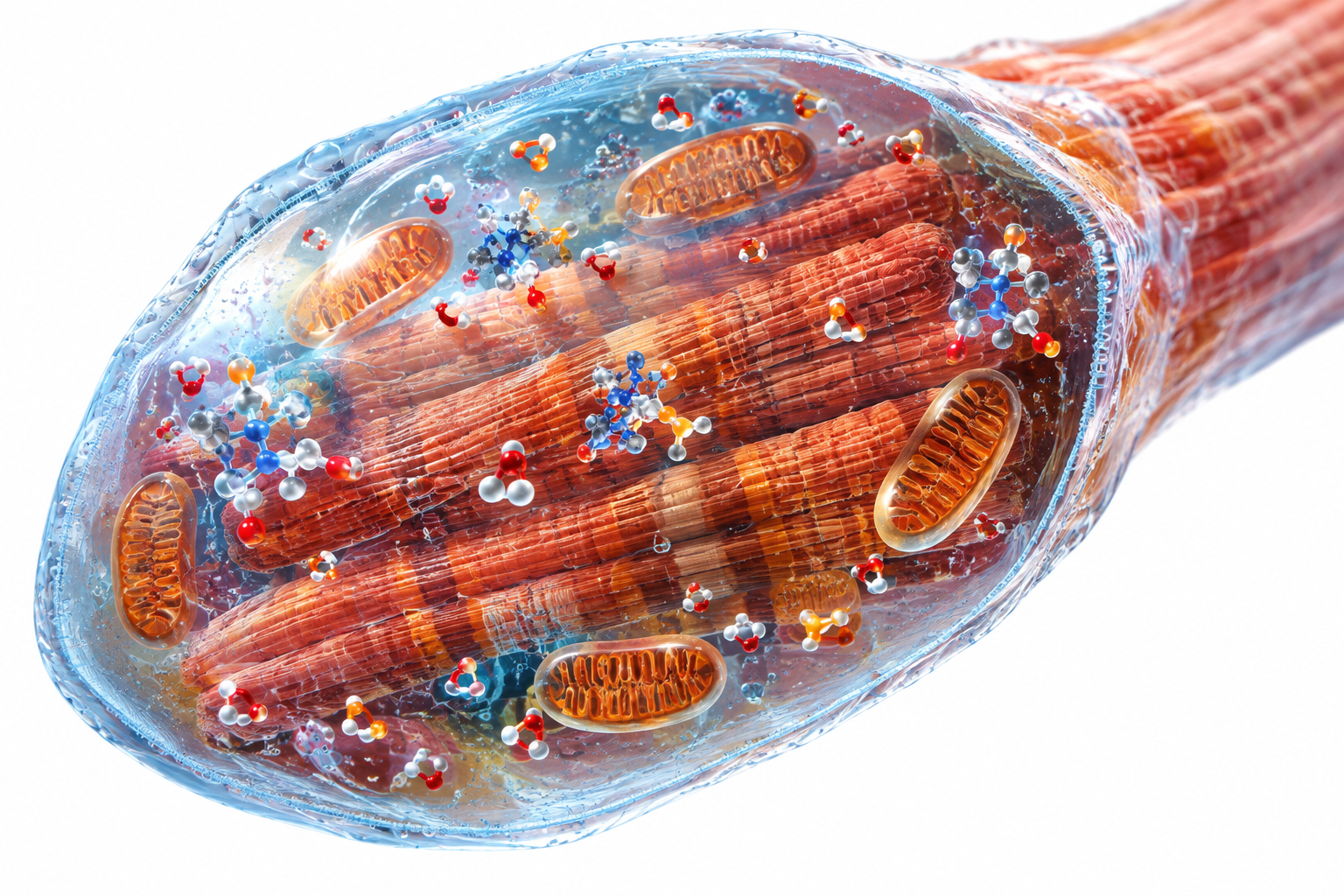
Creatine works by increasing the amount of phosphocreatine stored in your muscle tissue, which helps regenerate energy during short bursts of effort like lifting weights or standing up quickly from a chair. To store more creatine, your muscle cells also pull in more water, since creatine is osmotically active, meaning it draws fluid along with it.
This isn’t fluid retention in the way that sounds alarming, like swelling from heart or kidney trouble. It’s intracellular water, meaning it sits inside the muscle cell rather than under your skin or in your ankles. Research on creatine supplementation consistently shows this water shift happens within the first one to two weeks, particularly if someone starts with a loading phase of higher daily doses.
Some older adults skip the loading phase entirely and start with a lower daily dose instead, which tends to produce a slower, less noticeable increase in water weight. Either approach eventually saturates your muscle creatine stores, it just takes longer without loading.
Water Weight vs. Fat Weight: What the Research Shows
The weight gain from creatine is almost entirely water and, over time, potentially some added lean tissue if you’re also strength training. It is not fat gain. Studies tracking body composition during creatine supplementation typically show total body water increasing by roughly one to three pounds in the initial weeks, with that amount stabilizing rather than climbing indefinitely.
That stabilization point matters. If your weight keeps rising well beyond that early window, or if you notice swelling in your legs, ankles, or hands, that’s not a typical creatine response and deserves a conversation with your doctor rather than an assumption that it’s “just the creatine.”
If you’re already tracking your weight and body composition at home, a scale that separates water weight from lean mass can take a lot of the guesswork out of this. Our guide to smart scales for seniors covers models that estimate water percentage alongside muscle and fat, which is far more useful here than a standard bathroom scale.
Why This Matters More After 60

Older adults tend to have less total body water to begin with compared to younger adults, partly due to natural declines in muscle mass, which is where a large portion of the body’s water is stored. That means the water shift from creatine can feel more noticeable on the scale, even though the actual physiological change is similar across age groups.
There’s also the question of how your kidneys handle creatine and its breakdown product, creatinine. In healthy older adults with normal kidney function, research has not shown creatine supplementation to impair kidney function. But kidney function naturally declines somewhat with age even without diagnosed disease, and creatinine is the same marker doctors use to estimate kidney filtration rate on routine bloodwork.
This is a genuinely important point: if you take creatine and then have blood work done, your creatinine level may read slightly higher, which can look like reduced kidney function on paper even when your kidneys are working normally. Mentioning your supplement use to your doctor before lab work avoids unnecessary confusion or follow-up testing.
How to Tell the Difference on the Scale

A few practical signs can help you distinguish normal creatine-related water weight from something worth flagging to your doctor.
- Timing: Typical water weight gain from creatine shows up in the first one to two weeks and then levels off.
- Location: Creatine’s water shift happens inside muscle tissue, not as visible swelling in your ankles, hands, or face.
- Trend: Weight should plateau, not continue climbing week after week.
- How you feel: Creatine-related water retention shouldn’t come with shortness of breath, unusual fatigue, or a feeling of tightness in your extremities.
Staying adequately hydrated actually helps this process rather than working against it. Since creatine pulls water into your muscles, adequate fluid intake supports normal function elsewhere in the body. Our article on hydration and muscle cramps in seniors is a good companion read if you’re adjusting your water intake alongside a new supplement.
Choosing a Creatine Product
If you decide to try creatine, monohydrate is the form with the most research behind it by a wide margin, including in studies involving older adults and resistance training. There’s no strong evidence that buffered, micronized, or “advanced” creatine formulas outperform plain monohydrate for most people, so there’s little reason to pay more for them.
Creatine Monohydrate Powder
A well-studied, budget-friendly form of creatine that mixes easily into water or a protein shake.
Look for a product that lists creatine monohydrate as the only active ingredient, ideally with third-party testing noted on the label. Avoid proprietary blends that don’t disclose exact dosages, since you want to know precisely how many grams you’re taking each day.
Many older adults take creatine alongside a protein source to support muscle maintenance during strength training. If you’re building out your supplement routine, our protein supplements buying guide for seniors walks through what to look for in a protein powder that pairs well with resistance work.
When to Check With Your Doctor First
Creatine is generally well tolerated, but there are specific situations where you should talk to your doctor before adding it to your routine rather than after.
- You have diagnosed kidney disease or a history of kidney stones.
- You’re managing a significant chronic illness such as heart failure or liver disease.
- You take medications that affect kidney function or fluid balance, including certain blood pressure medications or diuretics.
- You’re on a sodium-restricted or fluid-restricted diet for a medical condition.
None of this means creatine is off limits for older adults with health conditions. It means the decision should involve someone who knows your full medical picture and current labs, not just general research on healthy populations. A quick conversation before you start, and periodic bloodwork while you’re taking it, is a reasonable way to use creatine responsibly.
Strength training is where creatine’s benefits actually show up, so pairing it with a consistent resistance routine matters more than the supplement itself. If you’re working out at home, our guide on sets and reps for senior strength training and our overview of daily habits that support strength after 60 are good starting points.
Frequently Asked Questions
How much water weight should I expect from creatine?
Most people gain somewhere between one and three pounds of water weight in the first couple of weeks of consistent use. This typically levels off once your muscle creatine stores are saturated, rather than continuing to increase over time.
Will the water weight go away if I stop taking creatine?
Yes. Once you stop supplementing, muscle creatine stores gradually decline over several weeks, and the associated water weight tends to decrease along with it. This is a reversible, temporary effect rather than a permanent change in your body composition.
Is creatine safe for someone with mild age-related kidney decline?
This depends on the degree of kidney function decline and should be reviewed with your doctor, ideally using recent bloodwork rather than a general assumption. Mentioning creatine use before lab tests also helps your doctor interpret your creatinine results accurately.
This article contains affiliate links. We may earn a small commission at no extra cost to you.