Creatine monohydrate has been studied for decades, mostly in athletes trying to get stronger or build muscle faster. But over the last several years, researchers have turned their attention to a very different population: older adults trying to hold onto muscle, strength, and independence. If you’re wondering whether creatine makes sense for you and, if so, when you should actually take it, the timing question matters less than most marketing suggests. What matters more is consistency, dose, and pairing it with the right kind of activity.
What the Research Actually Suggests for Older Adults
Creatine monohydrate is one of the most studied supplements in sports nutrition, and a growing body of research has looked specifically at adults over 60. Studies published in journals like the Journal of the International Society of Sports Nutrition and Nutrients have found that creatine supplementation, when combined with resistance training, may support gains in lean muscle mass and strength compared to resistance training alone.
The key phrase there is “combined with resistance training.” Creatine on its own, without any strength work, tends to show much smaller effects in older adults. It seems to work best as a supporting tool for people who are already lifting weights, doing bodyweight strength work, or following a structured program like the ones in our sets and reps guide for seniors.
Some research also points to potential benefits for cognitive function and recovery from illness or bed rest in older adults, though this research is younger and less conclusive than the strength data. Nobody should take creatine expecting it to treat or prevent any specific medical condition. Think of it as a well-researched addition to a training routine, not a treatment.
So When Should You Actually Take It?

This is where a lot of the marketing noise gets in the way. For years, supplement companies pushed the idea that timing around your workout (before, during, or immediately after) was critical for results. More recent research suggests that total daily intake and consistency matter far more than the exact clock time you take it.
For most seniors, the simplest and most sustainable approach is this:
- Pick a consistent daily dose. Most research on older adults uses around 3 to 5 grams per day, taken every day rather than cycled on and off.
- Take it at the same time daily. With breakfast, with your protein shake, or right after your workout on training days. Consistency matters more than precision.
- Don’t skip rest days. Creatine works by gradually saturating your muscle stores over time, so taking it only on workout days slows down that process.
- Pair it with resistance training. If you’re not doing some form of strength work, whether that’s dumbbells, resistance bands, or bodyweight moves from a chair workout routine, you’re unlikely to see much benefit from creatine alone.
Some people load creatine with a higher dose for the first five to seven days to saturate muscle stores faster. This isn’t necessary. A steady daily dose gets you to the same saturation point within three to four weeks, just a bit more gradually. For most seniors, skipping the loading phase is the more comfortable and equally effective option.
Who Should Talk to a Doctor First

Creatine monohydrate has a strong safety record in healthy adults, but “healthy” is the operative word. Anyone with existing kidney disease, or a history of kidney problems, should talk to their doctor before starting creatine, since it’s processed through the kidneys and there isn’t enough research on how it interacts with impaired kidney function.
The same goes for people managing significant chronic illness, such as heart failure, liver disease, or uncontrolled diabetes. If you take medications that affect kidney function, blood pressure, or fluid balance, including certain diuretics or NSAIDs used regularly, it’s worth reviewing your supplement plans with your physician or pharmacist rather than assuming it’s automatically fine to combine.
This isn’t meant to scare anyone off. Most seniors without these conditions tolerate creatine well. It’s simply a supplement that deserves the same “check with your doctor first” approach you’d take with any new addition to your routine, especially if you’re already managing multiple prescriptions.
Choosing a Creatine Supplement
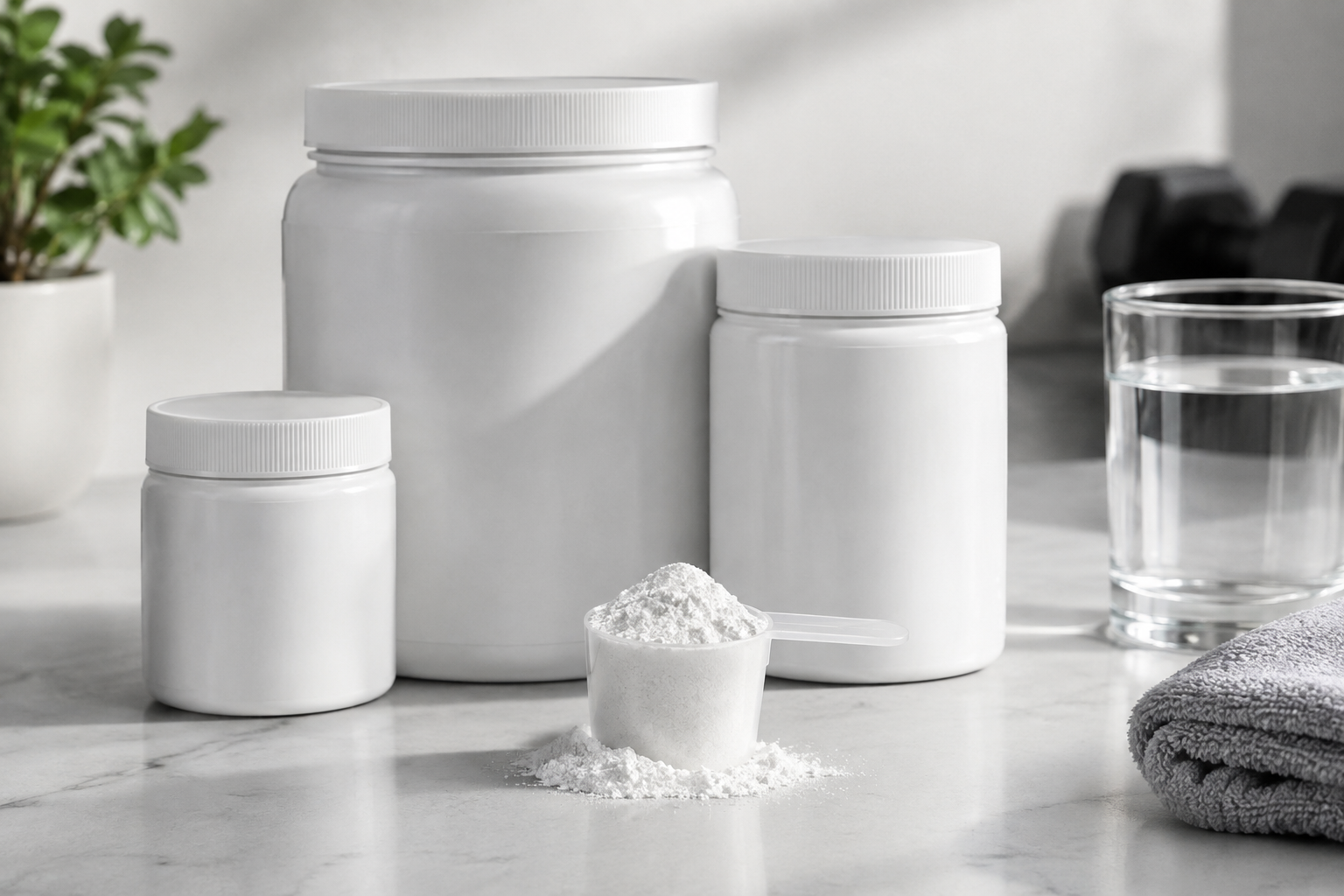
Skip the flavored blends, gummies, and “advanced formula” versions with a dozen ingredients you don’t recognize. Plain creatine monohydrate is the most studied form, the most affordable, and the easiest to dose accurately.
Creatine Monohydrate Powder
Look for a plain, unflavored micronized creatine monohydrate powder with no added stimulants or proprietary blends.
A simple kitchen teaspoon or the small scoop that comes in the tub is enough to measure out a standard daily dose. Mix it into water, coffee, or a protein shake. It has almost no taste, so it blends easily into whatever you’re already drinking in the morning. If you’re pairing it with a protein supplement as part of your muscle maintenance routine, our protein supplement buying guide covers what to look for there as well.
Frequently Asked Questions
Does creatine cause weight gain in seniors?
Some people notice a small increase in water retention within muscle tissue during the first week or two, which can show up as a slight bump on the scale. This isn’t fat gain, and it typically levels off. If you’re tracking body composition rather than just weight, a smart scale that measures body composition gives you a clearer picture than a standard bathroom scale.
Can creatine help with balance or fall prevention?
Creatine itself isn’t a balance supplement, but the muscle and strength support it may provide, when combined with resistance training, can indirectly support the kind of lower-body strength that plays a role in stability. For direct balance work, pairing your strength routine with exercises like heel-to-toe walking or the routines in our guide to muscles that prevent falls is a more direct approach.
This article contains affiliate links. We may earn a small commission at no extra cost to you.