When your appetite has shrunk but your protein needs haven’t, meals start to feel like a math problem you can’t solve. Maybe you can only manage a few bites at breakfast, or a full dinner plate makes you feel sick before you’re halfway through. The good part is you don’t need a big meal to get meaningful protein into your day. You need the right snacks, chosen carefully, spaced throughout the day.
This article focuses specifically on snack options for seniors who struggle to eat much at one sitting. It’s not a rehash of general protein guidelines or a breakdown of powder types. It’s a practical list of foods and products that pack a lot of protein into a small amount of volume, so you can hit your targets without forcing down food you don’t want.
Why a Small Appetite Makes Protein Harder to Get
Protein needs don’t shrink just because appetite does. In fact, many older adults need slightly more protein per pound of body weight than younger adults, partly to help preserve muscle mass. But if you’re only eating half of what you used to, spreading that protein across three big meals often doesn’t work anymore.
Small, frequent, protein-dense snacks solve this in a way that large meals can’t. Instead of trying to eat 25 grams of protein in one sitting, you might get there with three or four smaller snacks spread across the day. That’s much easier on a stomach that fills up fast.
Keep in mind that how much protein you actually need depends on your body size, activity level, total calorie intake, kidney function, and any illness you’re managing. Someone recovering from surgery or dealing with a chronic condition may have very different needs than someone who’s simply eating less due to age-related appetite changes. If you have kidney disease or a medically restricted diet, follow your clinician’s or dietitian’s specific guidance rather than a general list like this one.
What Counts as “High-Protein” in a Small Package
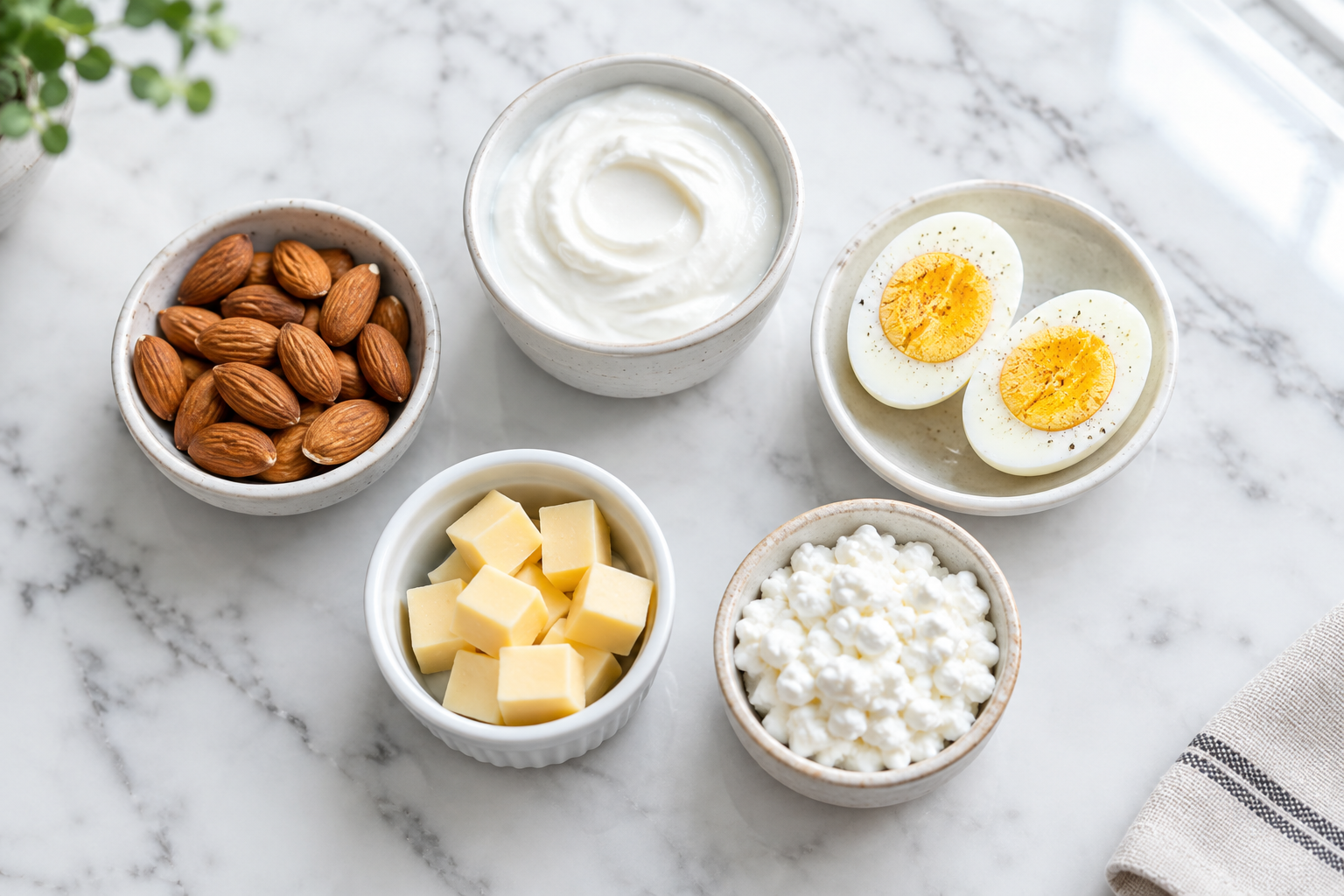
For a snack to be worth prioritizing when your appetite is limited, it should deliver a decent amount of protein relative to its volume. A snack with 10 to 15 grams of protein in a small serving is doing a lot more work than something that requires a full bowl to get the same amount.
Here’s a rough idea of what “protein-dense” looks like in everyday terms:
- A single hard-boiled egg has around 6 grams of protein.
- A small container of Greek yogurt (about 5.3 ounces) often has 12 to 15 grams.
- A single-serving meat stick or jerky pack can have 9 to 13 grams.
- A small ready-to-drink protein shake (around 11 ounces) can pack 20 to 30 grams.
- Two tablespoons of peanut or almond butter has about 7 grams.
Notice the pattern: the winners are foods that are naturally dense, not bulky. That’s the whole strategy when appetite is the limiting factor.
Best High-Protein Snacks for a Small Appetite
Dairy-Based Options
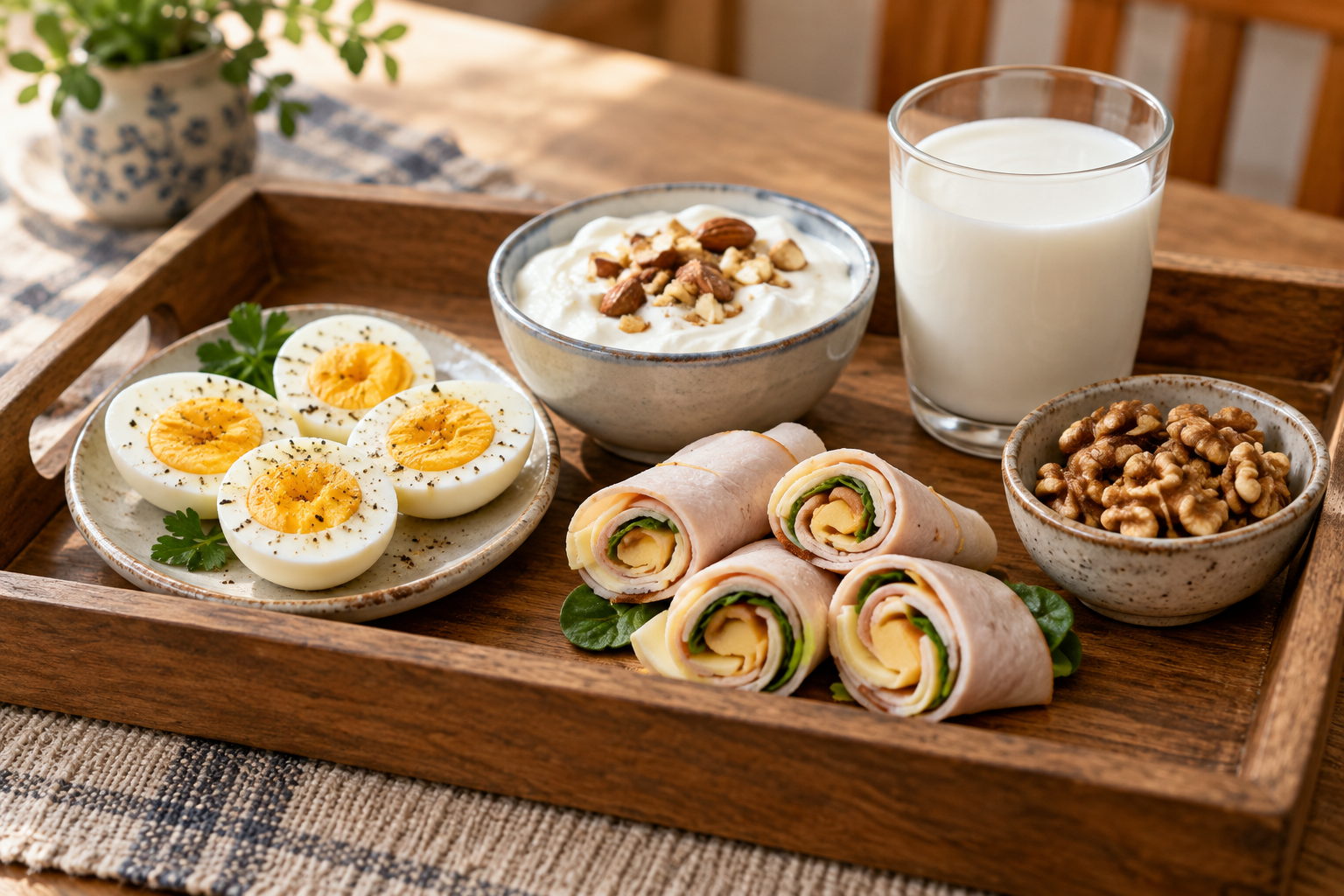
Greek yogurt and cottage cheese are two of the easiest wins here. Both are soft, require no chewing effort, and pack protein into a small volume. A half-cup of cottage cheese has roughly 12 to 14 grams of protein and goes down easily even when you’re not very hungry.
String cheese and cheese cubes are another good option if you need something portable that doesn’t require refrigeration for a few hours. They’re not huge protein sources on their own (around 6 to 8 grams per stick), but paired with a few nuts or a slice of turkey, they add up quickly.
Egg-Based Snacks
Eggs are one of the most efficient protein sources for someone eating small amounts. A couple of hard-boiled eggs kept in the fridge make an easy grab-and-go snack, and they travel well if you’re heading out for a walk or an appointment. Egg bites, either homemade or store-bought, are another soft, easy-to-eat option that doesn’t feel like “a meal” psychologically, which matters when a full plate feels overwhelming.
Ready-to-Drink Shakes
When chewing itself feels like too much effort, a ready-to-drink shake can be the easiest way to get a large dose of protein in a small volume. These are especially useful on days when illness, fatigue, or dental issues make solid food unappealing.
Premier Protein Shakes
A convenient, no-prep option that delivers a large amount of protein in a small, easy-to-drink serving.
If you want to understand the different types of protein supplements available and how to choose between powders, ready-to-drink shakes, and bars, our Protein Supplements for Seniors buying guide covers that in more depth. This article stays focused on whole-food and snack-style options instead.
Meat and Jerky Snacks
Meat sticks and jerky are compact, shelf-stable, and surprisingly protein-dense for their size. They’re also easy to portion out, so you can eat half now and save the rest for later without it going bad.
Chomps Meat Sticks
Single-serving, easy to open, and a good option for a quick protein boost between meals.
One thing to watch for with jerky and meat sticks is texture. Some brands are quite tough or chewy, which can be a problem if you have dental issues or difficulty chewing. Look for softer varieties or ones specifically marketed as “tender cut” if that’s a concern.
Nuts, Seeds, and Nut Butters
A small handful of almonds or a spoonful of peanut butter on a cracker won’t fill you up, but that’s exactly the point. These are calorie-dense and protein-dense at the same time, which matters if you’re also trying to avoid unintentional weight loss.
Individual nut butter packets are worth keeping around because they don’t require any prep and won’t go stale sitting in a bag or drawer.
Justin’s Nut Butter Packets
Portion-controlled and mess-free, good for pairing with crackers or fruit for a quick snack.
Tips for Making Small Snacks Count
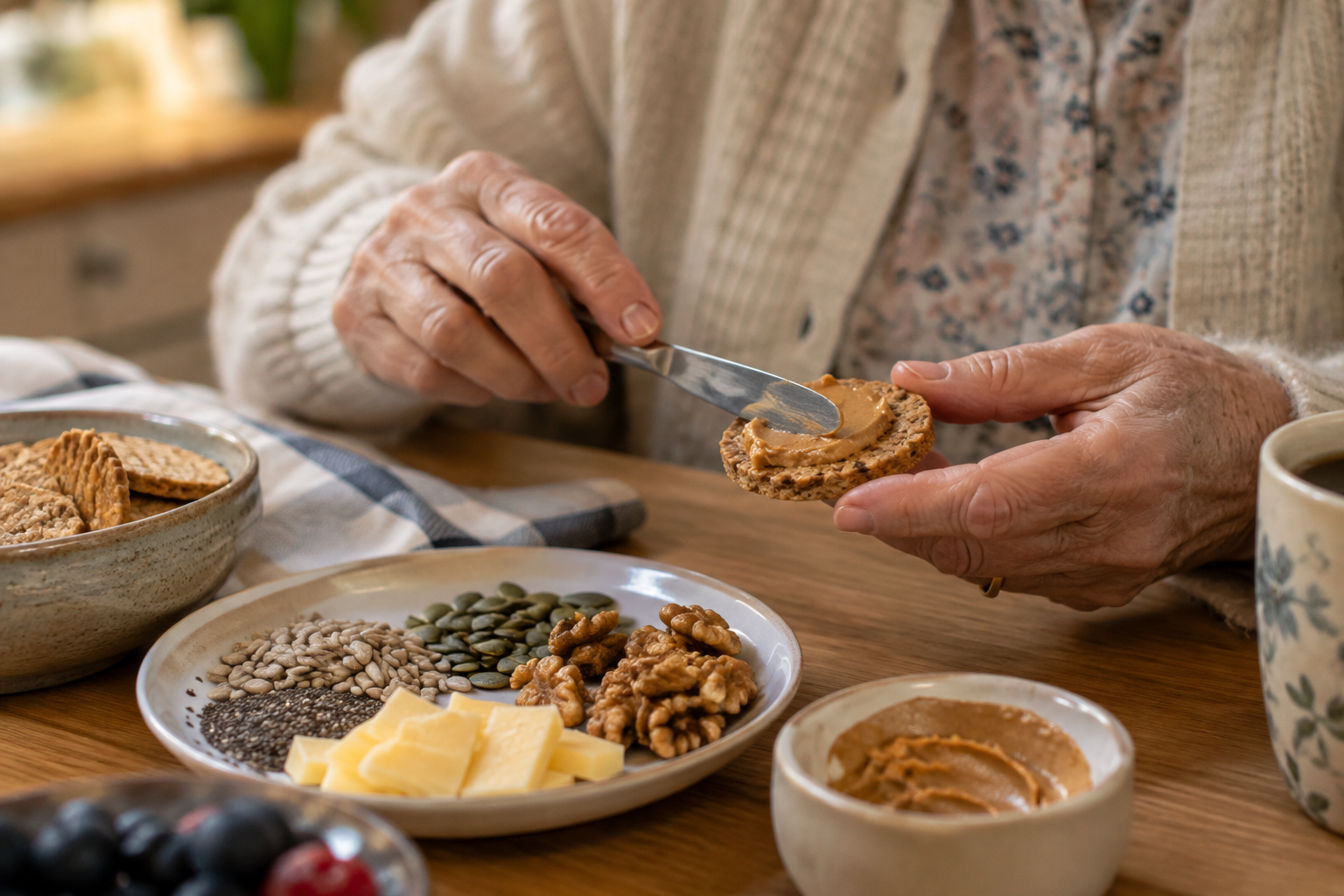
Spacing matters more than volume when your appetite is limited. Instead of three attempted meals, try five or six small protein-containing snacks spread every two to three hours. This keeps you from feeling pressured to eat a large amount at once.
Pair protein with something familiar and appealing rather than forcing an unfamiliar “health food” onto a picky appetite. If you’ve always liked crackers and cheese, keep that pairing and just choose a cheese with a bit more protein per ounce.
Track your intake loosely rather than obsessively. A smart scale that tracks body composition can help you and your doctor notice if muscle mass is trending down, which is often a better signal than the bathroom scale alone.
Don’t forget fluids alongside protein. Dehydration can suppress appetite even further, and it’s easy to overlook when you’re already eating less. Our guide on hydration and muscle cramps in seniors explains why staying on top of fluids matters even when you’re not thirsty.
Finally, protein intake works best alongside some form of regular movement, even light resistance work. Combining snack strategies with simple strength habits from our guide on daily habits that support strength and mobility after 60 gives your body a reason to actually use the protein you’re taking in.
Frequently Asked Questions
How much protein do I actually need if I have a small appetite?
It varies quite a bit based on your body size, activity level, total calories, and any medical conditions you have. Many older adults benefit from spreading 20 to 30 grams of protein across several small snacks rather than trying to hit a single large number at one meal. Ask your doctor or a registered dietitian for a target that fits your specific situation, especially if you have kidney disease or another condition that requires protein limits.
Are protein shakes a good substitute for meals if I can’t eat much?
They can be a useful tool, especially on days when solid food feels unappealing or eating tires you out. That said, shakes shouldn’t fully replace whole foods long-term, since you also need fiber, vitamins, and minerals that come from a varied diet. Think of them as a backup option for low-appetite days, not a permanent meal replacement, unless your clinician has specifically recommended otherwise.
What if chewing is difficult along with a small appetite?
Focus on soft, protein-dense foods like Greek yogurt, cottage cheese, egg bites, and smoothies made with milk or yogurt as a base. Ready-to-drink shakes are also helpful here since they require no chewing at all. If chewing difficulty is new or worsening, it’s worth mentioning to your dentist or doctor, since it can sometimes point to a separate issue that needs attention.
This article contains affiliate links. We may earn a small commission at no extra cost to you.