Wrist pain doesn’t have to be something you just live with. For many seniors, weak or achy wrists sneak up gradually, whether from years of repetitive tasks, arthritis, or simply the natural loss of grip strength that comes with age. The good part is that gentle, consistent exercise can make a real difference, and you don’t need fancy equipment or a gym membership to get started.
Before jumping in, one important note: if your wrist pain comes with tingling, numbness, or a shooting sensation into your fingers, especially at night, that’s a different situation. Those symptoms can signal carpal tunnel syndrome, and you should get a checkup before doing strengthening exercises. For general wrist stiffness and weakness without those warning signs, read on.
Watch: Gentle Wrist Strengthening for Seniors

This video walks you through a simple, low-impact routine you can do from a chair. It’s a good starting point if you’re not sure what proper form looks like.
The Core Exercises: Wrist Curls and Stretches
You only need a light weight and a sturdy surface. A soup can or a very light dumbbell works fine. The goal here is movement and blood flow, not heavy resistance.
Wrist Curls (Flexion and Extension)
Sit in a chair and rest your forearm on your thigh or a table, with your hand hanging off the edge, palm facing up. Hold a light weight and slowly curl your wrist upward, then lower it back down with control. Do 10 to 15 reps, then flip your hand over (palm facing down) and repeat the motion in the other direction.
Start with no weight at all if you’re dealing with significant pain. You can progress to a very light dumbbell as the movement becomes comfortable. If you want a good starting point for hand weights, 1 or 2 lb dumbbells are ideal for this kind of rehab-style work.
Wrist Circles and Stretches
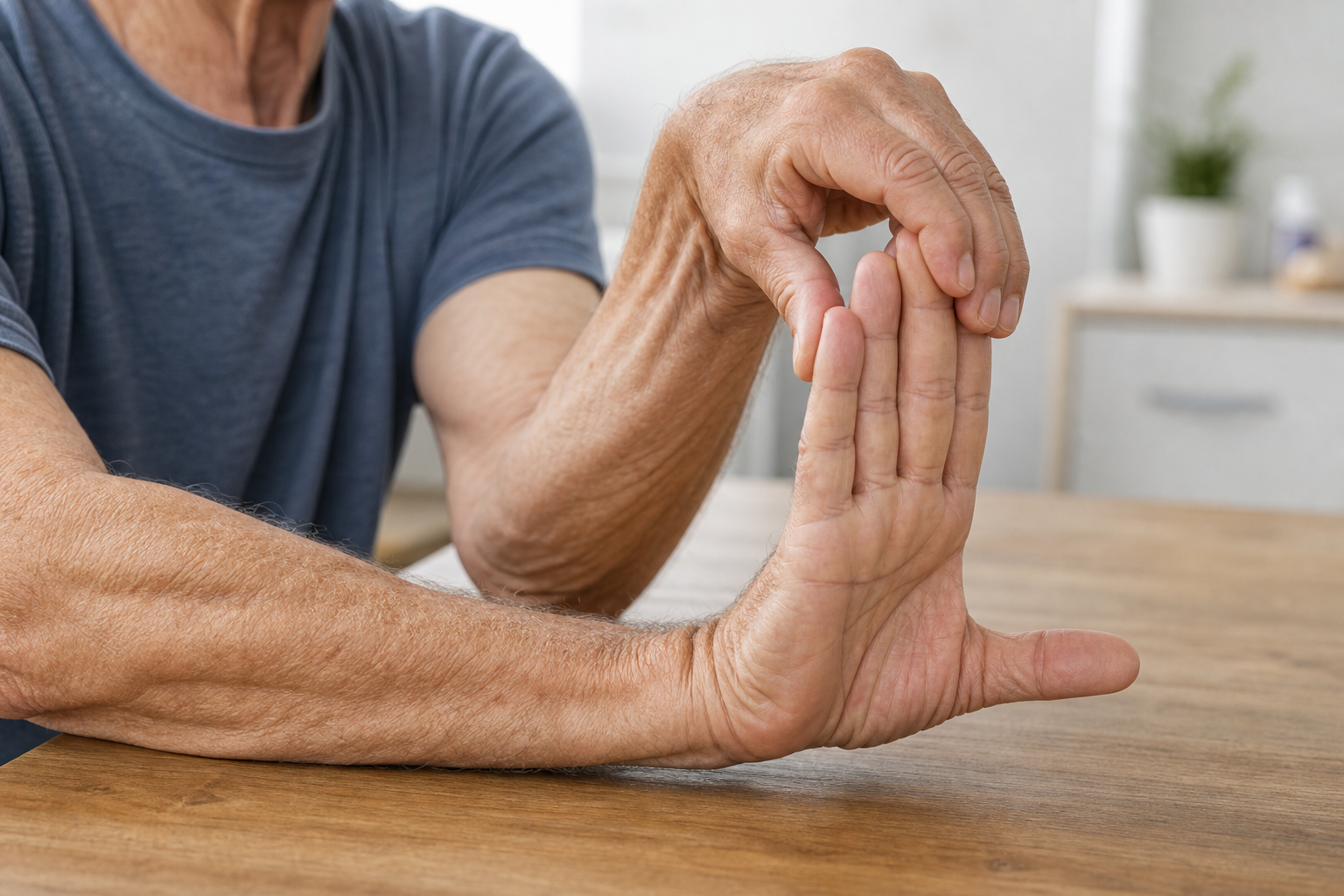
Slow wrist circles in both directions help with mobility and reduce morning stiffness. Do 10 circles each way before any strengthening work. Follow that with a simple prayer stretch: press your palms together in front of your chest and gently lower your hands toward your waist until you feel a stretch in the forearm. Hold 20 to 30 seconds.
For tight forearm flexors, extend one arm in front of you with your palm facing up, and use your other hand to gently pull your fingers back toward you. This stretch is surprisingly effective for wrist pain that gets worse during or after activity.
Resistance Band Work
Once basic curls feel easy, a light resistance band adds just enough challenge to build real strength without stressing the joint. Loop the band under your foot and hold the end in your hand for resisted wrist curls. This kind of progressive loading is what actually builds muscle, and it ties directly into the principles behind progressive resistance training for longer-term strength gains.
Wrist strength is also deeply connected to overall hand function. If you’re interested in improving your grip at the same time, our article on grip strength exercises for hand function and independence covers a lot of complementary ground.

Wrist and Forearm Strengthener
A dedicated wrist exerciser gives you adjustable resistance in a compact tool that’s easy to use at your desk or in a chair.
Troubleshooting: When Things Aren’t Improving

If you’ve been doing these exercises for two to three weeks and aren’t seeing any improvement, it’s worth looking at a few things.
- Are you going too hard, too fast? Wrist tendons and ligaments respond slowly to training. Stick with very low resistance for at least two weeks before increasing.
- Are you stretching before and after? Tight forearm muscles often drive wrist pain. The stretches matter as much as the strengthening.
- Is inflammation the real problem? Arthritis and tendinitis need a different approach than simple weakness. An anti-inflammatory diet and appropriate supplementation can support joint recovery alongside exercise. Some seniors also find that omega-3 supplements help reduce joint inflammation over time.
- Do you feel tingling or numbness? As mentioned above, this needs a medical evaluation before you continue. Carpal tunnel and other nerve issues require different treatment than muscle weakness.
For seniors dealing with other types of nerve-related discomfort, it may also be worth reading about neuropathy-safe exercises to make sure your full routine is appropriate for your situation.

Gel Wrist Support Brace
A comfortable wrist brace can reduce strain during daily activities and give inflamed tendons a chance to settle down between exercise sessions.
Frequently Asked Questions
How often should seniors do wrist strengthening exercises?
Three to four times per week is a good target. Daily stretching is fine and encouraged, but give your wrist muscles at least one rest day between strengthening sessions. If you’re sore the day after, that’s a signal to back off slightly on resistance or reps.
Is it normal for wrists to ache a little during these exercises?
Mild muscle fatigue is normal and expected. Sharp pain, pinching, or any sensation that radiates into your fingers is not normal and means you should stop. A dull ache that fades within an hour or two after exercise is generally okay. Pain that lingers into the next day means you did too much.
Wrist strength and flexibility tend to improve faster than most people expect once you’re consistent. A few weeks of gentle work, three times a week, can make a noticeable difference in how your hands feel during everyday tasks like opening jars, holding a steering wheel, or playing a sport like pickleball. Start simple, be patient, and pay attention to how your body responds.
This article contains affiliate links. We may earn a small commission at no extra cost to you.