If you spend most of your day in a chair, your hips are paying for it. Prolonged sitting keeps your hip flexors locked in a shortened position for hours at a time, and over time those muscles start to “forget” how to lengthen properly. The result is that familiar stiffness you feel when you finally stand up, that pulling sensation in the front of your hips, and sometimes low back pain that seems to come out of nowhere.
The good news is that tight hip flexors respond well to consistent, gentle stretching. You don’t need an hour-long yoga session or fancy equipment. A few targeted stretches done daily, plus some smarter habits around how you sit, can make a real difference in how your hips feel within a week or two.
Why Sitting Makes Your Hips So Tight
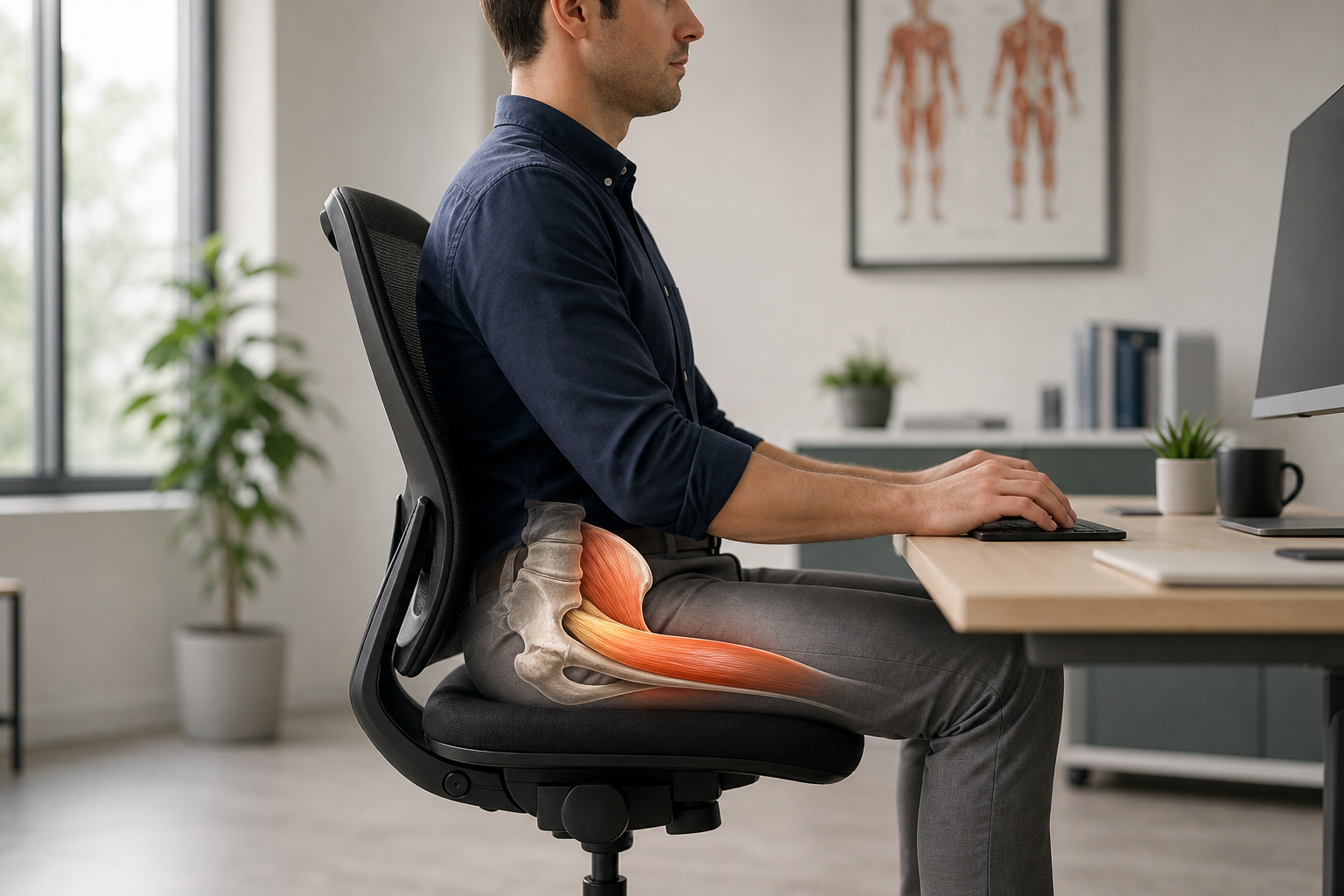
Your hip flexors, primarily the iliopsoas muscle group, connect your lower spine to your thigh bone. When you sit, these muscles are held in a shortened, contracted position. Do that for six, eight, or ten hours a day and the muscles literally adapt to that shorter length over time.
This matters beyond just hip discomfort. Tight hip flexors tilt your pelvis forward, which compresses your lower lumbar spine and can trigger or worsen back pain. They also affect how well your glutes fire, which has downstream effects on your knees and ankles. If you’ve been dealing with sciatica-like nerve pain or nagging low back issues, your hip flexors may be contributing more than you realize.
Daily Stretches That Actually Work
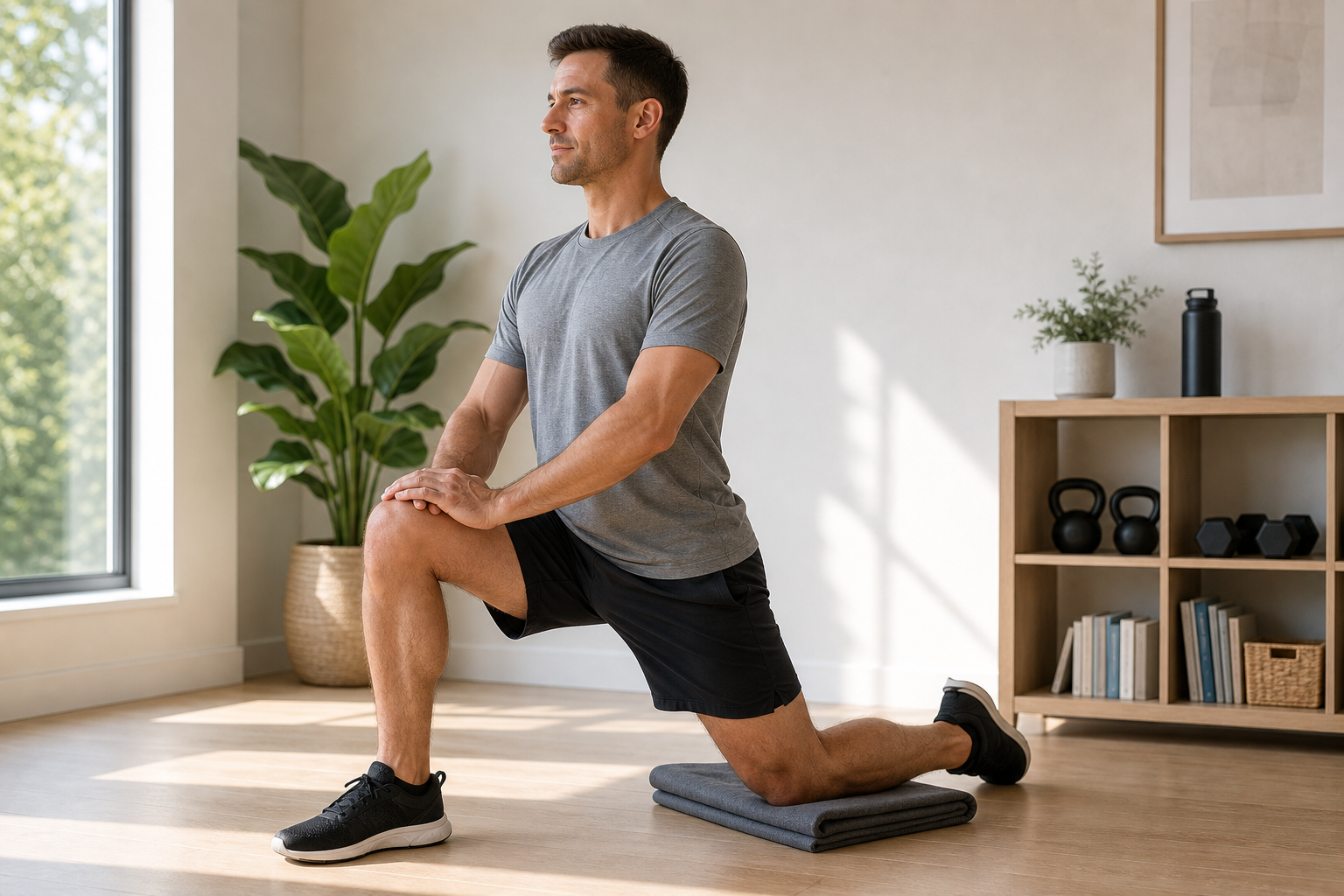
These five stretches target the hip flexors and surrounding muscles from multiple angles. Do them once or twice a day, holding each stretch for 30 to 45 seconds per side. Consistency matters far more than intensity, so stay within a comfortable range and don’t push into pain.
1. Kneeling Hip Flexor Stretch (the Classic)
Kneel on one knee with your other foot flat on the floor in front of you, knee at roughly 90 degrees. Gently push your hips forward until you feel a stretch in the front of the hip of your kneeling leg. Keep your torso upright and don’t let your front knee collapse inward.
To deepen the stretch, tuck your tailbone slightly under rather than arching your low back. A folded yoga mat or a kneeling pad under your knee makes this much more comfortable on hard floors.
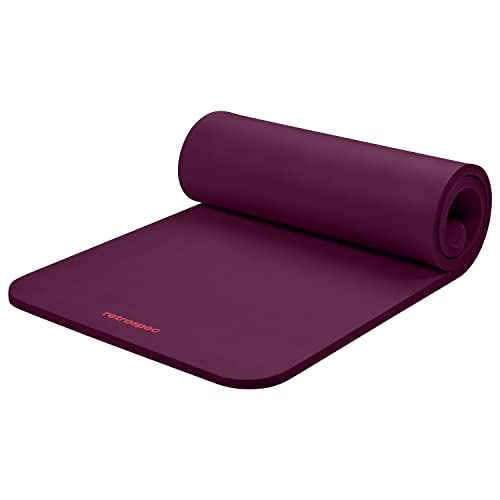
Yoga Mat with Extra Cushioning
A thicker mat protects your knees during floor-based stretches and makes daily practice much easier to stick with.
2. Standing Hip Flexor Stretch
If getting down to the floor is difficult, you can get a solid hip flexor stretch standing up. Stand tall, take a long step forward with one foot, and shift your weight slightly forward while keeping your back leg straight. You should feel a stretch through the front of the back hip. Hold a counter or wall for balance if needed.
This version is especially useful as a movement break during the day since you can do it right next to your desk.
3. Supine Psoas Stretch (Figure-4 Variation)
Lie on your back with both knees bent. Cross one ankle over the opposite thigh in a figure-4 shape, then gently let the crossed knee fall outward while keeping your lower back pressed into the floor. This targets the deeper psoas and piriformis muscles that often tighten alongside the hip flexors.
Hold for 30 to 45 seconds, then switch sides. This is a great one to do first thing in the morning before you even get out of bed.
4. Couch Stretch
This one looks a little awkward but it’s one of the most effective hip flexor stretches available. Place one knee on the floor right up against a couch or wall, with your shin resting vertically against it. Your other foot is flat on the floor in front. Slowly bring your torso upright. You’ll feel an intense stretch through the quad and hip flexor of the back leg.
Start conservatively. Even getting partway into this position is beneficial, and you can progress further over time as flexibility improves.
5. Hip Flexor Stretch with a Resistance Band or Strap
Lying on your back at the edge of a bed or table, let one leg hang off the side while keeping the other knee pulled into your chest. The hanging leg’s weight provides gentle traction on the hip flexor. You can loop a stretching strap with loops around the elevated knee for easier control.

Stretching Strap with Loops
A multi-loop stretching strap lets you hold stretches longer without gripping, which is especially helpful if hand or wrist strength is a concern.
Movement Breaks: The Missing Piece
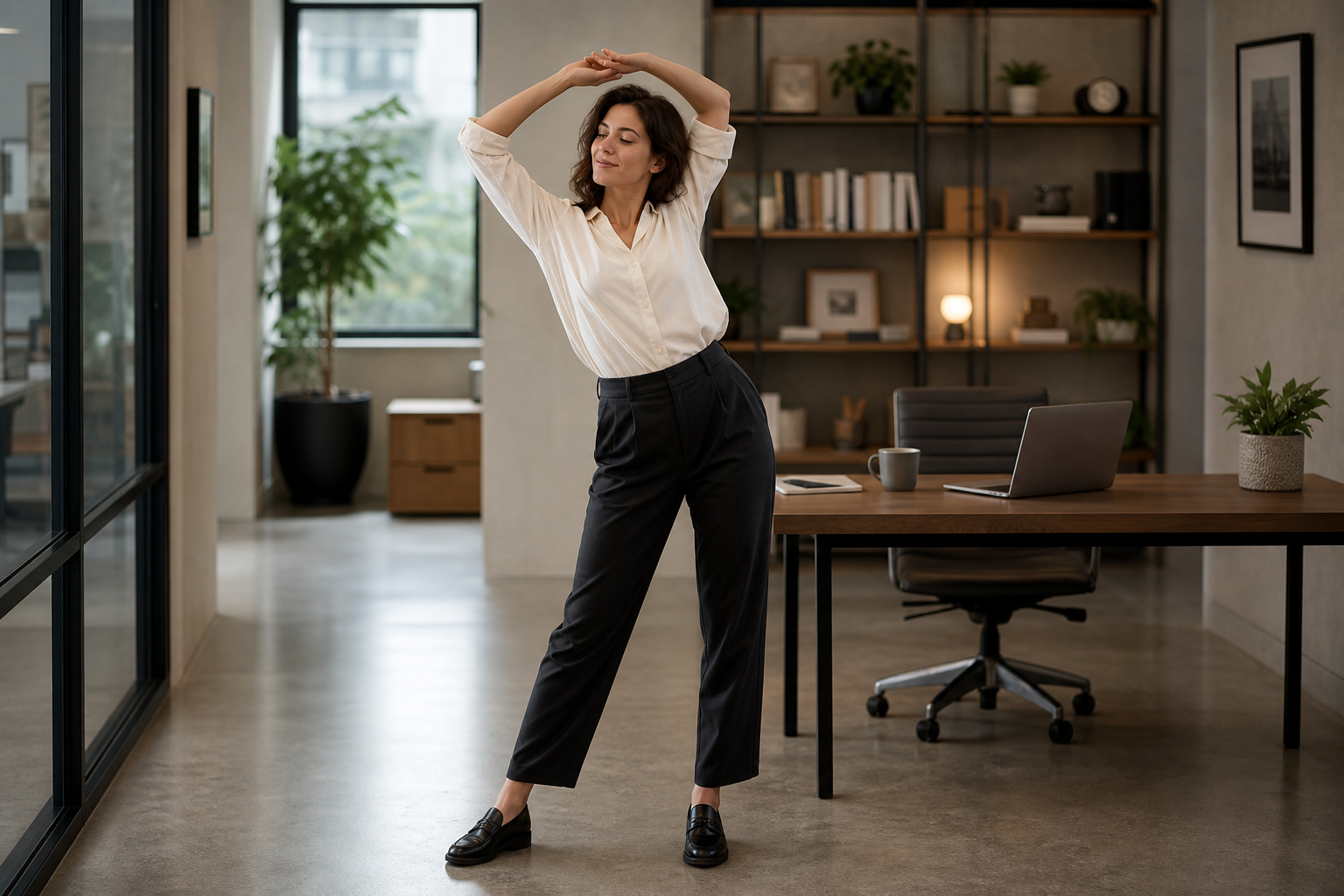
Stretching once a day helps, but it won’t fully counteract eight hours of uninterrupted sitting. The most effective approach is to interrupt your sitting throughout the day with short movement breaks every 30 to 60 minutes. Even standing up and walking to another room for two minutes helps reset the hip flexors.
Set a timer on your phone or use a fitness tracking app that sends movement reminders. Some people also find that switching between sitting and standing throughout the day reduces the cumulative tightness significantly. A simple standing desk converter can make that easy without replacing your whole desk setup.
A few easy movement-break options that specifically target the hips: march in place for 60 seconds, do 10 slow bodyweight squats, or take a two-minute walk. If you also deal with poor posture from sitting, pairing these hip stretches with the exercises in this posture correction guide gives you a much more complete daily routine.
Supporting Hip Health From the Inside
Flexibility work is most effective when your joints and connective tissue are well-nourished. If you haven’t looked into collagen supplements for joint health or the role that omega-3 fatty acids play in reducing joint inflammation, both are worth considering as part of your overall approach to hip comfort.
Also worth mentioning: if you’re recovering from a hip replacement or any recent hip surgery, please work with your physical therapist before starting this or any other stretching program. The post-hip replacement exercise guide on this site offers a safer starting point for that situation.
Frequently Asked Questions
How long does it take for tight hip flexors to loosen up?
Most people notice improvement within one to two weeks of daily stretching, especially if they also add movement breaks throughout the day. Significant flexibility gains typically take four to six weeks of consistent effort. If you’ve been very sedentary for years, give yourself at least six to eight weeks before judging results.
Can tight hip flexors cause knee or back pain?
Yes, and this is more common than people realize. Tight hip flexors pull the pelvis into an anterior tilt, which compresses the lumbar spine and can cause or worsen low back pain. They also affect how the quadriceps function, which can contribute to knee strain over time. Addressing hip flexor tightness often brings relief in both areas.
Should I stretch before or after sitting for a long period?
Both have value, but stretching after prolonged sitting tends to be more immediately effective because the muscles are already warmed up slightly and have been in a shortened position. A brief two-minute walk before you stretch helps increase blood flow to the tissues and makes the stretch more productive. Morning stretching (after a short warmup) is also excellent for starting the day with more mobility.
This article contains affiliate links. We may earn a small commission at no extra cost to you.