Lifting weights after 60 is one of the smartest things you can do for your health. It builds muscle, protects your bones, improves your balance, and keeps you independent longer. But here’s where a lot of older adults get tripped up: they either stay at the same weight forever because they’re afraid of getting hurt, or they push too hard too fast and end up sidelined for weeks. Neither approach works. What you need is a simple, sensible method for making progress without overdoing it.
That method is called progressive overload, and it’s not complicated. It just means gradually increasing the challenge you place on your muscles over time so they continue to adapt and grow stronger. This article breaks down exactly how to do that safely, with age-appropriate guidelines that respect your body’s recovery needs.
What Progressive Overload Actually Means
Your muscles get stronger by adapting to stress. When you lift a weight that challenges you, your muscle fibers experience tiny amounts of damage, and during recovery they rebuild slightly stronger than before. If you always lift the same weight, at some point your body adapts fully and stops improving. Progressive overload means you keep giving your body a slightly bigger challenge, just enough to trigger continued adaptation.
For people over 60, this doesn’t have to mean adding weight every single week. Overload can happen in several ways:
- Adding weight to the exercise
- Doing one more repetition at the same weight
- Doing one more set
- Slowing down the movement to increase muscle tension
- Reducing rest time between sets
Starting with reps and technique before jumping to heavier weights is usually the wisest approach after 60. Your connective tissue, tendons, and joints need more time to adapt than your muscles do, so going slowly protects you from the injuries that typically derail progress.
If you’re building a home setup and want equipment that makes small increases easy, this guide to budget-friendly home gym setups for seniors has practical ideas for getting started without overspending.
When to Add Weight: The Simple Rule

There’s one clear signal that tells you it’s time to increase your weight: you can complete all your planned sets and reps with good form and the last two reps of your final set feel only moderately hard, not a struggle.
A concrete example: if you’re doing three sets of 12 dumbbell curls and by your third set the 11th and 12th reps feel almost easy, you’re ready to go up. If those last reps have you grinding and your form is breaking down, you’re not ready yet.
A useful way to think about this is the Rate of Perceived Exertion (RPE) scale. On a scale of 1 to 10, your working sets should feel like a 6 or 7 when you’re maintaining a weight. When they drop to a 5, it’s time to progress. If they ever feel like a 9 or 10, you’ve gone too heavy.

Adjustable Dumbbells Light Weight
A good set of adjustable dumbbells lets you increase weight in small, precise increments without buying a full rack of individual weights.
Adjustable dumbbells are particularly useful for older adults because they let you move up in smaller steps than traditional fixed-weight dumbbells, which often jump by 5 pounds at a time. For many exercises after 60, a 2.5-pound increase is much more appropriate than a 5-pound jump.
How Much Weight to Add
The standard advice in most gyms is to add 5 pounds when you’re ready to progress. For younger lifters working with heavy loads, that might be fine. For adults over 60 working in a moderate weight range, a 5-pound jump can be a significant percentage increase and may be more than your joints and tendons can handle comfortably.
A conservative and effective guideline for older adults:
- Upper body exercises (curls, rows, presses): increase by 2 to 2.5 pounds
- Lower body exercises (squats, deadlifts, leg press): increase by 5 pounds
- Core and stabilizer exercises: move up only when form is perfect and the current load feels genuinely easy
Small plates, often called fractional plates, are worth having around for exactly this reason. They let you add as little as 1 pound to a barbell, which sounds tiny but adds up meaningfully over several months.
This connects directly to the 12-week progressive resistance training program on this site, which maps out specific week-by-week progressions you can follow without guessing.
Signs You’re Progressing Too Fast

This is the part most people skip, and it’s where injuries happen. Your body gives you clear warning signs when you’re adding weight too quickly. Learning to recognize them is just as important as knowing when to progress.
Joint Pain That Lingers
Muscle soreness after a hard workout is normal and typically fades within 24 to 48 hours. Joint pain is different. If your knees, shoulders, elbows, or hips ache during or after lifting, and especially if that pain sticks around for more than two days, you’ve likely gone up too fast. Drop back to your previous weight and stay there for another two to three weeks before trying again.
Your Form Breaks Down
Watch yourself in a mirror or record a short video on your phone. If you’re swinging the weight, arching your lower back excessively, or using momentum to get through reps, the weight is too heavy. Compromised form is how disc injuries, rotator cuff tears, and knee problems happen. Good form isn’t optional, it’s how you stay in the game long-term.
You’re Not Recovering Between Sessions
After 60, your body typically needs 48 to 72 hours to recover from a strength training session. If you’re still sore and fatigued two days after lifting, that’s a sign the total workload, including the weight, sets, and reps, is more than your body can currently handle. Recovery is where the gains actually happen, so protecting it matters.
Supporting your recovery through nutrition is just as important as the training itself. Getting enough protein after your workouts is critical for muscle repair, and these post-workout recovery meal ideas for seniors can help you build that habit. Likewise, knowing what to eat beforehand can improve how you perform in the gym, so check out this guide on pre-workout nutrition for senior athletes if that’s an area you haven’t thought much about.

Resistance Bands Set with Handles
Resistance bands are excellent for adding variety to your training and allow you to progress in smaller increments than most free weights.
Building a Sustainable Progression Plan
A practical approach for most adults over 60 is to commit to two or three strength training sessions per week and aim to progress on each exercise roughly every two to four weeks rather than every week. That pace feels slow, but it adds up to meaningful strength gains over a year without the injury risk of rushing.
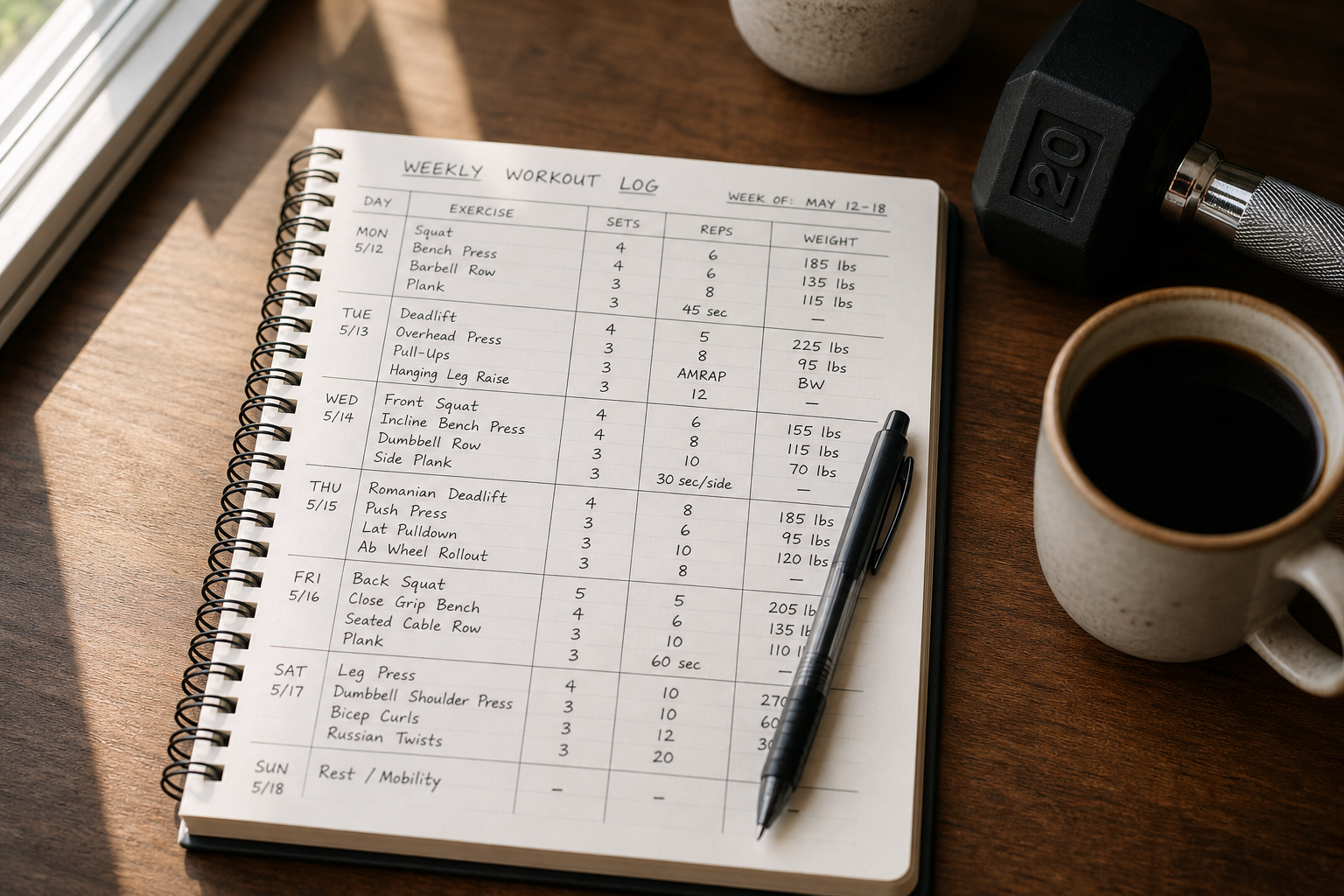
Keep a simple log. It doesn’t have to be fancy, a small notebook or a notes app on your phone works fine. Write down what you lifted, how many reps, and how it felt. When you look back after a few months, you’ll have clear evidence of your progress, and you’ll know exactly when you bumped up a weight and whether that jump worked out well.
If joint health is a concern for you, supporting your body nutritionally can help. Research on omega-3 supplements for joint health and vitamin D for bone and muscle function shows both can play a meaningful role in how well your body handles the demands of strength training.
Frequently Asked Questions
How often should someone over 60 increase their weights?
Every two to four weeks is a realistic and safe target for most older adults. Some exercises and some people will progress faster, and that’s fine. The key is that progression should always be driven by your performance, not by a schedule. If you hit all your reps with good form and it feels manageable, you’re ready. If you’re struggling, wait.
Is it okay to stay at the same weight for a long time?
Yes, absolutely. Maintaining strength is a legitimate goal, especially during periods of stress, illness, or recovery from an injury. Staying at a comfortable weight while focusing on form, consistency, and recovery is far better than pushing up too fast and getting hurt. Progress isn’t always linear, and that’s completely normal after 60.
What if I have arthritis or joint problems?
Strength training can actually help arthritis by strengthening the muscles that support your joints. The key is to choose joint-friendly exercises, keep weights in a moderate range, and pay close attention to how your joints feel after each session. You may also find that certain exercises work much better for you than others. For more on exercising safely with joint conditions, this guide to arthritis-friendly exercises is a good starting point.
This article contains affiliate links. We may earn a small commission at no extra cost to you.