Your calves do a lot of quiet, unglamorous work every day. Every time you stand up, walk across a room, or climb a step, those muscles at the back of your lower legs are contracting and releasing to keep you moving and upright. But here’s what most people don’t realize: the calf muscles also act as a kind of secondary heart for your legs, pumping blood back upward against gravity. When they get weak or stop moving regularly, circulation suffers, swelling creeps in, and your balance starts to slip.
Calf raises are one of the simplest, most accessible exercises you can add to your routine. You don’t need equipment, a gym membership, or a lot of time. Whether you’re recovering from surgery, managing a chronic condition, or just trying to stay steady on your feet, this guide will show you exactly how to do calf raises safely and build up gradually over time.
Why the Calf Muscle Pump Matters for Leg Health
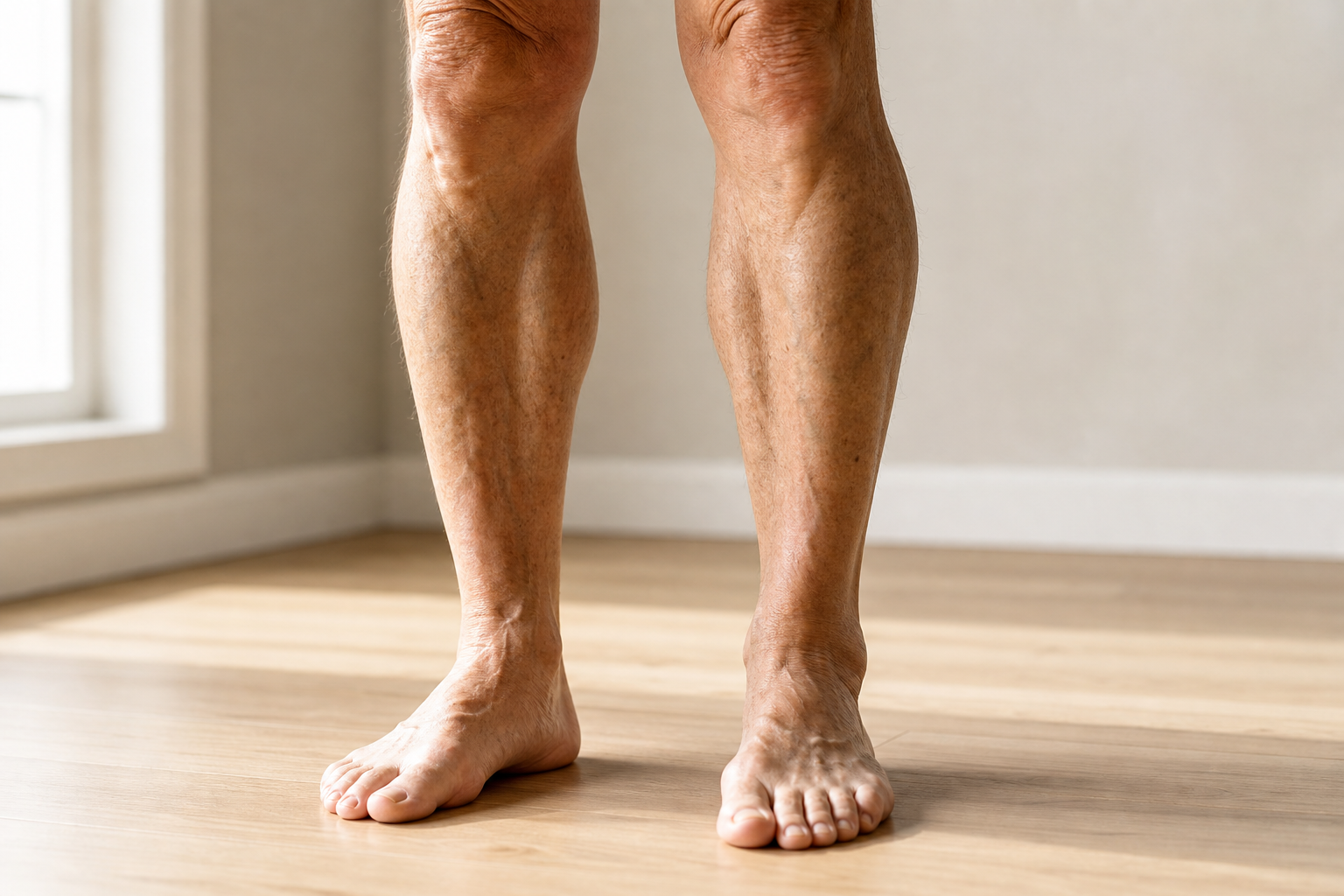
Blood flows down to your legs with help from gravity, but getting it back up to your heart is a bigger challenge. Your veins rely on a system of one-way valves and the squeezing action of surrounding muscles to push blood upward. The calf muscles are the most important part of that system in the lower body.
When the gastrocnemius and soleus contract during a calf raise, they compress the deep veins in the lower leg and force blood upward. This is why long periods of sitting or standing still lead to pooling, swelling, and that heavy, achy feeling in your legs. Regular calf activation keeps the pump working.
Beyond circulation, strong calves play a direct role in balance and fall prevention. They help you make tiny postural corrections when you’re standing or walking on uneven surfaces. Research consistently links lower-leg weakness to higher fall risk in older adults. Strengthening this area is one of the most practical things you can do for long-term stability. If you’re also working on wider balance challenges, pairing calf raises with vertigo and balance exercises covers even more ground.
Watch: Calf Raises for Seniors
Before jumping into the step-by-step instructions, take a few minutes to watch this video demonstration. Seeing the movement in action makes it much easier to get your form right from the start.
Two Versions: Seated and Supported Standing
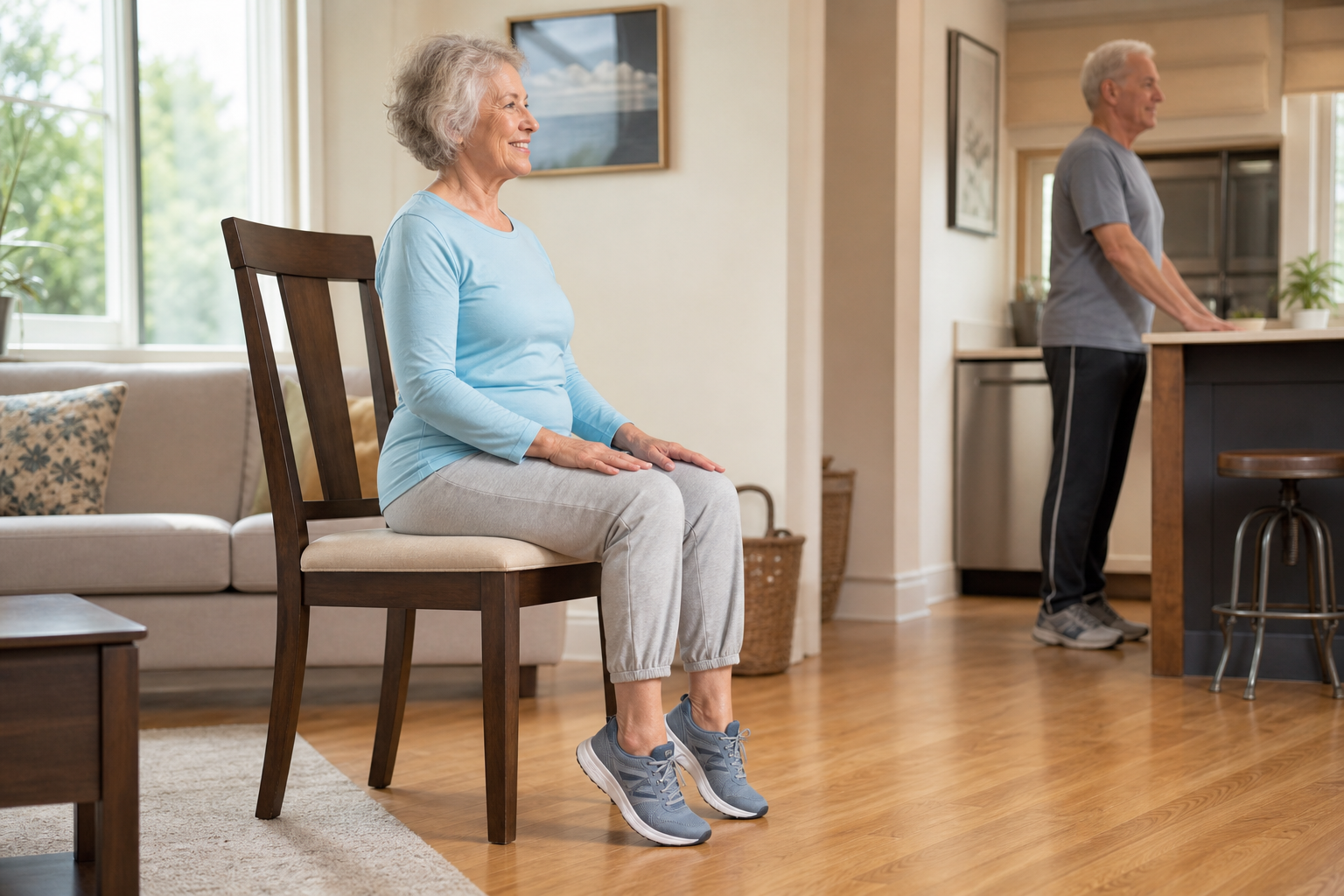
There’s no single “correct” way to do a calf raise. Your starting point depends on your current strength, balance, and any conditions that affect your lower legs or feet. Both versions below deliver real benefits. Start with whichever feels safest and progress from there.
Seated Calf Raises
This version is ideal if you’re new to the exercise, if you have balance concerns, or if you’re recovering from a procedure. Sitting removes the fall risk entirely and lets you focus purely on the movement.
- Sit near the front edge of a sturdy chair with your feet flat on the floor, hip-width apart.
- Keep your back straight and your hands resting on your thighs or the sides of the chair.
- Slowly raise both heels off the floor as high as comfortable, coming up onto the balls of your feet.
- Hold the top position for one to two seconds. You should feel a firm squeeze in the back of your lower legs.
- Lower your heels back to the floor slowly and with control. Don’t let them drop.
- Aim for 10 to 15 repetitions per set, two to three sets total.
To add a small challenge, place a light weight (like a water bottle or a light dumbbell) across your thighs. This increases resistance without compromising your safety.
Supported Standing Calf Raises
Once seated raises feel easy, move to the standing version near a counter or sturdy surface. The support is there for light touch balance only, not for bearing your weight.
- Stand facing your kitchen counter, a sturdy table, or a high-back chair. Place your fingertips lightly on the surface. Think of it as resting your hands there for confidence rather than gripping for support.
- Stand with feet hip-width apart and a very slight bend in your knees, not locked out.
- Slowly rise up onto the balls of both feet. Aim for a smooth, controlled lift rather than a fast bounce.
- Pause for one to two seconds at the top, then lower yourself back down with the same controlled pace.
- Start with 10 repetitions per set and work up to 15 to 20 as you get stronger.
If standing on both feet becomes easy, you can progress to a single-leg version. Hold the counter with one hand, lift one foot slightly off the ground, and perform the raise on the other leg. This significantly increases the challenge and builds single-leg stability, which is exactly what you use with every step you take.
Safe Progression Over Time
Progress in calf training doesn’t mean doing more sets indefinitely. It means gradually making the exercise harder in a way your body can handle. A simple 4-week progression looks like this:
- Week 1: Seated raises, 2 sets of 10. Focus on slow, controlled movement and full range of motion.
- Week 2: Seated raises, 3 sets of 12 to 15. Add a light resistance if comfortable.
- Week 3: Move to supported standing raises, 2 sets of 10. Take your time adjusting to the standing position.
- Week 4: Standing raises, 3 sets of 15. Begin experimenting with a brief single-leg hold at the top of each rep.
Listen to your body throughout. Mild muscle fatigue and a slight burn in the calf are normal and expected. Sharp pain in the Achilles tendon, ankle joint, or the arch of your foot is a signal to stop and check in with your doctor or physical therapist.
If you’re managing neuropathy in your feet or legs, be especially mindful of foot position and pressure. The neuropathy-safe exercise guide on this site has specific guidance for exercising when sensation is reduced.
For those who want to see how calf training fits into a longer-term strength plan, the 12-week progressive resistance training program is worth bookmarking. Calf raises pair well with that kind of structured progression.
Supporting Your Results With Recovery and Nutrition
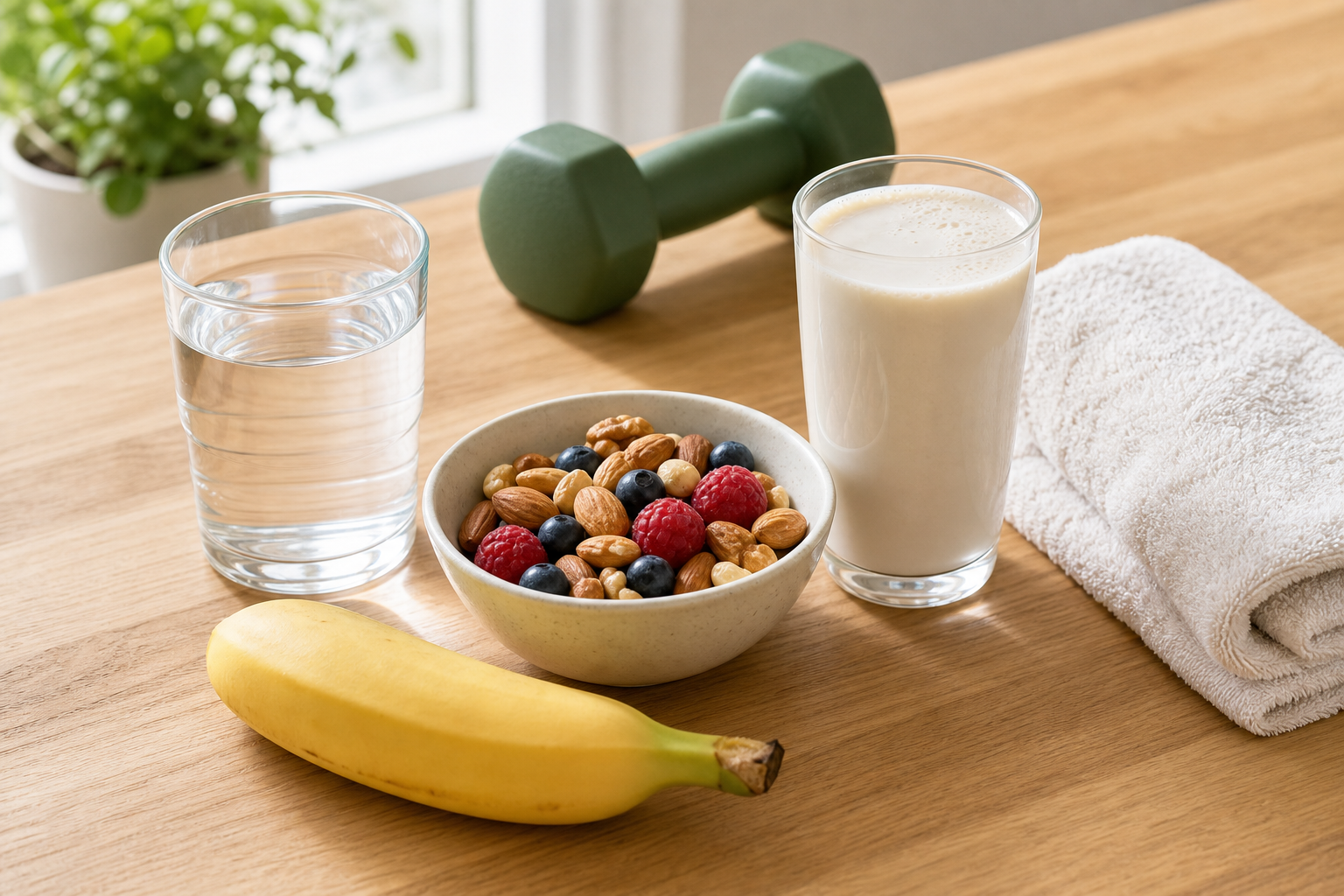
Exercise creates the stimulus for change, but your muscles actually rebuild and strengthen during recovery. Getting enough protein is non-negotiable for this process, especially after your 60s when muscle protein synthesis naturally slows. A light protein-rich snack within an hour or two after exercise helps kickstart repair.
For practical ideas on what to eat after a session, the article on post-workout recovery meals for seniors gives specific, realistic options that don’t require cooking a full meal.
Bone and muscle health also benefit from adequate vitamin D, which many older adults are low in without knowing it. Vitamin D for senior bone and muscle health explains what levels to aim for and how supplementation fits in.
Wearing compression socks during or after your calf raise routine can also support circulation, especially if you deal with swelling at the end of the day. The guide to the best compression socks for active seniors breaks down the options clearly.
Frequently Asked Questions
How often should seniors do calf raises?
Three to five times per week works well for most people. Your calves recover quickly because they’re used to repetitive daily movement, so they generally don’t need as much rest time as larger muscle groups. If you’re doing them daily, keep the intensity moderate and watch for any Achilles tendon soreness, which is a sign you need more recovery time.
Can calf raises help with swollen ankles and feet?
Yes, and quite effectively. The pumping action of the calf muscles directly assists venous return, meaning blood and fluid get moved back up from the lower legs more efficiently. Many people notice a reduction in end-of-day swelling when they incorporate regular calf raises into their routine. If swelling is significant or sudden, always get it evaluated medically before relying on exercise alone.
What if I feel pain or cramping during calf raises?
Muscle cramping during or after calf raises is common, especially early on. It’s often linked to dehydration or low magnesium and potassium levels. Make sure you’re drinking enough water and eating a varied diet. If cramping is frequent, talk to your doctor. Sharp or persistent pain in the Achilles tendon or heel is different and warrants a pause and medical evaluation before continuing.