A stability ball might look like a simple piece of gym equipment, but for older adults it’s one of the most versatile tools you can add to your home workout space. It challenges your core without the strain of floor crunches, improves your posture, and trains the small stabilizing muscles that keep you upright and confident on your feet. The trick is choosing the right one, because not all stability balls are created equal, and the wrong size or a low-quality construction can do more harm than good.
This guide walks you through everything you need to know before buying: how to size a ball to your height, what anti-burst ratings actually mean, when a base ring makes sense, and which balls are worth your money. You’ll also find a handful of gentle starter exercises to get you moving safely from day one. If you’ve been looking for a way to work on balance and stability at home without complicated equipment, a good stability ball is one of the best places to start.
Why Stability Balls Work So Well for Seniors
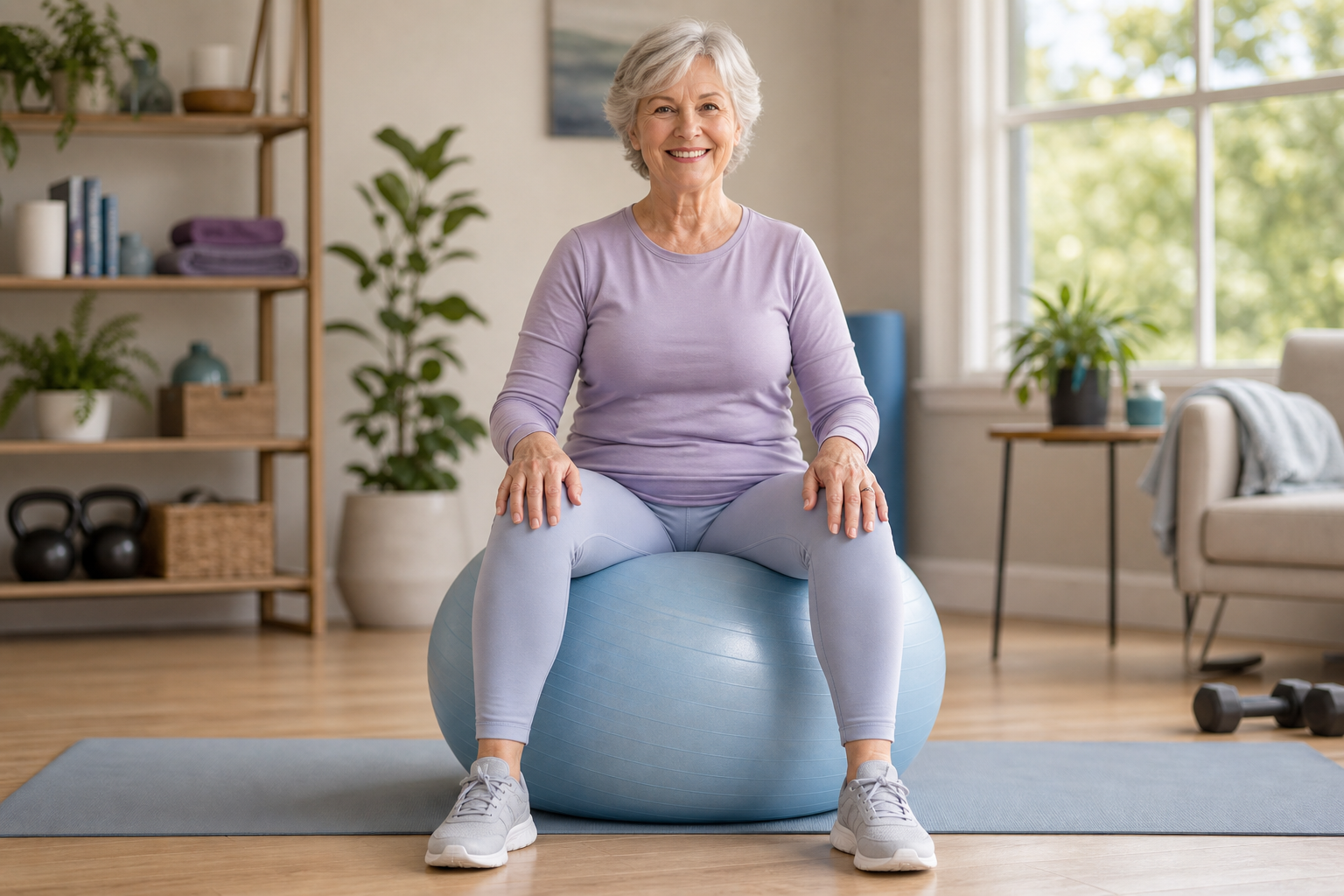
When you sit or exercise on an unstable surface, your body has to recruit deep core muscles, including the transverse abdominis and the multifidus muscles along your spine, just to keep you balanced. These are the muscles that protect your back, support your hips, and keep you steady during everyday movements like reaching, bending, and walking.
Standard floor exercises tend to skip right over those stabilizers. A stability ball wakes them up. Even just sitting on one for short periods while you watch TV or read can begin to improve your posture and core endurance over time.
For seniors managing conditions like arthritis or working through forward head posture and slouching, the low-impact nature of ball exercises is a major advantage. There’s no jarring impact on your joints, and you can control the intensity completely.
How to Choose the Right Size Ball
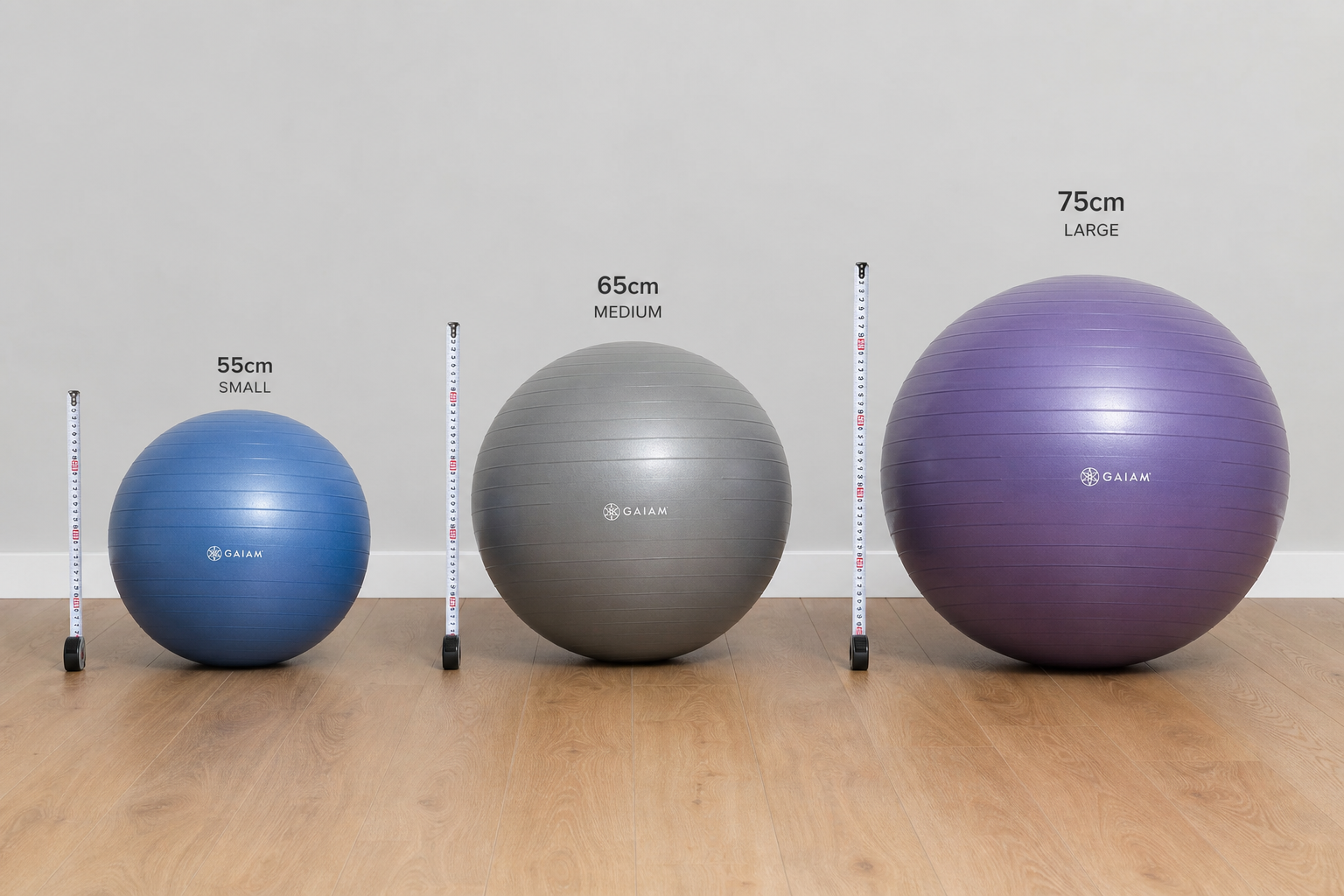
Sizing is the single most important buying decision you’ll make. A ball that’s too small forces your hips below your knees when seated, which strains your lower back. A ball that’s too large puts your thighs at an awkward upward angle and reduces your stability. You want your hips and knees at approximately a 90-degree angle when you sit on a properly inflated ball.
General Height-to-Ball-Size Chart
- Under 5’0″: 45 cm ball
- 5’0″ to 5’5″: 55 cm ball
- 5’6″ to 6’0″: 65 cm ball
- 6’1″ and above: 75 cm ball
Keep in mind that these are starting points. If you have longer legs relative to your torso, you may want to size up. If you have shorter legs, size down. When in doubt, buy a ball that comes with good inflation instructions, because under-inflating a larger ball by an inch or two is an easy way to fine-tune the fit.
Inflation Tips That Most People Ignore
Most stability balls come with a small hand pump and instructions, but few people follow them carefully. After inflating to the recommended diameter, let the ball sit for 24 hours before re-inflating. The material stretches during that first inflation, and the ball will lose some firmness. A slightly softer ball is actually more comfortable for beginners and easier on your joints.
Avoid over-inflating. A rock-hard ball dramatically increases your fall risk. You should be able to press your thumb in about half an inch when the ball is correctly inflated.
Understanding Anti-Burst Ratings
Anti-burst, also called slow-deflate technology, is a non-negotiable feature for senior users. A standard ball that punctures can collapse instantly, sending you to the floor. An anti-burst ball deflates gradually when punctured, giving you time to react and get off safely.
Look for balls rated to hold at least 300 lbs. Many quality balls are rated to 600 lbs or more, which isn’t just about weight capacity. Higher ratings generally indicate thicker, more durable PVC material that resists punctures from rough carpet, pet claws, or the occasional dropped object.
The material thickness matters too. Better balls use PVC that’s at least 2 mm thick. Cheaper balls sometimes use thinner material that passes a static weight test but fails under the dynamic stress of exercise. If a product listing doesn’t mention anti-burst specifically, skip it.

Trideer Extra Thick Yoga Ball
Features true anti-burst construction rated to 2200 lbs with thick PVC, comes in multiple sizes, and includes a quick-inflate pump.
The Trideer is a popular choice among older adults and physical therapists for good reason. It’s consistently cited for its thick walls and reliable slow-deflate behavior. It’s available in 45, 55, 65, and 75 cm options, so you can match it precisely to your height.
Base Rings: Who Actually Needs One
A stability ball base ring, sometimes called a ball holder or exercise ball cradle, is a simple ring that keeps the ball from rolling away when you’re not using it or when you’re just sitting down. For seniors who are new to ball exercises or who have balance concerns, a base ring can make a significant difference in confidence and safety.
You don’t use the ring during most exercises. Its main job is to stabilize the ball while you get seated or while it sits between exercises. Some rings also function as a slight stability aid during certain seated movements, which can be helpful if you’re returning to exercise after surgery. If you’ve recently gone through a hip replacement or knee replacement, starting with a base ring is a smart precaution.
Look for a ring made from non-slip rubber or foam that matches the diameter of your ball. Most rings are adjustable or come in two or three sizes. Make sure it sits flat on the floor without rocking. A wobbly ring defeats the purpose.

URBNFit Exercise Ball with Base Ring
Comes as a set with a matching non-slip base ring, anti-burst ball, and pump, making it an excellent all-in-one option for beginners.
Buying the ball and ring as a matched set is usually the better move. Mix-and-match combinations sometimes result in a ring that’s too small to cradle the ball correctly, which can cause tipping.
Watch: Stability Ball Exercises for Seniors
Before jumping into the exercises below, take a few minutes to watch this helpful video. It demonstrates proper form and gives you a visual reference for the movements, which is especially useful if you’ve never used a stability ball before.
5 Gentle Starter Exercises
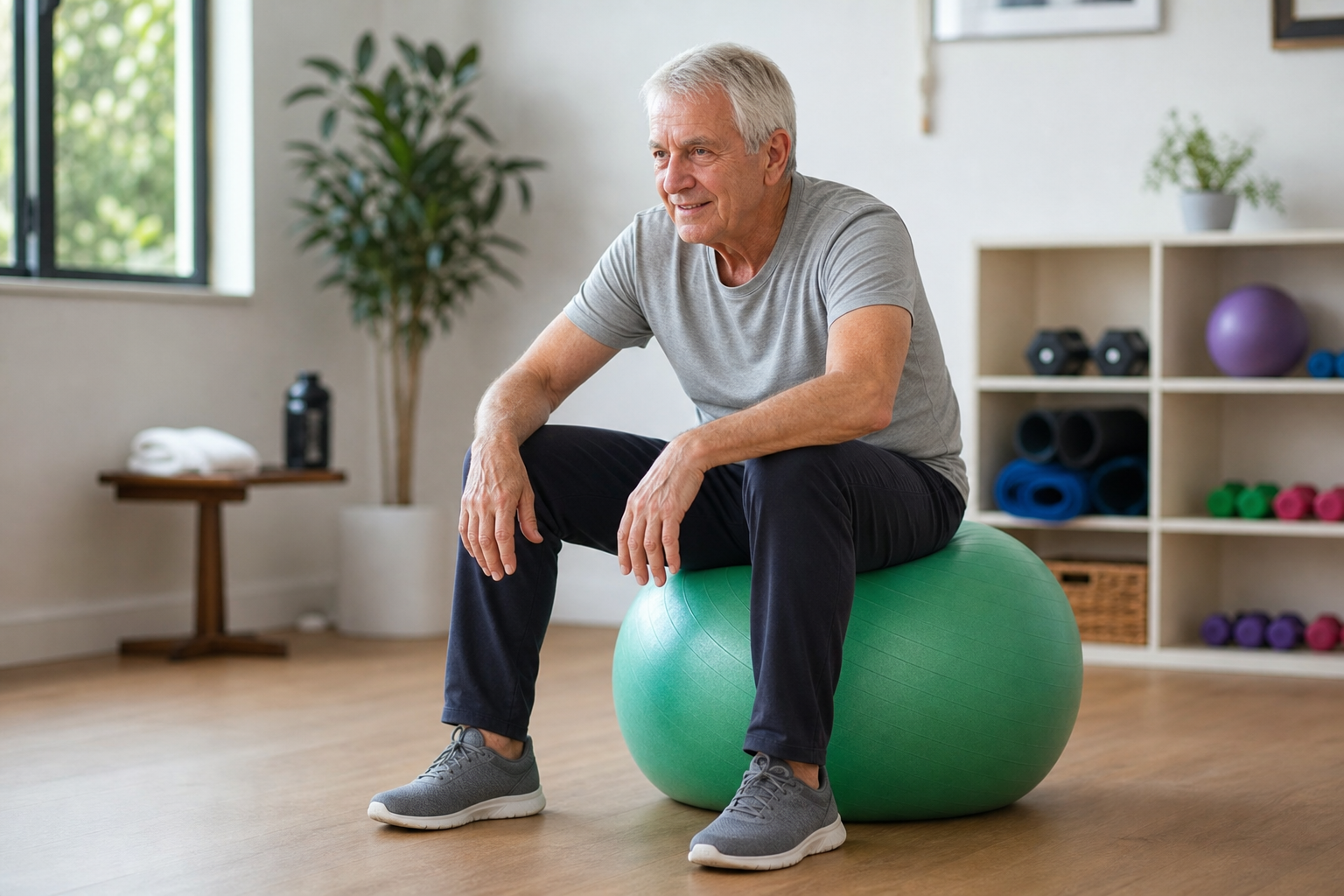
These five exercises are designed for beginners. You don’t need to do all of them in your first session. Start with one or two, get comfortable, and build from there. Always position the ball near a wall or sturdy chair so you can steady yourself if needed.
1. Seated Ball Bounce
Sit on the center of the ball with your feet flat on the floor, hip-width apart. Gently bounce up and down using your legs, keeping your spine tall. This activates your core and begins training your balance response. Do 30 seconds, rest, and repeat.
2. Seated Marching
From the same seated position, slowly lift one knee toward the ceiling, hold for two seconds, lower it, then repeat on the other side. This improves hip flexor strength and challenges your core stability. Aim for 10 repetitions on each side.
3. Wall Ball Squat
Place the ball between your lower back and a wall. Stand with feet shoulder-width apart and slightly forward. Slowly bend your knees to lower yourself as if sitting into a chair, letting the ball roll up your back. Stop when your thighs are parallel to the floor or as low as is comfortable. This is excellent for building leg strength without stressing your knees. Start with 8 to 10 repetitions.
4. Seated Side Lean
Sitting tall on the ball, place your hands on your thighs. Slowly tilt your body to the right, letting your right hip drop slightly, then return to center. Repeat to the left. This targets your obliques and lateral stabilizers. Move slowly and with control. Do 5 to 8 repetitions per side.
5. Chest Opener Stretch
Sit on the ball and slowly walk your feet forward until the ball supports your mid and upper back. Let your arms fall open to the sides and breathe deeply. This is a wonderful stretch for the chest and shoulders, especially helpful if you spend time at a computer. Hold for 20 to 30 seconds.
As you grow stronger, you can progress to more challenging variations. Pairing your ball work with other home equipment like a foam roller for muscle recovery can make a well-rounded routine. And if you’re building out a larger home fitness space, check out the guide to a budget-friendly home gym setup for more ideas.
Other Stability Balls Worth Considering
Beyond the two products highlighted above, a few other options consistently get strong reviews from older adult users and physical therapists.
The Live Pro Stability Ball is a mid-range option that comes in a wide range of sizes and colors, with a solid anti-burst rating and a textured surface that helps keep you from sliding. The texture detail is genuinely useful, especially if you work out in shorts or light clothing.
For anyone looking for a premium option with extra thickness, the Gaiam Total Body Balance Ball Kit includes a base ring, resistance bands, and a workout guide. It’s a solid all-in-one package if you want to start a full routine without buying separate accessories.

Live Pro Anti-Burst Exercise Ball
A consistently well-reviewed mid-range ball with a textured non-slip surface, wide size range, and strong anti-burst PVC construction.
You can also browse a broader selection of anti-burst stability balls on Amazon to compare ratings and current availability. Filter by customer review score and look specifically for products that mention slow-deflate technology in the product description.
Supporting Your Body Before and After Ball Workouts
Even gentle core and balance work puts demand on your muscles, joints, and connective tissue. What you eat around your workouts matters more than most people realize. A small, protein-rich snack before exercising helps fuel your muscles, and eating well afterward helps them recover. The guide to post-workout recovery meals for seniors has practical, easy ideas worth bookmarking.
If you’re working on balance and stability as part of managing a specific condition, you may also find the neuropathy-safe exercises guide helpful, particularly if foot or leg numbness affects your sense of where your body is in space.
Frequently Asked Questions
Can I use a stability ball if I have osteoporosis?
Yes, with some modifications. Avoid exercises that involve forward flexion of the spine, such as crunching over the ball, since those movements can increase fracture risk in the vertebrae. Focus instead on seated balance work, gentle back extensions, and wall squats. Always check with your doctor or physical therapist first, and pair your exercise plan with the advice in this osteoporosis exercise plan.
How long should I sit on a stability ball each day?
Start with 10 to 15 minutes at a time if you plan to use it as a chair replacement. Sitting too long without rest can fatigue your core muscles in a way that actually worsens posture rather than improving it. Build up gradually over several weeks. For active exercise sessions, 15 to 20 minutes of focused ball work is plenty for most seniors starting out.
How often should I replace my stability ball?
A quality anti-burst ball used for home workouts should last two to five years with proper care. Check it monthly for signs of material degradation, small cracks, or areas that feel softer than the rest. Keep it away from sharp edges and prolonged direct sunlight, which breaks down PVC over time. If the ball no longer holds its shape properly after inflation, it’s time to replace it.
What’s the difference between a stability ball and a balance ball chair?
A balance ball chair is a stability ball mounted in a frame with a backrest and sometimes wheels. It offers more support than a bare ball but provides less core activation because the frame limits movement. For fitness purposes, a standard stability ball with an optional base ring gives you more versatility. Balance ball chairs can be a reasonable option for people with severe balance impairments who want some postural benefit while seated at a desk.
This article contains affiliate links. We may earn a small commission at no extra cost to you.