Foam rolling has become one of the most recommended recovery tools in fitness circles, and for good reason. It helps loosen tight muscles, improve circulation, and reduce soreness after exercise. But here’s what most guides won’t tell you: the standard firm rollers you see at the gym are often too aggressive for older adults. Using one can leave you bruised, discouraged, or even injured if your muscles and connective tissue are more sensitive than they were at 35.
If you’re over 60 and looking to add foam rolling to your recovery routine, the key is starting with the right density roller and learning techniques that feel therapeutic rather than punishing. This guide covers exactly that, with specific product picks and gentle rolling methods for calves, thighs, and your back.
Why Density Matters More Than You Think
Foam rollers come in three general densities: soft, medium, and firm. Most budget rollers sold in big-box stores lean toward firm. They look fine, but rolling your IT band or calf on a hard roller when you’re not used to it can cause more inflammation than it relieves.
For seniors, soft to medium density rollers are almost always the better starting point. They provide enough pressure to work into the muscle tissue without causing bruising or excessive soreness afterward. If you’ve been sedentary for a while, have thinner skin, or are managing conditions like fibromyalgia or arthritis, soft density is non-negotiable.
You can always graduate to a firmer roller over time as your body adapts. Start gentle and progress from there.
Best Foam Rollers for Older Adults
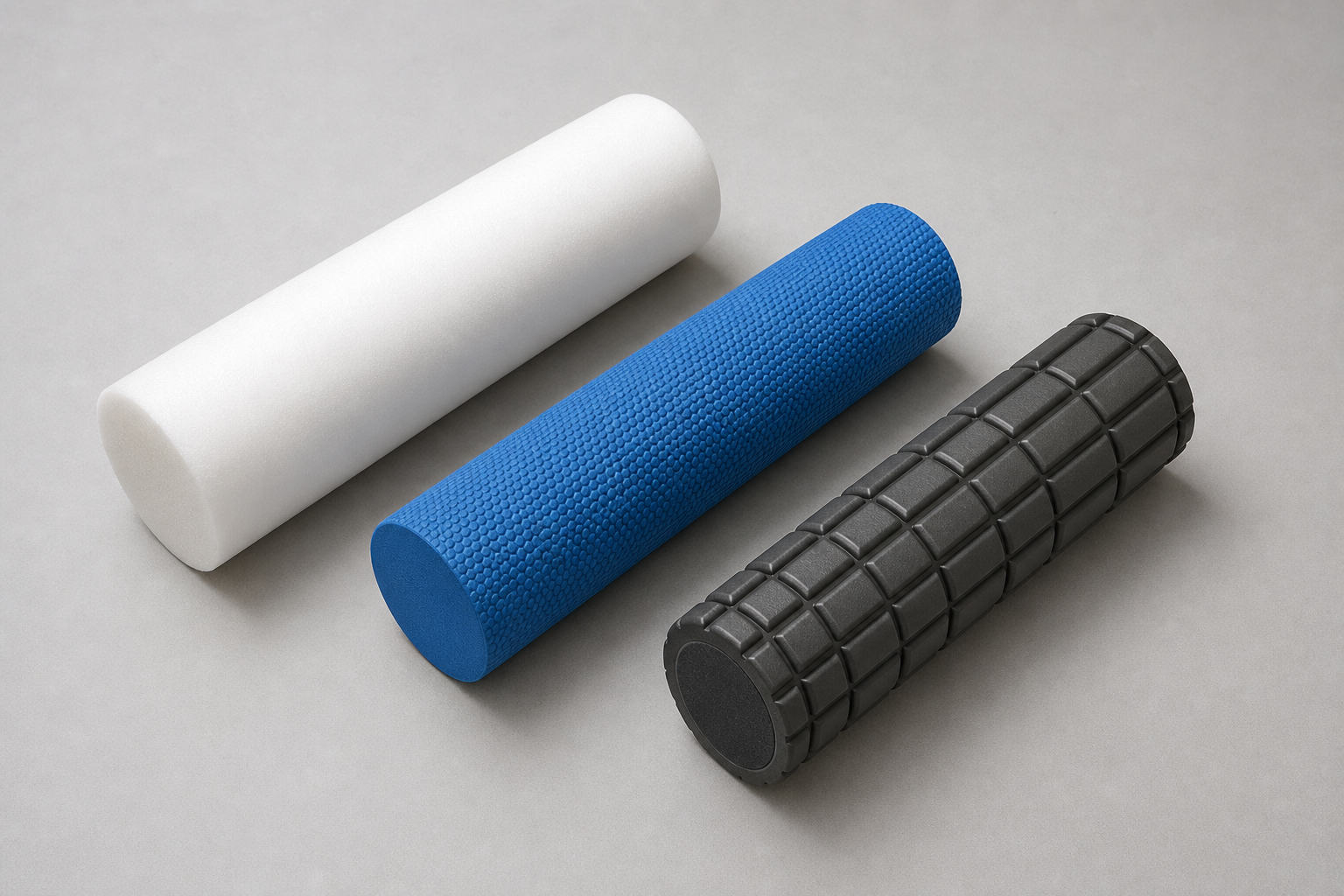
There are a lot of options out there, but not all are created equal for senior users. Below are the types and specific rollers worth your attention.
Best Overall: A Soft EVA Foam Roller
EVA foam rollers (ethylene-vinyl acetate) are softer and more forgiving than the dense polyethylene versions. A standard 12-inch or 18-inch EVA roller in a low-density formulation gives you the coverage you need for calves and thighs without the aggressive pressure of a traditional gym roller.
Look for one that’s at least 6 inches in diameter so it stays stable under your body weight. An 18-inch length is easier to control than a 36-inch version when you’re just getting started.

Soft EVA Foam Roller for Seniors
A low-density EVA roller is the safest starting point for seniors who are new to foam rolling or who have sensitive muscles and joints.
After you’ve been rolling consistently for a few weeks and your muscles feel more responsive, you can experiment with a medium-density roller for deeper work on larger muscle groups like the quads.
Best for Back Rolling: A Smooth Grid-Style Roller
Grid rollers have a textured surface that mimics the feel of a massage therapist’s fingers. For the back specifically, a smooth grid roller in medium density works well because the texture helps target specific areas along the spine without requiring you to apply as much body weight. This is particularly helpful if you have limited core strength or find it hard to control pressure when lying on your back.
A 13-inch or 26-inch grid roller from brands like TriggerPoint are well-regarded. The TriggerPoint GRID 1.0 (13-inch) is one of the most commonly recommended rollers for seniors who want a bit more surface variation without going firm.

TriggerPoint GRID Foam Roller
The GRID’s multi-density surface and medium firmness make it a smart step up for seniors who’ve outgrown a basic soft roller but don’t need an aggressively firm one.
Before you get started with any roller, watching a demonstration can make a big difference in technique. Here’s a helpful video that walks through foam rolling basics in a way that’s easy to follow:
Best for Calves: A Smaller Roller or Massage Stick
Full-length foam rollers can be awkward for calf work because of the angle required to get on the floor and back up safely. A compact 12-inch soft roller or a handheld massage stick lets you work the calves while seated in a chair, which is much safer and more comfortable for many older adults.
A massage stick roller is a good alternative to the traditional floor roller for this reason. You simply roll it up and down your calf while seated, controlling pressure with your own hands.
Gentle Foam Rolling Techniques for Seniors
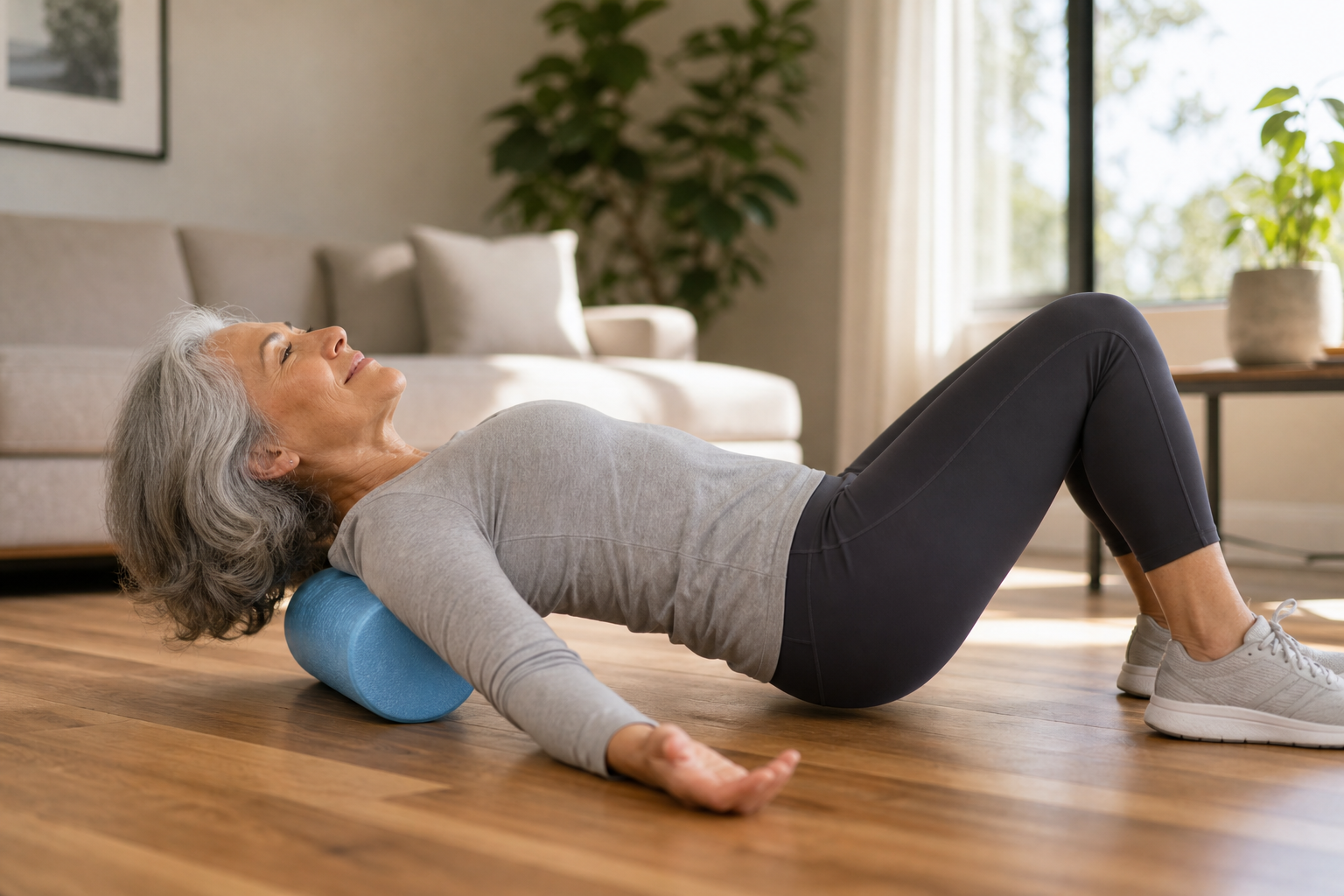
Good technique is just as important as choosing the right roller. Rolling too fast, staying in one spot too long, or rolling directly over a joint can cause irritation rather than relief.
Calves
Sit on the floor with the roller under one calf and your hands on the floor behind you for support. Slowly roll from just above the ankle up to just below the knee. Pause on any tender spots for about 20 to 30 seconds, then continue. Keep your foot relaxed and pointed forward.
If getting up and down from the floor is a concern, use a seated massage roller stick as described above. It gives you similar benefits without the floor work.
Thighs and Quads
For the front of the thighs, lie face down with the roller under your quads, just above your knees. Use your forearms to support your upper body and slowly shift your weight forward and back so the roller travels from above the knee to just below the hip. Keep your core gently engaged and avoid collapsing your lower back.
For the IT band (outer thigh), roll on your side from the hip down toward the knee. This area tends to be quite sensitive, so use less of your body weight by keeping your bottom leg on the floor as a kickstand. Go slowly and pause on tight spots rather than grinding back and forth rapidly.
Upper and Mid Back
Place the roller horizontally across your mid-back and lean back over it with your hands supporting your head. Never roll the lower back, as this can compress the lumbar spine and cause strain.
Roll slowly from the mid-back up toward the shoulder blades. Keep your hips on the floor or slightly lifted. Pause where you feel tension and take a few slow breaths to help the area release. If rolling your back causes any sharp pain or you’re managing sciatica or disc issues, check with your doctor before continuing.
How to Roll Safely Without Overdoing It

Less is more when you’re starting out. Many beginners make the mistake of rolling every muscle every day with too much pressure, which leads to soreness that discourages them from continuing.
- Limit sessions to 10 to 15 minutes when you’re just getting started.
- Never roll directly on a joint, a bone, or an area with acute pain or swelling.
- Roll slowly. About one inch per second is a good pace. Fast rolling doesn’t work the tissue the way slow, sustained pressure does.
- Breathe through it. If you’re holding your breath because the pressure is too much, ease up.
- Allow recovery time. Rolling two to three times per week is plenty for most older adults. Daily rolling isn’t necessary and can leave muscles feeling overworked.
Foam rolling works best as part of a broader recovery strategy. Pairing it with good nutrition plays a real role in how your muscles feel afterward. A solid meal with protein and anti-inflammatory foods within an hour or two of your workout can make a noticeable difference. Our guide to post-workout recovery meals for seniors has specific ideas that complement your rolling routine. And if you’re interested in additional recovery support, our article on collagen supplements for joint and skin health covers one of the more evidence-backed options for older adults dealing with joint stiffness.
Soft Foam Roller for Beginners
If you want a simple, budget-friendly entry point with low density and easy handling, a beginner-specific soft foam roller is a reliable first purchase.
If you’re building out a home recovery setup alongside your roller, it’s worth browsing our budget-friendly home gym setup guide for seniors for other practical tools that don’t require a lot of space or expense.
Frequently Asked Questions
Is foam rolling safe if I have osteoporosis?
It can be, but with important precautions. Avoid rolling directly on the spine or any area with known fractures or low bone density. Stick to soft-density rollers and focus on the muscles around major joints rather than applying pressure near bones. Always get clearance from your doctor first, and review our osteoporosis exercise plan for more context on exercising safely with this condition.
How long should I foam roll each session?
For older adults, 10 to 15 minutes per session is a reasonable target. Spend about one to two minutes on each major muscle group, pausing on any tender spots. More time doesn’t mean more benefit, and overdoing it can leave you sore and stiff rather than loose and recovered.
Should I foam roll before or after exercise?
After exercise is generally the better time for older adults. Rolling after a workout helps flush out metabolic waste from the muscles and supports the recovery process. Light rolling before exercise can work as part of a warm-up, but keep the pre-workout session brief (five minutes or less) and focus on large muscle groups like the quads and calves rather than sensitive areas.
This article contains affiliate links. We may earn a small commission at no extra cost to you.