If you’ve seen those “10-second test” videos floating around social media promising to predict how long you’ll live, you’ve probably noticed they’re a little light on details. The real test that exercise scientists and clinicians actually use is the 30-second chair stand test, and it’s been validated in peer-reviewed research for decades. It measures lower-body strength and endurance, and it gives you a concrete number to work with, not just a vague pass or fail.
Your legs are the foundation of your independence. Getting up from a chair, climbing stairs, recovering from a stumble — all of it depends on the strength in your quads, glutes, and hip flexors. After 60, muscle mass naturally declines at roughly 1-2% per year if you’re not actively working against it. Knowing where you stand right now gives you a real starting point.
How to Perform the 30-Second Sit-to-Stand Test
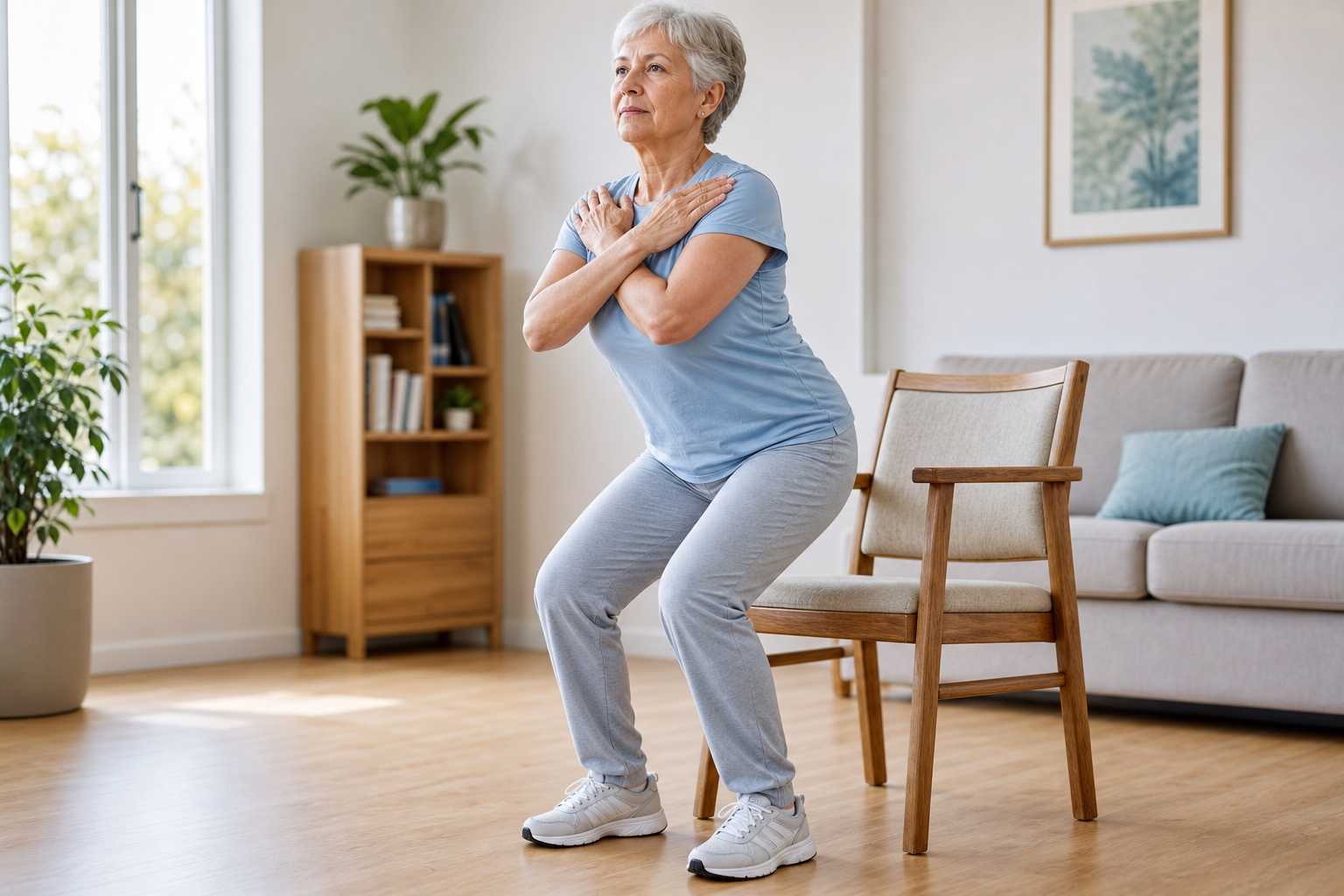
You’ll need a sturdy chair with a seat height of about 17 inches (a standard dining chair works well), a timer, and enough space to stand up safely. If you’re recovering from a hip or knee replacement, check with your doctor before attempting this.
- Sit in the middle of the chair seat with your back straight and arms crossed over your chest.
- Keep your feet flat on the floor, about shoulder-width apart.
- On “go,” stand up fully to a full upright position, then sit back down. That counts as one repetition.
- Continue for the full 30 seconds, counting every time you reach full standing height.
- If you’re halfway up when the timer ends, count it as half a rep.
Do not use your arms to push off the chair. The test measures leg strength specifically, and using your arms skews the results. If you genuinely cannot stand without arm assistance, note that and work from there.
Age-Based Reference Ranges
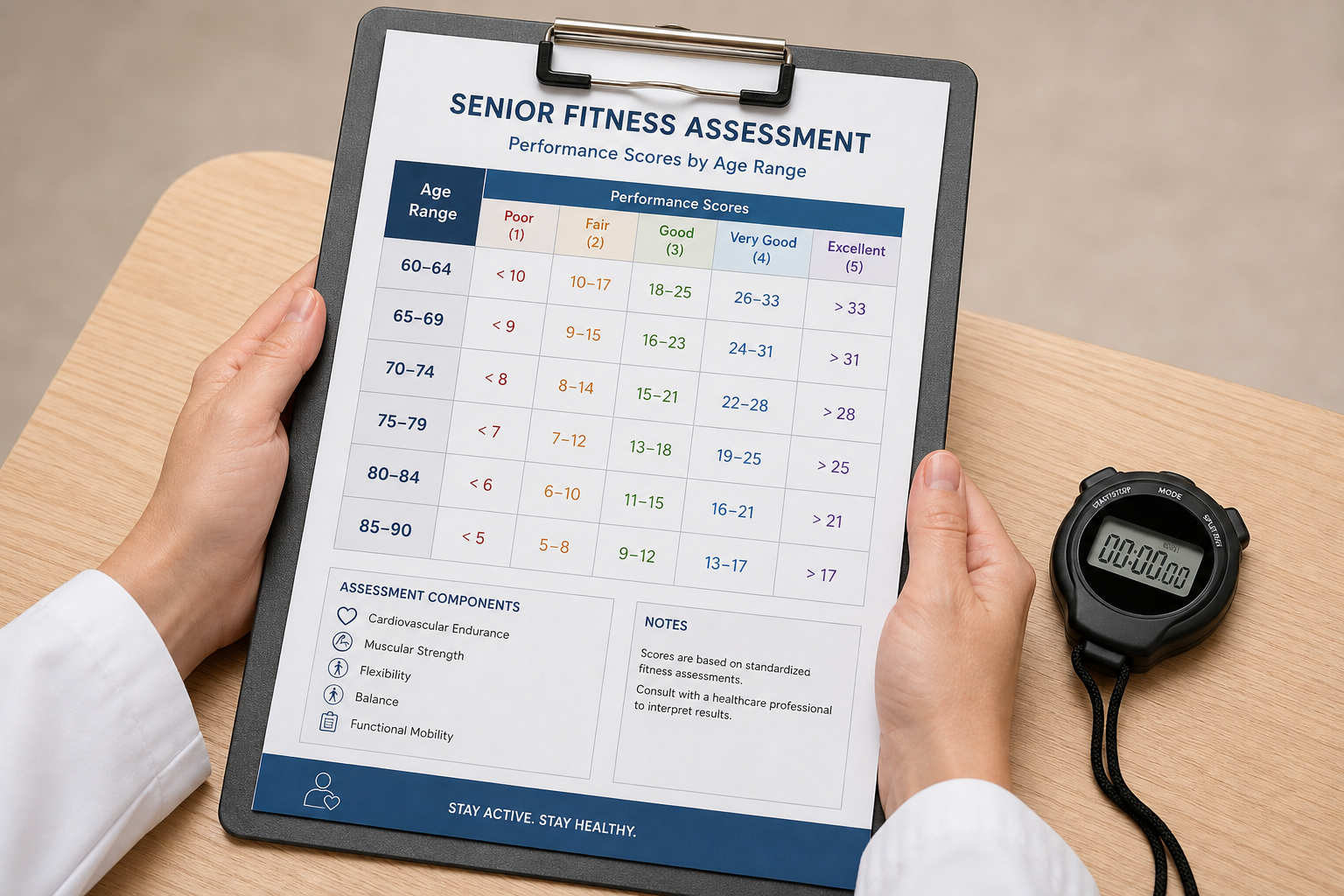
These norms come from research published by Rikli and Jones, whose Senior Fitness Test battery has been used in clinical and community settings worldwide. Scores are separated by sex because differences in muscle mass distribution affect the results.
Women
- 60-64: Below average is fewer than 12 reps; average is 12-17; above average is 18 or more
- 65-69: Below average is fewer than 11 reps; average is 11-16; above average is 17 or more
- 70-74: Below average is fewer than 10 reps; average is 10-15; above average is 16 or more
- 75-79: Below average is fewer than 10 reps; average is 10-15; above average is 16 or more
- 80+: Below average is fewer than 9 reps; average is 9-14; above average is 15 or more
Men
- 60-64: Below average is fewer than 14 reps; average is 14-19; above average is 20 or more
- 65-69: Below average is fewer than 12 reps; average is 12-18; above average is 19 or more
- 70-74: Below average is fewer than 12 reps; average is 12-17; above average is 18 or more
- 75-79: Below average is fewer than 11 reps; average is 11-16; above average is 17 or more
- 80+: Below average is fewer than 10 reps; average is 10-15; above average is 16 or more
Scoring below average for your age and sex doesn’t mean something is wrong with you permanently. It means you have a clear target to train toward, which is actually useful information.
What a Low Score May Signal
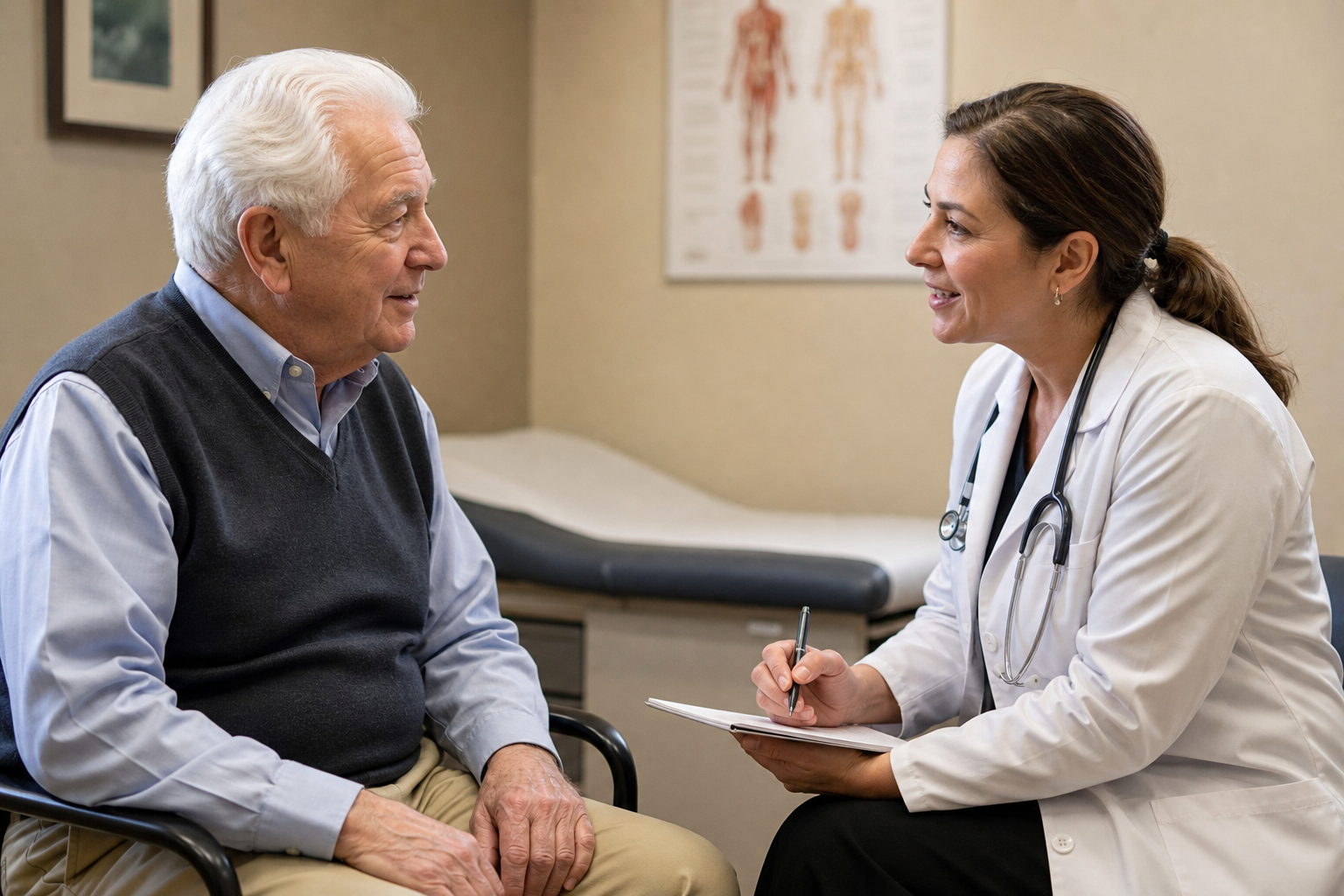
A low score often points to a combination of muscle weakness, reduced neuromuscular coordination, and sometimes joint pain that limits your range of motion. Research has linked poor sit-to-stand performance to higher fall risk, slower walking speed, and reduced ability to perform activities of daily living independently.
If your score is below average, it’s worth mentioning to your doctor, especially if the decline has been sudden. Unexplained muscle weakness can occasionally reflect underlying conditions worth investigating. More often, though, it reflects deconditioning that responds well to structured training. A progressive resistance training program focused on squats, step-ups, and hip hinges is one of the most direct ways to bring that number up.
Nutrition plays a bigger role than most people expect. Muscle protein synthesis slows with age, so adequate protein intake matters more in your 60s and 70s than it did in your 40s. If you’re not sure where to start, the protein powder guide for seniors over 70 covers both food-first strategies and when supplementing makes sense. Supporting that training with good post-workout recovery meals helps your muscles actually rebuild between sessions.
Vitamin D deficiency is also commonly overlooked as a contributor to muscle weakness in older adults. If you haven’t had your levels checked recently, it’s a simple blood test. You can read more about how vitamin D affects bone and muscle health specifically in seniors.
Frequently Asked Questions
Can I retest myself right away if I think I did it wrong?
Wait at least 30 minutes before retesting. Muscle fatigue from the first attempt will lower your score on a second attempt taken immediately, and you won’t get an accurate picture. Do the test once, record the number, and retest in 4-6 weeks after consistent training to track genuine progress.
What if knee or hip pain stops me from completing the test?
Pain during the test is information in itself. Note how many reps you completed before discomfort limited you, and bring that up with your healthcare provider. If arthritis or joint issues are a factor, there are arthritis-friendly exercises that can help build leg strength without the high-impact loading that aggravates inflamed joints. Don’t push through sharp or new pain.