A burning sensation in your feet during a walk isn’t something to push through and forget about. That burning is your nerves telling you something is wrong, and the cause determines whether you need a shoe change, a supplement, or a blood test. For adults over 60, foot burning during walking most commonly stems from nerve-related issues, but it can also be mechanical or vascular. Identifying the right cause saves you from months of trial-and-error remedies that don’t work.
The challenge is that foot burning has multiple distinct causes that look similar at first. A tight shoe compresses nerves in a way that feels almost identical to diabetic neuropathy until you look at the pattern. This guide walks through the five most common causes in older adults, what distinguishes each one, and what actually helps.
5 Common Causes of Burning Feet While Walking
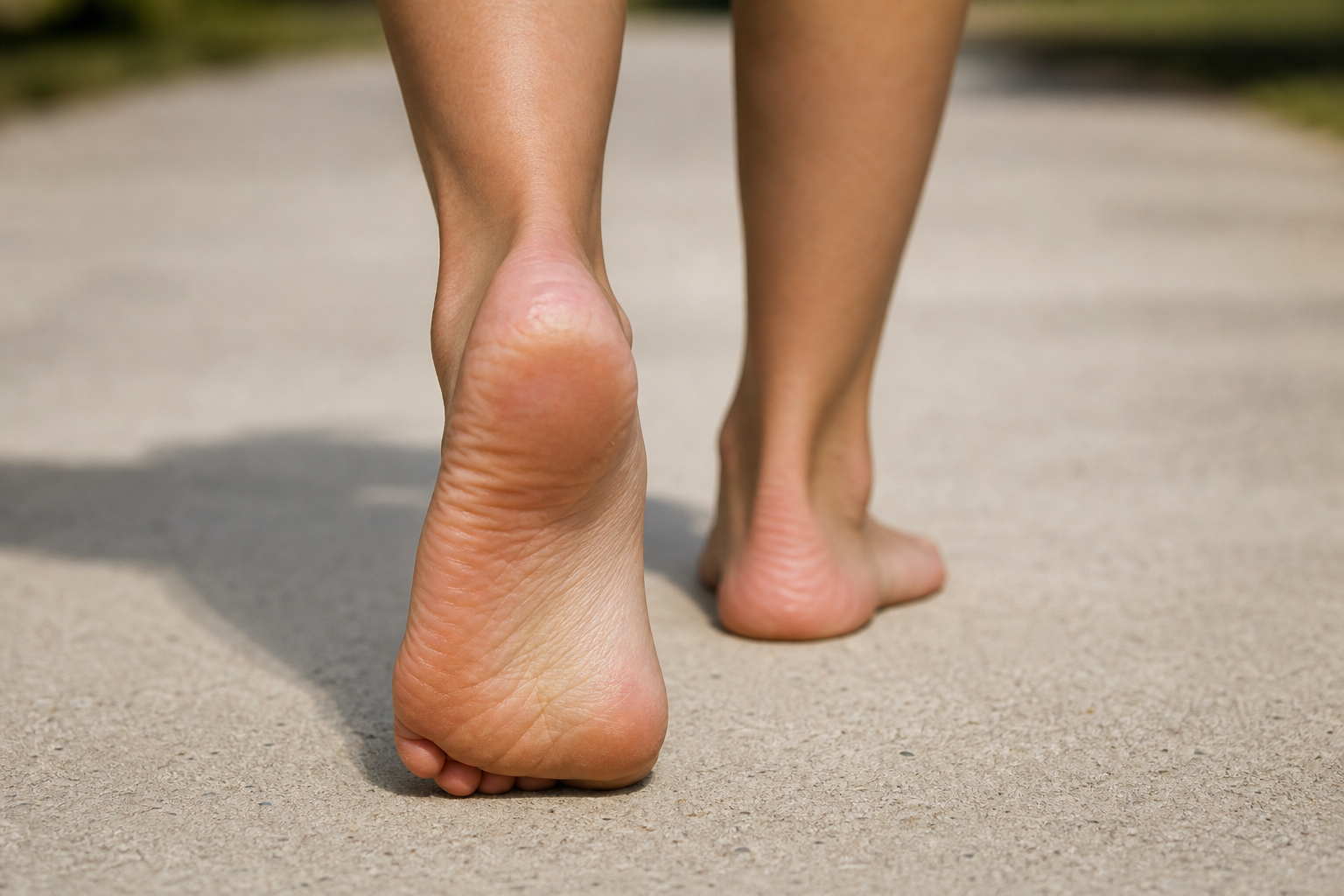
1. Peripheral Neuropathy (Diabetic and Non-Diabetic)
Nerve damage in the feet is the most common cause of burning during walking in adults over 60. Diabetes is the leading cause, but neuropathy also results from B12 deficiency, alcohol use, certain medications (chemotherapy, some antibiotics), and sometimes unknown causes (idiopathic neuropathy). The damaged nerves misfire, sending pain signals that your brain interprets as burning, tingling, or pins-and-needles.
Pattern: Burning affects both feet symmetrically, starting at the toes and progressing toward the ankles over months or years. It’s often worse at night and during sustained walking. You may also notice reduced sensation to temperature or touch in the affected areas.
The burning doesn’t improve when you change shoes or adjust your laces. It’s there whether you’re walking or sitting still, though movement can intensify it.
Some people describe the sensation as feet that feel like they’re on fire or wrapped in hot, tight socks. Others report sharp electrical zaps mixed with the burning. The sensory loss that accompanies neuropathy creates a strange contradiction: your feet burn intensely, but you can’t feel light touch or temperature accurately. This is why people with advanced neuropathy sometimes burn themselves on hot pavement without realizing it immediately.
What helps: Managing the underlying cause is the first priority. If diabetic, tighter blood sugar control slows nerve damage. Ask your doctor to check your HbA1c, fasting glucose, and B12 levels. Blood sugar spikes and drops both aggravate nerve symptoms, so consistent glucose control matters more than occasional perfect numbers.
For more information on managing diabetes through lifestyle changes, see our guide on managing diabetes through exercise.
Shoes with thick, cushioned soles reduce the impact that aggravates sensitive nerves. Walking on softer surfaces (tracks, treadmills, grass) is more comfortable than pavement. A walking pole or cane can reduce the force transmitted through your feet by redistributing some of your weight to your upper body.
Medication may help if lifestyle changes aren’t enough. Gabapentin and pregabalin are commonly prescribed for neuropathic pain. They don’t heal the nerves, but they reduce the intensity of pain signals. Duloxetine is another option that works through a different mechanism. These medications take 2-4 weeks to show full effect and often require dosage adjustments to find what works without excessive drowsiness or dizziness.
Talk to your doctor before starting any new exercise program or making significant changes to your walking routine, especially if you have diabetes or other conditions affecting circulation and nerve function.
2. Morton’s Neuroma
A Morton’s neuroma is a thickening of tissue around a nerve in the ball of the foot, usually between the third and fourth toes. It creates a sharp, burning sensation localized to that spot, often described as “walking on a pebble.” Tight, narrow shoes compress the metatarsal bones and aggravate the neuroma.
Pattern: Burning is in one specific spot in the ball of one foot (not both). Removing your shoe and rubbing the area provides temporary relief. The pain worsens in tight shoes and improves in flat, wide shoes or barefoot.
You might feel an urge to stop mid-walk, take your shoe off, and massage that exact spot. The relief is immediate but temporary.
Morton’s neuroma burning is position-dependent in a way neuropathy isn’t. Wearing slippers around the house is comfortable. Putting on dress shoes for an event brings the burning back within minutes. The pain intensifies when you push off with that foot during walking, right at the moment your weight loads the ball of the foot.
High heels are particularly problematic because they force weight forward onto the metatarsal heads and compress the forefoot in a narrow toe box. Even a modest heel height can trigger symptoms.
What helps: Switch to shoes with a wide toe box that don’t compress the forefoot. Measure your foot width properly. Many people wear shoes one or two widths too narrow without realizing it. Brands like New Balance, Hoka, and Altra make models specifically designed with wider toe boxes.
A metatarsal pad placed just behind the ball of the foot spreads the metatarsal bones apart and reduces nerve compression. Placement matters: the pad should sit about a half-inch behind the point where your pain is worst, not directly under it. If you place it too far forward, it makes the pain worse instead of better.
Ice after walking reduces inflammation around the neuroma. Roll your foot over a frozen water bottle for 10 minutes. Avoid heat, which increases swelling in the area.
If conservative measures don’t help within 6-8 weeks, a podiatrist can offer cortisone injections or discuss surgical options. Injections provide temporary relief (weeks to months) and can be repeated. Surgery removes the neuroma entirely but results in permanent numbness in the area between the affected toes.
3. Tarsal Tunnel Syndrome
Similar to carpal tunnel syndrome in the wrist, tarsal tunnel syndrome occurs when the tibial nerve is compressed as it passes through a narrow tunnel behind the inner ankle bone. This produces burning, tingling, and numbness along the sole of the foot, typically on one side.
Pattern: Burning and tingling along the bottom and inner side of one foot. Symptoms worsen with prolonged walking or standing. Tapping the area behind your inner ankle bone may reproduce or intensify the symptoms (Tinel’s sign). The burning often radiates from the ankle down into the arch and toward the toes in a specific distribution pattern.
People with flat feet or excessive pronation (feet that roll inward excessively during walking) are more prone to tarsal tunnel syndrome. The prolonged stretching of the tibial nerve with each step gradually leads to inflammation and compression inside the tunnel.
Symptoms typically start gradually. You might notice occasional tingling that becomes more frequent over weeks or months. Unlike Morton’s neuroma, which hurts in a pinpoint location in the ball of the foot, tarsal tunnel syndrome produces a more diffuse burning that follows the path of the nerve.
What helps: Supportive shoes with arch support reduce the pronation (inward rolling) that stretches the tibial nerve. Motion-control walking shoes designed for overpronation provide the structure that limits excessive foot motion. Look for shoes with a firm heel counter and a supportive midsole.
Our guide on stability shoes for seniors with balance issues covers footwear options that provide the support needed for conditions like tarsal tunnel syndrome.
Rest, ice after walking, and anti-inflammatory measures provide short-term relief. Wrap an ice pack around the inner ankle area for 15 minutes after walks. Elevating your feet while resting takes pressure off the nerve.
A night splint that holds your ankle in a neutral position prevents the foot from pointing downward during sleep, which can compress the nerve further. These splints look awkward but can significantly reduce morning burning and tingling.
A podiatrist or neurologist can confirm the diagnosis and recommend custom orthotics, physical therapy, or surgical decompression if conservative treatment fails. Nerve conduction studies can measure how well the tibial nerve is functioning and confirm whether tarsal tunnel syndrome is the correct diagnosis.
4. Vitamin B12 Deficiency
B12 is essential for nerve health. Deficiency causes a specific type of neuropathy that produces burning, tingling, and numbness in the feet (and sometimes hands). B12 absorption decreases with age, and common medications (metformin for diabetes, proton pump inhibitors for acid reflux) further deplete it. Deficiency can be present for years before symptoms appear.
Pattern: Gradual onset of burning in both feet, sometimes accompanied by balance problems, fatigue, and memory issues. The burning is constant but worsens with walking. Your feet might feel heavy or clumsy in addition to burning.
You may notice difficulty with fine tasks requiring foot coordination, like feeling for the brake pedal while driving or walking on uneven ground.
B12 deficiency neuropathy often comes with other systemic symptoms that help distinguish it from diabetic neuropathy. Unusual fatigue that doesn’t match your activity level, mild memory fog, mood changes, or a sore tongue can all signal B12 deficiency. Some people develop a subtle yellowing of the skin (jaundice) from B12 deficiency affecting red blood cell production.
The burning from B12 deficiency can be present for months or years before someone connects the symptom to a nutritional cause. People often attribute the burning to normal aging or diabetic complications without checking B12 levels.
What helps: A simple blood test measures your B12 level. Levels below 300 pg/mL may cause neurological symptoms even if they’re technically within the “normal” range (which often extends down to 200 pg/mL). If your B12 is between 200 and 400 and you have symptoms, consider it deficient enough to warrant treatment.
Treatment involves B12 supplementation (sublingual tablets or injections depending on the severity of deficiency). Sublingual B12 bypasses the stomach’s absorption process and works for mild to moderate deficiencies. Take 1000-2000 mcg daily. Injections are more effective for severe deficiencies or when absorption is compromised by medication or digestive issues.
Nerve damage from B12 deficiency is partially reversible if caught early, but permanent if prolonged. Improvement is slow. You might notice reduced burning after 4-6 weeks of supplementation, but full recovery can take 6-12 months. Some nerve damage becomes permanent if deficiency persists for years before treatment.
Vegetarians and vegans are at higher risk for B12 deficiency because the vitamin occurs naturally only in animal products. Fortified foods and supplements are essential for people following plant-based diets.
5. Footwear Compression
Shoes that are too tight, laced too tightly, or have inadequate toe room compress the nerves and blood vessels across the top and ball of the foot. Extended walking in these shoes causes burning that progressively worsens throughout the walk.
Pattern: Burning starts 10-20 minutes into a walk and worsens the longer you go. Removing or loosening your shoes provides immediate relief. The burning is across the top of the foot or in the ball, not just the toes. You might see visible indentations or red marks on your feet where the shoe pressed hardest.
Feet swell during walking. Shoes that fit comfortably when you first put them on in the morning can become painfully tight after 30 minutes of walking. This is especially true in warm weather or if you have any degree of edema (fluid retention).
Compression from laces tied too tightly across the top of the foot can compress the superficial peroneal nerve, causing burning across the top of the foot and into the toes. This is completely mechanical and resolves as soon as pressure is released.
What helps: Replace shoes that are too narrow or too short. Shop for shoes in the afternoon when your feet are largest. Try shoes on with the same socks you’ll wear for walking. Walk around the store for at least 10 minutes before deciding. Shoes should feel comfortable immediately, not require a “break-in” period.
Lace shoes loosely across the top of the foot, tightening only at the ankle for security. You can skip every other lace hole across the forefoot to reduce pressure, then lace normally at the ankle. This technique is called gap lacing or window lacing.
Shoes should have at least a thumb’s width of space between your longest toe and the end of the shoe. Your longest toe might not be your big toe. Check the fit of both feet. Many people have one foot slightly larger than the other. Buy for the larger foot.
Replace shoes every 300-500 miles of walking. Cushioning breaks down, arch support collapses, and the shoe becomes less protective even if the outer appearance looks fine. Most walking shoes last 6-12 months depending on how much you walk. Proper footwear and walking form are essential to preventing many types of foot pain; our article on walking form elements that reduce joint pain provides additional guidance on technique improvements that can help.
Additional Causes Worth Checking

Plantar Fasciitis
While plantar fasciitis typically causes heel pain, chronic inflammation can extend forward along the arch and create a burning sensation across the bottom of the foot during walking. The pain is usually worst with the first steps in the morning and after periods of rest, improving somewhat as you walk and then worsening again after prolonged activity.
Plantar fasciitis burning differs from neuropathy in its location (bottom of the foot, concentrated in the arch) and its pattern (worse after rest, partially improving with initial movement). Stretching the plantar fascia by pulling your toes back toward your shin usually reproduces the pain.
Peripheral Artery Disease
Reduced blood flow to the legs and feet from narrowed arteries can cause burning pain during walking. This is less common than neuropathy but more serious. PAD burning is usually accompanied by muscle cramping in the calves, thighs, or buttocks during walking (claudication). The pain typically improves within minutes of stopping.
PAD burning is distinct from neuropathy because it’s exercise-dependent. You can walk comfortably for a certain distance, then burning or cramping starts. You stop, the symptoms resolve quickly, and you can walk