Exercising alone is the biggest predictor of quitting. The absence of accountability, social connection, and shared purpose makes solo home exercise feel optional in a way that a scheduled class or workout partner never does. Building an exercise support group doesn’t require a gym membership or a formal organization. It requires 2-4 people who commit to showing up, whether that means exercising together in person, joining a video call, or simply checking in daily to confirm that everyone moved their body.
The difference is measurable. People exercising with partners stick with it. People exercising alone drift away within weeks. This isn’t a character flaw. It’s how humans work.
Why Support Groups Keep Seniors Exercising
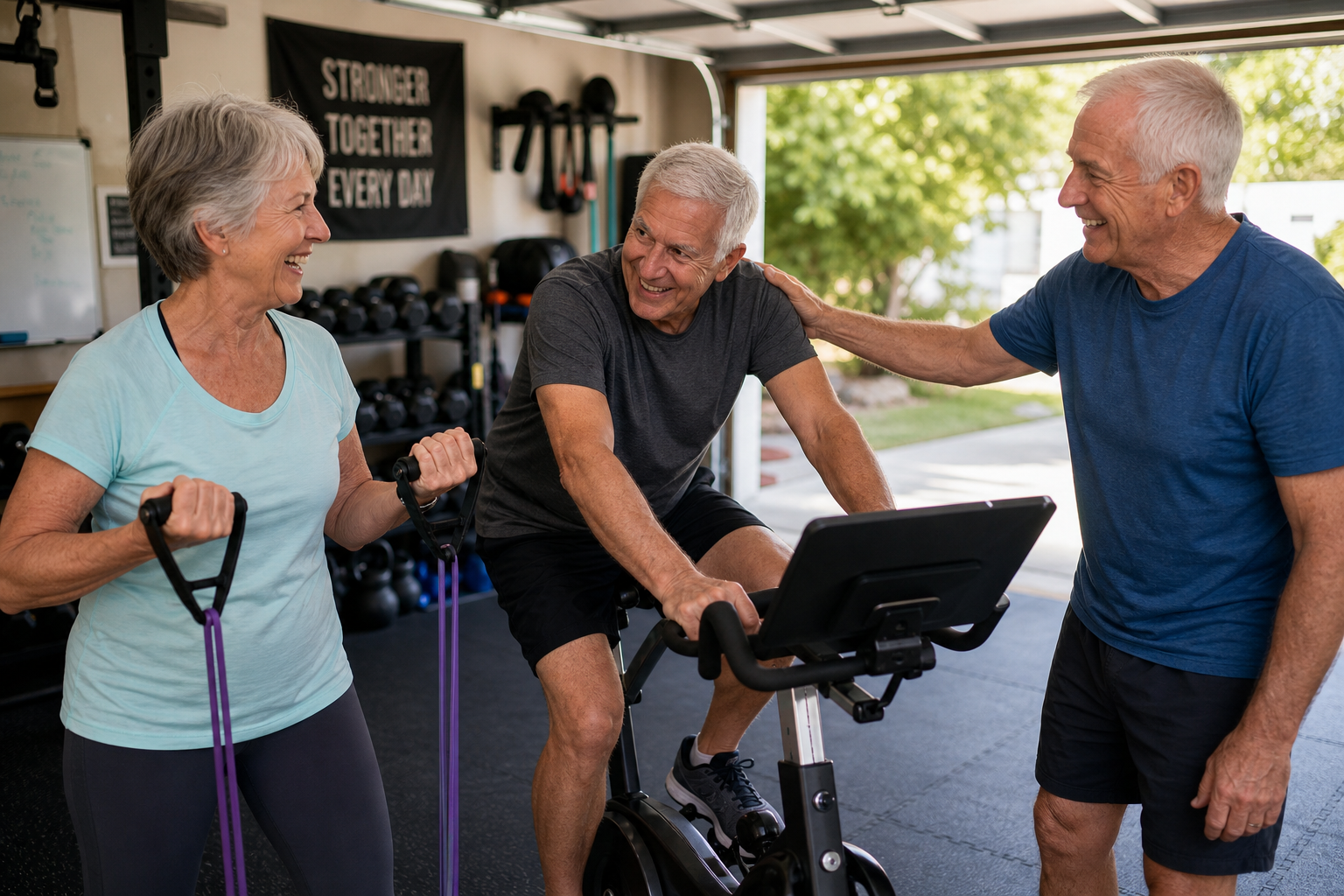
Accountability
When you exercise alone, skipping a session disappoints only yourself, and depression, fatigue, or bad weather easily override that mild self-disappointment. When someone else is expecting you, the social obligation to show up is a stronger motivator than willpower alone. Research shows that exercise compliance rates are 60-70% higher with a partner or group than solo.
The mechanism is simple: you hate letting people down more than you hate getting up early. A text message saying “See you at 9 AM tomorrow” creates a commitment that “I should really exercise tomorrow” never does. The person on the other end is counting on you, has adjusted their schedule, and will notice if you don’t show. That external pressure compensates for the internal motivation that naturally fluctuates.
This accountability works even when the other person isn’t physically present. Daily check-in groups where members text “Did my exercises” or “Walked 25 minutes today” provide enough social obligation to nudge someone out the door on days they’d otherwise skip. The group doesn’t need to police anyone. Just knowing you’ll report your activity (or lack of it) is enough.
Social Connection
Loneliness and social isolation are independent risk factors for depression, cognitive decline, and mortality in seniors. An exercise group provides regular social contact that independently improves health outcomes, even before the exercise benefits are counted.
The health impact of isolation is comparable to smoking 15 cigarettes per day. A twice-weekly walking group with post-walk coffee addresses that risk directly. The exercise is valuable, but so is the conversation during the walk, the check-ins about grandchildren, the shared complaints about joint pain, and the routine of having people who expect to see you.
Many older adults find their social circles shrinking naturally. Retirement removes daily coworkers. Friends move closer to family or pass away. Adult children have their own busy lives. An exercise group fills that gap with low-stakes, regular interaction. You don’t need deep emotional vulnerability to walk together. Showing up is enough.
Shared Knowledge
Group members share what works: exercises that helped their knee pain, videos they enjoyed, modifications for common limitations, and strategies for staying motivated during winter. This collective wisdom is more practical and relatable than professional advice because it comes from people dealing with the same challenges you face.
A physical therapist’s textbook recommendations are accurate but generic. Your walking partner’s tip that shifting weight more to the outside of her foot reduced her knee pain during walks is specific, tested, and relevant. You trust it because she’s dealing with arthritis too, not reading from a script.
This knowledge exchange happens naturally. Someone mentions their balance has improved since adding single-leg stands to their routine. Someone else shares a YouTube channel with clear, slow-paced instruction. A third person recommends a shoe brand with better arch support. Over months, the group becomes a repository of tested, age-appropriate solutions to common exercise obstacles.
How to Start a Group
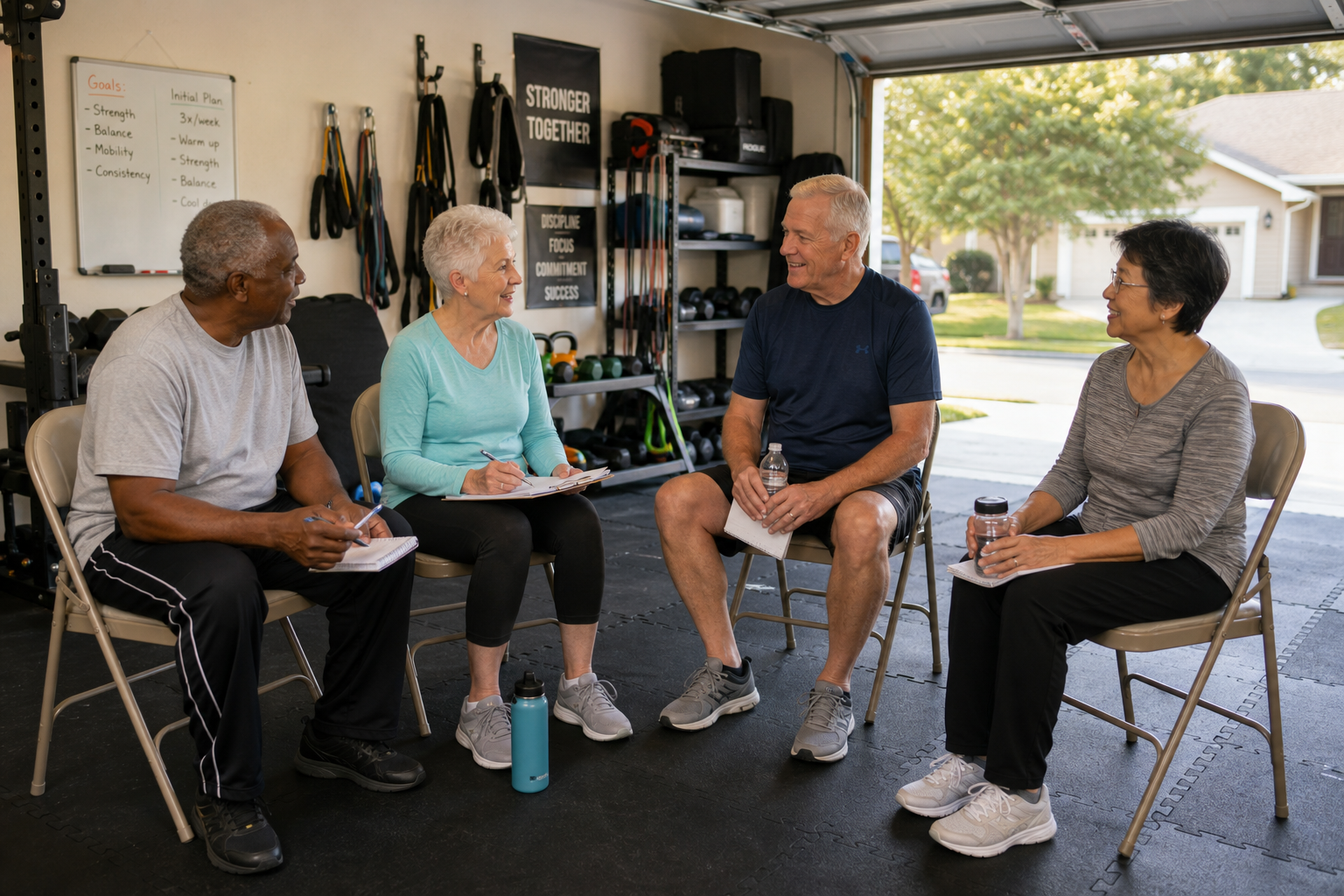
Find 2-4 People
Start small. Two people is enough. Ask a neighbor, a friend from church, a former coworker, or a family member. The ideal group shares a similar fitness level and schedule availability. Post a note at your senior center, community bulletin board, or neighborhood social media group: “Looking for 2-3 seniors interested in a weekly walking and exercise group.”
Don’t wait for the perfect group composition. Start with whoever says yes. A group of two that actually meets is infinitely more valuable than a theoretical group of six that never forms. If the first person you ask declines, ask the next person. Most people appreciate being invited even if they can’t participate.
Consider starting with people who already exercise inconsistently. Recruiting someone who goes to the gym five days a week is harder than recruiting someone who owns dumbbells they never use or who walks occasionally but not regularly. Find people who want to exercise more but struggle with solo motivation.
Choose a Format
- In-person group walks: Meet at a set time and place, walk for 20-30 minutes, and socialize briefly afterward. This is the simplest format and the easiest to sustain. Weather becomes a group decision (walk in light rain or reschedule) rather than an individual excuse.
- In-person home workouts: Meet at one person’s home, follow a YouTube exercise video together, and share coffee after. Rotate homes weekly. This works well in winter or for groups preferring strength and balance work over cardio.
- Virtual accountability group: For friends who live far apart, create a text message or phone call check-in group. Each person reports daily: “Walked 20 minutes” or “Did chair exercises today.” The check-in takes 10 seconds and provides daily accountability without requiring schedules to align.
- Phone workout partners: Exercise simultaneously while on a phone or video call. You each do your own workout in your own home but share the session in real time. This is surprisingly effective for motivation. The presence of another person, even through a screen, reduces the temptation to quit early.
Hybrid formats work too. A group might walk together twice a week and maintain a daily text check-in group the other five days. Use what fits your schedules and preferences.
Set a Schedule
Consistency requires a fixed schedule. “We walk Tuesday and Thursday at 9 AM” is specific enough to become a habit. “We should get together sometime this week” is vague enough to never happen. Choose 2-3 times per week that work for everyone and protect those times as non-negotiable.
The schedule matters more than the activity. A group that walks the same route every Tuesday at 9 AM for six months will stay together. A group that keeps rescheduling, switching times, and debating which park to visit will dissolve. Predictability reduces friction. Everyone knows when to show up, and the decision-making is already done.
If someone can’t make a particular session, the group meets anyway. The schedule doesn’t bend for individual absences (life happens, people get sick, appointments come up). The group is the constant. Members rotate through as needed.
Keep It Simple
Don’t over-organize. You don’t need matching t-shirts, a formal charter, or a complex exercise program. Walk together. Do a YouTube video together. Check in by text. The value is in the consistency and connection, not the production quality.
Elaborate structures kill groups. Rotating leadership roles, detailed attendance tracking, membership dues, formal meeting agendas, and performance metrics add friction without adding value. Someone always forgets it’s their week to lead. Someone else feels guilty about missing payments. The bureaucracy becomes work instead of support.
The best groups are informal. Show up, exercise, leave. Maybe grab coffee after. That’s it. No one takes minutes or sends recap emails. This isn’t a committee. It’s a standing appointment to move your body with people who care whether you show up.
Activities That Work Well for Groups
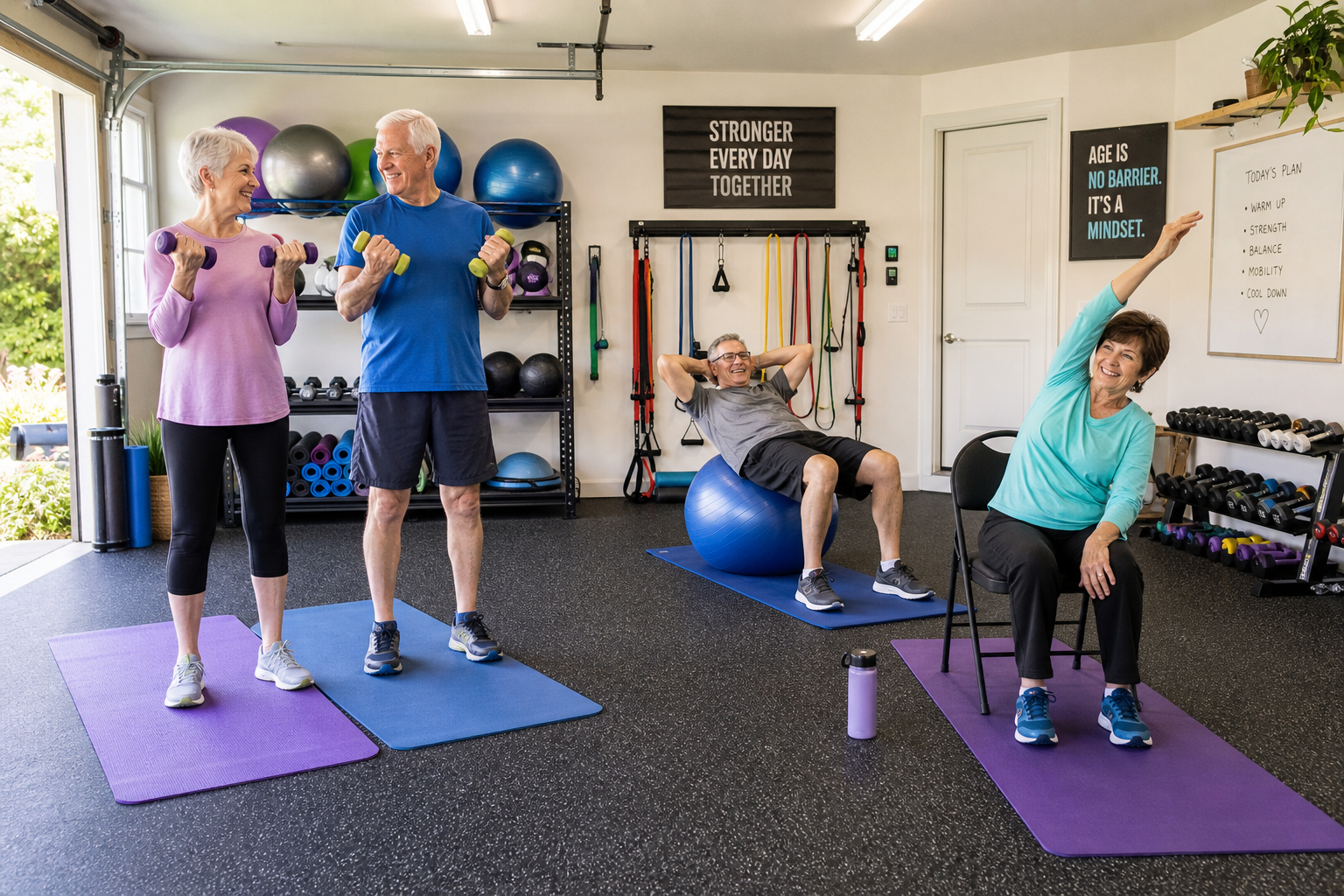
- Walking groups: The most popular and lowest-barrier option. Walk a regular route at a pace everyone can maintain. Allow the group to naturally split into faster and slower pairs if needed. The slower pair sets the turnaround point, and the faster pair doubles back to meet them.
- Chair exercise sessions: Follow a YouTube chair exercise video together. Everyone can modify at their own level while still exercising in sync. This format works for groups with mixed mobility and allows members with balance concerns to participate safely.
- Tai chi or yoga: Learning a new skill together adds shared challenge and accomplishment. Free YouTube videos provide instruction. These activities improve balance, flexibility, and body awareness while being low-impact and joint-friendly. Check out our comparison of yoga vs tai chi to help decide which practice might work best for your group.
- Resistance band sessions: A set of resistance bands per person enables group strength training in any living room. Bands are portable, inexpensive, and allow each person to adjust resistance easily. Members can work at different intensity levels side by side.
- Fitness challenges: Group challenges (who can walk the most steps this week, who can hold a single-leg stand the longest) add friendly competition. Keep challenges inclusive and focused on personal improvement rather than absolute performance.
- Water exercise: If your community has a pool with shallow water or a warm therapy pool, water walking and water aerobics provide excellent low-impact options for groups with joint pain or arthritis. The buoyancy reduces stress on hips and knees while still providing resistance.

Resistance Bands Set for Seniors
Perfect for group strength training sessions, portable and allows everyone to work at their own level
The best activity is the one everyone will actually do repeatedly. A walking group that meets 100 times beats a perfectly programmed strength routine that meets three times before falling apart.
Keeping the Group Going
Celebrate Milestones
When the group completes a month of consistent meetings, celebrate with a special outing (a longer nature walk, a healthy group meal). Recognition reinforces the behavior. The celebration doesn’t need to be elaborate. A group photo after a particularly good walk, a small potluck after a home workout session, or just acknowledging “We’ve been meeting for three months straight” provides positive reinforcement.
Milestones might include total sessions completed, aggregate miles walked by the group, or individual achievements (first time someone completed a full video without modifications, someone’s doctor commenting on improved blood pressure). Make success visible.
Allow Flexibility
Life happens. Missing a session isn’t a failure. The group continues whether all members are present or not. No guilt trips, no lectures. People deal with health setbacks, family obligations, travel, and bad days. A sustainable group assumes irregular attendance and doesn’t treat it as a crisis.
If someone misses two weeks straight, a casual “Haven’t seen you, hope you’re doing okay” check-in is appropriate. Pressure and judgment aren’t. Some people will drift away. That’s normal. Focus on the people who keep showing up.
Flexibility also means accommodating changing abilities. If a member has surgery or a health setback that temporarily limits them, offer modified participation. They can walk a shorter distance, do a gentler video, or just show up for the social time afterward. Excluding someone for being “too slow” or “not keeping up” destroys the supportive purpose of the group.
Members recovering from hip or knee replacement surgery can often continue modified participation. Our guides on post-hip replacement exercise and post-knee replacement exercises can help the group understand appropriate modifications during recovery.
Vary Activities Occasionally
Walk a new route, try a different video, visit a local pool together. Novelty prevents the boredom that leads to group dissolution. Most sessions should follow the established routine (predictability keeps people coming), but occasional variation refreshes interest.
Once per month, consider a “field trip” session: a nature trail instead of the usual sidewalk route, a chair exercise video from a different instructor, or a visit to a local park with outdoor fitness equipment. The change of scenery re-engages people who’ve started going through the motions.
Seasonal variation happens naturally. Summer walking groups might shift to earlier morning times to avoid heat. Winter groups might move indoors more often. Let the group adapt to conditions rather than forcing rigid consistency that makes participation miserable. For seasonal safety guidance, check our tips on hot weather workout safety and cold weather exercise.
Welcome New Members
Groups naturally lose members (moves, health changes, schedule conflicts). Actively recruiting one new member per quarter keeps the group vital. New members bring fresh energy and prevent the group from shrinking to unsustainable size.
Make joining easy. New members shouldn’t need unanimous approval or a formal orientation. They show up, walk with the group, and either come back or don’t. Over-screening kills growth. Trust that people who don’t fit will self-select out.
When bringing in new members, brief them on the basics: “We meet here at 9 AM on Tuesdays and Thursdays, walk for about 30 minutes, and sometimes grab coffee after. Come whenever you can make it.” That’s enough. They’ll learn the rest by participating.
Common Obstacles and Solutions
Someone Dominates Conversation or Complains Constantly
This can drain group energy fast. A chronic complainer who spends the entire walk listing ailments and grievances makes others dread showing up. Address it gently but directly: “I know you’re dealing with a lot, but let’s try to keep the walk upbeat today.” If the behavior continues, consider splitting into sub-groups during the activity so others can choose their walking partners.
Group walking naturally allows people to pair off and rotate partners. Use that flexibility. The person who wants to discuss medical issues in detail can walk with someone who doesn’t mind, while others pair up for different conversation.
The Group Gets Too Large
More than six people makes scheduling harder and conversation more difficult. If your walking group grows past comfortable size, consider splitting into two groups with different schedules or routes. A Tuesday/Thursday morning group and a Wednesday/Friday evening group can both thrive. Members can attend either or both.
Alternatively, the larger group can fracture naturally into faster and slower sub-groups during walks, reconvening briefly at the end. This maintains the social benefit while accommodating different paces and fitness levels.
Winter Weather Disrupts the Routine
Cold weather and shorter daylight hours kill many exercise groups. Plan for it. Decide in advance what conditions trigger moving indoors (temperature below freezing, active precipitation, ice on sidewalks). Have a backup indoor location (someone’s living room, a mall with early walking hours, a community center) and a backup activity (indoor exercise video, resistance band routine).
Groups that winter-proof their routine survive. Groups that decide week-by-week whether to meet based on weather forecasts drift apart by February.
Someone Keeps No-Showing Without Notice
Repeated no-shows without communication disrupt the group’s rhythm and make other members wonder if they should have bothered showing up. Address it directly: “We missed you the last few times. Are Tuesdays not working for you anymore?” Give them an easy out. Maybe their schedule changed and they can’t make that time but feel guilty about quitting. Release them from obligation without judgment.
If they want to continue but keep forgetting or oversleeping, suggest they set a phone reminder or have another member text them a reminder an hour before. Sometimes people want to participate but need more structure.
Frequently Asked Questions
What if group members have different fitness levels?
Different fitness levels are normal and manageable. During walks, the group naturally separates by pace (pairs or trios form based on walking speed) and reconvenes at designated points. During strength exercises, each person uses a different resistance level. During videos, each person follows the modification appropriate for their ability. The social and accountability benefits are the same regardless of individual fitness level.