Most treadmill reviews focus on top speed, maximum incline, and training programs designed for runners. Seniors who walk at 1.5-3.0 mph need something different: a machine that starts slowly, adjusts in small increments, has sturdy handrails, a cushioned deck, and a console you can actually read. The treadmill that’s best for a 30-year-old marathon trainer is not the treadmill that’s best for a 70-year-old rebuilding walking endurance.
Walking is one of the safest, most effective forms of exercise for older adults. A quality treadmill built for low-speed walking removes weather barriers, eliminates trip hazards from uneven sidewalks, and provides continuous support through full-length handrails. The right machine makes daily walking sustainable year-round, whether you’re dealing with extreme summer heat or icy winter conditions.
What Low-Speed Walkers Need
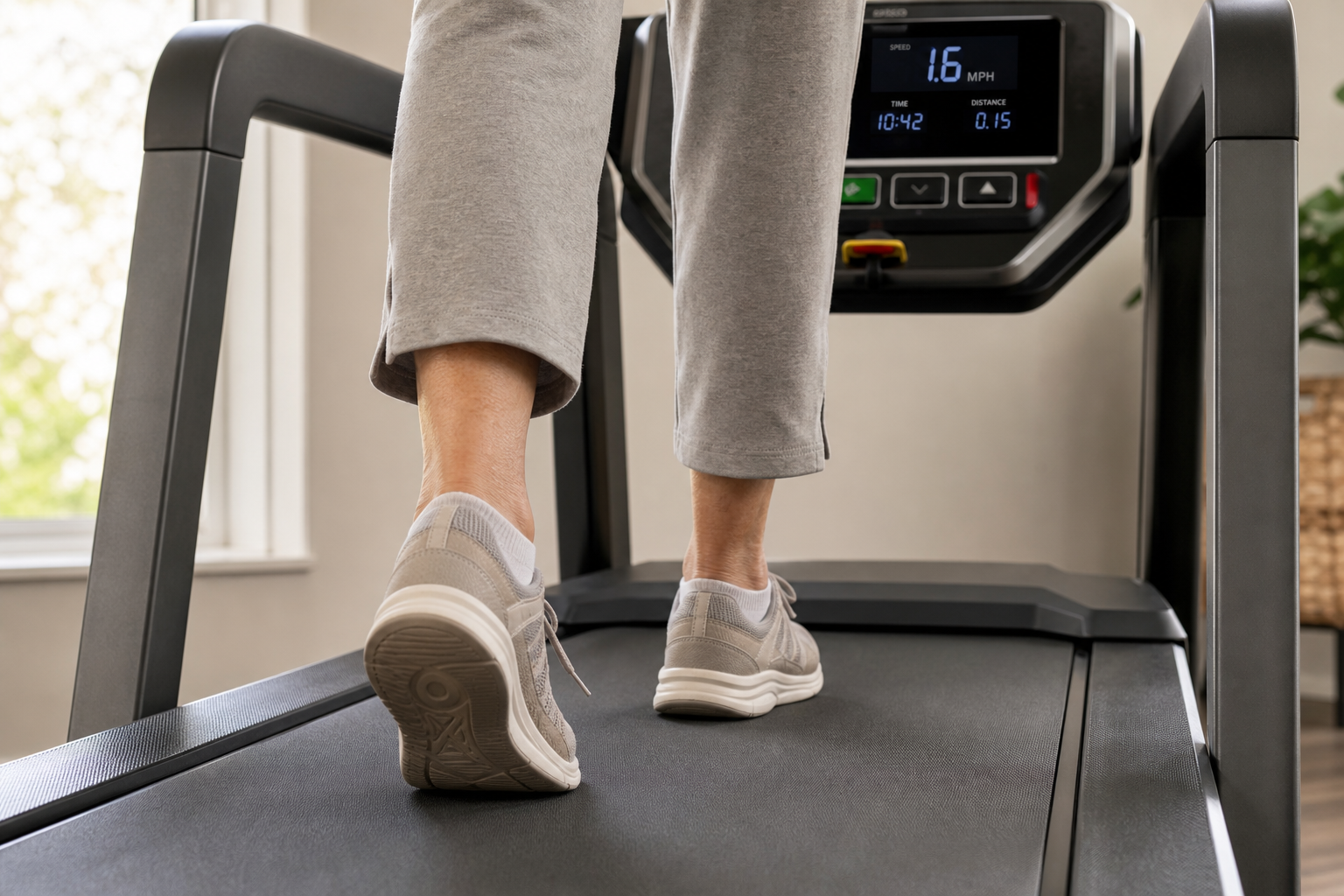
True Low Starting Speed
Many treadmills claim a 0.5 mph minimum speed, but the belt at that speed is jerky and irregular. Quality treadmills maintain smooth belt operation down to 0.5-1.0 mph, which matters for seniors who need to start very slowly or who use the treadmill for rehabilitation. Look for treadmills with larger motors (2.5+ CHP), which maintain consistent belt speed even at low settings.
The motor size directly affects smoothness at walking speeds. A 2.0 CHP motor may struggle to maintain steady belt movement below 2.0 mph, creating slight hesitations or surges that throw off your stride. A 2.5 CHP or larger motor eliminates these irregularities. If you’re recovering from surgery, working through balance issues, or simply starting very cautiously, this smooth low-speed operation is essential.
Small Speed Increments
Adjusting speed in 0.1 mph increments lets you find your exact comfortable pace. Some budget treadmills only adjust in 0.5 mph jumps, which means jumping from 2.0 to 2.5 mph with no option in between. That 0.5 mph difference can feel like a significant increase for a senior walker.
When you’re building endurance or recovering strength, progression happens in small steps. Being able to move from 2.0 to 2.1 to 2.2 mph over weeks gives you control over your own pace. Forced jumps of half a mile per hour can feel like too much too soon, discouraging consistent use. Fine-tuned speed control keeps walking comfortable and sustainable.
Cushioned Deck
A cushioned walking surface absorbs 15-40% of the impact that pavement delivers to your joints. For seniors with arthritis, this cushioning extends comfortable walking time significantly. Premium cushioning systems (Sole’s Cushion Flex, NordicTrack’s FlexSelect) are worth the additional cost for joint-sensitive walkers.
Impact absorption matters more than most people realize. Every step on concrete sends a jarring force through your ankles, knees, and hips. Over a 30-minute walk, that adds up to thousands of impacts. Quality cushioning doesn’t eliminate all impact, but it softens each step enough that your joints feel the difference. Many older walkers report being able to walk 10-15 minutes longer on a cushioned treadmill than they can on pavement before knee or hip discomfort forces them to stop.
Variable cushioning systems let you adjust firmness. Softer settings work well for arthritis relief. Firmer settings provide more stability if you have balance concerns and prefer feeling solid ground beneath your feet. Being able to switch between settings as your needs change adds years of useful life to the machine.
Full-Length Handrails
Handrails that extend the full length of the walking deck provide continuous balance support. Many treadmills only have short bars at the console, which leaves you unsupported during the majority of your walk. Full-length side rails are essential for seniors with balance concerns.
Short console bars force you to walk with your hands near your chest, cramping your natural arm swing and pulling your posture forward. Full-length rails let you place your hands wherever feels natural, whether you’re lightly resting fingertips on the rail for occasional balance checks or gripping firmly for continuous support. The rails should sit at a comfortable height (typically waist to mid-chest level) and have a non-slip surface that’s easy to grip.
Some treadmills place the rails too low or too high, forcing awkward arm positions. Before buying, check rail height specifications. If possible, test the treadmill in person to confirm the rails feel comfortable at your natural arm height.
Large, Readable Console
Backlit LCD displays with numbers at least 1 inch tall are the minimum for readability. Touchscreens with large icons work well for tech-comfortable seniors. Avoid consoles that require multiple button presses to display basic information (speed, time, distance). The simplest console is the one you’ll actually use.
A good console shows speed, time, and distance simultaneously without needing to cycle through screens. Buttons should be large, clearly labeled, and responsive. Quick-touch speed buttons (press “2.0” to jump directly to 2.0 mph) are faster and easier than holding an up arrow and waiting for the speed to climb.
Backlit displays are easier to read in varied lighting. If your treadmill sits near a window, glare can make non-backlit screens nearly invisible at certain times of day. LED displays with bright blue or green numbers are easy to see from several feet away, so you’re not leaning into the console trying to read your stats.
Emergency Stop Features
A magnetic safety clip attached to your clothing stops the belt instantly if you stumble. This is the most important safety feature on any treadmill and should be used during every session, regardless of how confident you feel.
The safety clip attaches to a magnetic key on the console. If you step back or fall, the clip pulls out, cutting power immediately. Most clips attach via a cord, so you need enough length to walk comfortably without the cord pulling taut. Attach it to your waistband or belt loop, not your shirt collar (which can slip off if you stumble forward).
Some users skip the safety clip once they feel confident on the treadmill. Don’t. Stumbles happen when you’re not expecting them, and even a brief lapse in attention can lead to a fall. The belt continues moving until you manually stop it or until the safety clip disengages. That split-second automatic shutoff can prevent injury.
Top Low-Speed Treadmills for Seniors
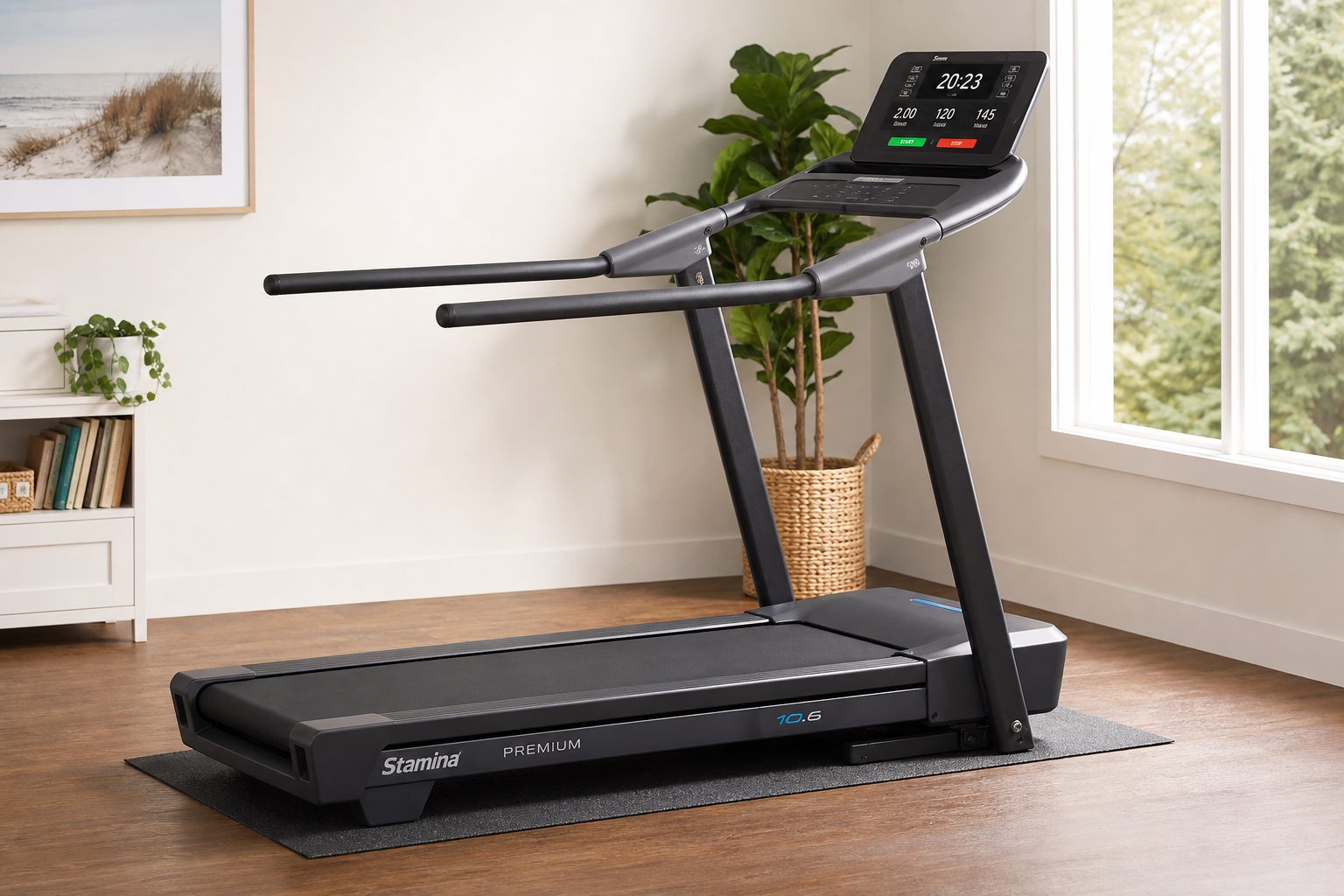
Sole F63
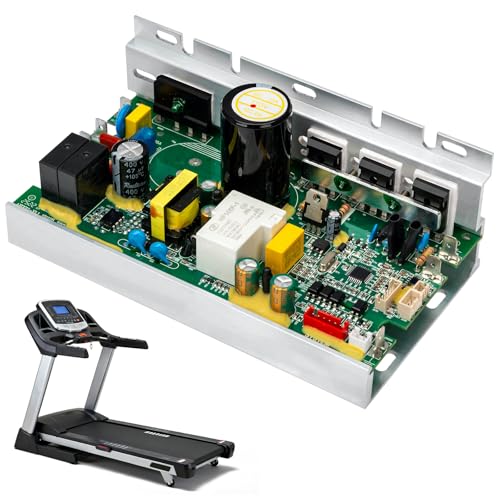
Sole F63 Treadmill
Best overall choice for seniors: exceptional cushioning, smooth low-speed operation, and simple controls
The Sole F63 features the Cushion Flex Whisper Deck (40% impact reduction), a 0.5-10 mph speed range with 0.1 mph increments, a 20-inch wide belt, and a 15-level motorized incline. The console is simple and readable with large buttons. Bluetooth audio lets you listen to music or podcasts through built-in speakers. The 325-pound weight capacity accommodates most users.
The F63’s 3.0 CHP motor delivers exceptionally smooth operation at walking speeds. Belt movement at 1.0 mph is as steady as belt movement at 4.0 mph, with no hesitation or surging. The deck cushioning is among the best in this price range, noticeably softer than budget models without feeling spongy or unstable.
Incline adjustment is motorized, so you don’t need to stop and manually adjust a pin. Incline adds workout variety without adding speed. Walking at 2.0 mph on a 3% incline burns more calories and strengthens leg muscles more than walking at 2.5 mph on a flat surface, and it does so without the joint stress of faster walking.
The console includes six preset programs and two custom programs. Preset programs vary speed and incline automatically, which adds variety but may not suit seniors who prefer maintaining a single steady pace. Custom programs let you design your own speed and incline patterns if you want structure without surprises.
Best for: Most senior walkers. Excellent cushioning, smooth low-speed operation, and simple controls.
Horizon T101
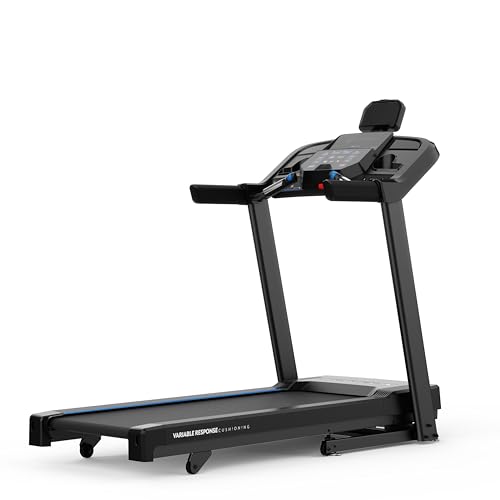
Horizon T101 Treadmill
Budget-friendly option with quality low-speed performance and simple controls
The Horizon T101 is the best budget option with quality low-speed performance. The 3-zone cushioning system provides good impact absorption, the 20-inch belt is comfortable, and the console is clean and simple. Bluetooth connectivity works with free fitness apps. The motor is 2.5 CHP, sufficient for smooth walking speeds.
The T101 keeps things simple. There are no fancy programs, no touchscreen, no subscription services. You get speed, incline, time, distance, and calories. The console has large physical buttons that respond immediately when pressed. If you want a treadmill that turns on, adjusts speed smoothly, and doesn’t try to upsell you on monthly memberships, the T101 delivers.
The 3-zone cushioning system isn’t as plush as the Sole F63’s deck, but it’s significantly better than walking on concrete. The zones are arranged so the front of the deck (where your foot strikes) is softer, and the rear is firmer (for push-off stability). This zoned approach provides cushioning where you need it without sacrificing the firm feel that helps with balance.
The 20-inch belt width is standard for home treadmills. It’s wide enough for comfortable walking but narrow enough to fit in most rooms. The 50-inch belt length is adequate for walkers. Runners need longer belts for extended stride length, but at walking speeds, 50 inches provides enough space.
Best for: Budget-conscious senior walkers who want solid basics without premium pricing. For more affordable options, check our guide to budget treadmills under competitively priced.
NordicTrack Commercial Series
The NordicTrack Commercial series offers FlexSelect adjustable cushioning (toggle between soft and firm), a large touchscreen with iFIT guided walks (virtual scenic routes, trainer-led programs), and decline capability for variety. The iFIT subscription is optional but provides engaging content that makes treadmill walking less monotonous.
iFIT includes thousands of walking workouts filmed in locations worldwide. You can walk through national parks, along coastal trails, or through European cities while a trainer provides encouragement and adjusts your treadmill’s speed and incline to match the terrain. The screen shows the actual location via video, not just a static image.
Some seniors find iFIT’s guided workouts motivating and prefer structured sessions over self-directed walking. Others find the automatic speed adjustments intrusive and prefer manual control. You can use the treadmill without iFIT and control everything manually, but the subscription is where the NordicTrack’s value shows.
The decline feature (up to -3% on some models) is uncommon on home treadmills. Walking on a decline activates different leg muscles than walking on flat or inclined surfaces, adding variety to your routine. Decline walking is easier on knees than incline walking, making it useful for people with anterior knee pain who still want terrain variation.
The touchscreen is large (10 to 14 inches, depending on model) and responsive. The console is more complex than the Sole or Horizon, with more buttons and features. If you’re not comfortable with technology, the added features may feel overwhelming rather than helpful.
Best for: Seniors who want guided walking programs and virtual scenic routes to combat treadmill boredom.
WalkingPad Folding Treadmill
The WalkingPad is an ultra-compact folding treadmill designed specifically for walking (top speed 4 mph). It folds in half for storage under a bed or in a closet, making it ideal for small apartments. The walking surface is narrower than full-size treadmills (about 17 inches), and there are no handrails, so it’s only appropriate for seniors with good balance. Some models include a handlebar attachment sold separately.
The WalkingPad is a different category of machine. It’s meant for casual walking while watching TV or as an under-desk treadmill for light movement during the day. The narrow belt requires attention to foot placement. If you tend to drift side to side while walking, you’ll step off the belt frequently.
The lack of handrails makes the WalkingPad inappropriate for anyone with balance concerns, gait instability, or significant joint weakness. It works well for seniors who walk confidently without support and who simply want a convenient way to add movement to their day without dedicating a room to a full-size treadmill.
The folded size is impressively small (roughly 2 feet by 3 feet by 6 inches), and the unit weighs around 60 pounds, so it’s manageable to move. Some models have wheels for easier sliding under a bed. The compact design means a smaller motor (around 2.0 HP), which is adequate for walking but may struggle with heavier users or prolonged use at higher speeds.
Best for: Seniors with very limited space who have adequate balance and don’t need handrail support.
Treadmill Setup and Placement
Position your treadmill with at least three feet of clearance behind the belt. This space is critical if you stumble backward or if the safety clip fails to stop the belt immediately. A wall or piece of furniture directly behind the treadmill turns a minor stumble into a collision.
Place the treadmill on a level surface. Even a slight tilt forward or backward changes belt speed and balance perception. If your floor is uneven, use leveling feet (most treadmills include adjustable feet) or place rubber pads under the machine.
Treadmill mats serve multiple purposes. They protect flooring from scratches and reduce vibration noise. They also keep the treadmill from sliding during use, which is especially important on smooth surfaces like tile or laminate. A 3/4-inch thick mat provides the best vibration absorption.
Electrical requirements are simple. Most home treadmills run on standard 120-volt household outlets. Some larger commercial-grade treadmills require 240-volt outlets, but walking-focused models typically don’t. Avoid using an extension cord. If the outlet isn’t within reach of the treadmill’s power cord, have an electrician install a closer outlet.
Treadmill Safety Tips for Seniors
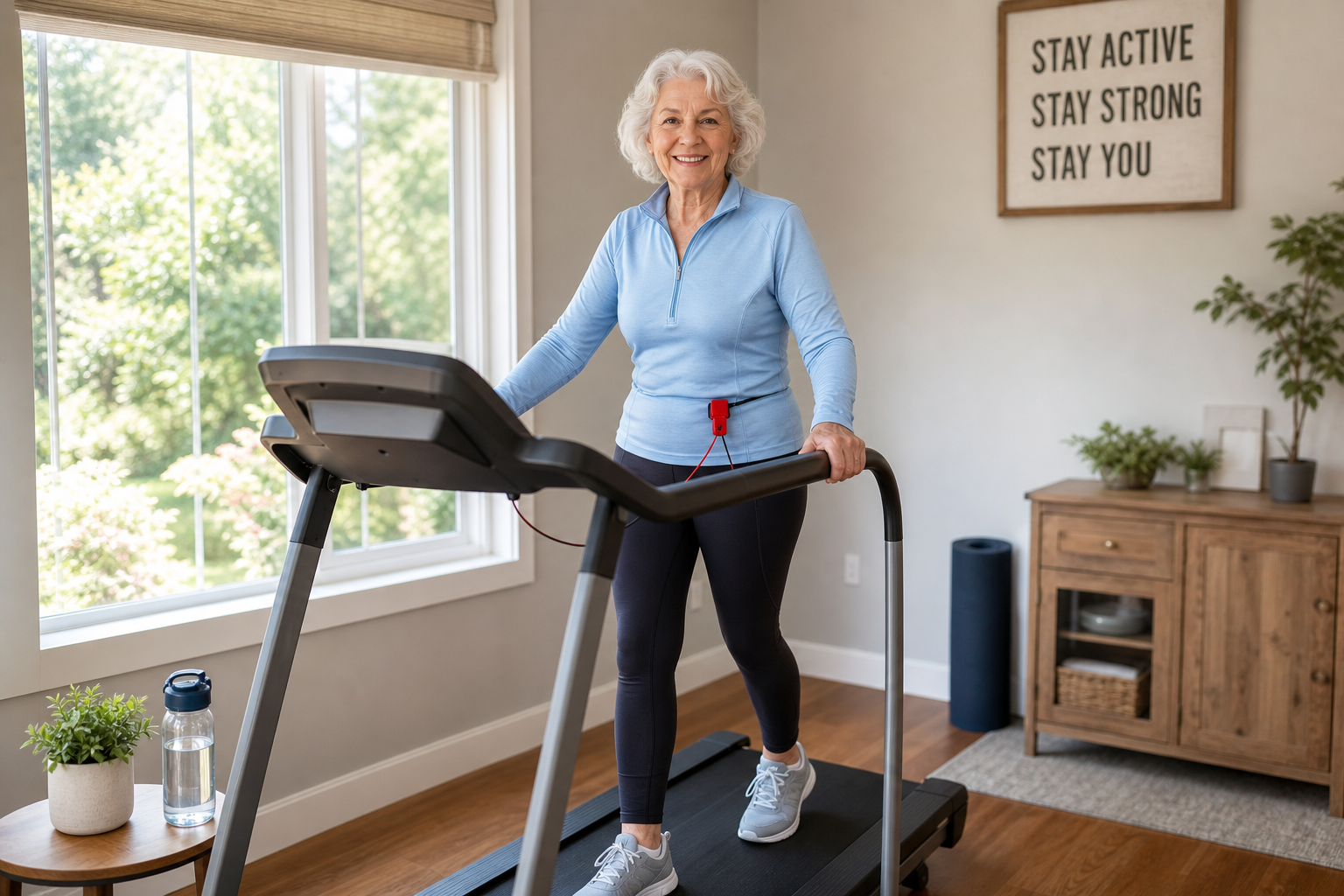
- Always attach the safety clip before pressing start. Clip it to your waistband, not your shirt (which can pull off).
- Straddle the belt (feet on the side rails) when pressing start. Step onto the moving belt only after it’s reached your target speed.
- Start every session at 1.0 mph for the first 2-3 minutes as a warm-up, even if